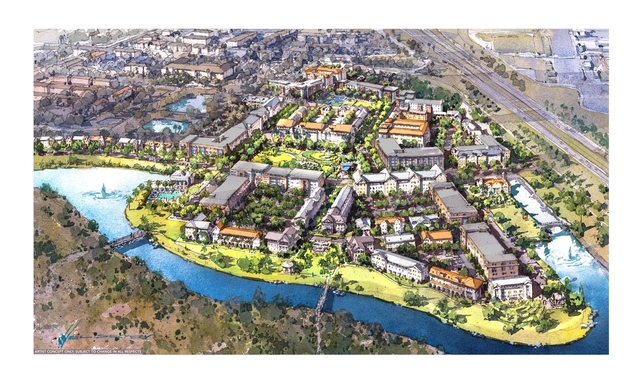
Community development proposals in Disney World come from back days. One of Walt Disney's last visionary projects was the Experimental Prototype Community of Tomorrow (EPCOT), a center for American enterprise and urban living. Disney advocated that the problems of cities were the most critical issues facing society and planned a city that could develop in a controlled manner, contrary to the urban expansion in the USA during the first half of the last century. After Disney died in 1966, the "EPCOT" concept was abandoned as the company was uncertain about the feasibility of operating a city. Fifty- five years later, after a thorough search, Walt Disney World chose The Michaels Organization for its experience in building and managing attainable housing communities.
Authenticity seems impossible today, with places and the buildings in them assembled with products from the Industrial Development Complex that could be assembled almost anywhere else on Earth in a debauchery of placelessness, disharmony with nature, and meaninglessness that doesn’t age well. So how is authenticity in the built environment achieved?
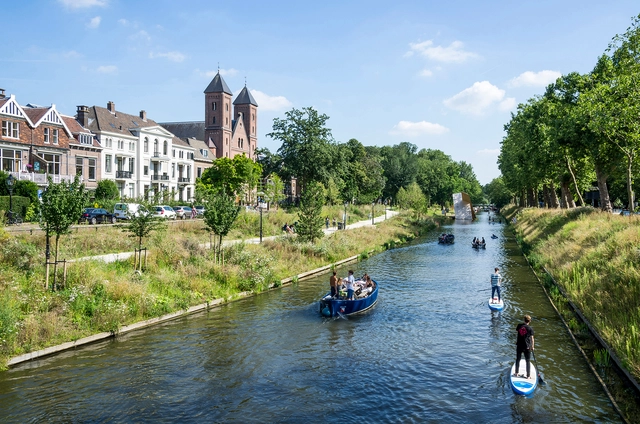
The Dutch firm OKRA landschapsarchitecten has been awarded the European Prize for Urban Public Space 2022 for its project to restore the Catharijnesingel canal in the city of Utrecht in the Netherlands. Being an initiative of the Center of Contemporary Culture of Barcelona (CCCB), this eleventh edition received 326 projects from 35 different countries showing those problems that European cities must face and proposing some solutions in the framework of a post-pandemic context focused on climate change and how to make cities more livable.
Envision your ideal neighborhood. Maybe it’s on a cul-de-sac in the suburbs, where every neighbor has a well-manicured lawn, a two-car garage, and everyone gives each other a friendly wave on their way to work. Or maybe you live in a high-rise building in a dense urban center, where you take public transit to the office five days a week and say hello to your doorman on your way out. Whatever your neighborhood might look like, there’s always a sense of wanting to know the people who live around your- or at least an unspoken reliance on one another to ensure that your surroundings are safe. What happens when technology brings you and your neighbors together to report on local happenings? Is it a good thing, or does it create a vigilante situation gone awry?
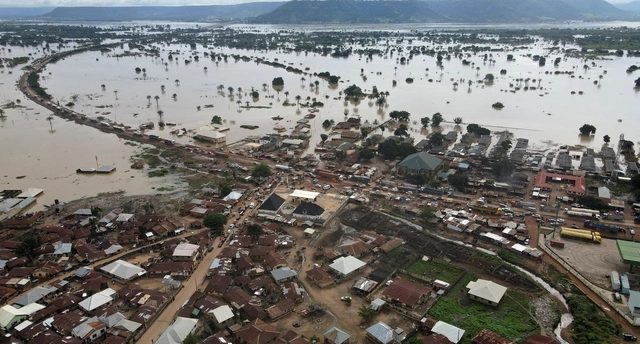
A few days ago, the world gathered at Sharm El Sheik, Egypt, for its annual climate change summit: COP27. Like the rest of Africa, Nigeria is represented by its retinue of bureaucrats, climate advocates, and other interest groups. Since the last meeting in Scotland (COP26), Nigeria signed the Climate Change Act into law, setting a target of attaining net-zero greenhouse gas emissions between 2050 and 2070. In the interim, Nigeria has developed an ambitious energy plan that would see it transition from fossil fuels to renewable energy, using its vast reserve of natural gas as a hedge. The country is at the forefront of the African Carbon Markets Initiative and plans to raise at least $500 million from carbon crediting trading to offset emitted carbon.
https://www.archdaily.com/992422/nigerias-ambitious-climate-agenda-and-its-misplaced-fixation-on-carbon-footprintMathias Agbo, Jr.
According to the World Population Clock, the human population reached 8 billion on November 15th. According to the UN, this milestone represents a celebration of human longevity due to improvements in public health and medicine, but it also comes with warnings about inequality, limited access to food and resources, and environmental damage. Despite the impressive number, the annual World Population Prospect report shows that the global population is growing at the slowest rate since 1950, and it predicts a continued deceleration in the second half of this century.
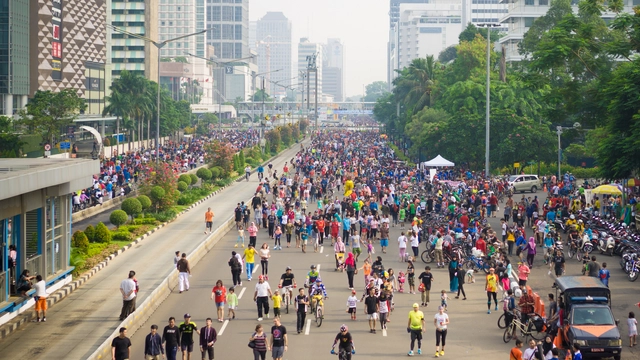
As more than half of the worldpopulation lives in cities, an estimated 55.7%, according to UN-Habitat’s latest reports, the urban challenges are growing exponentially. The UN expects this number to increase to 68% by 2050, with close to 90% of this increase taking place in Asia and Africa. Accelerated urbanization can pose significant risks, such as increasing inequality, poverty, sectorized development, social exclusion, and pollution. In this context, a well-balanced urban agenda becomes crucially important in achieving inclusive, safe, and sustainable cities.
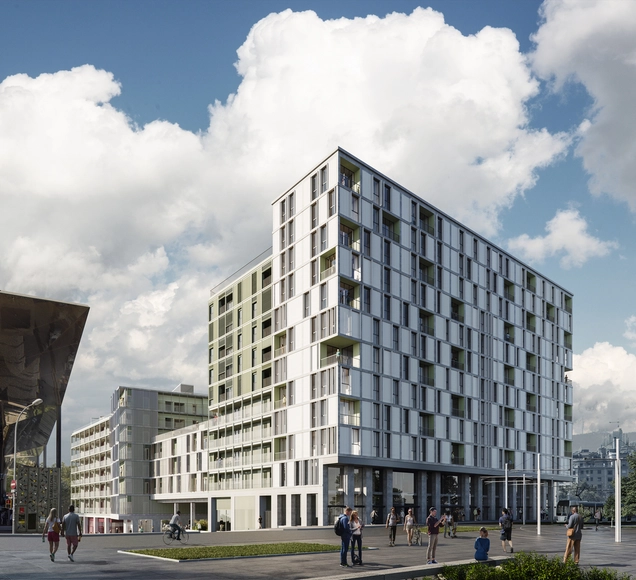
Illa Glories / CIERTO ESTUDIO. Image Cortesía de CIERTO ESTUDIO
CIERTO ESTUDIO was founded by six young architects in 2014. Since then, the team has not stopped growing and thus consolidating its professional practice in Barcelona. These six women architects are: Marta Benedicto, Ivet Gasol, Carlota de Gispert, Anna Llonch, Lucia Millet, and Clara Vidal.
The studio was born from plurality, therefore its thinking is inevitably diverse and this is reflected in its collaborative work methodology, always looking for the maximum architectural claim and its own character.
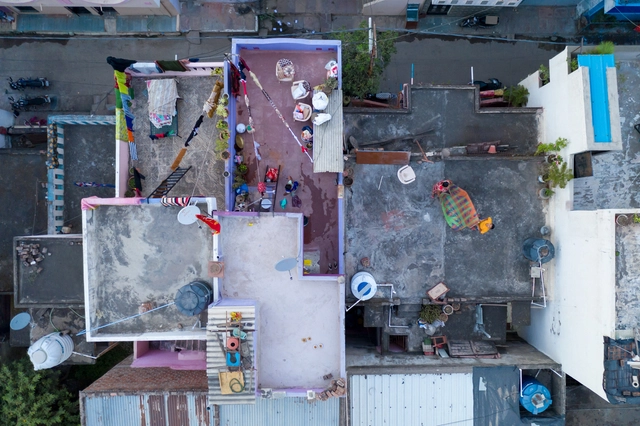
Aranya Community Housing / Vastu-Shilpa Consultants . Image Courtesy of Vitra Design Museum
In almost every Indian language, a colloquial term for “family” - ghar wale in Hindi, for example - literally translates to “the ones in (my) house”. Traditionally, Indian homes would shelter generations of a family together under one roof, forming close-knit neighborhoods of relatives and friends. The residential architecture was therefore influenced by the needs of the joint family system. Spaces for social interaction are pivotal in collective housing, apart from structures that adapt to the changing needs of each family. The nuanced relationship between culture, traditions, and architecture beautifully manifests in the spatial syntax of Indian housing.
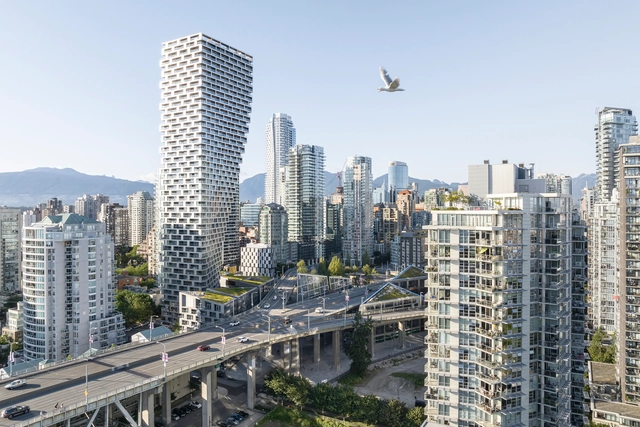
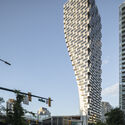
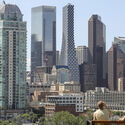
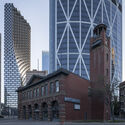
BIG – Bjarke Ingels Group has released a photo series of the Vancouver House and the Telus Sky towers, captured for the first time since their opening in 2020 during the pandemic. In a sort of "yin and yang," both skyscrapers are shaped by a curvilinear silhouette that involves the surrounding like a giant curtain revealing the building to the skyline.
The 220-meter-tall Telus Sky tower, and the 149 meters high Vancouver House, accommodate mixed-use offices and residential spaces, with connections to cycling and pedestrian pathways in their platforms. Moreover, both hold the highest level of Energy and Environmental Design. Vancouver House is the city's first LEED Platinum building, and TELUS in Calgary now occupies the largest LEED Platinum footprint in North America, with 70,725 square meters.
Sensory urbanism is a form of investigation of how non-visual information defines a city's character and affects its livability. Using methods that range from sound tracks and smell maps, wearables and virtual reality, researchers in this area have introduced other senses to urban centers.
The Power of Air by Sidnie Ancion, Meg Kalinowski, Anabella Acevedo Peña – UD Spring Semester 2022. Image Courtesy of City College of New York
The Spitzer School of Architecture at the City College of New York has been challenging the strictures of traditional design education for decades. Now, the esteemed school’s revamped Master of Urban Design program continues this trend of innovative education by reframing the urban environment as a laboratory where students play active research roles.
Community facilities are spaces for social interaction where people find leisure and information. Whether a cultural or a community center, this type of equipment aims to bring people together, creating opportunities for interaction in an environment of care and neighborhood.
“Art aims to represent not the outward appearance of things, but their inward significance”, Greek polymath Aristotle remarked. Public art in cities worldwide seeks to pursue this aim by offering a sense of meaning and identification to its residents. Taking the form of murals, installations, sculptures, and statues, public art engages with audiences outside of museums and in the public realm. This art presents a democratic manner of collectively redefining concepts like community, identity, and social engagement.
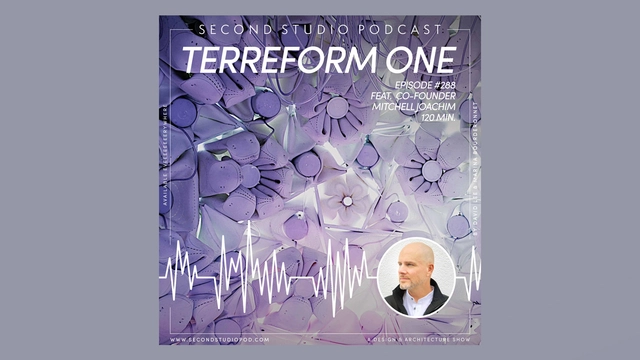
The Second Studio (formerly The Midnight Charette) is an explicit podcast about design, architecture, and the everyday. Hosted by Architects David Lee and Marina Bourderonnet, it features different creative professionals in unscripted conversations that allow for thoughtful takes and personal discussions.
A variety of subjects are covered with honesty and humor: some episodes are interviews, while others are tips for fellow designers, reviews of buildings and other projects, or casual explorations of everyday life and design. The Second Studio is also available on iTunes, Spotify, and YouTube.
This week David and Marina are joined by Mitchell Joachim, PhD, Associate Professor, NYU and Co-Founder, Terreform ONE to discuss the complexities of urban design; the role of the urban designer; the real-life applications of his research; funding projects; cricket farms; and more.
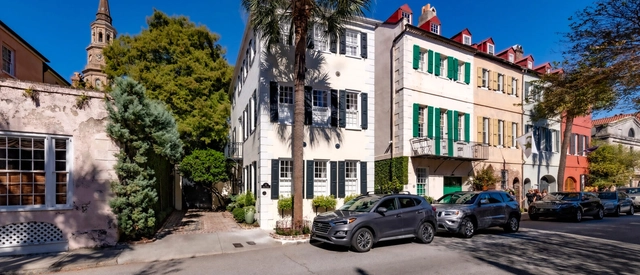
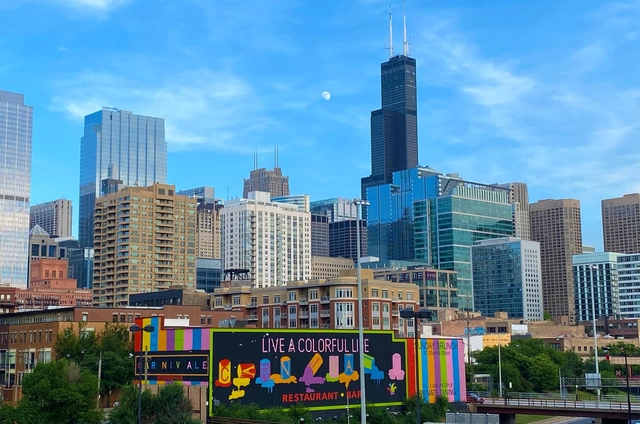
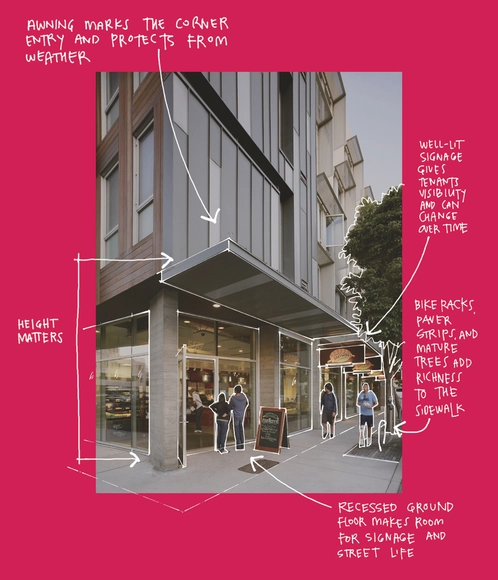
A famous skyline can evoke rich associations and unleash imagination, but the real experience of a city is in its streets. Early humans evolved to see the first 20 feet in front, above, and around them so they could identify potential threats in the landscape. In our modern urban environment, this is still how we experience buildings and places. While aerial views and Google Earth imagery are useful for reference, the main experience of the outside of a building is what we pass by on the street, up to about the second or third story. The height of a building doesn’t necessarily matter if the street experience is rich and accessible.
https://www.archdaily.com/990889/activating-the-edges-how-to-create-lively-active-streetsAmanda Loper, Daniel Simons, David Baker
While the United Nations has been continuously urging architects, engineers, and city shapers to put the 2030 agenda and the SDGs into action, and the IPCC report revealed intensifying climate change, sparking widespread discussion over insufficient action, the 83rd ongoing session of The United Nations Economic Commission for Europe - UNECE Committee on Urban Development, Housing and Land Management taking place in San Marino, has just issued a special declaration on “how to build better, safer, more inclusive, and resilient" cities, ahead of COP27. This set of “Principles for Sustainable and Inclusive Urban Design and Architecture”, or the San Marino declaration has gathered the signatures of Norman Foster and Stefano Boeri.
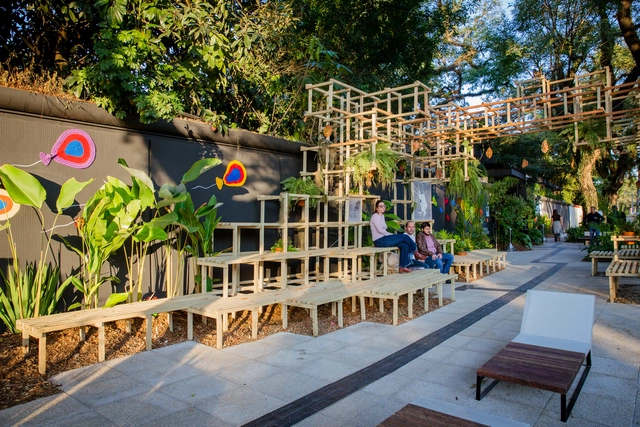
If the pavement of a sidewalk is a key element for the flow organization, the urban furniture chosen to compose the public space is responsible for the qualification of the place, creating more friendly spaces. Dumpsters, flowerbeds, signposts, benches, lighting, bike racks and so many others help transform a space that, despite being just a pass-through, is also the only public space in most cities.