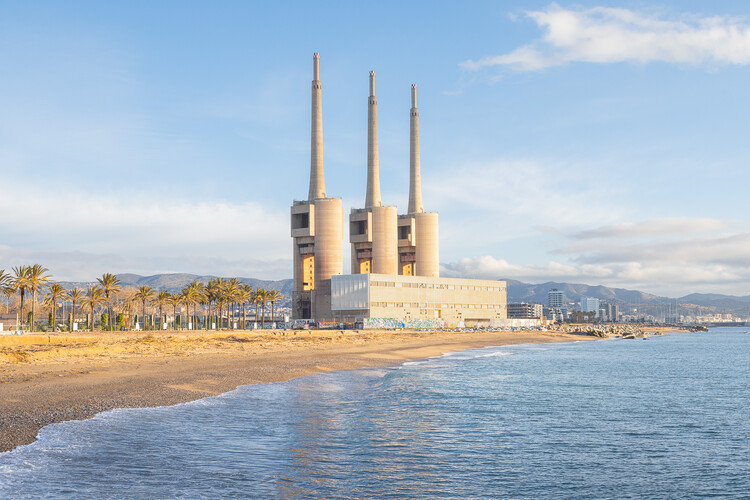
The UIA World Congress of Architects is an international event for architectural dialogue organised by the International Union of Architects (UIA, by its French acronym), a non-governmental organisation that unites national associations of architects from over 100 countries, representing more than one million professionals. The first UIA Congress of Architects, which also marked the institution's founding, was held in Lausanne in 1948 during the post-war reconstruction period. Since then, UIA congresses have been held every three years in a different city within a member country, serving as the organisation's main recurring event. In 2026, the Congress will be held in Barcelona, and UNESCO has consequently designated the city as the World Capital of Architecture 2026. Each Congress focuses on a key topic relevant to the profession, articulated through a central theme. Recent themes include Copenhagen 2023: "Sustainable Futures. Leave no one behind." and Rio 2020–2021: "All the worlds. Just one World." The topic for 2026 is "Becoming. Architectures for a Planet in Transition," welcoming renowned figures in contemporary architectural thought and practice for a broad and critical overview of the possible futures of architecture.
The ultimate accolades of World Building of the Year supported by GROHE, World Interior of the Year, Future Project of the Year and Landscape of the Year were announced today as hundreds of architects from across the world convened at a grand finale Gala Dinner at Miami Beach Convention Center in Florida. A host of Special Prizes, including the American Beauty Prize supported by the Royal Fine Art Commission Trust, were also announced at the closing event to celebrate the eighteenth edition of the festival. The announcement follows the final day of WAF, in which prize winners across all 43 categories have been competing for the winning titles.
https://www.archdaily.com/1036083/world-building-of-the-year-and-interior-of-the-year-revealed-at-world-architecture-festival-2025Enrique Tovar
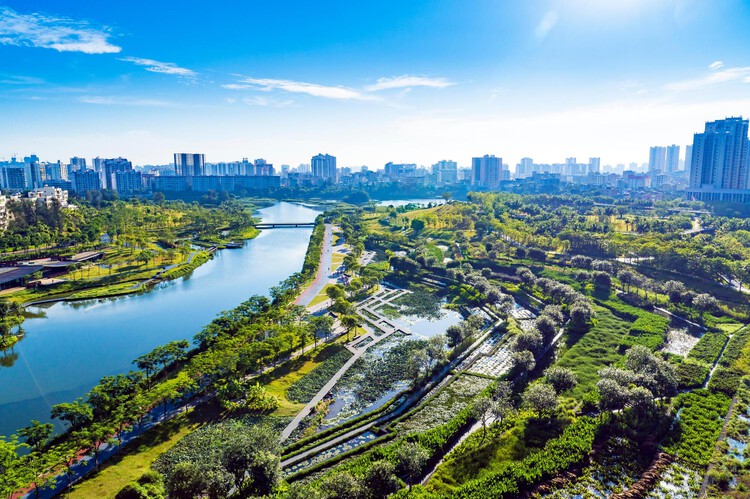
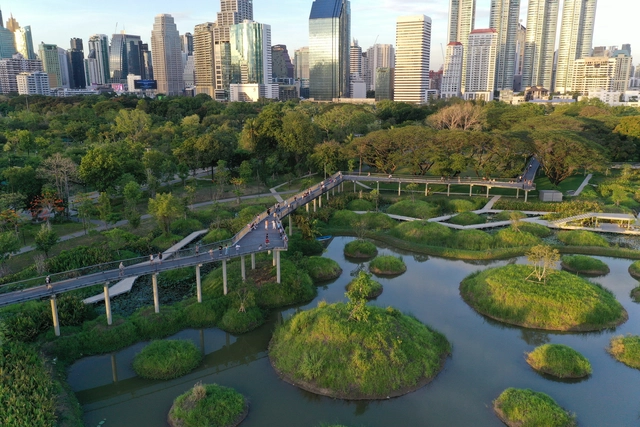
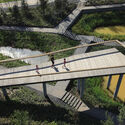
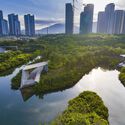
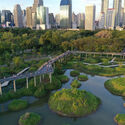
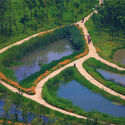
A globally-recognized advocate for ecological urbanism, Yu gained international relevance after his "sponge city" philosophy was adopted as a national policy in China in 2013. The approach prioritizes nature-based solutions, such as wetlands, parks, and permeable pavements, to absorb and retain water. This novel method stood in stark contrast to traditional concrete infrastructure, offering cities a way to combat urban flooding and accelerate climate change by working with nature rather than against it. His ideas have since been implemented in hundreds of cities worldwide.
The concept of "sponge cities" has gained prominence since it was introduced by Chinese landscape architect Kongjian Yu, founder of Turenscape, and was officially adopted as a national policy in China in 2013 to combat urban flooding. This approach prioritizes nature-based infrastructure such as wetlands, rain gardens, and permeable pavements, creating landscapes with porous soil where native plants can thrive with minimal maintenance. When it rains, these systems absorb and slow down water flow, reducing flood risks. In contrast, traditional concrete- and pipe-based drainage solutions, though widely used, are costly, rigid, and require frequent maintenance, sometimes even making cities more vulnerable to flooding due to blockages and overflows.
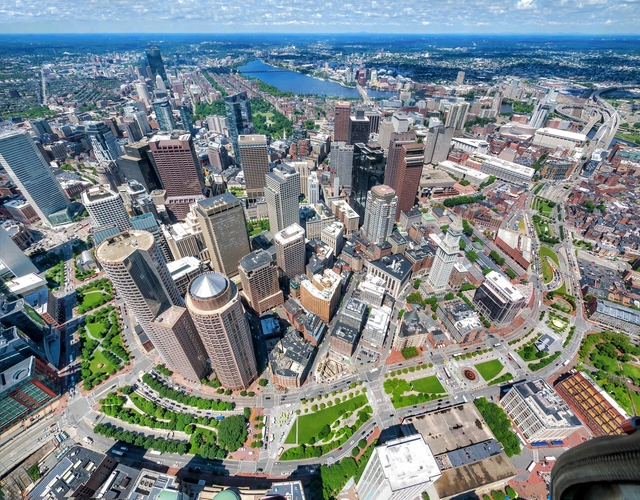
Greenways, as a typology of urban design, have become an essential element in the planning of modern cities. They emerge in response to the increasing fragmentation of urban landscapes by elements such as highways. They usually integrate natural and constructed spaces, providing much-needed connections across various parts of the city. At the same time, they promote pedestrian accessibility, recreation, and social interaction. The Rose Kennedy Greenway in downtown Boston, United States, exemplifies this human-centered approach to design. The project, which began construction in 1991, showcases the potential of greenways to reconnect urban environments and enhance community life. As a series of parks designed by various architecture firms, it aims to create physical links and meaningful spaces that foster social development and a sense of place.
Alarming cases of climate disasters are a constant presence in world news. Last month's floods in southern Brazil gained special attention from heat waves and forest fires to droughts and cyclones. This tragedy, which left over half a million people homeless, was understood to be the result of a combination of factors, including human actions that have devastated ecosystems to create environmentally irresponsible cities.
In this context, the work of Beijing-based architect Kongjian Yu, founder of the landscape architecture firm Turenscape, has gained international visibility and recognition, which included receiving the 2023 Cornelia Hahn Oberlander International Landscape Architecture Prize (“Oberlander Prize”). His "sponge cities" concept, designed to address and prevent urban flooding in the face of accelerated climate change, was adopted as national policy in China in 2013. This approach prioritizes large-scale nature-based infrastructures such as wetlands, greenways, and parks.
Beijing-based landscape architect Kongjian Yu has been announced by the Cultural Landscape Foundation as the recipient of the 2023 Cornelia Hahn Oberlander International Landscape ArchitecturePrize (“Oberlander Prize”). Kongjian Yu has gained international recognition for his concept of “sponge cities,” a measure to address and prevent urban flooding in the context of accelerated climate change. The concept was adopted as a national policy in China in 2013, prioritizing large-scale nature-based infrastructures such as wetlands, greenways, parks, canopy tree and woodland protection, rain gardens, green roofs, permeable pavements, and bioswales. Yu has been selected by the international jury of the Oberlander Prize, recognizing him as “a force for progressive change in landscape architecture around the world.” Organized biannually, the prize aims to recognize and give visibility to landscape architecture and the ways in which it can address issues of climate change and sustainability.
Finnish architect Juhani Pallasmaa once said that "architecture is essentially an extension of nature into the man-made realm, providing the ground for perception and the horizon of experiencing and understanding the world."
In the constant hustle and bustle of the modern surroundings, it is more than needed to take a step back and listen to the sounds of something as calmly powerful as nature. Moreover, listening to the beautiful harmonies created by birds chirping and sound waves can make our inner voice louder as well.
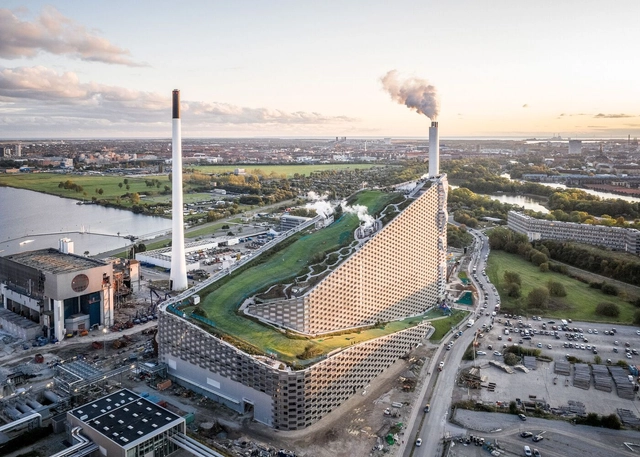
World Architecture Festival has revealed the winners for this year’s categories, highlighting buildings and landscapes completed across the world between 2019 and 2021. Chosen from almost 500 shortlisted projects from 62 countries, the winning projects showcase exemplary contributions to the built environment reflecting this edition’s theme: ‘Resetting the City: Greening, Health and Urbanism’. In addition to the completed buildings categories, the annual award also announced Copenhill, designed by Bjarke Ingels Group, as the 2021 World Building, while SLA was awarded Landscape of the Year for its design of Al Fay Park.
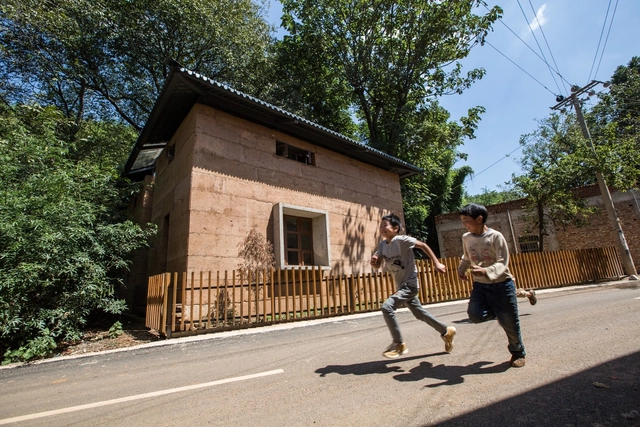
Post-Earthquake Reconstruction Project in Guangming Village / The Chinese University of Hong Kong & Kunming University of Science and Technology. Image Courtesy of World Architecture Festival
Due to the "high standard of category winners presented in the first two days of WAF", the super jury has also awarded a Director’s Special Award to Superlofts Houthavenin Amsterdam by Marc Koehler Architects.
Winners of the year's Future Project, Landscape, Small Project, Iran Special Prize and Best Use of Colour awards were also announced. Continue after the break to see the winners.
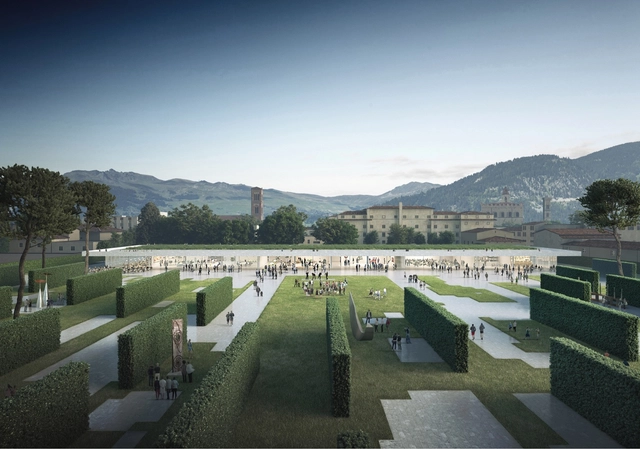
The 230-team competition asked architects to design a new 3-hectare urban park in Prato’s historical city center on the site of the former city hospital, within the perimeter of the city walls. The project is intended to meet the needs of a contemporary city while driving socio-economic development of the city center through “enhancements to its touristic vocation, sustainability and accessibility.”
The jury, chaired by architect Bernard Tschumi, unanimously selected the winning proposal for “its ability to offer to the city of Prato an original, innovative and practical solution.” Commented Tschumi on the design, “The project is remarkable in the way it understands and celebrates the history of Prato and of its medieval walls. At the same time, it looks to the future and to the development of the city and its diverse population.”
The jury also released the full rankings of the 10 finalist teams. Learn about the winning design and see the entries from all 10 of the finalists, after the break.
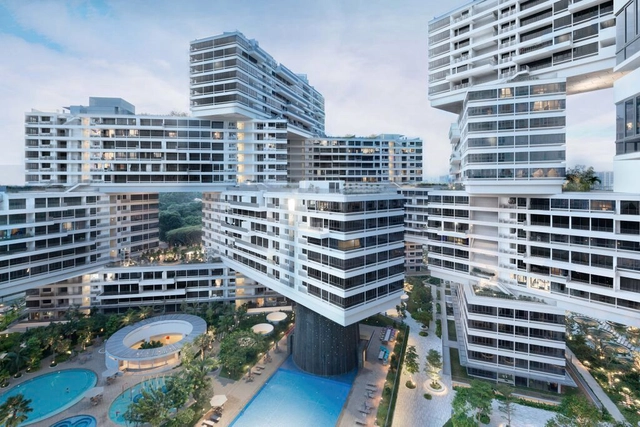
OMA and Buro Ole Scheeren's vertical village in Singapore, The Interlace has been named the World Building of the Year 2015 at culmination of the World Architecture Festival (WAF). Celebrated for being "an example of bold, contemporary architectural thinking," as WAF Director Paul Finch described, the project is eighth building to ever win the illustrious award. It is considered to be a "radical new approach to contemporary living in a tropical environment."
Winners of the year's Future Project, Landscape, Small Project and Color Prize awards were also announced. Read on to see the who won with comments from the jury.
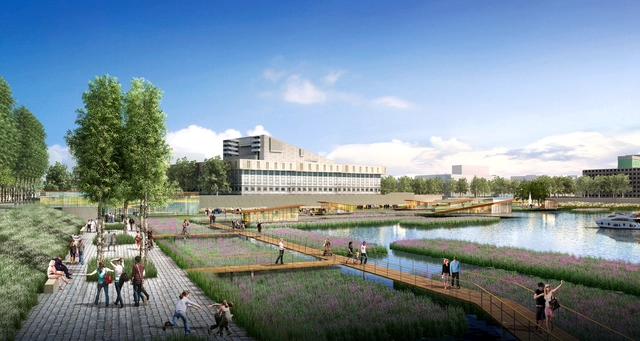
Russian-Chinese consortium Turenscape and MAP architects was announced as winners of a major competition to redevelop the Kaban lake system embankments in Kazan, Russia. Their winning concept, “Elastic band: The Immortal Treasure of Kazan” aims to establish a "continuous system of landscapes along the bank line, which will preserve the cultural and historical memory and become a basement for future stage-by-stage development."
"The water is turning into a real living treasure and heritage of Kazan," said the competition's organizer.
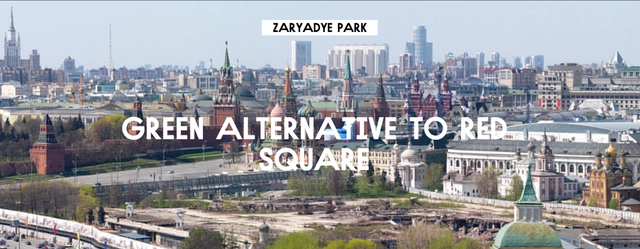
In the 20th century, it was going to be the site of the world's tallest skyscraper, but it became the world's largest hotel. In 2006, the hotel was replaced with a fence, the largest advertising space in all of Europe, enclosing acres of undeveloped, highly valuable land. In 2014, it will become Moscow's first - and most important - park in over 50 years.