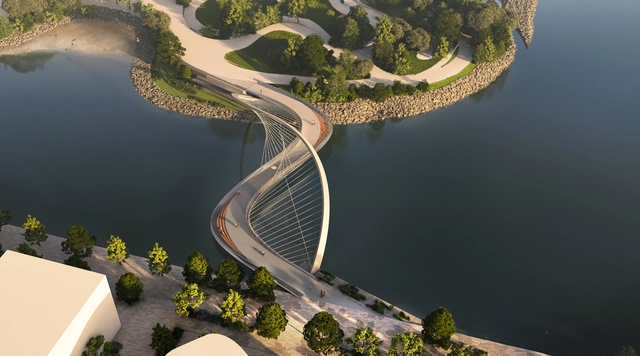
WilkinsonEyre has just been selected to design the new Equinox Bridge in Toronto, Canada. Designed in collaboration with Zeidler Architecture, Two Row Architect, and Arup, this bridge will connect the central waterfront to Villiers Island and the expanded park system along the new mouth of the Don River. Selected through a competition commissioned by Waterfront Toronto and the City of Toronto, the bridge seeks to foster a connection between people and water.
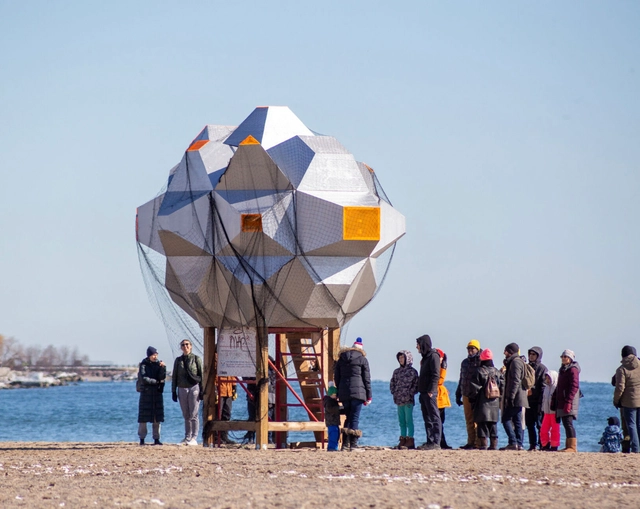
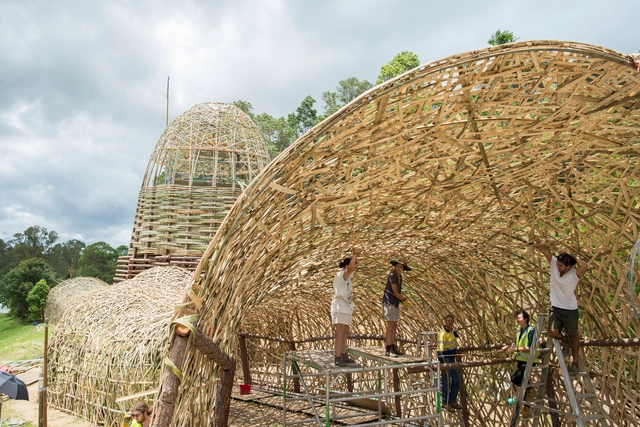
We Caught A UFO! by Xavier Madden and Katja Banovic, Croatia and Australia. Image Courtesy of Winter Stations
Winter Stations, now in its 10th year, has unveiled the winning designs selected from a pool of hundreds of submissions worldwide. Following an international design competition launched in November 2023, designers, artists, and architects contributed with bold proposals to reimagine the lifeguard stations along Toronto’s east-end beaches for the winter. Launched by RAW Design, Ferris + Associates, and Curio in 2014, the event aims to gather an international design and art community to join in this playful exercise of rethinking public spaces through bold temporary interventions. The winning designs were realized with the support of Anex Works, a Toronto-based fabrication group, and will be on display until the end of March.
For its 10th anniversary edition, the chosen theme for this year is “Resonance,” hoping to challenge designers to reflect on the artistic legacy and enduring impact of the Winter Stations and to embark on a journey of reinvention and reimagination. The projects were invited to recreate and reinvent installations from previous Winer Stations editions, offering moments of contemplation and remembrance. The event also continues the tradition of the Lifeguard Sands, inviting designers to incorporate them into their designs without structurally altering the stands in any manner.
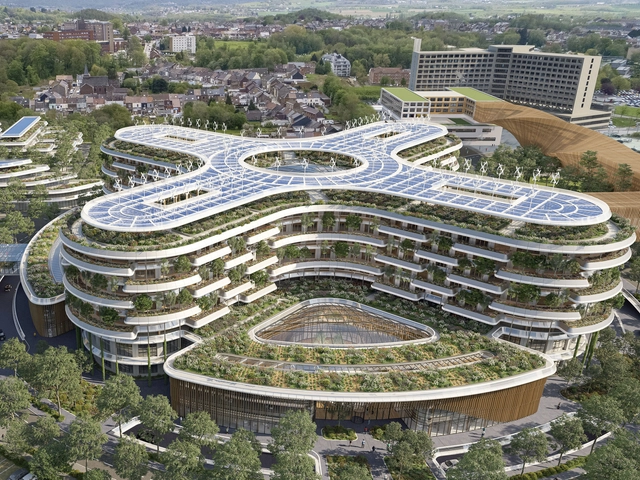
This curated selection of the Best Unbuilt Architecture highlights projects submitted by the ArchDaily community that demonstrate the use of organic shapes in various forms of architecture and program use. Many times, organic architecture stands as a testament to what we are able to make in 2024, innovating in structural and material technology. From Vincent Callebaut’s HospiWood to Zomorrodi & Associates’ Cadence Art Center, these instances showcase this shift in desigin thinking. Whether its a residential villa in the United States or a resort centered around a curved pool in the Netherlands, organic architecture has been trending globally.
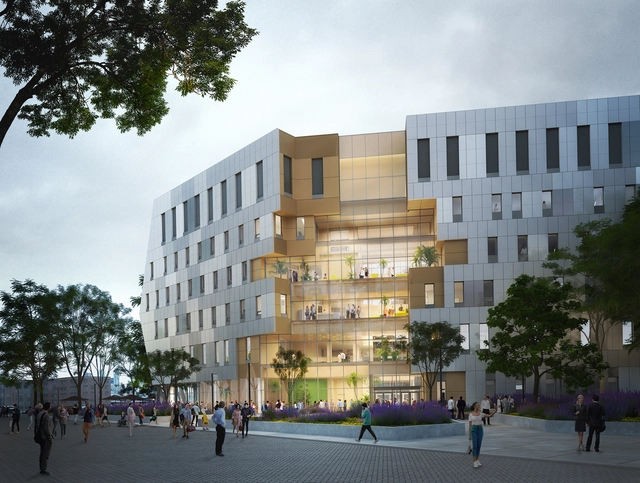
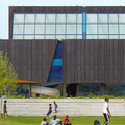
Diamond Schmitt and MVRDV have unveiled the design for a new building for the Scarborough Academy of Medicine and Integrated Health (SAMIH) at the University of Toronto’s Scarborough Campus. The new addition, featuring laboratory spaces, classrooms, and offices, aims to function as a communal and gathering space for the community. The functions are distributed around a five-story atrium that opens toward the exterior on both sides of the building and establishes a destination point within the pedestrian flows of the campus. Solar panels integrated into the façade help power the building, while the warm finishes of the interior contribute to creating a welcoming atmosphere.
The window for solving climate change is narrowing; any solution must include embodied carbon. TheSixth Assessment Report published by the IPCC (Intergovernmental Panel on Climate Change) concludes that the world can emit just500 gigatonnes more of carbon dioxide, starting in January 2020, if we want a 50 percent chance of staying below 1.5 degrees. In 2021 alone, the world emitted about36.3 gigatonnes of carbon, the highest amount ever recorded. We’re on track to blow through our carbon budget in the next several years. To quote the IPCC directly: “The choices and actions implemented in this decade will have impacts now and for thousands of years (high confidence).”
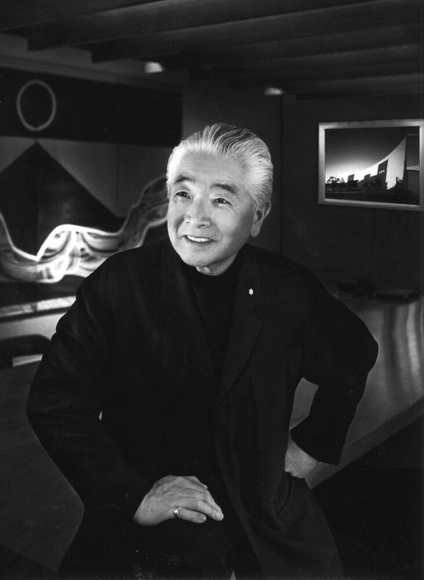
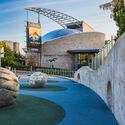
Visionary architect Raymond Moriyama, co-founder of Moriyama Teshima Architects and the designer behind some of Canada’s most influential buildings, has passed away at the age of 93. Renowned for designing major buildings across the world, including the Canadian War Museum, Ontario Science Center and the Canadian Embassy in Tokyo, Moriyama focused on creating humane buildings reflecting ideals of democracy, equality, and inclusivity. Moriyama passed away on September 1st, 2023, according to a statement from his firm, Moriyama & Teshima Architects.
Under the titles of Optimism and Instability, this year’s global index score has returned to pre-Covid-19 days, highlighting that the world has fully recovered from the pandemic. Ranking living conditions in 173 cities based on stability, health care, culture and environment, education, and infrastructure, the survey suggests that nowadays, “life in cities is a bit better than at any time in the past 15 years”, although Stability scores dropped on average in 2023, due to worldwide clashes, political disruptions, social protests, inflation, and wars.
In this third feature, we met with co-chairs of Design for Resilient CommunitiesAnna Rubbo, Senior Researcher, Center for Sustainable Urban Development (CSUD), The Climate School, Columbia University, and Juan Du, Professor and Dean of the John H. Daniels Faculty of Architecture, Landscape and Design, University of Toronto.