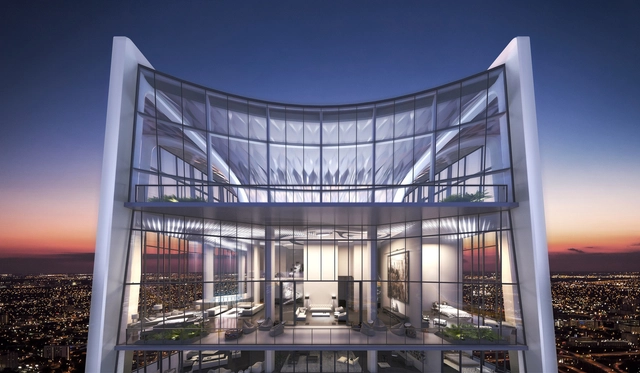
Courtesy of Zaha Hadid Architects. ImageOne Thousand Museum high-rise residential building in Miami, Florida, will feature a curving exoskeleton finished with glass fiber-reinforced concrete.
When it comes to building a bridge, what prevents it from having the most enduring and sustainable life span? What is its worst enemy? The answer is, simply, the bridge itself—its own weight.
Built with today’s construction processes, bridges and buildings are so overly massed with energy and material that they’re inherently unsustainable. While concrete is quite literally one of the foundations of modern construction, it’s not the best building material. It’s sensitive to pollution. It cracks, stains, and collapses in reaction to rain and carbon dioxide. It’s a dead weight: Take San Francisco’s sinking, leaning Millennium Tower as an example.
Modern, smart construction can and will do better. A convergent set of technologies will soon radically change how the construction industry builds and what it builds with.
The digital platform rocagallery.com, a project from Roca, aims to be a reference point for design and architecture to news and thought, with more than 30 international writers and content updated every week.
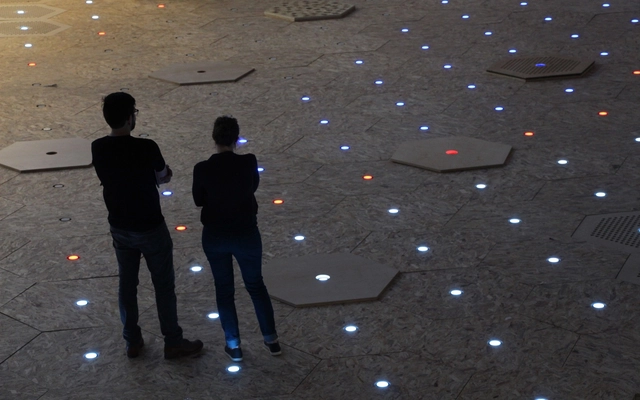
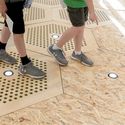
Carlo Ratti Associati, working in collaboration with Alphabet’s Sidewalk Labs, has unveiled their design for a modular paving system named “The Dynamic Street.” Intended to make streets “reconfigurable, safer, and more accessible to pedestrians, cyclists, and tomorrow’s self-driving vehicles,” the project will be on display at Sidewalk Lab’s office and experimentation space in Toronto throughout the summer of 2018.
Manifesting as a series of hexagonal modular pavers, the project explores the various patterns which can be created by reconfiguring modules, with a potential future “allowing a street to create an extra car lane during rush hour before then turning it into a pedestrian-only plaza in the evening.”
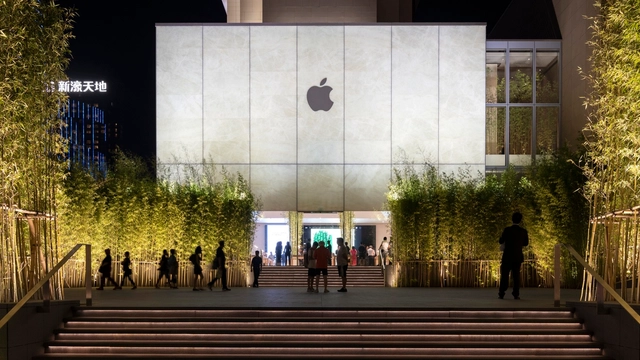
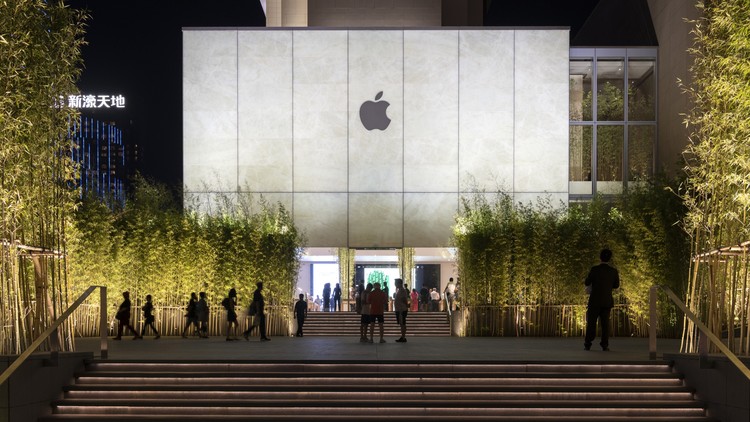
Apple Store, Sands Cotai Central, Macau - exterior at night with the cube illuminated and bamboo planting framing the entrance with people. Image Courtesy of Nigel Young, Foster + Partners
Foster + Partners has published photographs of their recently-opened Apple Store in Macau, intended as a “new oasis of calm” against the city’s buzz and excitement. The store, opened on June 29th, was designed in response to a brief calling for “an inviting, contemplative space, where technology, entertainment, and arts come together to make a positive contribution to the city.”
The Donghua Chen & Partners proposal named the “Science Loop” sees a series of systems, including social, skyline, circulation, devolution, and recycling loops, organized as an integrated network.
As self-driven cars are being introduced to our city streets and tech companies have expanded their influence far beyond the boundaries of our computer and smartphone displays, a new generation of architects are charged with imagining how to employ the technology of tomorrow in ways that will advance and improve the world’s built environments. With autonomous transportation, virtual and augmented reality and artificial intelligence promising unprecedented tools for revolutionizing human infrastructure in a future that no longer feels particularly distant, present-day data gathering and analysis capabilities have already transformed our ability to understand trends on an unforeseen scale.
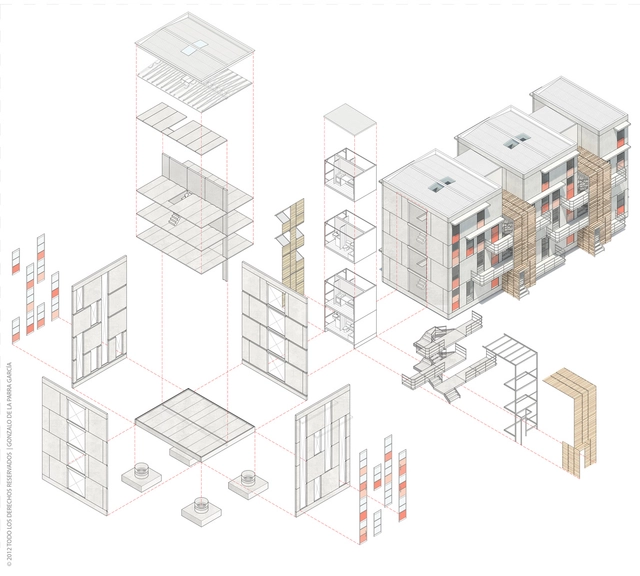
Taking full advantage of modern data science capabilities and semi-automated robotic technology currently deployed in factory settings around the world, Masters candidate Stanislas Chaillou from the Harvard GSD imagines how today’s new tech could help realize the longtime architectural ambition of creating flexible buildings capable of adapting to variable uses.
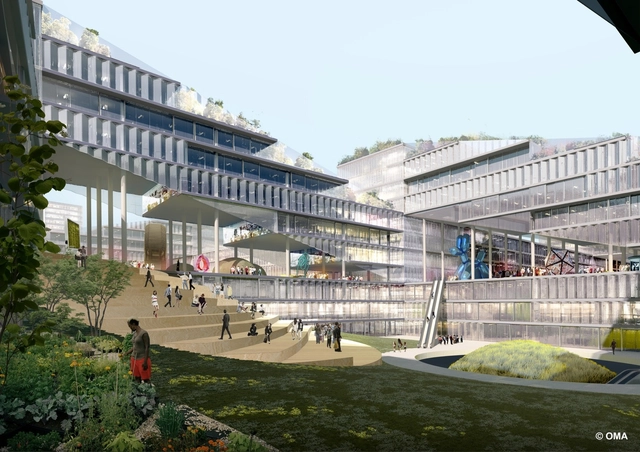
OMA has been announced as one of four firms to win an international competition for the design of Unicorn Island in Chengdu, an “innovative masterplan specifically designed for New Economy companies.”
As Chinamoves from a production-orientated economy to a knowledge and service-based economy, the masterplan seeks to provide a variety of working and living conditions for both start-up firms and “Unicorn” companies, those with a value of over one billion US dollars. Along with OMA, the four winners also included Morphosis, who were recognized for their walkable scheme integrating business, green infrastructure, and lifestyle.
Published in partnership with The Greenhouse Talks, the following essay by Aaron Betsky examines limbo spaces and the opportunities presented by these ambiguous areas.
In the spaces where we wait, tarry, or just while away the time, the strictures and structures of good architecture dissolve. In the waiting rooms at airports, government bureaucracies, or doctors' offices, in the places to where we escape to do little to nothing, and in the cocoons we create by using either the latest technology or ancient meditation techniques to come to ourselves, boundaries dissolve. We spend more and more of our time in such spaces. They are the purgatory between the hell of everyday reality and the seamless heaven of virtual social space—or the other way around. What is the architecture of such not-quite-free spaces, and how should we design what is meant to fade away? What do such spaces tell us about the future of architecture?
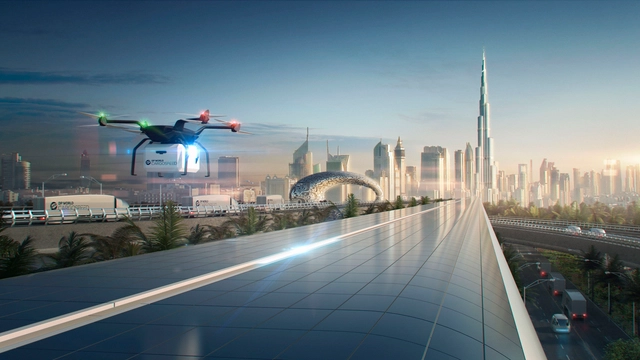
Foster + Partners has released a video depicting their vision for a future high-speed transportation infrastructure, taking advantage of recent advances in hyperloop technology. Designed for DP World Cargospeed, a collaboration between cargo giant DP World and Virgin Hyperloop One, Foster + Partners’ vision for an infrastructural network seeks to create a new ecosystem where urban centers and rural landscapes are interconnected, as are humans and nature.
https://www.archdaily.com/893579/new-video-shows-foster-plus-partners-vision-for-cargo-carrying-hyperloop-networkNiall Patrick Walsh
Mercer released their annual list of the Most Livable Cities in the World last month. The list ranks 231 cities based on factors such as crime rates, sanitation, education and health standards, with Vienna at #1 and Baghdad at #231. There’s always some furor over the results, as there ought to be when a city we love does not make the top 20, or when we see a city rank highly but remember that one time we visited and couldn’t wait to leave.
To be clear, Mercer is a global HR consultancy, and their rankings are meant to serve the multinational corporations that are their clients. The list helps with relocation packages and remuneration for their employees. But a company’s first choice on where to send their workers is not always the same place you’d choose to send yourself to.
And these rankings, calculated as they are, also vary depending on who’s calculating. Monocle publishes their own list, as does The Economist, so the editors at ArchDaily decided to throw our hat in as well. Here we discuss what we think makes cities livable, and what we’d hope to see more of in the future.
Videos
Courtesy of Gary di Silvio and Giacomo Mangia
Carlo Ratti Associati (CRA) has unveiled Scribit, a “writing robot” which draws images and text on any wall surface, turning office, living, and bathroom walls into a blank canvas for artistic expression. Using in-built engines, Scribit can draw, cancel, and re-draw new content an infinite number of times, allowing users to print different images, messages, or feeds every day.
Scribit is always connected to the internet, allowing users to download, upload or source any online content. Operating in real time, Scribit immediately reproduces any data sent to it by the user, be it a restaurant posting the day’s menu, a financial firm posting stock market updates in its lobby, or an art enthusiast projecting their own content on the living room wall.
This issue of dearq seeks to shed light on a spectrum of spatial, material, and research practices intertwining architecture, design, and computation. We welcome contributions that address these from critical, de-colonial, and local perspectives, with a non-exclusive focus on Latin America and the rest of the “Global South”.
BIM (Building Information Modeling) is a methodology that allows architects to create digital design simulations to manage all the information associated with an architectural project.
While CAD creates 2- or 3-dimensional drawings that don't distinguish between their elements, BIM incorporates 4-D (time) and 5-D (costs). This allows users to manage information intelligently throughout the life cycle of a project, automating processes such as programming, conceptual design, detailed design, analysis, documentation, manufacturing, construction logistics, operation and maintenance, renovation and/or demolition.
In any design and construction project there are an unlimited number of participants, as well as infinite interactions between parties. The projects are multidisciplinary and include information that is not necessary to all involved. So who is responsible for what in each project? How far does my responsibility go and where does yours start? BIM helps to order the complexity of this process. [1]
ARCHITECT magazine is now accepting entries for its 12th Annual R+D Awards! We would be grateful if you could share the competition details below with your network. The winners will published in ARCHITECT’s July 2018 issue and on our website. As with previous years, full-time students and faculty are eligible for a reduced registration fee!
Carbon fiber's light weight and unique properties make it an exciting potential building material, say researchers at Autodesk BUILD Space. Image Courtesy of University of Stuttgart
On any weekday, Chicago’s downtown business district, the Loop, teems with harried humans crossing the street like herds of wild antelope fleeing a predator. Most scurry past the Field Building without considering its significance—or that of the historic building demolished in 1931 on the same site: the Home Insurance Building. Built in 1884, it was the first tall building erected on a frame made of structural steel—a light, affordable, and durable material that allowed structures to be built taller, stronger, and faster than those made of wood or stone.
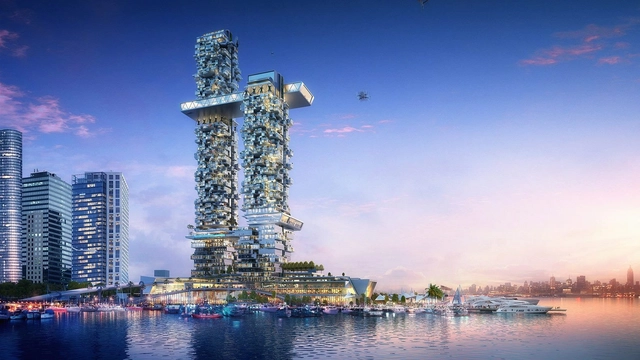
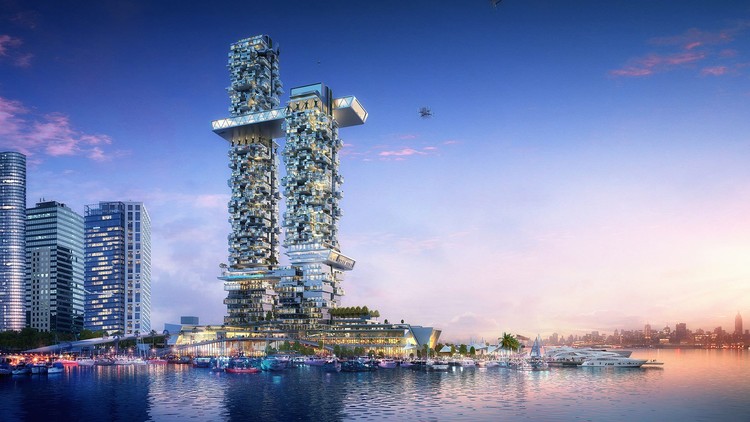
Humphreys and Partners, a Dallas-based architecture firm, presented a vision of future residential living at the 2018 International Builders’ Show earlier this year. Tackling current issues of affordable housing, sustainable design and how technology is changing the way we live, their futuristic vision Pier 2: Apartment of the Future consists of two soaring skyscrapers on the Manhattan waterfront.
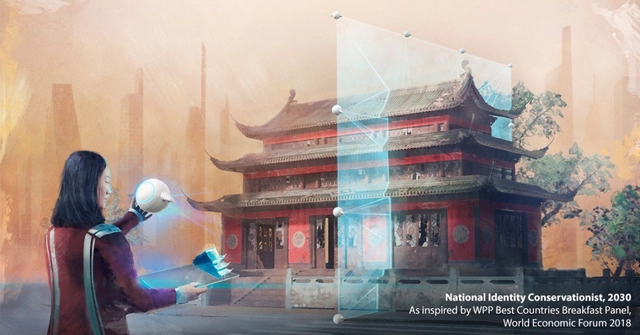
In a world where technology is at the forefront of our lives, it’s hard to imagine that many of the jobs that are available now did not exist 10 years ago; uber drivers, social media managers, app developers and even the job of an ArchDaily writer would have seemed an abstract concept! As technology advances further, even more job positions will be created and others left behind, leaving it open to speculation as to what will come next.
It is almost impossible to predict the future, but digital agency AKQA and Mish Global have attempted the impossible and envisioned several potential jobs in the design and construction industry in 2030 following inspiration from several panels they attended at the World Economic Forum. With the speed of changes over the last decade, they don’t seem too far from reality either.













.jpg?1525297152&format=webp&width=640&height=580)