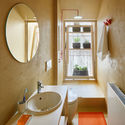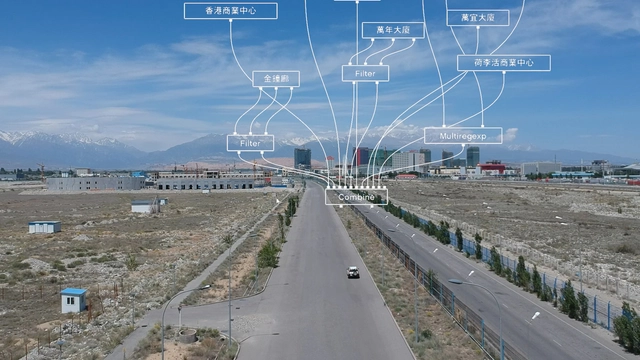
Since 2008, ArchDaily’s core mission has been to provide inspiration, tools, and knowledge to architecture lovers around the world. Central to this democratization of architectural knowledge has been our extensive projects library, where buildings around the world, in all shapes and sizes, are showcased and made available for all to see. We have always worked to make sure this vast database is as accessible as possible, allowing you to filter categories, countries, architects, years, and products. Today, we are proud to announce our latest feature: you can now search for ArchDaily projects by color!
https://www.archdaily.com/920019/filter-archdaily-projects-by-colorNiall Patrick Walsh
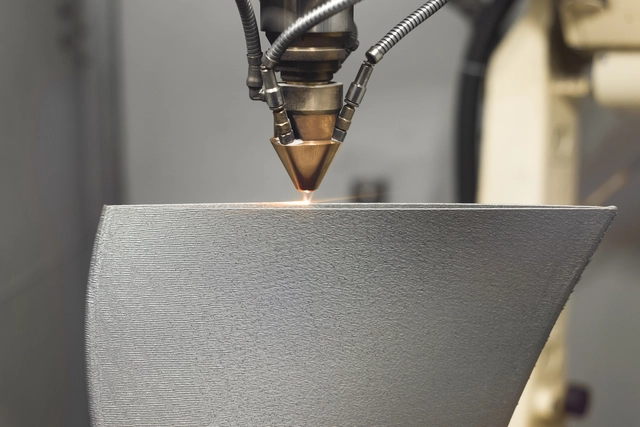
This is all quite recent: less than a year ago, a French family became the first in the world to live in a 3D printed house. Short of 20 years, this seemed like a distant dream, this new technology has developed quickly, and it arises as a possible contribution to the housing crisis around the world.
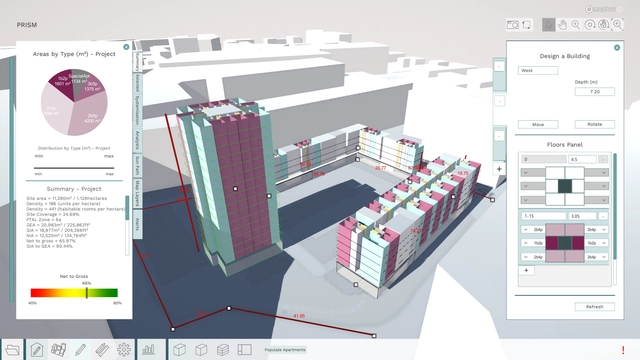
Squint/Opera, BIG, and UNStudio have collaborated in the design of Hyperform, a revolutionary data-driven design tool that allows architects across the world to collaborate in augmented reality. The tool allows designers to immerse themselves in a virtual 3D environment, where site images, maps, data, and 3D models can be uploaded, viewed and altered through collaboration.
https://www.archdaily.com/919404/big-unstudio-and-squint-opera-launch-ar-design-toolNiall Patrick Walsh
The Archiboo Web Awards, now in their fourth year, are the only awards to highlight and celebrate the creative use of technology to communicate great architecture.
Organised by architecture platform, Archiboo, the awards recognise outstanding digital performers from engaging content and impactful design to those pushing the boundaries with the latest technologies.
Judged by a panel of experts, the 2018 awards saw amazing growth and recognition by the architectural community attracting entries from some of the world’s most respected practices and web designers.
The awards party will take place in September 2019 during the London Design Festival.
When you start to consider implementing the BIM (Building Information Modeling) methodology, whether as an independent professional or as a construction firm, it's necessary to take into account three key aspects: the technology, the process, and the people who bring it all together. In this article, we will address the key points in every one of these three aspects in order to give you insight into how to best start using BIM.
A technological innovation is revolutionizing one of the oldest professions in the world. Augmented reality has just broken onto the scene and has already been transforming civil construction. The changes are seen not only in designing and modeling, but also in building. Augmented reality benefits the entire construction team: engineers, designers, architects, project managers and service providers.
Unlike virtual reality, which creates a totally new and independent environment of the real world, augmented reality includes virtual elements that interact with what already exists. It is thus possible to combine virtual architectural designs with the reality of the construction site, increasing efficiency and accuracy, reducing the occurrence of errors and saving time, money and resources.
Although the ability to install home automation in a practical way is associated with new projects, it is possible to adapt previously built buildings in a relatively simple way. In both small and large renovations projects these systems can deliver automated features that responds to the requirements and needs of its users. They can also improve the habitability and comfort of its spaces, increase their security and promote long-term energy and money savings. So, what considerations must be taken into account in order to transform an regular architecture project into an "intelligent" one?
Imagine light fixtures that act as Bluetooth beacons, allowing smartphones to help visitors find their way around a building. Imagine a lighting system which can pinpoint the location of people and physical assets within the building. Imagine an automation system which can use occupancy data and personal preferences to orchestrate an optimized and personalized building environment.
https://www.archdaily.com/912394/illuminating-the-future-how-bluetooth-mesh-will-fundamentally-change-lighting-systemsDavid Hakimi
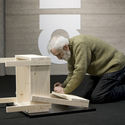
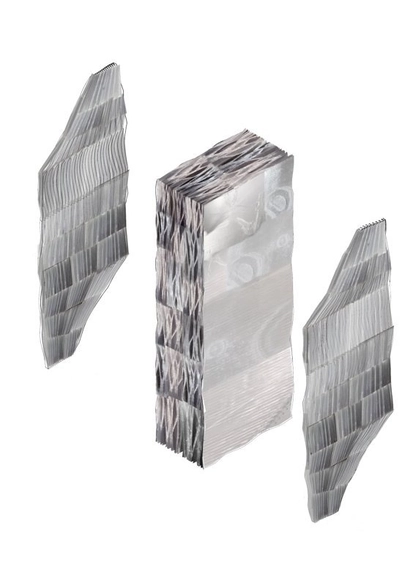
A sturdy featherweight table? Sounds... contrary to reason. But this contradiction was the very impetus for the design. Created for a research center that’s pushing the boundaries of design and manufacturing using technology and science, the designers--AIRLab, in collaboration with DManD-- sought to dematerialise the typical structure of a table, creating a sense of instability with the visual counterpoint of a solid surface.
If you're looking to upgrade your standard architecture presentation, SENTIO VR's tutorials can be very useful. They allow you to accurately use Revit, SketchUp, V-ray, 3Ds Max, Lumion and Cinema4D to create 360 renders and perform virtual reality experiences, with both technical and visual advice.
A professional networking platform has been launched aimed at connecting early-career architects in the USA. Ticco admits architects with between 2 and 15 years of experience, with the goal of sharing smart design ideas for the future of the built environment. Developed by Katie Rispoli Keaotamai over a one-and-a-half-year timespan, the platform will now accept applications for its first 100 members until April, at a cost 31% lower than the fees paid for professional memberships.
Centered around dialogue, the platform offers access to ideas and opportunities that will positively shape the built environment, be it exchanging information, consulting on a project, or finding a new role in the profession.
https://www.archdaily.com/909489/networking-platform-aims-to-connect-and-kickstart-the-careers-of-young-architectsNiall Patrick Walsh
Carlo Ratti Associati has teamed up with Makr Shakr, the world’s leading producer of robotic bartending systems, to design a driverless robotic bar which “aims to propose new on-demand ways to enjoy leisure in cities.” GUIDO (Italian for “I drive”) features two mechanical arms with the ability to precisely prepare and serve drinks in seconds, mounted atop an autonomous vehicular platform.
Self-driving technology allows GUIDO to weave through the built environment, responding to bookings from a customer app. As orders are placed through the app, GUIDO sources the cocktail’s components from bottles stored on the counter, and prepares the drink on site. GUIDO’s system also performs ID age verification and supports paying via mobile phone.
https://www.archdaily.com/909466/carlo-ratti-associati-designs-self-driving-robotic-cafeNiall Patrick Walsh
The Cooper Union is to host a new exhibition showcasing the impact of technology on architectural drawing. “Drawing Codes: Experimental Protocols of Architectural Representation: Volume II” will examine how “emerging design and production technologies impact the ways in which architects engage with traditional practices of architectural drawing and how rules inform the ways the built environment is documented, analyzed, represented, and designed."
The exhibition will feature 24 experimental drawings by firms such as Aranda\Lasch, Höweler + Yoon, and Outpost Office. The artists were challenged by the curators to consider at least one concept that expands on the notion of “code” in design and representation. A strict set of rules was enforced, including black and white media, and limiting the drawing to two dimensions.
Home automation, or Domotics, is a set of technologies applied to a residence to control lighting, climate, entertainment systems, and appliances. Its systems allow for efficient management of energy consumption, security, accessibility, and the general comfort of the building, becoming an important issue to consider when designing, building, and living.
Domotic systems are based on the collection of data by sensors, which are then processed to issue precise orders to the executors, varying the environmental quality of each enclosure according to the needs of the user. The pace of current life and the technological advances we have experienced in recent years have led to new ways of living, motivating the design of homes and more human, multifunctional and flexible buildings. What was once a luxury is now a feasible and effective solution for all types of projects.
In this article, we've compiled a collection of smart homes where domotics have been used.
This article was originally published by Jude Fulton on Medium under the title "Why Architects are Super Well-Suited for Startups". You can see the original post here.
Courtesy of Zaha Hadid Architects. ImageOne Thousand Museum high-rise residential building in Miami, Florida, will feature a curving exoskeleton finished with glass fiber-reinforced concrete.
When it comes to building a bridge, what prevents it from having the most enduring and sustainable life span? What is its worst enemy? The answer is, simply, the bridge itself—its own weight.
Built with today’s construction processes, bridges and buildings are so overly massed with energy and material that they’re inherently unsustainable. While concrete is quite literally one of the foundations of modern construction, it’s not the best building material. It’s sensitive to pollution. It cracks, stains, and collapses in reaction to rain and carbon dioxide. It’s a dead weight: Take San Francisco’s sinking, leaning Millennium Tower as an example.
Modern, smart construction can and will do better. A convergent set of technologies will soon radically change how the construction industry builds and what it builds with.
The digital platform rocagallery.com, a project from Roca, aims to be a reference point for design and architecture to news and thought, with more than 30 international writers and content updated every week.