Our cities, vulnerable by nature and design, have generated the biggest challenge that humankind has to face. With the vast majority of the population expected to settle in urban agglomerations, rapid urbanization is going to raise the issue of adaptability with future social, environmental, technological and economic transformations.
In fact, the main problematic of the decade questions how our cities will cope with fast-changing factors. It also looks into the main aspects to consider in order to ensure long-term growth. In this article, we highlight major points that help future-proof our cities and create a livable, inclusive and competitive fabric that adapts to any unexpected future transformation.
Now more than ever, architecture is in need of innovation. The pandemic has made us fundamentally rethink the functioning of our cities, public spaces, buildings, and homes. Meanwhile, the recent Black Lives Matter and racial justice protests have us questioning architecture’s complicity in broader socioeconomic issues. These challenges are pressing, and we cannot put off changing architecture any longer.
Videos
Peter Eisenman, Patrik Schumacher, and Alisa Andrasek among the speakers that participated at Digital Futures. Image Courtesy of Digital Futures
Like most functions in recent months, this year’s Digital FUTURES, which is held annually since 2011 at Tongji University in Shanghai, had to move online due to the pandemic. The organizers took this as an opportunity to give the event a global dimension, turning the festival into what they rightfully call the most significant worldwide event for architectural education ever staged, with a 24/7 display of workshops, lectures and panel discussions involving some of the most prominent architects and educators. Here is an overview of the festival, together with a selection of lectures from Digital FUTURES World.
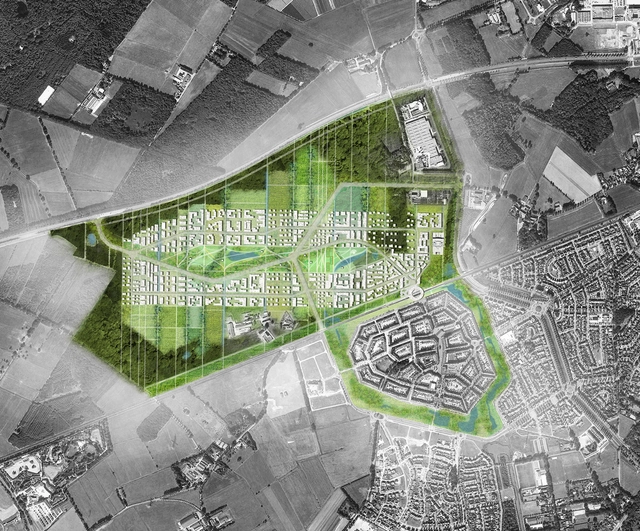
Brainport Smart District, Helmond, NL. . Image Courtesy of UNStudio
By 2025, Frost and Sullivan, a market research company, has predicted that there will be at least 26 fully-fledged major smart cities around the world. While some still think that as our cities get more intelligent, they will resemble sci-fi futuristic movies, the reality is that the quality of life in these cities will drastically improve. Cities are set to become more efficient with better services. Nevertheless, before reaching these ideals, let us go back on the process itself, and evaluate the challenges that we might face.
Because the concept of smart cities is still very new, with rare finalized and implemented projects, the topic is still unclear. Although big titles and strategies are well defined, the on-ground application is still uncertain, giving us the opportunity to question its planning process. In fact, how can we go wrong when designing smart cities? What key element are we failing to address in the planning phase?
While not all plastics are being recycled, even the ones that display the recycling sign, the global plastic waste problem is nowhere close to being resolved. Recycling, generally determined by factors like demand, legislations, and economy, takes on arguably around 20% of the annual production of plastics, leaving a large quantity unattended, doomed to last forever in our environment. In addition, competing with newly-produced materials, recycled plastics need to meet standards of quality and price, and undergo a sustainable, efficient, and economically viable transformation.
ROGP or Rejects of Glass & Plastics Technology is an innovative approach that repurposes plastics, once labeled as non-recyclable materials due to technical complexity or economy-related issues.
Strelka Institute's 2020 Summer program has invited Delft University and Politecnico di Milano professor Filippo Santoni de Sio’s to give a lecture about keeping control of technology which is more and more intelligent and autonomous.
Our future is full of robots and artificial intelligence. Intelligent systems like the ones we already have in our smartphones assess our health, make financial transactions, take strategic decisions and actions in warfare, drive our cars, and more. Some people dream of intelligent systems that will perfectly match our desires and needs, be beneficial for everybody, and make us happier, healthier, richer, and smarter. Others fear intelligent systems will turn against us, make us unhappy and unemployed, damage us, enslave us, and dehumanize us (if not kill us). Which scenario will eventually be realised crucially depends on the question of whether we as a society will be able to control the direction of future technological development.
https://www.archdaily.com/943415/meaningful-control-humans-over-intelligent-technologies-with-filippo-santoni-de-sioStrelka Institute
Architects don’t make buildings. Architects make drawings of buildings. But of course, someone has to make the building. The construction industry is one of the largest economic sectors and we all interact with the built environment on a daily basis, but the actual work of getting a building from drawing to structure has barely evolved over the decades. While the rest of the world has moved into Industry 4.0, the construction sector has not kept pace. Architecture has begun to embrace some digitalization. After all, not many of us work with mylar on drafting tables anymore. So with the architecture industry’s everlasting link to the construction industry, will the latter pick up some new technological tricks by association? And when it does, how will that change the role of the architect?
Smart homes, the Internet of Things, and contactless technology have become an indelible part of the architecture and interior design industries, with automated lighting, smart HVAC units, and speakers like Alexa or Google Home becoming a principal part of the modern upper middle class home. As new devices and competing systems are continually released, we list some of the most popular home technologies developed by Lutron, alongside tips for how to integrate and choose among them.
https://www.archdaily.com/941241/how-to-design-a-smart-and-contactless-homeLilly Cao
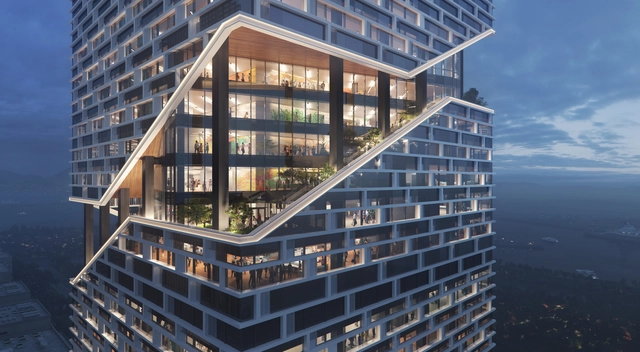
NBBJ has been selected to design the new Vivo headquarters, introducing the next generation of work environments that integrates nature, health, and equal access to amenities. Located in Shenzhen’s Bao’an district, the 32-story spiraling tower highlights an innovative design that embraces the urban-coastal site and reflects the company’s values. Construction began in May 2020 and is scheduled for completion by fall 2025.
Videos
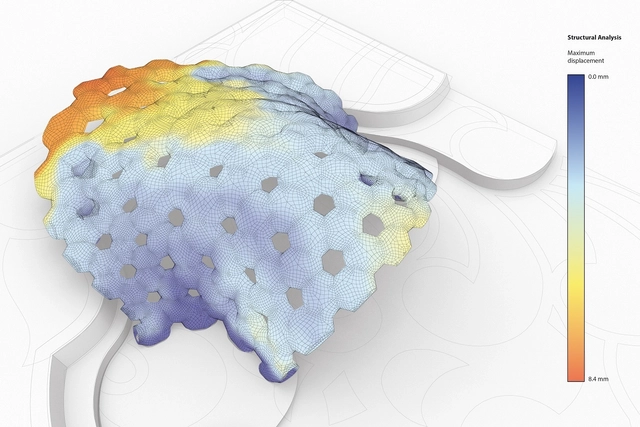
Análises estruturais. Image Cortesia de Oliver Krieg
When someone mentions architecture visualization, most immediately think of sketches, computational renderings, and drawings. This connection occurs because we almost always associate visualization with picturing a project that is not yet built, either for the validation of aesthetic and functional decisions or to represent the idea to a client, who is often unfamiliar with technical drawings. Yet in addition to considering superficial elements such as materials, plans, textures, and colors, when carrying out a project, the architect needs to be aware of technical issues that are invisible to the naked eye, which may directly influence the project.
The author gained a grasp for innovative architectural materials and their application while working for architects such as Rick Joy, whose Mountain House in Tucson, Arizona, employed rammed-earth walls. (Creative commons/Flickr user designmilk)
There is a slide I like to show at the beginning of the architecture courses I teach that provides an overview of the last hundred years or so in design and technology. In the left column, a car from the beginning of the 20th Century (a Ford Model T) is poised over a contemporary car (a Tesla). The middle column contains a similar juxtaposition, showing a WWI-era biplane and a modern-day stealth fighter (an F-117A). In the right column, Walter Gropius’s 1926 Bauhaus Dessau building is seen next to an up-to-date urban mixed-use building. The punch line, of course, is that the two buildings—separated by roughly 100 years—look basically the same, whereas the cars and planes separated by the same timespan seem worlds apart. What is the reason for this?
We are on the cusp of the second great age of space exploration.
Outer space has always captured the imaginations of the public. New advances in technology (including comet landings, the Orion Spacecraft, and large scale social experiments leading to exploration of Mars) mean that outer space is no longer a place only astronauts will get to experience – but something you and I can experience within our lifetimes
The General Motors Technical Center fascinates with architecture filled with an abundance of light. Interior offices and showrooms evoke the impression of a calm overcast sky for a human environment and beauty. The campus designed by Eero Saarinen represents an influential icon of midcentury design. Susan Skarsgard's book "Where Today Meets Tomorrow" opens intriguing perspectives to the origin of the American landmark.
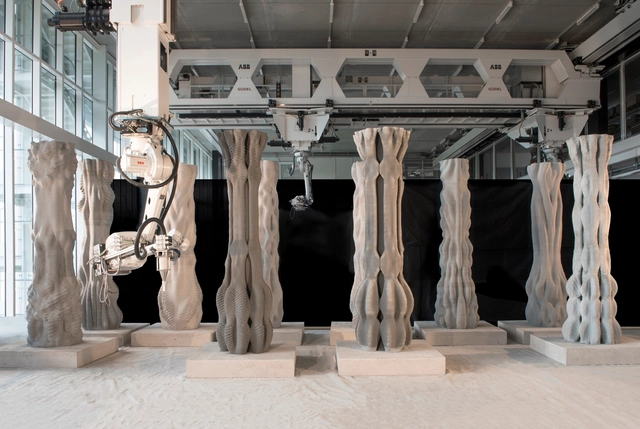
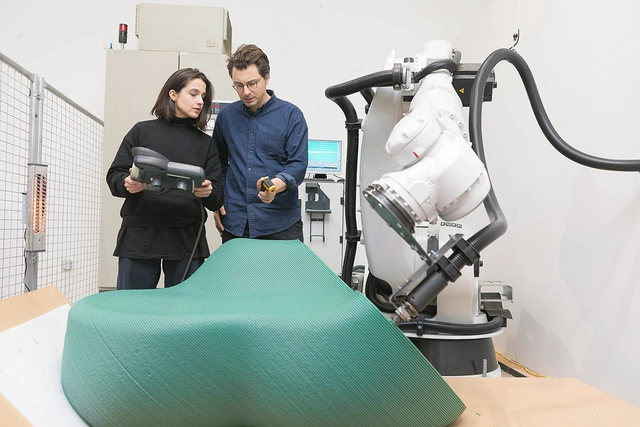
A couple of years ago, digital fabrication was making headlines regularly, promising to drastically change the architecture practice. The revolution in architecture might not have arrived yet, but research projects, experiments and the dedication of several architects and universities already opened a new realm of possibilities for architectural expression. Therefore, it seems appropriate to give an overview of the impact the technology had so far within the architecture practice. This article covers the different types of processes within the field and the projects that experiment with them, with the scope of reframing the architectural potential of digital fabrication.
AI in the architecture industry has provoked much debate in recent years - yet it seems like very few of us know exactly what it is or why it has created this storm of emotions. There are professionals researching AI who know more about the field than I do, but I have hands-on experience using AI and algorithms in my design over the past 10 years through various projects. This is one of the challenges that our field faces. How can we make practical use of these new tools?
Dissociating architecture from furniture is almost impossible. As Le Corbusier parking contemporary cars in his project photos suggests, the objects that decorate a domestic space demonstrate the wealth and lifestyle of the user who lives in it. From the moment that humanity ceased to be nomadic, there has existed records of rudimentary furniture. In an excavated site dating from 3,100 to 2,500 BCE, a variety of stone furniture was discovered, from cabinets and beds to stone shelves and seats. Since these early examples, furniture has always been used to express ideas: be it the exclusive and luxurious furniture of Ancient Egypt, meant to demonstrate the power and wealth of the empire, to the functional and simplified designs of the Bauhaus, meant to reconstruct rationality in the world, studying the evolution of furniture design is instrumental to understanding architectural styles.
Nowadays, the advancement of technology and the internet has made changes develop faster and faster, making them even more difficult to assimilate and follow. Furniture follows this trend, be it in the way of designing, manufacturing, or even selling products. Below, we outline some ways in which technology has impacted this field:
The digitization of production and technological resources linked to the development of increasingly sophisticated tools has a direct impact on the contemporary practice of architecture and urbanism. Thinking about cities and buildings based on the digital assumption provides great possibilities for innovation in terms of design, optimization of resources and processes, improvement in performance and monitoring the maintenance of work, among other aspects. Many tools are already available, ranging from artificial intelligence to 3D printing, through various devices that change the paradigms of the profession and demand a new attitude when designing.
The use of artificial intelligence (AI) is based on the idea of optimizing, streamlining and expanding the reach of the most diverse operations. Their systems are programmed to identify patterns and carry out predictions, decisions, and ultimately perform and actions with speed and accuracy. The efficiency of the models depends on the quantity and quality of the data, which can be obtained by applications, cameras, and sensors. In the urban context, technology based on the use of artificial intelligence has been seen as a way to improve the management of cities, especially those that are denser and have larger footprints.









.jpg?1596025638 "© Charbel Tannous, courtesy of Development Inc.")

Ai_Qing_Courtesy_of_KPF.jpg?1592356426&format=webp&width=640&height=580)