In the past 30 days, Amazon searches for touchless products such as automatic shoe cover dispensers, touch free soap dispensers, contactless thermometers, and hand free faucets have increased by up to 2000%. As anxieties over the spread of COVID-19 through contact or shared surfaces continue to plague the general population, these technologies offer a potential solution for offices or organizations struggling to stay operational without increasing the risk of viral spread.
The impact of COVID-19 has disrupted daily life as we know it and caused a shift in technology trends within the workplace. Over recent weeks, businesses have found themselves hastily searching for and implementing temporary solutions to help them deliver an uninterrupted service. These solutions are highlighting the significant role technology plays in helping companies adapt to the situation and maintain daily operations. But what happens once the crisis is over?
In this episode of Inspiring Design podcast series, host Rashan Senanayake and ArchDaily's CEO David Basulto discuss in detail the story of Archdaily, from its start as a local platform to the word's most visited architecture website, going more in-depth about the mission behind the website and its goals for the future. The interview covers the transformative role of technology within the architecture field, as David Basulto contemplates on the major innovation triggers in design and the shifting scope of the profession within society.
In the highly connected world we live in, technology influences and impacts almost every decision we make. Big Data, Artificial Intelligence (AI), and the Internet of Things (IoT) have enhanced our connected world and helped us understand more about the spaces we inhabit. Aside from the smart homes and smart appliances we have become accustomed to, the modern day office is being redesigned and reprogrammed to include a variety of smart technology systems. The goal of these systems is to put our offices to work and empower businesses to better understand their design decisions, real estate investments, and most importantly- their own employees.
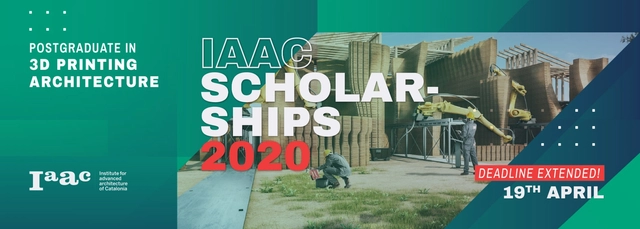
IAAC is glad to announce to you that the OTF:3D Printing Architecture program has extended the application deadline until April 19th for 2 FULL scholarships for the next academic year. This is a great opportunity to learn about novel technologies for sustainable design and construction, thanks to additive manufacturing.
In this article, we tap into how AI could be augmenting, changing design processes, and how architects and other professionals are responding and incorporating these technological advancements into their design work. What kind of innovation can AI bring to this industry, and what has been experimented with so far? This selection of projects can help form an opinion on the architectural application of AI.
The “smart” movement has gained traction and generated buzz over the last decade, but despite all of the hype, what even is a smart city? The dogma behind its loose definition and goals has been rather elusive, and while some claim that it relies on digitization of all urban aspects, others argue an increase in personal data collection is the sole method for improving urban lifestyles. One person’s digital paradise is perhaps another person’s technophobic doomsday. Extending beyond the mere definition of these cities, what role do designers and researchers play in creating this loosely identified futuristic landscape? As Corbusier once defined a home as a machine for living, it’s time to redefine how our buildings shed their passive exteriors and become the true machines for working that they were always meant to be.
In 2018, the UN released an article stating that 55% of the world’s population already lived in urban areas, predicting that by 2050 this percentage would reach 68%. This trend toward greater urbanization carries with it several implications regarding environmental degradation and social inequality. According to National Geographic, urban growth increases air pollution, endangers animal populations, promotes the loss of urban tree cover, and heightens the likelihood of environmental catastrophes such as flash flooding. These health hazards and catastrophic phenomena may be more likely to impact poorer populations, as larger cities tend to demonstrate higher rates of economic inequality and uncontrolled growth tends to produce unequal distributions of space, services, and opportunities.
To mitigate these negative effects of urbanization, designers are increasingly prioritizing sustainability and the maximization of available space – allowing more people to occupy less space with a smaller footprint.
Craftmanship is back. Following a century of mass production and industrial development, crafts are starting to be revalued and reinterpreted. A new sensitivity towards raw materials, the recovery of local techniques and the defense of small-scale trade are a few of the claims that this comeback represents. Materials such as earth and ceramics, textiles and wood are being reinterpreted by designers, artists, and architects around the world, in search of both their own style and the representation of collective nostalgia.
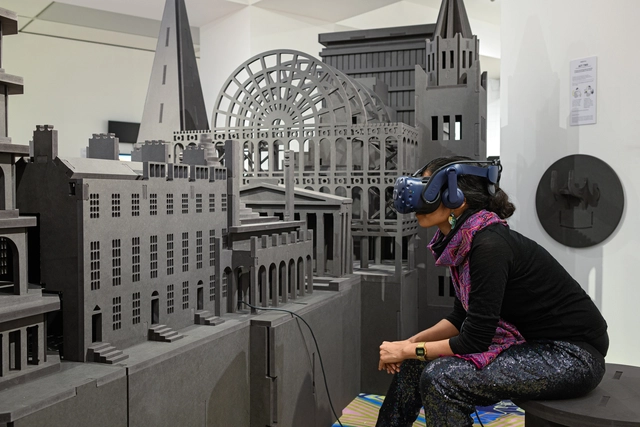
Freestyle by Space Popular at RIBA Architecture Gallery @ Francis Ware
RIBA presents its first virtual reality (VR) exhibition, exploring moments across 500 years of aesthetics in architecture.
What makes a style? How is a style collectively agreed upon and shared? Drawing on RIBA’s world-class collections, Space Popular uses virtual reality to examine styles of the past and to consider the technology’s impact on contemporary spaces and buildings. Historic artefacts will be displayed alongside newly commissioned content, inviting you to enter a beguiling virtual universe to experience how popular cultures and technologies impact architecture and its style evolution.
MVRDV in collaboration with Airbus, Bauhaus Luftfahrt, ETH Zurich, and Systra, is developing a plan for the future of Urban Air Mobility (UAM). The investigation tackles the integration of “flying vehicles” into our urban environments and envisions a comprehensive mobility concept.
The global climate crisis is not only forcing us to rethink architectural design and the way we live, but also the materials and products that shape our built environment, starting from its origins and manufacture. Toward this end, wood has become an efficient alternative to steel and concrete – materials with high levels of embodied energy – and has led to some important architectural innovations that may culminate in its more widespread use worldwide.
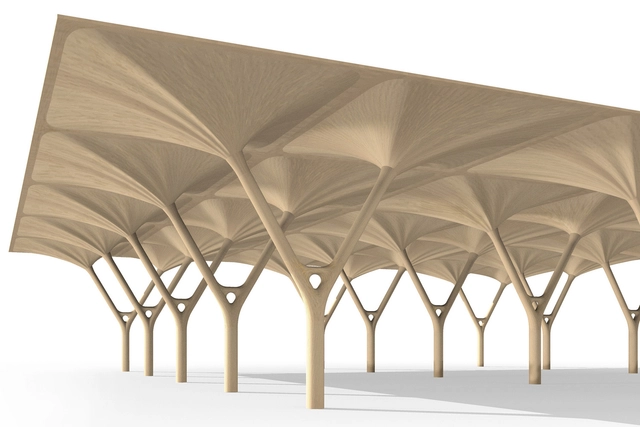
Inspired by the efficiency of nature, Strong By Form has developed Woodflow, a technology that generates wood panels of high structural performance, "combining the optimization of their shape, the orientation of their fibers in relation to the direction of stressors, and the variation in their density for better compression or traction," as explained by its creators. In addition, all of their products are developed in a controlled process through parametric software, integrated into BIM platforms and CNC manufacturing systems.
We talked with Jorge Christie, CTO of Strong By Form, to learn more about this new technology.
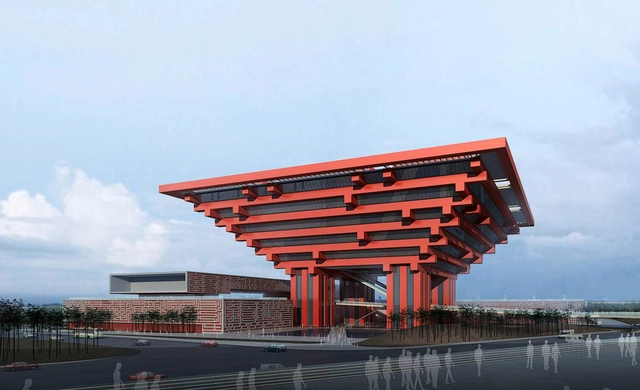
While technology and construction have progressed rapidly in recent years, allowing structures to be built taller and faster than ever, remnants of colossal ancient monuments remind us that construction techniques from as long as hundreds of years ago had enormous merit as well. In fact, many of the innovations of antiquity serve as foundations of modern construction, with the Roman invention of concrete serving as a cogent example. Other essential ancient construction techniques, such as the arch and the dome, are now often considered stylistic flourishes, with designs like the Met Opera House reinterpreting classical typologies in a modern context. Yet perhaps the most relevant reinterpretations of ancient construction today are those that do so in the interest of sustainability, renouncing high-energy modern construction methods in favor of older, more natural techniques.
https://www.archdaily.com/933010/the-future-of-the-old-how-ancient-construction-techniques-are-being-updatedLilly Cao
With the amount of information and technology we currently have, whether from academic research or from the manufacturers of construction products themselves, there is very little room for empiricism and experimentation when we design on the most diverse scales. Even worse is when design specification misconceptions can pose huge costs and headaches. However, long before construction and occupancy of the building, it is possible to clearly understand how the construction will function thermally, its photovoltaic power generation capacity, and even how much power will be required to cool and/or heat it. There are software, tools and applications that allow you to quantify all these design decisions to avoid errors, extra costs, unnecessary waste generation, and ensure the efficiency of all materials applied.
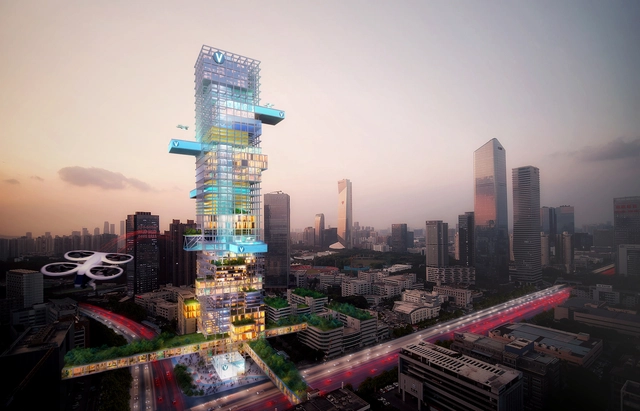
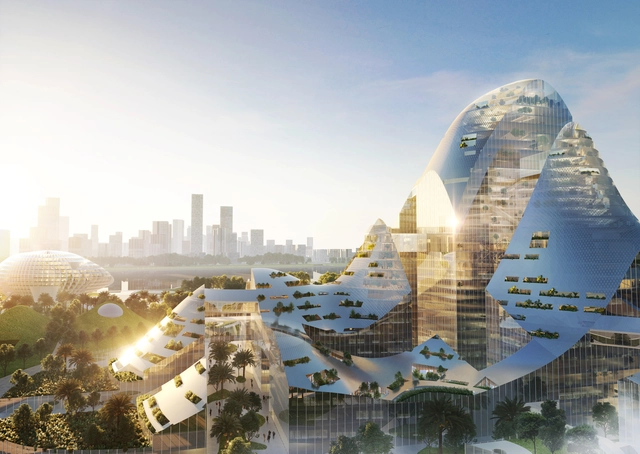
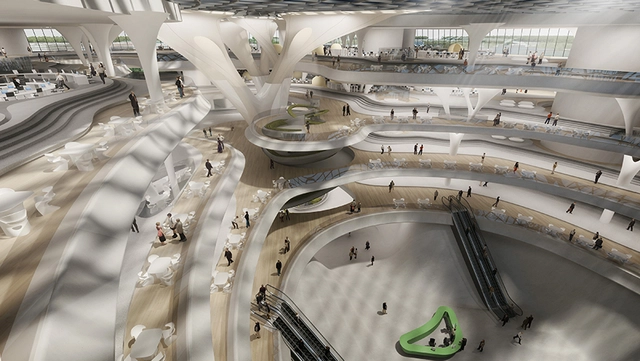
MVRDV has just released images of the firm’s competition entry for the next Tencent headquarters campus, located in Qianhai Bay, Shenzhen. Highlighting the green potential of Smart CityTechnology, the project imagines an entire urban district including offices, homes for Tencent employees, commercial units, public amenities, schools, and a conference center.
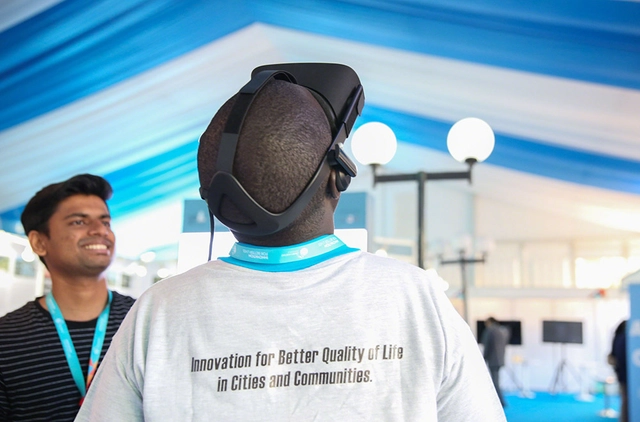
The MIT India Initiative is a not-for-profit effort of students and alumni from the Massachusetts Institute of Technology to delve into pressing problems in novel, challenging contexts, and tackle these with technology and design. This is a first of its kind workshop where mentors from multiple departments of MIT and Harvard will work with talented participants chosen from all across India to design solutions to some of today's most pressing challenges.
The Un-habitat or the United Nations agency for human settlements and sustainable urban development, whose primary focus is to deal with the challenges of rapid urbanization, has been developing innovative approaches in the urban design field, in order to encourage the active participation especially of children, women and underprivileged individuals.
Designing well, creating beautiful buildings as well as boosting revenue and making your firm profitable rank highly among the goals of architects around the world today. What are the most effective tools architects need to achieve those goals? At a recent Technology and Architecture panel, successful architects discussed answers to that very question. When you watch this panel discussion, recorded live at the prestigious Pritzker Military Museum and Library, you will hear inspiring approaches to design, coordination and project management - rooted in BIM and enabled by the design flexibility found in ARCHICAD.




.jpg?1587954414 "NUBO Kindergarten / PAL Design. Image © Michelle Young, Amy Piddington")



.jpg?1586440310&format=webp&width=640&height=580)

.jpg?1583859382&format=webp&width=640&height=580)




.jpg?1583859382)
.jpg?1582834753&format=webp&width=640&height=580)
.jpg?1582834791 "via Shutterstock")



.jpg?1582834753)