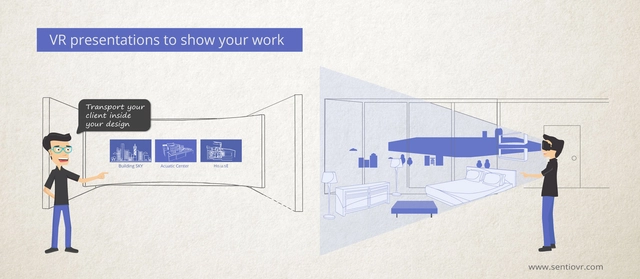
A portfolio is the standard way for architects to show their work and their style, process and brand. Over the last decade, portfolios have evolved from paper to digital, primarily because it is more time and cost efficient to maintain a digital portfolio and keep it up-to-date.
Within the realm of digital portfolios, choices can range between an app, a PDF, to a web-hosted portfolio. Architects usually choose to use JPEGs as the main element of the portfolio and may add text or other digital media like video or audio.
However, with the increasing use of new technologies like Virtual Reality to present architectural work - there is a strong case for creating and maintaining an immersive VR portfolio of your work to differentiate your brand in front of your audience and embrace newer technologies.
https://www.archdaily.com/888524/how-to-create-an-architecture-portfolio-in-virtual-realityChaitanya Ravi
Architecture is a collaborative discipline, where a day’s work often involves sharing files, emails, and information in the process of completing a project. Whether you are entering competitions, applying for jobs or getting your work published, being tech-savvy when sharing files is a crucial skill to have—while failing to be tech-savvy can lead to frustrated colleagues, wasted time, and even missed career opportunities.
To help you ensure you're not making any mistakes, we’ve put together a few pointers you can use to share work online more efficiently and effectively.
An integral and substantial component of TAW 2018, the International Scientific Conference aims at exploring contemporary research activities and design tactics that deal with the topic of co-habitation from different perspectives and within different fields of interest, directly or indirectly related to architecture, city, and landscape. Through the observation of different tactics adopted by researchers and professionals, the hope is to identify new research and design trajectories.
The International Scientific Conference aims at exploring contemporary research activities and design tactics that deal with the topic of co-habitation from different perspectives and within different fields of interest, directly or indirectly related to architecture, city, and landscape.
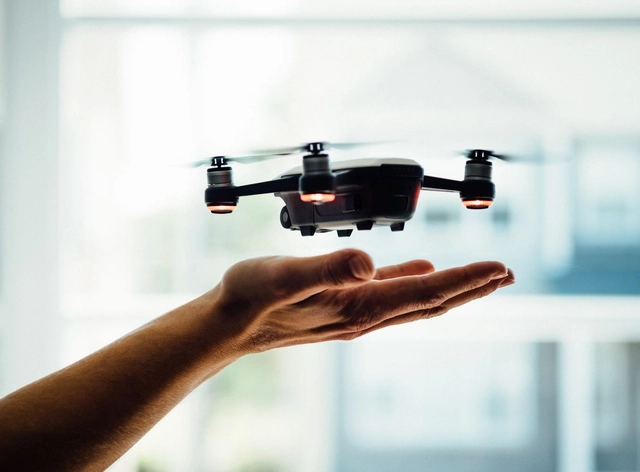
Small unmanned aerial vehicles (UAVs), commonly called drones, are gaining in popularity not only among the general public and consumers, but also among professionals working in the AEC industry. We’ve seen ambitious predictions for the use of drones on construction sites, as transportation vehicles and marketing tools.
While this new technology, like 3D printing and robotic fabrication in general, promises to revolutionize the architectural profession, it is useful to know to what extent its practical application can affect the way archipreneurs work. It seems that, for now, drones have great potentials when it comes to several aspects of the profession.
https://www.archdaily.com/886743/how-drones-can-be-used-in-architecture-and-how-to-use-them-without-breaking-the-lawLidija Grozdanic for Archipreneur.com
Even with tech like virtual reality, augmented reality, 3D printing, computational design and robotics already reshaping architecture practice, the design community is just scratching the surface of the potential of new technologies. Designers who recognize this and invest in building skills and expertise to maximize the use of these tools in the future will inherently become better architects, and position themselves for entirely new career paths as our profession evolves. It is a uniquely exciting moment for architecture to advance through innovative use of technology. Even just a decade ago, designers with interests in both architecture and technology were essentially required to pursue one or the other. Now, with architecture beginning to harness the power of cutting-edge technologies, these fields are no longer mutually exclusive. Rather than choose a preferred path, today’s architects are encouraged to embrace technology to become sought-out talent.
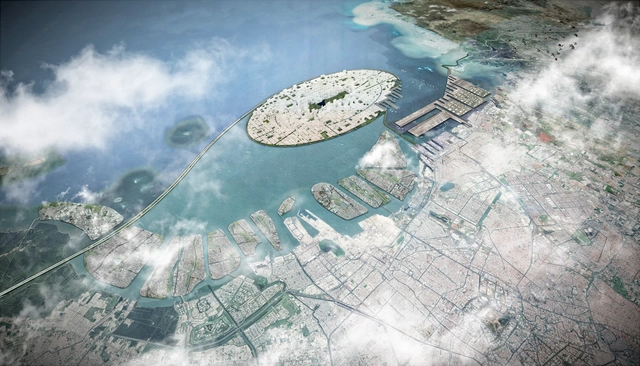
Due to rapid population and economic growth, Indonesia is facing issues such as land subsidence and rising sea levels. To combat these problems and more, SHAU Architects created a master plan for the Jakarta Jaya Foundation focused on large-scale land reclamation to integrate green space. By addressing impending challenges, SHAU Architects proposal, Jakarta Jaya: the Green Manhattan, won a Smart Cities prize at the World Architecture Festival 2017.
Videos
Songdo in South Korea is perhaps the most complete realization yet of the smart city concept. Image Courtesy of Cisco
In order to be successful in any field, professionals must stay ahead of the curve—though in architecture nowadays, technology progresses so quickly that it’s difficult to be on the front lines. Virtual Reality can transport architects and their clients into unbuilt designs and foreign lands. Smart Cities implement a network of information and communication technologies to conserve resources and simplify everyday life. Responsive Design will give buildings the ability to be an extension of the human body by sensing occupants' needs and responding to them.
With the technology boom, if architects want to stay in the game they will inevitably have to work alongside not only techies but scientists too. Neuroscientist Colin Ellard works “at the intersection of psychology and architectural and urban design.” In his book, Places of the Heart: The Psychogeography of Everyday Life, Ellard examines how our technology-based world impacts our emotions and behavior to try to figure out what kind of world we should strive to create.
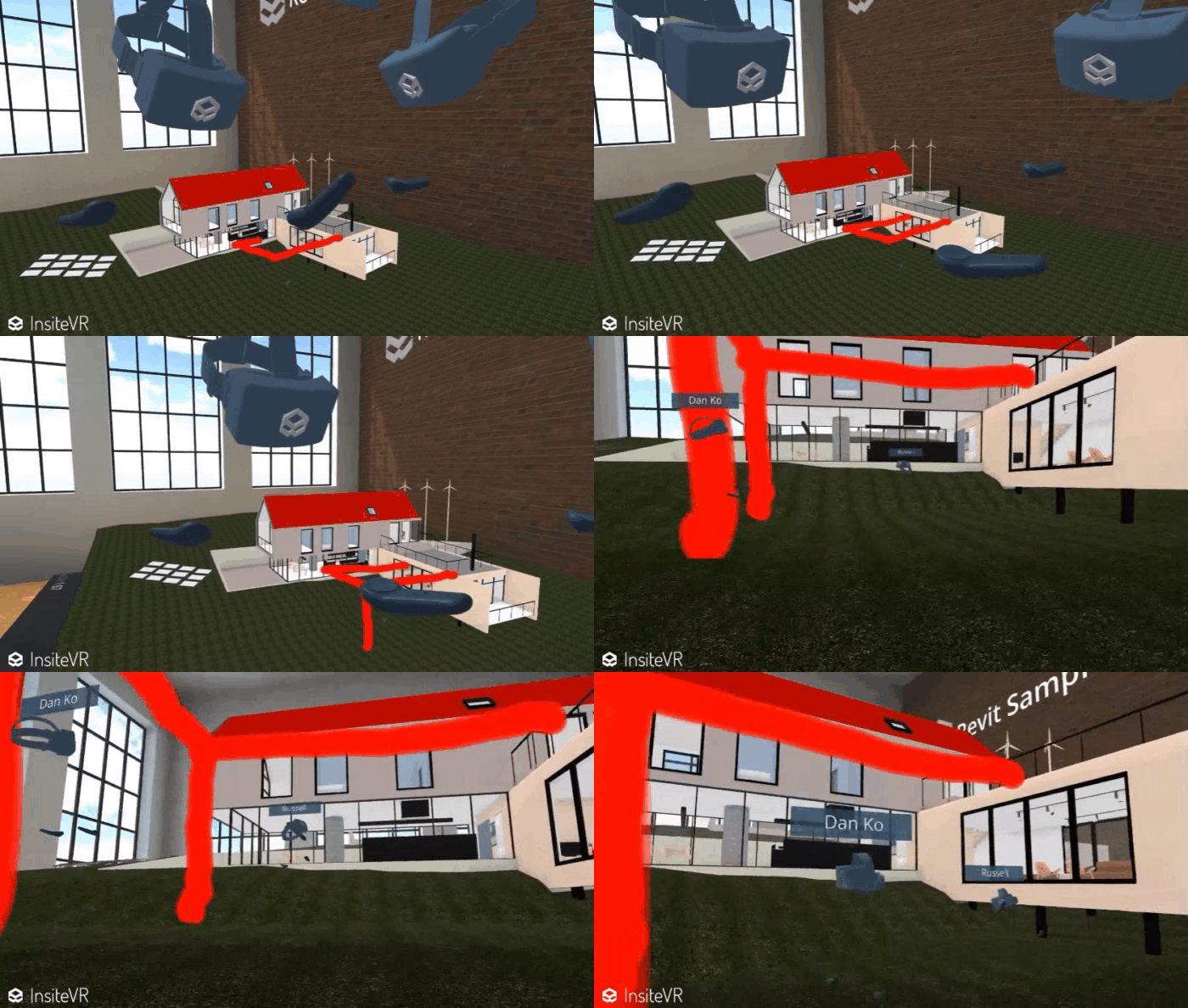
Successful communication is fundamental to the success of any project, especially in architecture and construction. The industry has moved from 2D drawings to 3D BIM with programs like SketchUp and Revit. At times, there is still a struggle to communicate in and through these 3D models. From InsiteVR comes a solution.
The newest innovation by InsiteVR is like screen sharing but for 3D. As virtual reality gets more affordable and portable, collaborative VR has the potential to be as common as a screen share meeting. Together or in separate parts of the world, InsiteVR meetings allow architecture and construction professionals to review their models in virtual reality. Features include a designated lead presenter, built in voice, collaborative markups, synchronized cloud models, scale and mute controls.
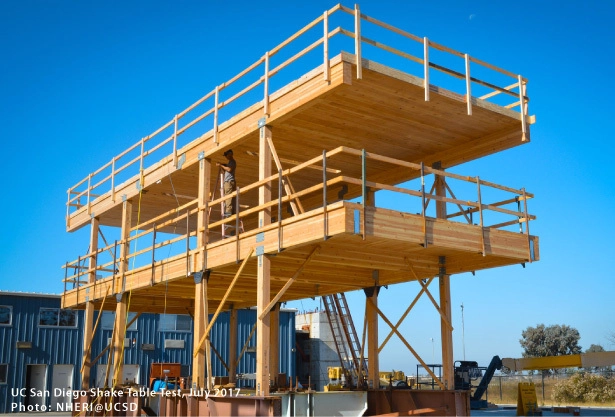
At a time when engineers, designers, and builders must find solutions for a resource-constrained environment, new wood technology, materials, and science are accelerating efforts to enhance safety and structural performance.
International Building Code requires all building systems, regardless of materials used, to perform to the same level of health and safety standards. These codes have long recognized wood’s performance capabilities and allow its use in a wide range of low- to mid-rise residential and non-residential building types. Moreover, wood often surpasses steel and concrete in terms of strength, durability, fire safety, seismic performance, and sustainability – among other qualities.
Amazon’s open call for bids for its new headquarters, HQ2, closed last month, but in the months leading up to the final decision in 2018, analysts will continue to flood the internet with detailed studies evaluating who they believe should be the winner. In other words, the mirror-mirror-on-the-wall game for cities is just starting to warm up.
Earlier, ArchDailyreported on the data-driven approach adopted by Moody’s Analytics which projected Austin, TX as the winner. But another study by IT education company Thinkful now points towards Washington DC as the city most likely to make the cut. So what makes Washington DC the fairest of them all? Read on to see how data science techniques helped analysts at Thinkful with this prediction, what kind of approach they adopted, and how it differed from that of Moody’s Analytics.
https://www.archdaily.com/882976/amazon-hq2-study-by-data-science-experts-names-washington-dc-as-ideal-host-cityZoya Gul Hasan
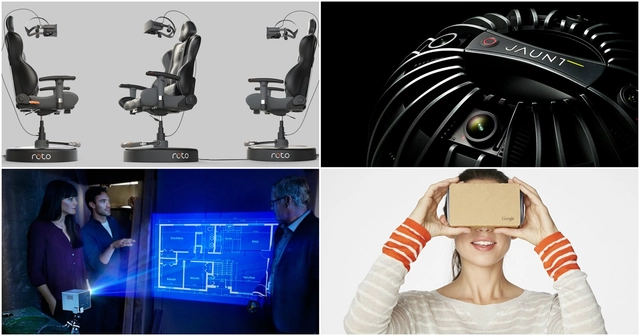
2017 has been an amazing year in the field of technology for architects. Most excitingly, we’ve seen an exponential growth in our fascination with virtual and augmented reality. Various types of innovative technology for architects are rolled out so regularly, we find our architect clients wondering where to begin.
Which of the many tech developments are merely gimmicks that will disappear as fast as they arrived, and which are here to stay, becoming permanent fixtures within professional practice? We’ve compiled a list of 10 pieces of technology for architects that will differentiate your firm from the competition in the studio and on the construction site.
Can architecture and design reverse climate change? Architect and founding partner of Stefano Boeri Architetti (SBA), Stefano Boeri believes it can. Boeri’s Vertical Forest, a project which marries the natural and urban spheres through biodiversity and reforestation, has already come to fruition in Milan, is currently under construction in Beijing, and soon to be constructed in Shanghai. (Watch the video to learn more about Boeri’s Vertical Forest projects.)
Recently we’ve written a fair amount about the state of architectural research. The general consensus appears to be that it lacks rigor and, even more importantly, is not grounded in good science. Steven J Orfield has some strong opinions about architectural research. He’s been conducting it—for architecture and design firms, as well as Fortune 500 companies—at his Minneapolis-based Orfield Laboratories for more than three decades now. Late last week I talked to him about why architects are afraid of science, how he would introduce it into the schools, and his work in the field of universal design.
Designing Buildings Wiki have joined forces with BSRIA to launch a new competition looking for fresh and innovative ideas in response to the question: How can tomorrow's challenges be met by today's buildings?
A city is smart when it makes better decisions, and there are only two types of decision: strategic and tactical. Strategic decisions determine the right thing to do. Tactical decisions choose the right way to do it. SMART technology is not smart technology if it causes us as citizens to confuse strategy with tactics. In other words, there are many decisions about the operation of a city that we may delegate happily to technology. But there are questions of governance, of determining our fate, of deciding what is the right thing to do as populace, that if we delegate—we abdicate. “To govern is to choose,” John F. Kennedy once said.
If I were to have believed the many consultants and emissaries of large technology companies that came to see me when I was the Chief Urban Designer of New York City, the SMART city they promised me was a place where the traffic lights always turned green and the elevator doors always awaited our arrival. They promised a city that would anticipate our needs at every turn, given tantalizing form in the recent present of our connected personal devices and the apps that seem to know us better than we know ourselves. Now, with the advent of the internet of things on the near horizon, we are set to make SMART cities a reality. Imagine the awesome power of an entire city synchronized to our taste and movement!
Videos
Courtesy of Guillermo Fernandez-Abascal, Urtzi Grau and Daniel Perlin
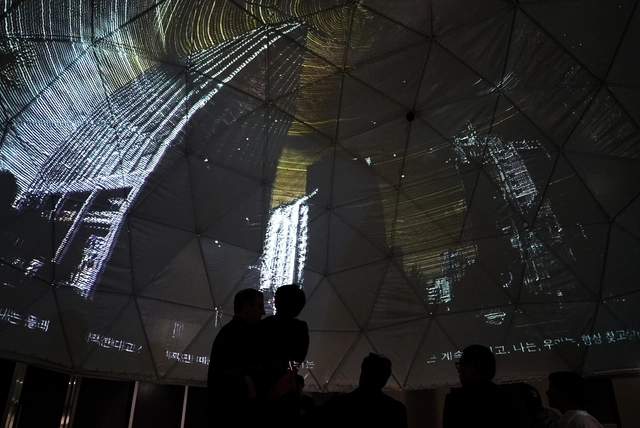
Driver Less Vision, an installation at the 2017 Seoul Biennale of Architecture and Urbanism by Guillermo Fernandez-Abascal, Urtzi Grau and Daniel Perlin, is an immersive 3D video experience comprised of spatial scans of Seoul, projected into a dome and paired with surround sound. The supporting audio is the internal monologue of a personified autonomous vehicle, driving through the streets of a future Seoul, Korea. The installation transports vierers to the front seat of the autonomous vehicle, providing a new perspective of traversing cities—through the car’s point of view.
Apple’s fall 2017 Keynote, which at the time of publication is already underway, is the first ever event held at the new Steve Jobs Theater right at the center of the Apple Headquarters in Cupertino. Every year at its fall keynotes, the company makes it major product announcements—last year, they announced the iPhone 7, Apple Watch series 2, and Airpods. This year, most of the hype surrounded the expected announcement of the iPhone 8 (and iPhone X!).
However, we have also been eagerly awaiting the announcement of updates to iOS 11 and its release to the public. First introduced on June 5, 2017 at the Worldwide Developers Conference, the discussion of the new Apple operating system will feature user updates but also developer updates—and it's here where we find the true star of the show: ARKit, the back-end tools which developers can use to create next-generation augmented reality (AR) apps for users of iOS 11 devices.
https://www.archdaily.com/879403/the-real-star-of-the-apple-keynote-arkit-augmented-reality-technologyAD Editorial Team


.jpg?1517601640)





.jpg?1511989021&format=webp&width=640&height=580)