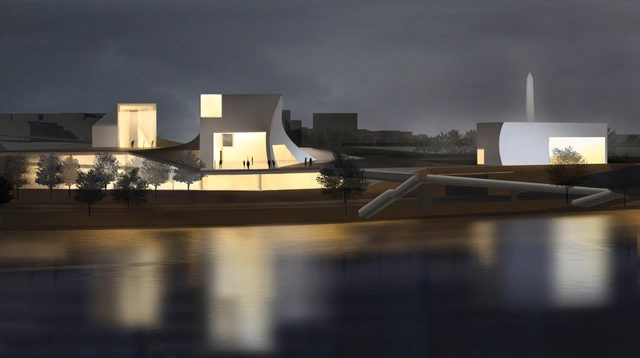
Steven Holl Architects have received the go-ahead for a new pedestrian bridge linking their own Kennedy Center Expansion to the Potomac riverfront. Originally proposed by Kennedy Center architect Edward Durell Stone in 1959, the idea to extend the lively arts program from the center along the waterfront is set to increase the vitality of both existing programs. The bridge approval was one of the last remaining piece of the project, with the majority of the Kennedy Center Expansion already under construction.
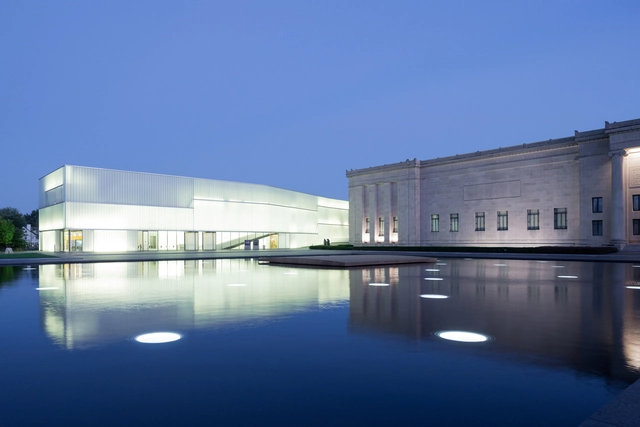
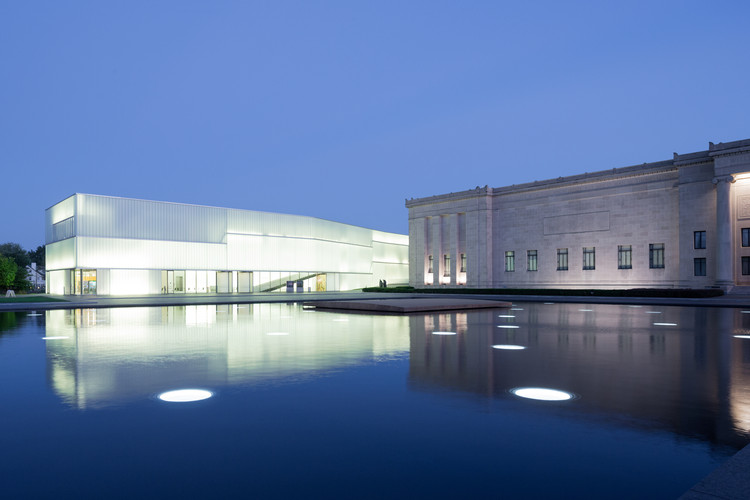
Today marks the ninth anniversary of the opening of the Steven Holl Architect’s Bloch Building for the Nelson-Atkins Museum of Art. To commemorate the occasion, Iwan Baan has visited the project to show how it has settled into place on the museum’s campus, become an architectural icon for Kansas City, and continues to shine as one of Steven Holl's most recognized projects.
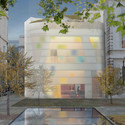
Exterior, Day View. Image Courtesy of Steven Holl Architects
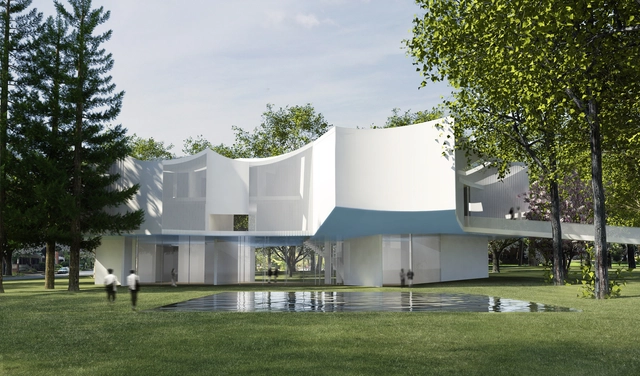
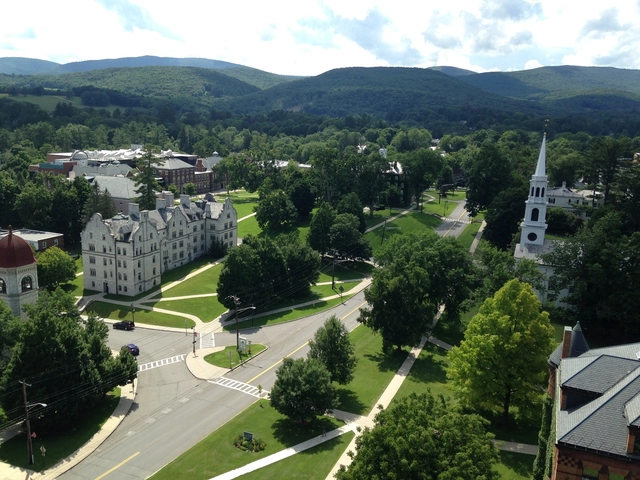
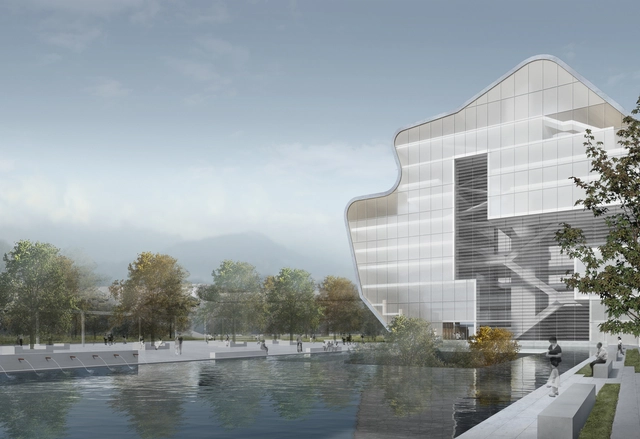
Steven Holl Architects has been commissioned by Franklin & Marshall College, in Lancaster, Pennsylvania, for a new Visual Arts Building and Quad, promoting a future for the arts on the campus. Inspired by the trees that will surround the building, Holl calls the project a “pavilion on the park,” in a design compared to a kite in the trees. The project was announced by President Daniel R. Porterfield during F&M’s commencement on May 7, after Holl and Senior Partner Chris McVoy presented their concept to the College Board of Trustees two days prior.
Steven Holl Architects (SHA) has been commissioned by Williams College to complete a program and masterplan study for the Williams College Department of Art and Museum of Art (WCMA). "The Master Plan aims to evaluate programming and space needs toward the determination of a program to catalyze the engagement of students, faculty and visitors with the visual arts," says SHA.
After talking with nearly 30 distinct groups of students, faculty and museum staff, SHA defined five main goals in which the study is based on:
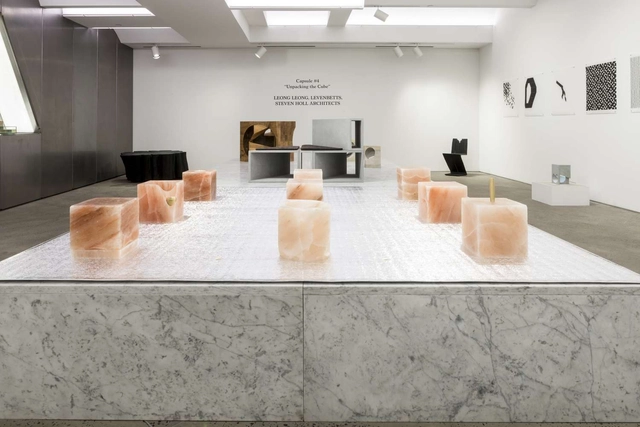
CHAMBER is pleased to announce their first exhibition in 2016, Capsule #4: “Unpacking The Cube,” presenting works by LEONG LEONG, LEVENBETTS, and STEVEN HOLL ARCHITECTS. The exhibition will open Thursday, January 21st.
Referencing architecture's intimate past with the arts, Steven Holl argues the importance of collaborating with other artists for the benefit of the profession alongside choreographer and dancer Jessica Lang. "If we don't intermix the arts and collaborate, we are going to close... The arts are going to fade out individually. We are stronger together."
Watch the Spirit of Space video above to learn more about Holl and Lang's collaboration - Dance with Architecture - that uses dance to explore the four types of architecture: "under the ground, in the ground, on the ground, and over the ground."
Steven Holl Architects has unveiled their design for a new public library and museum in a developing area of Shenzhen, China. With the goal of creating a public space with two buildings connected below the plaza level, the massing concept is based on a three-part removal. While the design did win the most votes from the jury in the overall competition, city officials chose a different scheme to continue with.
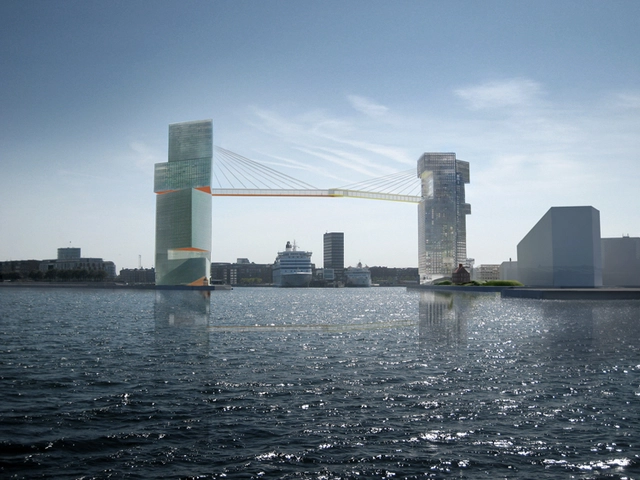
Steven Holl Architects (SHA) is preparing to break ground on a project that is nearly eight years in the making. The ambitious "Copenhagen Gate" development will break ground next year, as Fast Company reports, after being initially held back in 2008. It will feature two asymmetrical towers - Gate L and Gate M - connected by a (terrifying) pedestrian skybridge suspended 213 feet above the harbor.
A consortium led by Sergey Skuratov Architects (SSA) was selected over Steven Holl Architects and Miralles Tagliabue EMBT to develop a concept for a multi use complex on Moscow's Sofiyskaya Embankment. Planned for a historic area on the Moscow-river bank, opposite Kremlin, the winning concept calls for three "longitudinal units with roofs of different types and heights" that produce a "picturesque outline" and offers a "gentle transition" from the "old buildings to new."
Read on for a glimpse of the winning and two runner-up proposals.
It is no secret that, in the last 10 years, a majority of the big budget construction projects have been centered in newly emerging world markets like China. But now, the markets may be turning. Steven Holl Architects is a strong example of this trend: with the groundbreaking of the Glassell School of Art in Houston on the 15th, the firm now has 8 projects under construction in the western world - 7 in the United States, and one in the United Kingdom. Owing to the steady strengthening of the US dollar over recent years, clients seem to be investing in high ticket architecture once again. After completing projects abroad such as the Sliced Porosity Block in Chengdu, and Nanjing’s Sifang Art Museum, Holl will now be working in cities like Richmond, Iowa City, New York and London.
Holl’s recent work also reflects a change in design scale. In projects such as the Linked Hybrid in Beijing and the Vanke Center/Horizontal Skyscraper in Shenzhen, design began at the urban level, resulting in inward-looking superstructures. In the firm’s return to the west, projects are usually designed as an object or extension of an existing environment, such as in their expansion project for the Kennedy Center. The reduced sense of scale is also evident in the square-footage in some of their recent designs, including a residence to be built at under 1000 square feet.
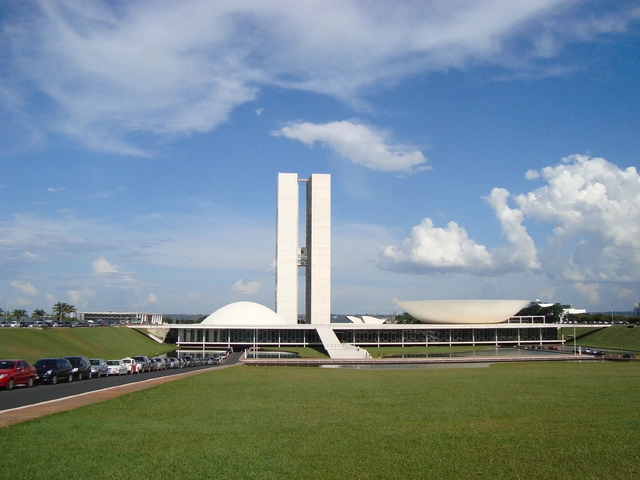
In June, the Department of State’s Bureau of Overseas Buildings Operations (OBO) released a call for architects interested in designing a New Embassy Compound (NEC) in Brasília, Brazil's federal capital. Of the 48 firms deemed eligible to compete, 6 practices have been shortlisted to move on to the second and final stage of the international competition.
In It’s A Wonderful Life the film’s protagonist George Bailey, facing a crisis of faith, is visited by his guardian angel, and shown an alternate reality where he doesn’t exist. The experience gives meaning to George’s life, showing him his own importance to others. With the increasing scale of design competitions these days, architectural “could-have-beens” are piling up in record numbers, and just as George Bailey's sense of self was restored by seeing his alternate reality, hypothesizing about alternative outcomes in architecture is a chance to reflect on our current architectural moment.
Today marks the one-year-anniversary of the opening of Phase 3 of the High Line. While New Yorkers and urbanists the world over have lauded the success of this industrial-utility-turned-urban-oasis, the park and the slew of other urban improvements it has inspired almost happened very differently. Although we have come to know and love the High Line of Diller Scofidio + Renfro and James Corner Field Operations, in the original ideas competition four finalists were chosen and the alternatives show stark contrasts in how things might have shaped up.
On this key date for one of the most crucial designs of this generation, we decided to look back at some of the most important competitions of the last century to see how things might have been different.
In the latest video on architecture and urbanism from 32BNY, Steven Holl and his associate Dimitra Tsachrelia sit down with Elia Zenghelis, a founding partner at OMA and former lecturer at the Architectural Association in London. After forty-five years in architecture, Zenghelis has come to a series of conclusions, including a long-standing belief that men obstruct the design potential of their female colleagues, creating an imbalance in the professional landscape. "Women are much better architects than men," proclaims Zenghelis, former professor to Steven Holl, Rem Koolhaas and Zaha Hadid (as well as a former collaborator of the latter two). Sitting in Holl's New York office, Zenghelis argues that women have a certain intuition that proves essential to the creation of great design. "It's men that dominate the scene - something has to happen," he says.
A community of 750 units interconnected on, below and above ground, Steven Holl Architects"Linked Hybrid" was an intentional shift away from the monolithic, monofuctional skyscraper. The entire complex was designed to be a "three-dimensional urban space" that encouraged chance encounters beyond the ground floor.
In this video architect Steven Holl talks about the building's design and how it has performed, seven years after the building's completion.
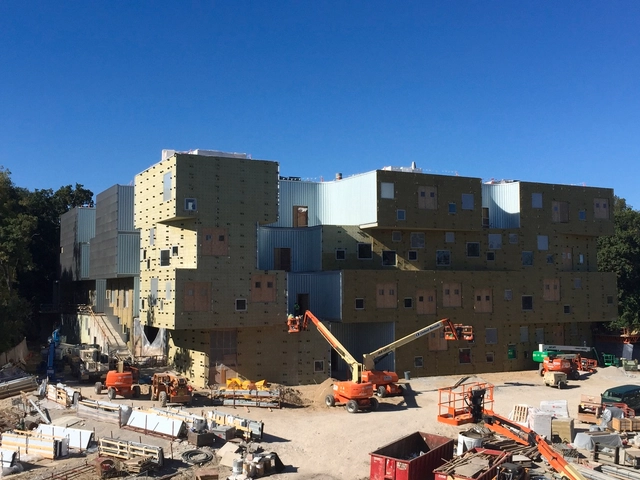
Steven Holl Architects has broken ground on the “Ex of In House,” an experimental guest house and artist studio in Rhinebeck, New York. The house is part of the firms’ ongoing research project “Explorations of In,” which questions “current clichés of architectural language and commercial practice” and explores spatial language, energy, openness and public space.
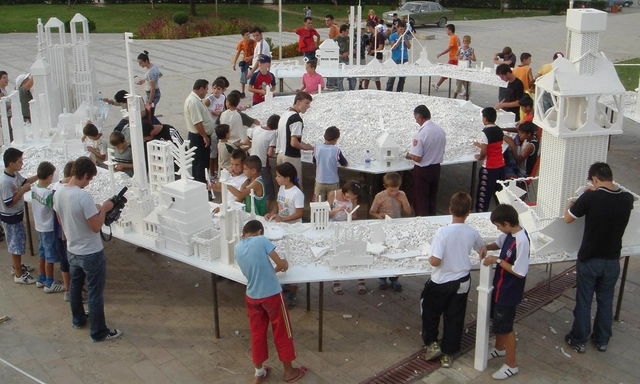
As part of their series of "Panorama" exhibits being presented this year, Friends Of The High Line have announced that they will host Olafur Eliasson's installation, "The Collectivity Project" from May 29th until September 30th this year on the High Line at West 30th Street. The installation, which has previously traveled to Tirana, Oslo, and Copenhagen, features an interactive imaginary cityscape made of over two tons of white LEGO bricks, with visitors invited to design, build and rebuild new structures as they see fit.
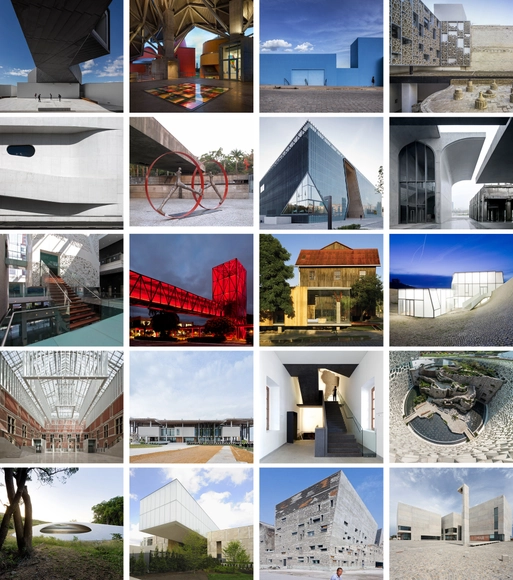
In honor of International Museum Day we’ve collected twenty compelling museum projects. In this round up you’ll find a truly global selection; from Wang Shu's Ningbo Historic Museum in China and Tod Williams + Billie Tsien's Barnes Foundationin Philadelphia to Monoblock's Contemporary Art Museumin Buenos Aires, see all of our editors’ favorites after the break!
https://www.archdaily.com/631994/archdaily-editors-select-20-more-amazing-21st-century-museumsAD Editorial Team