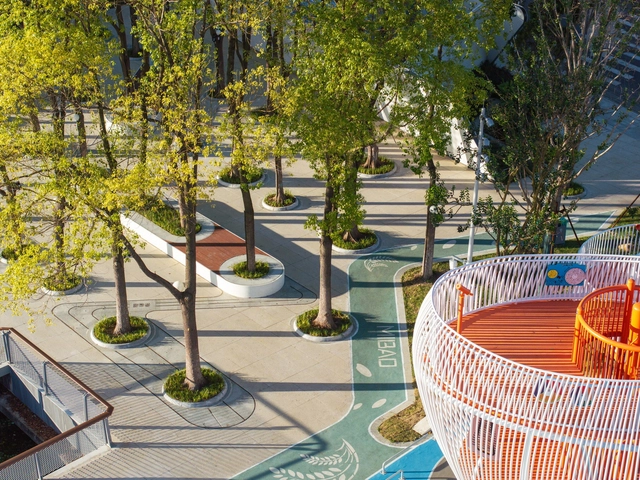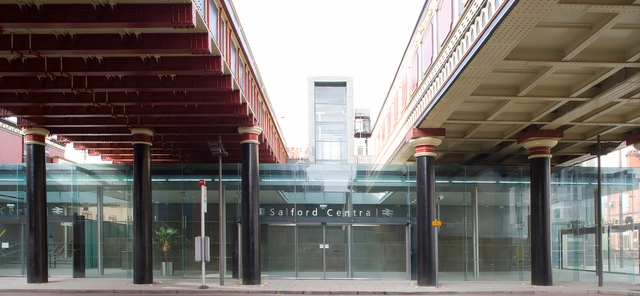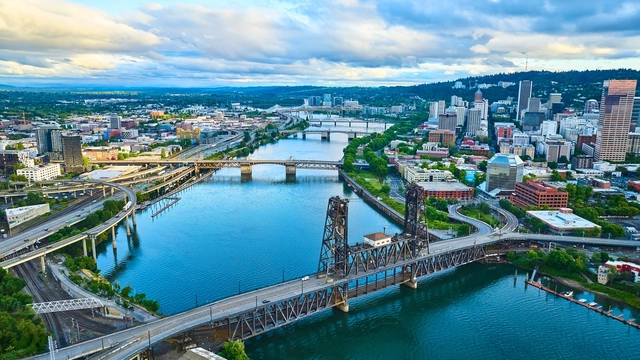
Evolving theories in urban design seek to reframe how cities are built and experienced. As theory and practice grows more empathetic towards the needs of its diverse stakeholders, queer urban design brings a broad and holistic shift to understanding identity and community in publicly inhabited spaces. The approach challenges traditional - often rigid - methods of city planning by applying principles of queer theory to reflect fluidity and interconnectedness. On occasion of Pride Month 2024, ArchDaily investigates the building blocks of "queer urban design" to influence city planning practices to be more inclusive.
Alarming cases of climate disasters are a constant presence in world news. Last month's floods in southern Brazil gained special attention from heat waves and forest fires to droughts and cyclones. This tragedy, which left over half a million people homeless, was understood to be the result of a combination of factors, including human actions that have devastated ecosystems to create environmentally irresponsible cities.
In this context, the work of Beijing-based architect Kongjian Yu, founder of the landscape architecture firm Turenscape, has gained international visibility and recognition, which included receiving the 2023 Cornelia Hahn Oberlander International Landscape Architecture Prize (“Oberlander Prize”). His "sponge cities" concept, designed to address and prevent urban flooding in the face of accelerated climate change, was adopted as national policy in China in 2013. This approach prioritizes large-scale nature-based infrastructures such as wetlands, greenways, and parks.
In the mountain valleys of China’s Fujian Province, thousands of large, rammed earth fortresses lay abandoned. Once used for both defense and collective housing, the tulou typology is an integral part of the region’s cultural heritage, with 46 of them being recognized by UNESCO as World Heritage Sites. Despite this, the rural communities surrounding them have struggled to find new roles and purposes for these buildings. Going beyond the need for conservation, architect Xu Tiantian of DnA_Design and Architecture set out to develop and adapt this heritage to reintroduce it into community life. The Fujian Tulou | Adaptive Reuse project recently won the Gold Prize of Holcim Awards 2023 for Asia-Pacific, recognized for creating “an exemplary model for building conservation initiatives.”In a video interview for ArchDaily, Xu Tiantian discusses the principles that underpin this initiative and the potential outcomes of adaptive reuse in rural communities.
For cities, hosting an Olympic event represents both an honor, an important opportunity for growth, and a significant challenge. With over 200 nations taking part in the Games, the Olympics are the largest sporting competition in the world. Adapting the public and sporting infrastructure to accommodate this sudden influx of people and the scale of these events runs the risk of misunderstanding the cities’ needs after the closing ceremony, often producing “white elephants” that struggle to adapt to the rhythm and necessities of everyday urban life. Urban transformations are often cited as an advantage of hosting the Olympic Games, as cities are incentivized to invest in their traffic infrastructure, housing, and public spaces. One such example is the city of Paris, which introduced its first metro line on the occasion of hosting the second edition of the Olympic Games in 1900.
When it comes to the venues, however, the issue of adaptive reuse becomes a pressing one, as the architecture is challenged to find solutions to transform, accommodating thousands of people during the Olympics, then scaling down to become a financially sustainable part of a city’s sporting offering. Across the world, several Olympic venues have managed to extend their usability after the closing of the games, opening themselves to the local communities and welcoming a more diverse programming of sports and leisure events. While the high construction costs are often difficult to justify, these venues have become markers of local identity and attractive tourist attractions, extending their use decades after welcoming the Olympic crowds.
Republic Square in Ljubljana holds immense historical and symbolic significance for Slovenia. It is located in the historic center of the city and features a blend of buildings with different designs, scales, and dimensions, together with interconnected open spaces, passages, and underpasses. These elements form a multifunctional complex whose construction lasted more than 20 years and underwent several volumetric and programmatic reconfigurations. Visible from a distance and standing out above the Ursuline Church’s bell tower, two prominent office towers rise as part of this work designed by Edvard Ravnikar, the most prominent Slovenian architect of the second half of the 20th century.
Courtesy of SITELAB urban studio and Field Operations
SITELAB urban studio and Field Operations have revealed a design proposal to reimagine San Francisco’s iconic Powell Street. The street used to be one of the busiest pedestrian corridors in its district and a popular tourist attraction, with cable cars running up and down the street and connecting Union Square and Hallidie Plaza. Across the most popular three-block stretch, the storefronts have become mostly vacant. According to the San Francisco Chronicle, one of the reasons was the Covid pandemic, which led to a further decrease in tourism and in commercial activities. Now a new project led by designers SITELAB urban studio and Field Operations aims to revive the now underutilized transit corridor and to catalyze a renewed interest in the area.
Heatherwick Studio has unveiled the design of a new large-scale glass canopy to become one of the main attractions of Olympia, an ambitious regeneration project aimed at transforming the 138-year-old exhibition halls in London into a global culture and entertainment destination. Originally designed by Sir Henry Edward Coe, Olympia is set to offer visitors a wide range of venues and activities, including two hotels, over 30 restaurants, bars and eateries, a 4,400-capacity live music hall, a theater, and spaces for the Wetherby Performing Arts School, in addition to over 2.5 acres of accessible public spaces. The revival project is co-designed by Heatherwick Studio and SPPARC.
Stefano Boeri Architetti has been declared the winner of the international competition for the redevelopment of a former industrial site in downtown Bratislava. The project includes the transformation of one of the largest abandoned areas in the Slovak capital, with the aim of creating an active new central hub for the city, complete with parks and public spaces, residential units, and a variety of amenities. Stefano Boeri Architetti’s master plan proposal, titled “Urban Oasis,” has been appreciated by the jury for integrating familiar typologies, creating a “European matrix” of medium-density developments organized around accessible public spaces.
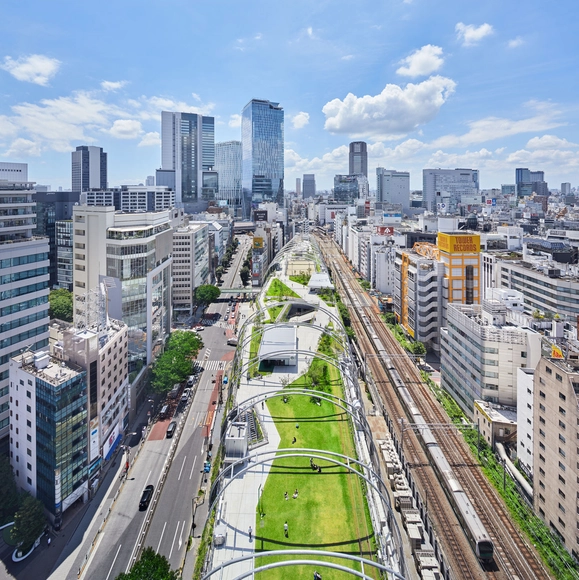
In the early 2000s, an abandoned rail line in Manhattan sat decaying - a memory from a time when freight trains traveled straight through the city. To most citizens, it was a site destined for demolition. However, a few visionary residents saw an opportunity in this neglected space and advocated to transform it into a public green space for the community. The success of the project seemed to spark a "High Line Effect", inspiring other American cities to pursue civic infrastructure on outdated railways, roadways, and industrial sites.
As dwellers of big cities, we tend to be dragged into a very fast-paced lifestyle. Surrounded by monumental buildings and infrastructure, we can easily lose sight of key spaces that connect us with our neighborhood and provide us with rare moments of peace and enjoyment. Appropriation of the environment we inhabit becomes an uncommon circumstance.
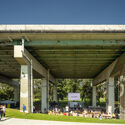
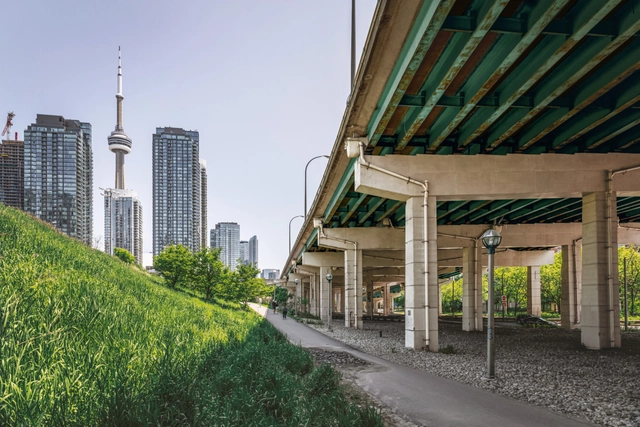
Urban infrastructure intended for city connectivity disrupts urban patterns and often leaves behind a series of spaces without a properly defined use. Fortunately, the notion of space beneath infrastructure is being redefined, as architects are generating public spaces nestled under flyovers, bridges, and other urban structures.
Formerly neglected spaces, overlooked or dismissed as mere leftovers of urban planning, are now transformed into dynamic environments for community engagement and artistic expression. Architects, city planners, and the users themselves are embracing the challenge of reclaiming forgotten or underutilized areas and developing innovative solutions, integrating greenery, art installations, and sustainable elements into the urban fabric.
The Harvard Graduate School of Design (Harvard GSD) has announced the Class of 2025 Loeb Fellows. Ten practitioners and activists from around the world have been selected to join the Loeb Fellowship program to expand their careers and advance their programs and initiatives focused on equity, resilience, and collective action.
The ten selected practitioners are mid-career professionals coming from diverse backgrounds. Each one has been recognized for initiating practices that are transforming public spaces and urban infrastructures, addressing public health concerns and environmental injustices, as well as housing needs and efforts to preserve the cultural, natural, and architectural heritage of diverse regions from all continents.
Courtesy of [applied] Foreign Affairs, Institute of Architecture, University of Applied Arts Vienna
Public Markets are complex cases that beautifully combine an engineering exploration with the instigation of a beneficial public function. In fact, it doesn't take much to designate an open and accessible commercial hub that would encourage commercial exchange and economic development for small or local businesses. All one needs is a lot and a sheltering roof. However, many designers and architects have chosen to take this exercise beyond the social level and into further material and technical exploration.
Powerhouse, Australia’s largest museum institution dedicated to applied arts design, and technology, has revealed the plans for a comprehensive restoration of its three sites located in Sydney, Australia, in addition to the opening of a new site in Parramatta in Western Sydney in 2025. The Powerhouse Ultimo site contains two heritage-listed buildings: the Ultimo Powerhouse and the Ultimo Post Office. The project for the renovation of this heritage location is led by a team of architects, Durbach Block Jaggers working in partnership with Architectus, Youssofzay + Hart, and landscape architects, Tyrell Studio.
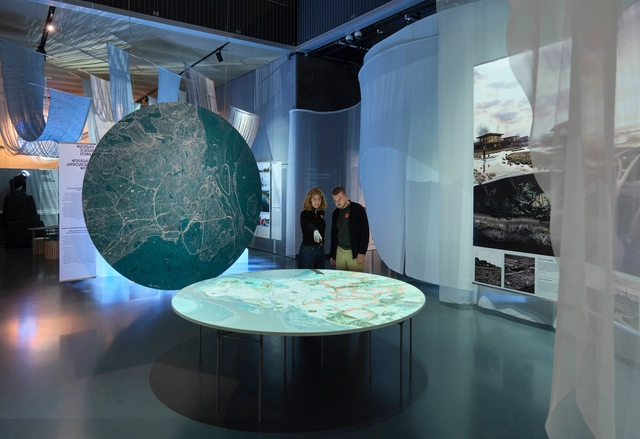
Architecture and Design Festival Concéntrico celebrates its 10th anniversary from 25 April to 1 May 2024 with an edition that aims to reflect on the impact of the annual festival upon the city of Logroño, Spain, as well as to consider how the city continues to evolve. Through installations, exhibitions, lectures, performances, workshops, and activities, Concéntrico proposes a reflection of the urban environment, welcoming architects and designers to intervene and challenge it while opening conversations about pressing matters.
While the official theme of the festival focused on the future of cities, the invited architects and designers took this suggestion further. Several overarching themes and subjects emerged during this year’s event, from the incorporation of concepts of time, an unusual element to be tacked through temporary installations, to the desire to engage more honestly with a wider public, to listen to their needs and create platforms where diverse perspectives can take center stage.
MASSLAB has just won the competition for the new roof of Bragança's Water Treatment Plant in Portugal. Integrating public use of this infrastructure, which until now only serves a functional purpose, the project showcases adding value to existing infrastructure by rethinking them. Blending architecture, landscaping, and urban design to transform this structure into a vibrant public space, MASSLAB seeks to change the perception of water treatment facilities in urban settings. By reimagining the roof as a livable infrastructure, the project transforms the purely functional roof into an engaging and integral part of the urban fabric.
From April 25 to May 1, 2024, Logroño hosts the tenth edition of Concéntrico, a celebration of urban innovation and transformation. This year, the festival explores the future of cities, incorporating new formats, engaging diverse audiences, and tackling urban challenges through the lens of time as a catalyst for change in design. Featuring 20 interventions and activities involving over 100 professionals from 17 countries, the program encompasses processes such as renaturalizing public spaces, reimagining urban structures, and integrating recycled materials from previous editions.
Additionally, collaborations with educational centers ensure a lasting impact beyond the festival, fostering new collective practices in public spaces. Special projects such as "The street in 10 years" or initiatives involving students and pupils from local schools and educational centers further enrich the festival's engagement with communities across Spain.
Social infrastructure encompasses the resources and services that allow the creation of communal bonds and social connections. Within the built environment, it manifests through public spaces like parks, libraries, and community centers alongside threshold spaces such as public transportation stops.
These public social spaces play a crucial role in strengthening communities and, in turn, their ability to respond to catastrophic climate-related events. They can provide physical shelter to the populations most vulnerable to these events and foster resilient networks of people who can more quickly recover. Given the escalating frequency of extreme weather events in the United States due to climate change and its social infrastructure inadequacies, examining public spaces as a critical tool for climate resilience becomes vital.