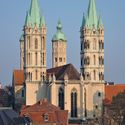
After carefully deliberating in their annual session, UNESCO's World Heritage Committee selected 19 new sites to inscribe on the World Heritage List in the city of Manama in Bahrain. Featuring 13 cultural sites such as Buddhist mountain monasteries in Korea, the industrial city of Ivrea in Italy, and the Caliphate city of Medina Azahara in Spain, alongside three natural sites and three mixed sites (classified as both cultural and natural heritage), the list now aggregates to 1092 sites in 167 countries.
From the historical Sultan Ahmed Mosque in Istanbul to the contemporary city of Brasilia orchestrated by Oscar Niemeyer, the World Heritage List has continuously exhibited varied examples of architecture and urban planning from different eras and movements from around the world. Amongst the new additions, there are several sites of religious importance, city organization, and natural conservation.
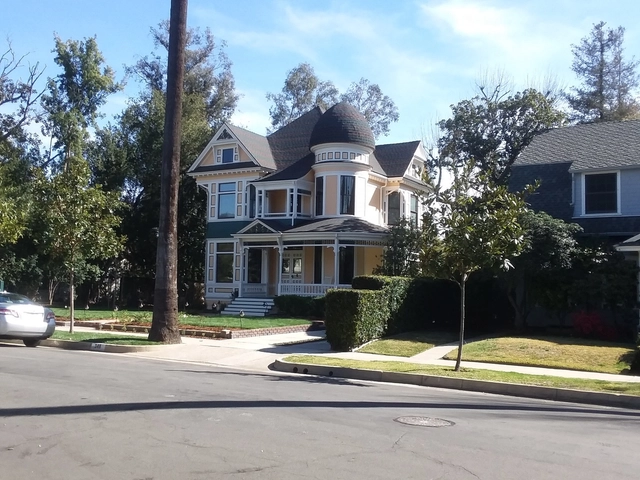
The Governor Markham Landmark District is one of the oldest neighborhoods in the City of Pasadena, and residences included in the District parallel Pasadena’s growth from incorporation as a city in 1886. Ninety-four percent of the homes were constructed between 1891 and 1933. This area became an official Landmark District in 2005 and was listed on the National Register of Historic Places in 2012, nominated by Pasadena Heritage.
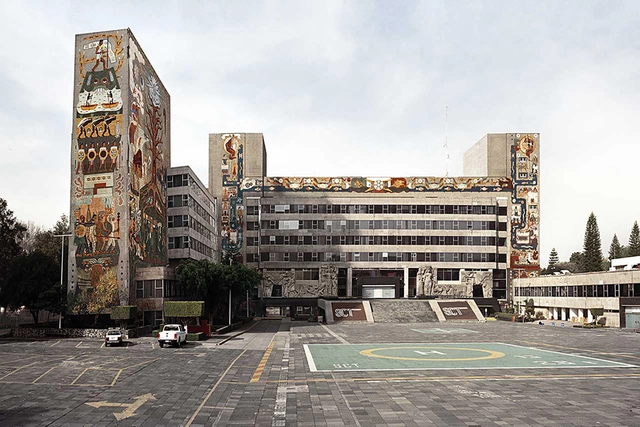
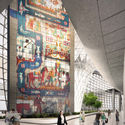
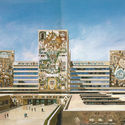
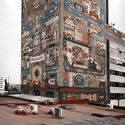
Centro SCOP in Mexico City was shuttered after a series of devastating earthquakes. A new exhibition proposes rehousing its historically significant murals. Image Courtesy of Pablo López Luz/ Archivo Diseño y Arquitectura
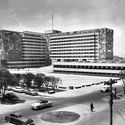
It’s a slate-gray day in Mexico City’s Colonia Narvarte neighborhood and mounting gusts signal imminent rain. Centro SCOP, a sprawling bureaucratic complex, rises sharply against this bleak backdrop. The building is a masterful, if not intimidating, example of Mexican Modernism, an H-shaped assemblage of muscular concrete volumes designed by architect Carlos Lazo, covered in an acre-and-a-half of vibrant mosaic murals.
At its peak, the building accommodated more than 3,000 workers for the Secretariat of Communications and Transportation (SCT). Today, save a security guard in its gatehouse, it is empty.
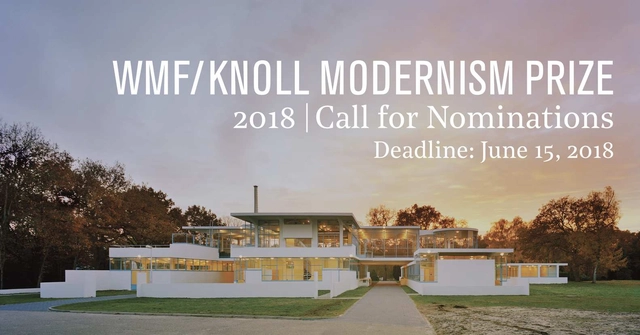
Nominations are now open for the 2018 World Monuments Fund/Knoll Modernism Prize. Celebrating its tenth anniversary, the prize recognizes architects or designers that have demonstrated innovative solutions to preserve or save threatened modern architecture.
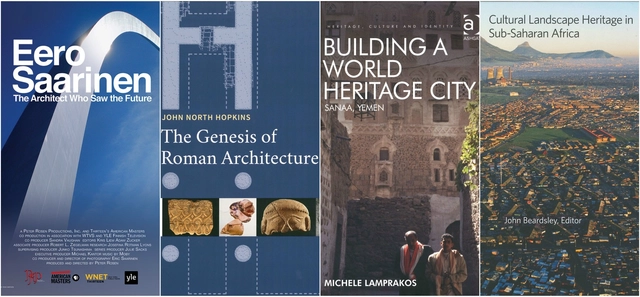
Get ready to add to your reading and watch lists because the Society of Architectural Historians (SAH) just announced the 2018 award recipients for the SAH Publication, Film and Video Awards. Winners received their awards at SAH’s 71st Annual International Conference awards ceremony on April 20th in Saint Paul, Minnesota. The list of SAH Award recipients represents some of the best media in architectural, urban, and landscape history, as well as historic preservation scholarship and architectural exhibition catalogs. Nominations for the 2019 awards will be accepted by SAH on June 1st of this year.
See the list of this year's SAH Award recipients below.
When architects were asked to re-imagine Chicago’s neglected buildings for an exhibition, Dirk Lohan designed a revitalization plan for Louis Sullivan'sPilgrim Baptist Church. Soon Sullivan’s landmark building will become the nation’s first National Museum of Gospel Music, complete with a cafe, retail store, event space, research and listening library, and a 350-seat auditorium.
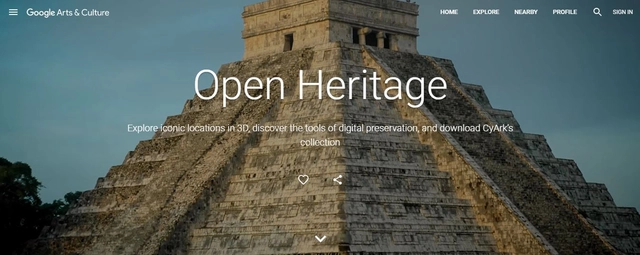
In partnership with a 3D laser-scanning nonprofit called CyArk, Google Arts & Culture began the Open Heritage Project, a new chapter for historic preservation in the form of virtual reality. By using advanced 3D laser scanning technology, high-res drone photography, and DSLR cameras, CyArk can virtually recreate historic architecture to be more easily explored and restored.
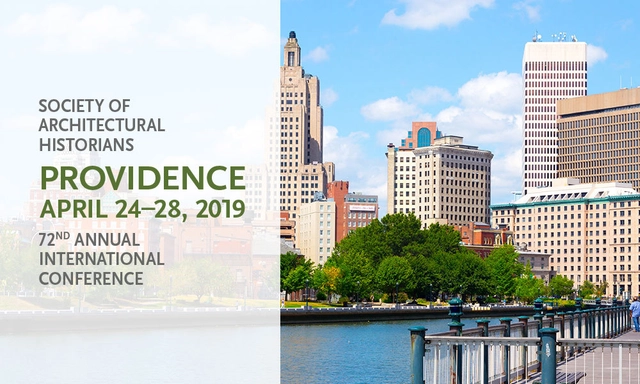
The Society of Architectural Historians is now accepting abstracts for its 72nd Annual International Conference in Providence, Rhode Island, April 24–28. Please submit an abstract no later than 11:59 p.m. CDT on June 5, 2018, to one of the 34 thematic sessions, the Graduate Student Lightning Talks or the Open Sessions. SAH encourages submissions from architectural, landscape, and urban historians; museum curators; preservationists; independent scholars; architects; scholars in related fields; and members of SAH chapters and partner organizations.
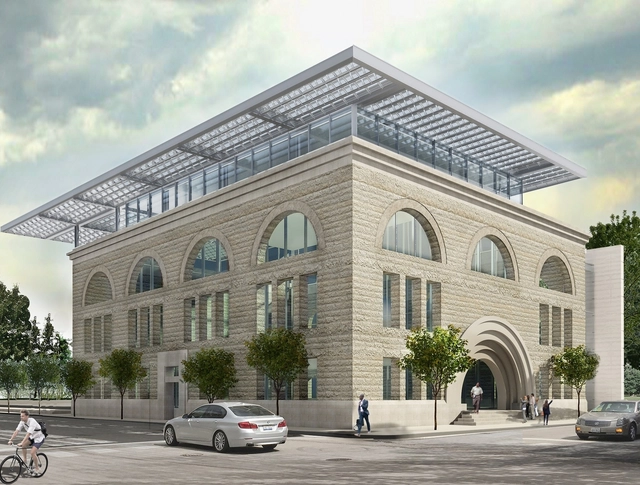
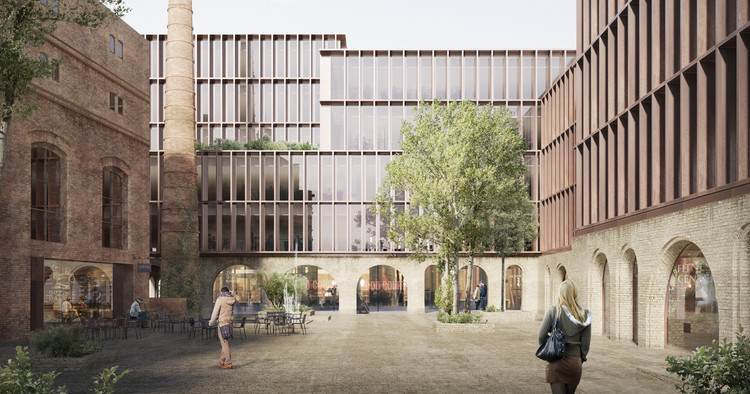
The proposal for the 120,000-square-foot (11,500-square-meter) district manifests as a vibrant, public-orientated program, including a gym, child care center, café, food court, and spa. A series of courtyards and plazas are laced throughout the scheme, connecting old and new in a “timeless, classic appearance that is also uniquely contemporary.” The design took 2nd place in a competition in which no first place winner was selected, as the jury felt that no entry fully met the competition criteria. As the highest-placing entry, the competition organizers have committed to begin negotiations with Schmidt Hammer Lassen to refine the design.
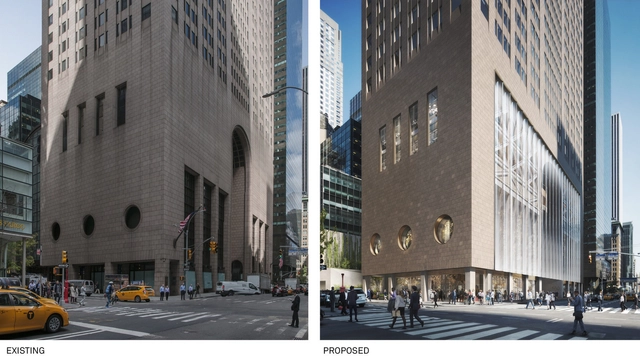
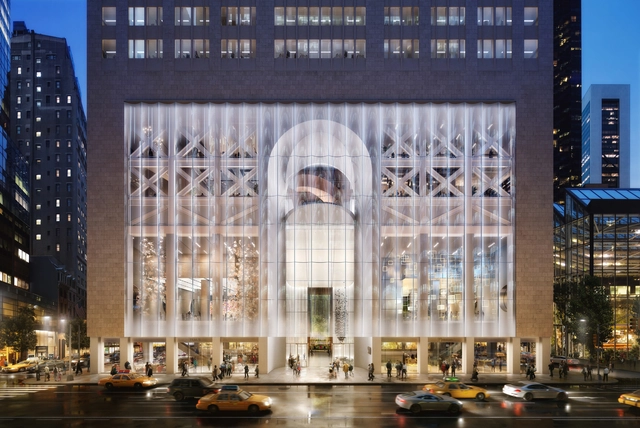
The designs by Snøhetta for the renovation of the building at 550 Madison Avenue have launched the building to the forefront of the debate about the preservation of Postmodern heritage. The plans include replacing the stone facade with undulating glass in order to transform the building's street presence. Should plans progress, the once prominent arched entry will sit behind fritted glass and stone covered columns will be unwrapped to create a hovering datum.
In a world where technology is at the forefront of our lives, it’s hard to imagine that many of the jobs that are available now did not exist 10 years ago; uber drivers, social media managers, app developers and even the job of an ArchDaily writer would have seemed an abstract concept! As technology advances further, even more job positions will be created and others left behind, leaving it open to speculation as to what will come next.
It is almost impossible to predict the future, but digital agency AKQA and Mish Global have attempted the impossible and envisioned several potential jobs in the design and construction industry in 2030 following inspiration from several panels they attended at the World Economic Forum. With the speed of changes over the last decade, they don’t seem too far from reality either.
While the exterior of Philip Johnson’s iconic AT&T awaits its fate in an upcoming New York City landmarks designation hearing, demolition of its granite-clad interior lobby has already begun.
Citing the fact that the lobby had already been altered in the 1990s – including the removal of the “Golden Boy” statue – when the building switched tenants from AT&T to the Sony Corporation, the Landmarks Preservation Commission decided last month that the interiors were not deserving of landmark status.
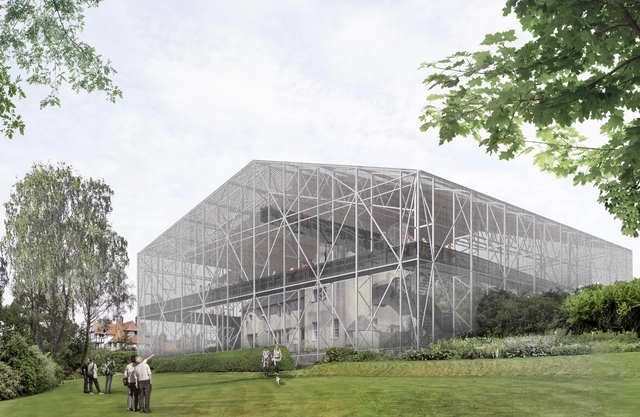
The temporary pavilion will cover Charles Rennie Mackintosh's Hill House for preservation work. Image Courtesy of Carmody Groarke
London-based firm Carmody Groarke and the National Trust for Scotland have announced plans for a major project to conserve one of Scotland’s most important buildings: the Hill House in Helensburgh, designed by Scottish architect Charles Rennie Mackintosh.
Facing plans for a major renovation that would significantly alter the street presence of the building, Philip Johnson’s Postmodern icon, 550 Madison (formerly AT&T Building) has now cleared the first stage in the process of becoming a designated New York City landmark.
Today, an application to schedule a hearing to landmark the building was approved unanimously by the city’s Landmarks and Preservation Commission (LPC). In a few months time, the LPC will hold a public forum for the building, followed by a deliberation on whether or not the tower deserves official landmark status.
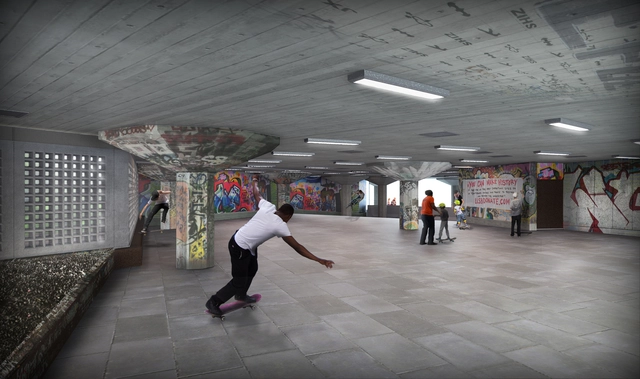
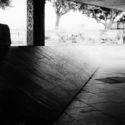
The Southbank Undercroft, which lies beneath the Queen Elizabeth Hall along the River Thames in London, has been the subjectof muchdebate in recent years following a proposed closure and redevelopment in 2013. Long Live Southbank, an organization born out of this threat of expulsion, gave the diverse community who call the space home a voice. After 17 months of campaigning, they were successful in ensuring the Undercroft was legally protected and fully recognized as an asset of community value. Since then, the group of activists has begun another groundbreaking journey.
In partnership with Southbank Centre, Long Live Southbank recently launched a new crowdfunding campaign to restore the legendary Undercroft. The restoration project will cost £790,000 and is set to open in 2018, improving Londoners’ access to free creative spaces in the heart of the City. These types of space are becoming increasingly rare and the restoration effort reflects a desire to celebrate the authentic cultural sites that make London the vibrant landscape it is.
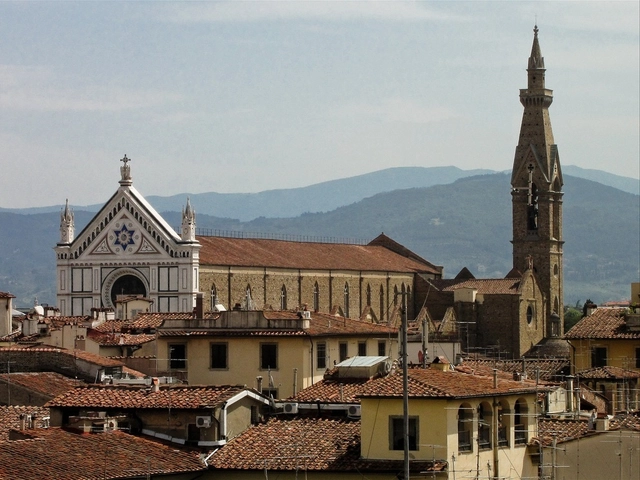
A Spanish tourist has been killed by a piece of falling masonry in the Basilica of Santa Croce in Florence, Italy. As reported by The Guardian, the 52-year old victim was hit by "a piece of decorative stone that fell from a height of 20 metres (66 ft) as he visited the religious building with his wife." Reports suggest that the fragment was around 15cm by 15cm (6 by 6 inches) in size; according to Yahoo, the fragment "had supported a beam in the right transept of the Basilica."
Following the incident, the attraction has been closed to visitors indefinitely.
https://www.archdaily.com/881997/falling-masonry-kills-tourist-in-florences-deteriorating-basilica-di-santa-croceAD Editorial Team
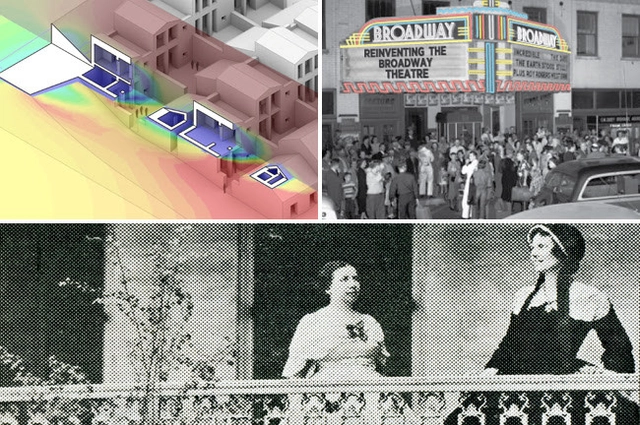
Featured work of Fellows past and present (clockwise from top left): Kress Fellow Tim Frank (2015), Blinder Awardee Rebecca Ward (2014), and Fitch Fellow Paul Kapp (2017).
Since 1989, the James Marston Fitch Charitable Foundation has been in the vanguard of historic preservation practice and theory. The mission of the Fitch Foundation is to support professionals in the field of historic preservation, and to achieve this we provide mid-career grants to those working in preservation, landscape architecture, urban design, environmental planning, materials conservation, decorative arts, architectural design and history, and allied fields.
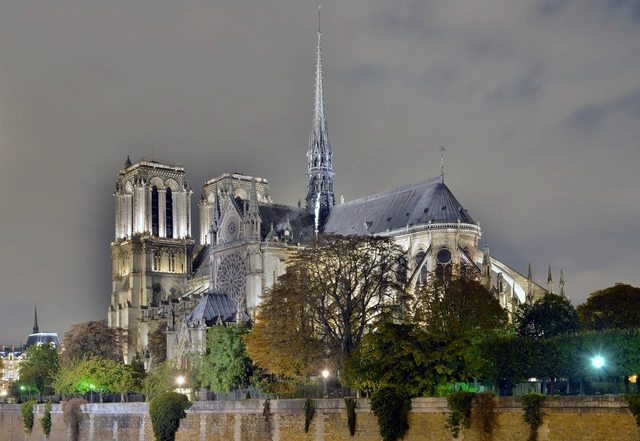
Broken gargoyles and fallen balustrades replaced by plastic pipes and wooden planks. Flying buttresses darkened by pollution and eroded by rainwater. Pinnacles propped up by beams and held together with straps.
According to the Friends of Notre-Dame de Paris, the iconic Parisian cathedral is in "desperate need of attention." Perhaps more concerningly, the holy site and French national monument is also in "a worrisome state of preservation." Built of limestone—a material notoriously susceptible to erosion—the building is in an accelerating state of wear-and-tear, demanding renewed funding efforts and expertise to secure its immediate and long-term future. From the lead roof to the stone buttresses, the world-renowned gargoyles to the stained glass windows, every inch of the structure requires differing levels of attention.
https://www.archdaily.com/881238/iconic-and-revered-notre-dame-de-paris-faces-an-uncertain-futureAD Editorial Team










.jpg?1516086194&format=webp&width=640&height=580)