1. ArchDaily
  2. Philip Johnson

Philip Johnson: The Latest Architecture and News

Staging Culture: The Architect as Curator

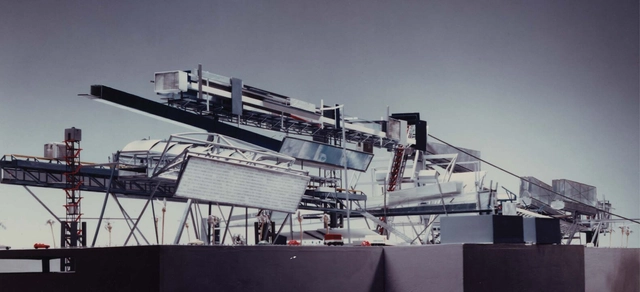
Architecture has never been confined to the act of building. It constantly negotiates between material practice and intellectual reflection, yet throughout the twentieth and twenty-first centuries, many architects felt that the built project alone was insufficient to address the full range of questions facing the discipline. Economic pressures, political contexts, and programmatic demands often narrowed the scope of practice.

Exhibitions and curatorial platforms, by contrast, created spaces of experimentation and critique, opening arenas where architecture could interrogate itself, where its past could be reinterpreted, its present challenged, and its future projected. In this tension, the figure of the architect-curator emerged, treating curating itself as a form of design — not of walls or facades, but of discourse, narratives, and frameworks of meaning.

Staging Culture: The Architect as Curator - Image 1 of 4Staging Culture: The Architect as Curator - Image 2 of 4Staging Culture: The Architect as Curator - Image 3 of 4Staging Culture: The Architect as Curator - Image 4 of 4Staging Culture: The Architect as Curator - More Images+ 32

Designing for Density: How Modernist Principles Continue to Shape Social Housing Solutions Today

When discussing modernist living, several iconic private residential projects may first come to mind—Le Corbusier's Villa Savoye, the Case Study Houses, most notably by Richard Neutra, Pierre Koenig, and Charles and Ray Eames, as well as the glass houses by Mies van der Rohe and Philip Johnson. Most of these projects exemplified an idealized vision of modern living, set in picturesque landscapes and characterized by experimentation with new construction methods, materials, and spatial concepts. Their designs embraced openness, blurring the boundaries between private and public spaces, largely unburdened by constraints such as density, efficiency, accessibility, public transit integration, or communal considerations.

While these modern homes remain influential in contemporary residential design, they also—perhaps unexpectedly—laid the groundwork for high-density housing principles. Concepts such as the interplay between public and private space, modular construction, and prefabrication, initially explored in these private residences, have been adapted to the vastly different constraints of social housing. 

Designing for Density: How Modernist Principles Continue to Shape Social Housing Solutions Today - Image 1 of 4Designing for Density: How Modernist Principles Continue to Shape Social Housing Solutions Today - Image 2 of 4Designing for Density: How Modernist Principles Continue to Shape Social Housing Solutions Today - Image 3 of 4Designing for Density: How Modernist Principles Continue to Shape Social Housing Solutions Today - Image 4 of 4Designing for Density: How Modernist Principles Continue to Shape Social Housing Solutions Today - More Images+ 26

After Closure due to Hurricane Damage, the Rothko Chapel Announces Reopening Date

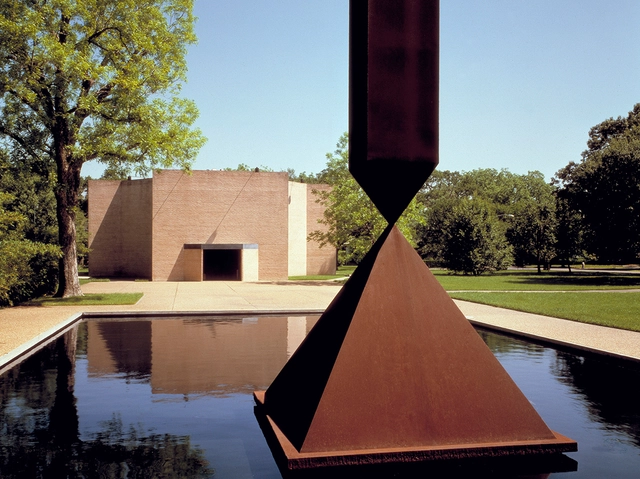
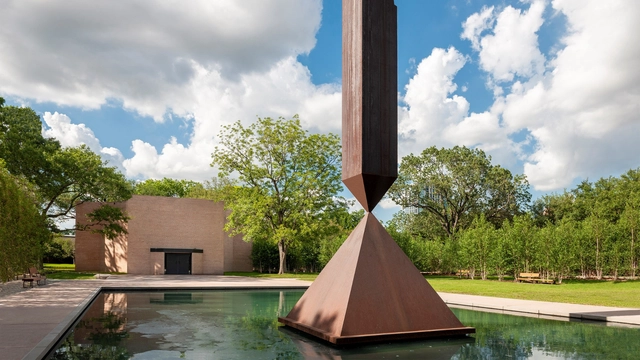
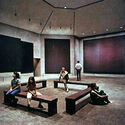
The Rothko Chapel, a celebrated structure appreciated for its profound meditative space, has announced its reopening to the public on December 17th. Following the extensive damage caused by Hurricane Beryl last July, the custodians of the structure announced its indefinite closure, as a team of art conservators, engineers, and volunteers began the extensive work to restore both the architecture and the invaluable artworks stored within. The Chapel's reopening marks a significant milestone in the recovery process, making this sanctuary of contemplation accessible once again to the community.

After Closure due to Hurricane Damage, the Rothko Chapel Announces Reopening Date - Image 1 of 4After Closure due to Hurricane Damage, the Rothko Chapel Announces Reopening Date - Image 2 of 4After Closure due to Hurricane Damage, the Rothko Chapel Announces Reopening Date - Image 3 of 4After Closure due to Hurricane Damage, the Rothko Chapel Announces Reopening Date - Image 4 of 4After Closure due to Hurricane Damage, the Rothko Chapel Announces Reopening Date - More Images+ 1

Rothko Chapel Closes Indefinitely After Suffering Damage During Hurricane Beryl

Built in 1971, the Rothko Chapel in Huston, Texas, was conceived as an intimate sanctuary for people of every belief, while in front of the chapel, Barnett Newman's sculpture "Broken Obelisk" stands in memory of Dr. Martin Luther King Jr. In 1964, Mark Rothko was commissioned by John and Dominique de Menil to create a meditative space for his site-specific paintings. Rothko’s vision clashed with that of the initial architect, Philip Johnson, over the scale and grandiosity of the building, which he felt distracted from the art. The project underwent several revisions with different architects, including Howard Barnstone and Eugene Aubry. Now officials have announced the indefinite closing of the chapel, after having sustained severe damage during Hurricane Beryl, the Category 1 storm that hit Houston on July 9.

Rothko Chapel Closes Indefinitely After Suffering Damage During Hurricane Beryl - Image 1 of 4Rothko Chapel Closes Indefinitely After Suffering Damage During Hurricane Beryl - Image 2 of 4Rothko Chapel Closes Indefinitely After Suffering Damage During Hurricane Beryl - Image 3 of 4Rothko Chapel Closes Indefinitely After Suffering Damage During Hurricane Beryl - Image 4 of 4Rothko Chapel Closes Indefinitely After Suffering Damage During Hurricane Beryl - More Images+ 1

Madrid Architecture City Guide: 27 Brutalist and Contemporary Attractions to Explore in the Spanish Capital

Subscriber Access | 

Madrid, the vibrant capital of Spain, offers a blend of tradition and modernity, reflected in its diverse architectural heritage. This rich past is etched into the old façades, expansive public spaces, and historic religious institutions that define much of Madrid’s character today. The city’s continuous architectural renewal, reflected in both respectful restorations and innovative new constructions, highlights Madrid’s commitment to preserving its heritage while embracing modernity.

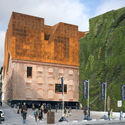
In the 20th century, Madrid embraced modernity, influenced by movements such as Rationalism, the International Style, and Brutalism. Today, Madrid is a showcase for contemporary design, where contemporary projects by renowned architects coexist with its historical legacy. Structures like the CaixaForum by Herzog & de Meuron and Jean Nouvel’s Reina Sofía Museum exemplify the city’s interest in architectural explorations

Madrid Architecture City Guide: 27 Brutalist and Contemporary Attractions to Explore in the Spanish Capital - Image 1 of 4Madrid Architecture City Guide: 27 Brutalist and Contemporary Attractions to Explore in the Spanish Capital - Image 2 of 4Madrid Architecture City Guide: 27 Brutalist and Contemporary Attractions to Explore in the Spanish Capital - Image 3 of 4Madrid Architecture City Guide: 27 Brutalist and Contemporary Attractions to Explore in the Spanish Capital - Image 4 of 4Madrid Architecture City Guide: 27 Brutalist and Contemporary Attractions to Explore in the Spanish Capital - More Images+ 24

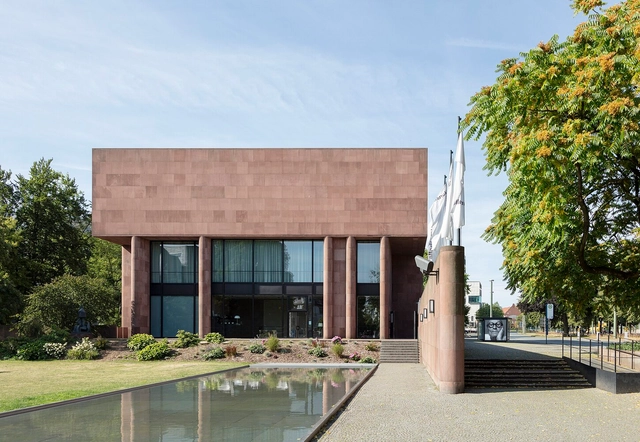
Caruso St John Architects Wins Competition to Renovate Philip Johnson’s Kunsthalle Bielefeld

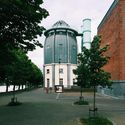
Following an international competition, Caruso St John Architects has been appointed to renovate the iconic Kunsthalle Bielefeld in Northwest Germany. Designed by Philip Johnson and completed in 1968, the structure is Johnson’s only museum in Europe. Despite past maintenance efforts, the building remains largely unchanged from its original state. The renovation aims to modernize the museum’s services, exterior, and interior spaces.

Caruso St John Architects Wins Competition to Renovate Philip Johnson’s Kunsthalle Bielefeld - Image 1 of 4Caruso St John Architects Wins Competition to Renovate Philip Johnson’s Kunsthalle Bielefeld - Image 2 of 4Caruso St John Architects Wins Competition to Renovate Philip Johnson’s Kunsthalle Bielefeld - Featured ImageCaruso St John Architects Wins Competition to Renovate Philip Johnson’s Kunsthalle Bielefeld - Image 3 of 4Caruso St John Architects Wins Competition to Renovate Philip Johnson’s Kunsthalle Bielefeld - More Images

Shigeru Ban Architects Unveils "Paper Log House" on Display at Philip Johnson's Glass House

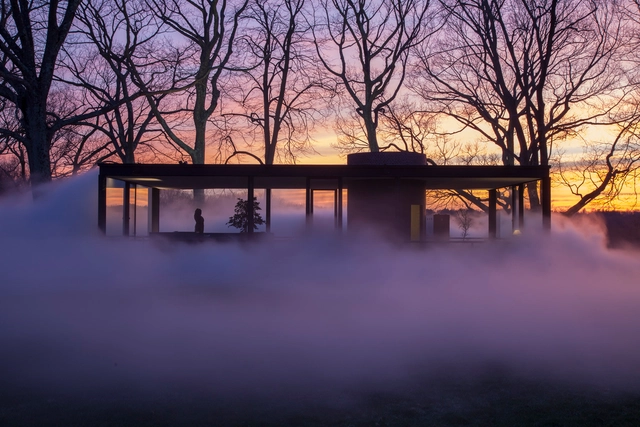
Shigeru Ban Architects, in collaboration with The Glass House and The Irwin S. Chanin School of Architecture of the Cooper Union, have just revealed “Shigeru Ban: The Paper Log House at The Glass House.” This collaborative installation opened on April 15th and is on display until December 15th, 2024, welcoming more than 13,000 annual visitors. This year, students from The Cooper Union actively participated in the making of this structure as part of the university’s Building Technology Course.

Shigeru Ban Architects Unveils "Paper Log House" on Display at Philip Johnson's Glass House - Image 1 of 4Shigeru Ban Architects Unveils "Paper Log House" on Display at Philip Johnson's Glass House - Image 2 of 4Shigeru Ban Architects Unveils "Paper Log House" on Display at Philip Johnson's Glass House - Image 3 of 4Shigeru Ban Architects Unveils "Paper Log House" on Display at Philip Johnson's Glass House - Image 4 of 4Shigeru Ban Architects Unveils Paper Log House on Display at Philip Johnson's Glass House - More Images+ 8

Money and the Conundrum of Architects Who Don’t Build

This article was originally published on Common Edge.

If you’ve been in the profession of architecture long enough, you come to know a certain rarified subset of fellow professionals: Those who call themselves “architects,” who have a degree, and who may even be licensed and members of the AIA, but who do not practice architecture. They simply like being an “architect.”

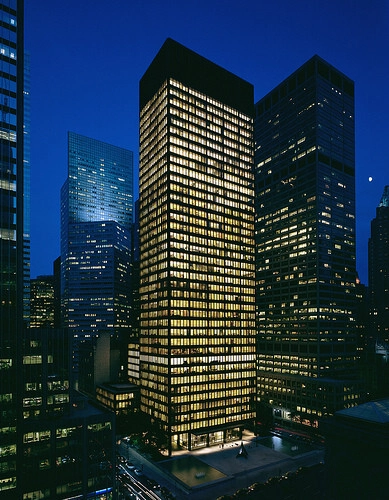
Light Matters: Richard Kelly, The Unsung Master Behind Modern Architecture’s Greatest Buildings

Richard Kelly illuminated some of the twentieth century’s most iconic buildings: the Glass House, Seagram Building and Kimbell Art Museum, to name a few. His design strategy was surprisingly simple but extremely successful.

Lighting for architecture has been and still often is dominated by an engineering viewpoint, resigned to determining sufficient illuminance levels for a safe and efficient working environment. With a background in stage lighting, Kelly introduced a scenographic perspective for architectural lighting. His point of view might look self-evident to today’s architectural community, but it was revolutionary for his time and has strongly influenced modern architecture.

Cultivating “A Certain Warmth” Inside 550 Madison, One of Manhattan’s Quirkiest Towers

Subscriber Access | 

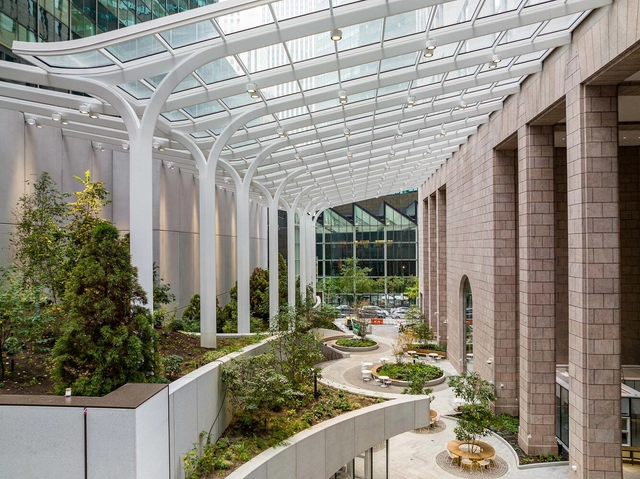
550 Madison Avenue (née the AT&T Building, more recently Sony Plaza) is among the more recognizable figures on New York’s skyline. Designed by architect-provocateur Philip Johnson, the 37-story skyscraper stands out thanks to its curious headgear: a classical pediment broken by a circular notch, inviting frequent comparisons to the top of a Chippendale grandfather clock. A singular, if largely inoffensive presence on today’s icon-heavy streetscape, the design was positively shocking on its debut in 1979, when Johnson himself appeared on the cover of Time holding a model of the project, then still four years from completion. The image heralded the arrival of something new in American architecture: the fading of the flat-crowned Modernist towers of the midcentury and the onset of the Postmodernist wave.

Cultivating “A Certain Warmth” Inside 550 Madison, One of Manhattan’s Quirkiest Towers - Image 1 of 4Cultivating “A Certain Warmth” Inside 550 Madison, One of Manhattan’s Quirkiest Towers - Image 2 of 4Cultivating “A Certain Warmth” Inside 550 Madison, One of Manhattan’s Quirkiest Towers - Image 3 of 4Cultivating “A Certain Warmth” Inside 550 Madison, One of Manhattan’s Quirkiest Towers - Image 4 of 4Cultivating “A Certain Warmth” Inside 550 Madison, One of Manhattan’s Quirkiest Towers - More Images+ 2

A New Book Chronicles the Turbulent History of Architectural Complexity

The marquee-busting title says it all: Joseph Giovannini’s Architecture Unbound is an ambitious attempt to explore the wilder shores of design and explain how and why maverick architects have dared greatly. It’s also a wide-ranging introduction to artists who laid the groundwork for architectural innovation a century ago; to the philosophers and theorists who mapped new ways of thinking, and to the complexities of chaos theory, parametric and software programs that have shaped exceptional buildings over the past few decades.

A New Book Chronicles the Turbulent History of Architectural Complexity - Image 1 of 4A New Book Chronicles the Turbulent History of Architectural Complexity - Image 2 of 4A New Book Chronicles the Turbulent History of Architectural Complexity - Image 3 of 4A New Book Chronicles the Turbulent History of Architectural Complexity - Image 4 of 4A New Book Chronicles the Turbulent History of Architectural Complexity - More Images+ 4

18 Ways to Make Architecture Matter

This article was originally published on Common Edge.

Was there ever a time when architects felt properly valued? Probably not. Certainly not since the profession became dependent on the business of America, which is business. With economic growth as the country’s prime directive through the 20th century, architects—as members of the construction industry—played their part. How? By designing buildings of all kinds that were lighter, cheaper, and quicker to erect. Architects’ values might have been social, artistic, even cosmic, but their value to society has been primarily economic.

What Is Postmodernism?

Subscriber Access | 

As the prefix already indicates, postmodernism is a turning point in history, thereby proving the willingness of scholars to define this new era based on the rejection of the previous movement. Postmodernism first emerged in the 1960s as a departure from modernism. As a reaction against the austerity, formality, and lack of variety of modern architecture, particularly in the international style advocated by Le Corbusier and Mies van der Rohe, postmodernism defends an architecture full of signs and symbols that can communicate cultural values. Postmodernism is a reaction to homogeneity and tediousness by praising difference and striving to produce buildings that are sensitive to the context within which they are built.

What Is Postmodernism? - Image 2 of 4What Is Postmodernism? - Image 3 of 4What Is Postmodernism? - Image 6 of 4What Is Postmodernism? - Image 8 of 4What Is Postmodernism? - More Images+ 5

Harvard Will Remove Philip Johnson’s Name From Cambridge Home That He Designed as Graduate Student

The Harvard Graduate School of Design (Harvard GSD) will no longer refer to a private residence at 9 Ash Street in Cambridge as the “Philip Johnson Thesis House.” Moving forward, the home, designed by and inhabited by Johnson while enrolled at the Harvard GSD in the 1940s, will now be known solely by its physical street address.

Infographic: The Bauhaus, Where Form Follows Function

Subscriber Access | 
Infographic: The Bauhaus, Where Form Follows Function - Featured Image

UPDATE: In honor of the 100th anniversary of the Bauhaus, we’re re-publishing this popular infographic, which was originally published April 16th, 2012.

From the “starchitect” to “architecture for the 99%,” we are witnessing a shift of focus in the field of architecture. However, it’s in the education system where these ideas really take root and grow. This sea change inspired us to explore past movements, influenced by economic shifts, war and the introduction of new technologies, and take a closer look at the bauhaus movement.

Often associated with being anti-industrial, the Arts and Crafts Movement had dominated the field before the start of the Bauhaus in 1919. The Bauhaus’ focus was to merge design with industry, providing well-designed products for the many.

The Bauhaus not only impacted design and architecture on an international level, but also revolutionized the way design schools conceptualize education as a means of imparting an integrated design approach where form follows function.

The Stories Behind 7 of the Most Iconic Eyeglasses in Architecture

Subscriber Access | 

Eyeglasses: the quintessential accessory of the architect. They are mini pieces of architecture you can wear, and an outward expression of your inner persona. Whether they be square, round, or wire-frame, black, white, tortoiseshell, or bright neon tones, they represent our visionary ideals. As such, many of the most iconic spectacles have an interesting history behind them; so here are the stories behind seven of the most recognizable eyeglasses in the architecture world.

Fantastic Images of Architecture in the Fog: The Best Photos of the Week

Subscriber Access | 

Taking photographs in fog can be an experience as chaotic as it is enchanting. Although working with this phenomenon can be risky, since fog dramatically modifies the available light and the atmosphere of a scene, if you know how to take advantage of it, the result can lead to perfect photographs. Below is a selection of 10 images from prominent photographers such as Kevin Scott, Richard Barnes, and Koichi Torimura.

Fantastic Images of Architecture in the Fog: The Best Photos of the Week - Image 1 of 4Fantastic Images of Architecture in the Fog: The Best Photos of the Week - Image 2 of 4Fantastic Images of Architecture in the Fog: The Best Photos of the Week - Image 3 of 4Fantastic Images of Architecture in the Fog: The Best Photos of the Week - Image 4 of 4Fantastic Images of Architecture in the Fog: The Best Photos of the Week - More Images+ 5

Facing Major Renovations, Philip Johnson’s AT&T Building Gets Hearing for Landmark Designation

Facing plans for a major renovation that would significantly alter the street presence of the building, Philip Johnson’s Postmodern icon, 550 Madison (formerly AT&T Building) has now cleared the first stage in the process of becoming a designated New York City landmark.

Today, an application to schedule a hearing to landmark the building was approved unanimously by the city’s Landmarks and Preservation Commission (LPC). In a few months time, the LPC will hold a public forum for the building, followed by a deliberation on whether or not the tower deserves official landmark status.