Architecture this week reflects on how buildings and cities adapt to changing cultural, social, and environmental conditions. From the expansion of established institutions and the preservation of architectural archives to new approaches to housing and the use of domestic space, several stories consider how architecture negotiates between existing contexts and future needs. These questions extend beyond individual buildings, touching on the role of public space, infrastructure, energy, and collective memory in shaping the built environment. At the same time, new projects and cultural programs across different contexts demonstrate how architecture can respond to local histories, urban transformation, and resource constraints while establishing new relationships between buildings, landscapes, and the communities that use them.
Open House Europe Annual Summit "Future Heritage", courtesy of Architektūros fondas.
Open House Europe will hold its third Annual Summit in Athens on January 9–10, 2026. Hosted by Open House Athens, co-hosted by Open House Slovenia and Open House Thessaloniki, and coordinated by Architektūros fondas, the Summit will once again convene festival organisers, architecture professionals, students, enthusiasts, and partners from across the continent and beyond for shared reflection, exchange, and dialogue.
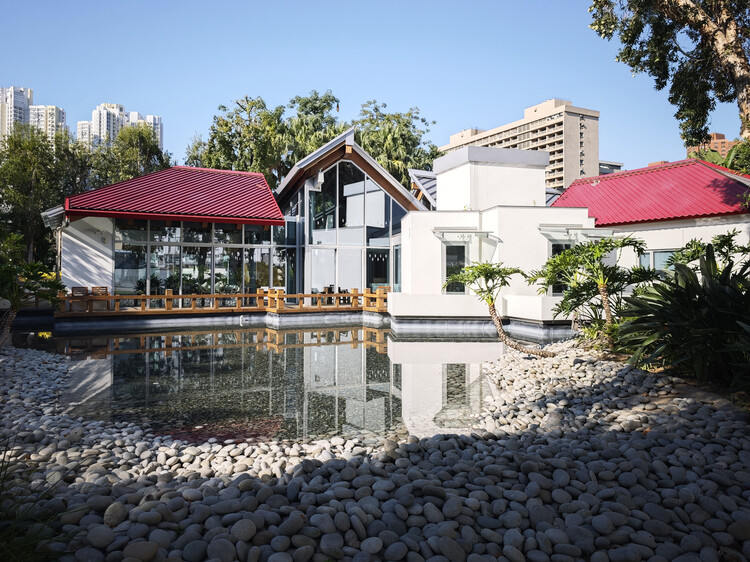
Earlier this month, news of Frank Gehry's passing prompted an outpouring of tributes to the architect behind flamboyant museums, concert halls, and sinuous residential complexes. Rather than revisit that well-charted terrain, it is worth pausing on a more contemplative work in his oeuvre: Maggie's Cancer Caring Centre in Hong Kong. Quiet, optimistic, and calibrated for everyday resilience, the building reflects multiple registers of Gehry's intent: a commitment to positivity and survival—and, more personally, an architect's own reckoning with loss and end-of-life care.
The remark reframes Maggie's Hong Kong as more than a commission; it suggests a design process shaped by grief and turned toward comfort, dignity, and the possibility of hope—an ethos that aligns closely with the organization's mission.
The fragility—and temporal beauty—of neon has captivated audiences since the early 1900s. First shown commercially by French engineer Georges Claude at the 1910 Paris Motor Show, neon spread rapidly, achieving broad popularity in the United States from the 1920s through the 1950s. Mid-century America saw it everywhere: from the casinos of the Las Vegas Strip to roadside motor inns along Route 66 and the spectacle of Times Square. By the latter half of the century, however, many signs were scrapped or left to decay, and numerous municipalities restricted neon as visually garish or power-hungry—despite the technology's comparatively modest energy use. In the U.S., renewed interest in neon arguably didn't meaningfully return until the early 2000s.
In Hong Kong, by contrast, neon was embraced with unusual enthusiasm at a time when it began to lose popularity elsewhere. Even as installation slowed in recent decades—largely due to updated ordinances requiring removal of overhanging signs whose support structures failed to meet safety standards—the city's affinity for neon never fully disappeared.
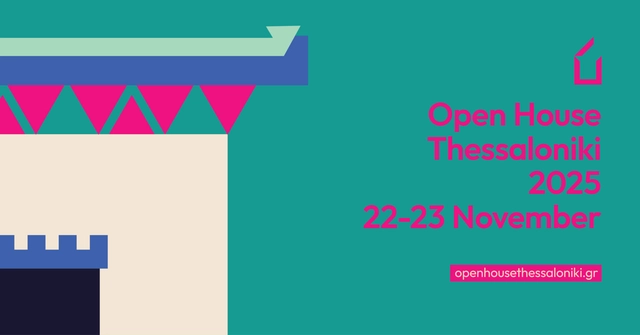
Open House Thessaloniki 2025, courtesy of Open House Greece.
Open House Thessaloniki returns on 22–23 November, once again inviting the public to experience the city through its architecture. During the festival weekend, over 70 buildings, ranging from historic landmarks and adaptive reuse projects to innovative new constructions, will open their doors for free guided tours led by volunteers, offering a unique opportunity to explore Thessaloniki’s diverse architectural identity.
OPEN Bilbao 2025 poster, courtesy of Asociación Open Urbanity.
The Open House festival in Bilbao, OPEN Bilbao, returns for its ninth edition with an extensive programme of visits and activities that invite the public to discover the city’s architectural heritage while highlighting new ways of understanding and practising architecture. Taking place from September 29 to October 5, the festival not only explores some of Bilbao’s most emblematic buildings but also highlights alternative approaches to the profession, offering a broader perspective on what architecture can mean today.
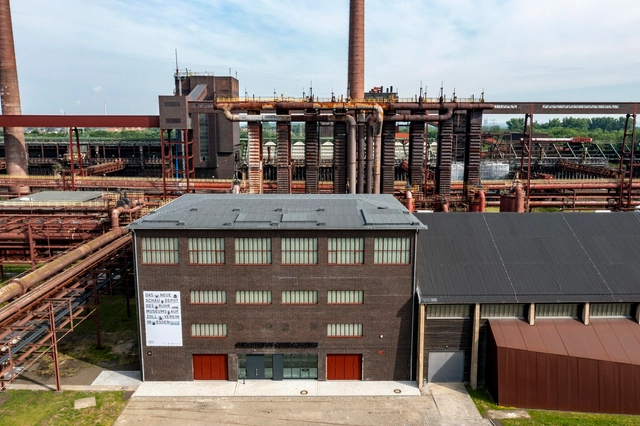
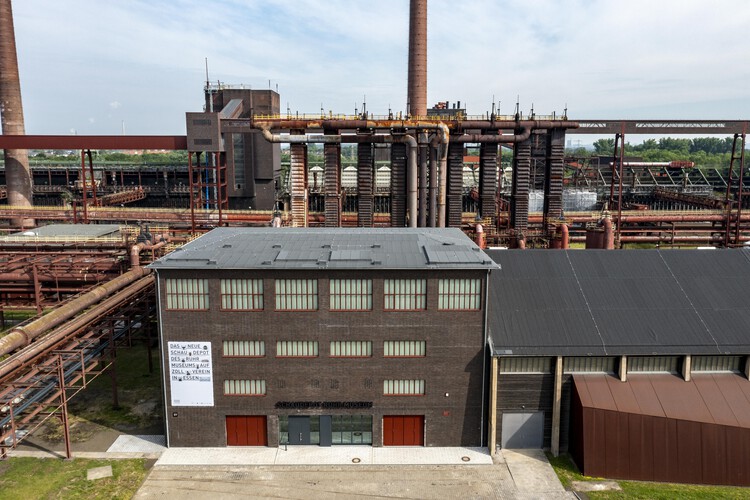
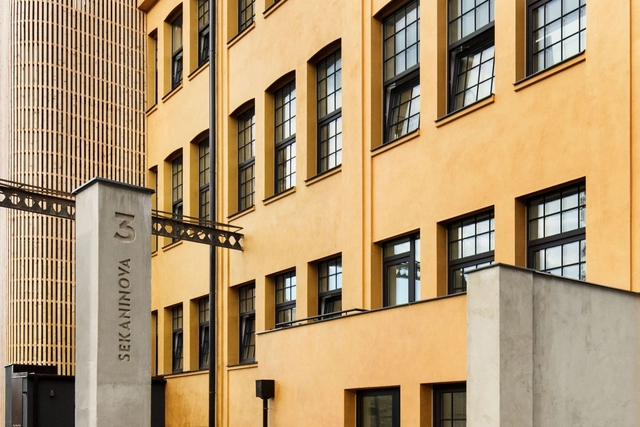
Once the largest coal mine in Europe, the Zollverein complex in Essen, Germany, has undergone a remarkable transformation over the past twenty-five years. What was once a landscape of abandoned industrial facilities is now a laboratory of contemporary architecture, featuring works by Rem Koolhaas, Norman Foster, and SANAA. Their interventions bridge the site’s industrial past with its imagined future. Spanning 100 hectares, the UNESCO World Heritage site has become a global model of adaptive reuse, redefining what it means to preserve industrial heritage. Within this context stands the Ruhr Museum and its enigmatic art repository, the Schaudepot. Located in the complex’s former salt factory, the museum impresses not only with its collection but also with its architecture, which transforms a 1960s industrial building into a vibrant cultural venue.
Because of its historical and architectural relevance, the project is featured in the 2025 edition of Open House Essen, under the theme “Future Heritage.” The initiative explores which spaces might shape our future architectural legacy and asks pressing questions: What should we preserve? What should we adapt? And how can we design a future that is both livable and fair?
Videos
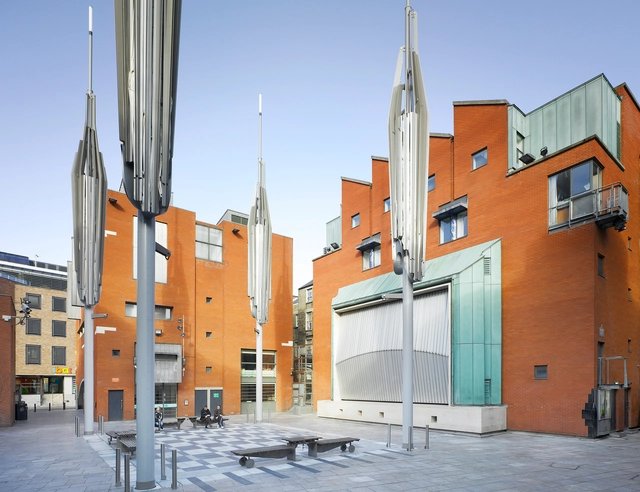
Meeting House Square, Temple Bar. Image Courtesy of Sean Harrington Architects
The veteran Irish architecture critic Shane O'Toole once remarked that when traveling in Europe in the 1970s, "The universal comment was is there modern architecture in Ireland? Now, in less than 50 years, we've gone to a Pritzker Prize and two RIBA Royal Gold Medallists in five years." He attributes this change in perception to a design competition that launched the careers of several of Ireland's award-winning architects of today. This was the Temple Bar Framework Plan competition of 1991 in the center of Dublin, the capital of Ireland, which was won by a group of architects still in their 30s, running under the name of Group 91.
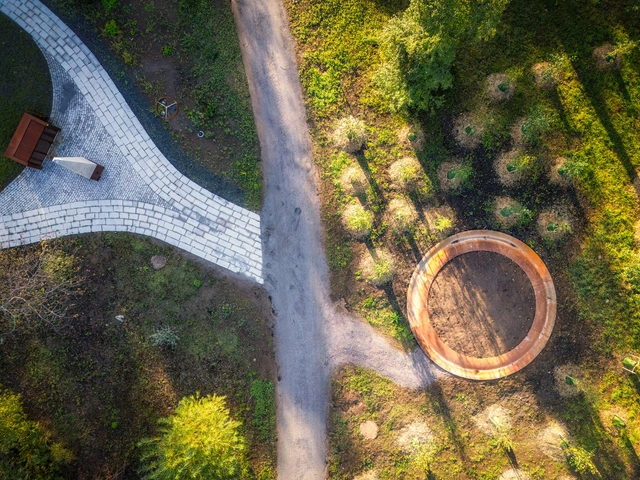
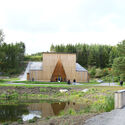
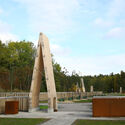
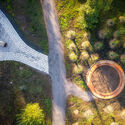
Opened in October 2024, the Järva Cemetery offers everyone, regardless of faith or beliefs, a space for remembrance, continuing Stockholm's long tradition of funeral history. After overcoming significant planning obstacles, the site, designed by Kristine Jensen Tegnestue and Poul Ingemann, was created to accommodate burials and funeral ceremonies, with options for coffins, urns, ash groves, and a commemorative forest. During the last edition of Open House Stockholm, visitors could explore its surrounding natural landscapes and connect with the space.
Throughout 2024, ArchDaily, in collaboration with the Open House Europe architecture event, brought inspiring projects and stories to light. These true architectural gems were unveiled through visits, and their widely shared narratives enriched the architectural discourse. It is an invitation to explore the stories behind buildings that, although part of citizens' daily lives, often go unnoticed amidst the routine automation of everyday life.
These narratives explored projects of different scales, uses, and contexts, revealing everything from religious buildings, to remarkable examples of adaptive reuse of old industrial structures, now taking on new roles within their communities. Each story uncovered the many layers that make up a building – from its initial design to the new meanings it has acquired over time.
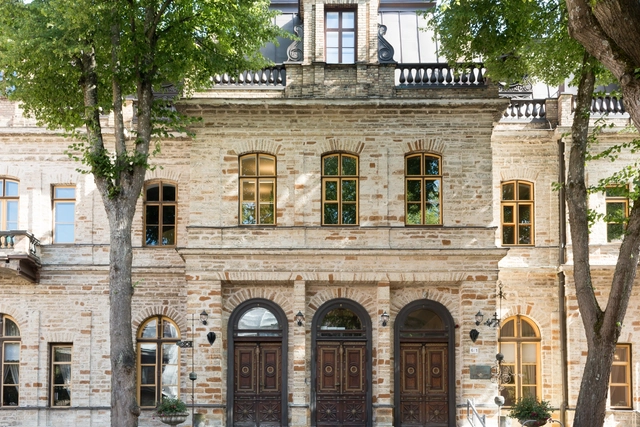
In the heart of Tallinn, where history weaves through cobblestone streets and ancient towers, stands the Ungern-Sternberg Palace — a monument that bridges the opulent past of Estonia's aristocracy with the vibrant world of contemporary academia. Now home to the Estonian Academy of Sciences, this historic building embodies Estonia's enduring dedication to knowledge and cultural preservation. Through Open House Tallinn, which highlights the city's architectural heritage, the palace's significant history, and remarkable architectural details are brought to a wider audience, offering unique insight into Estonia's cultural resilience.
Constructed in the 19th century as a symbol of aristocratic power, the palace has transformed from a private residence into a national hub of intellectual life. Its grand halls, once the scene of lavish gatherings, now foster scientific and academic pursuits, illustrating how heritage architecture can evolve alongside societal change.
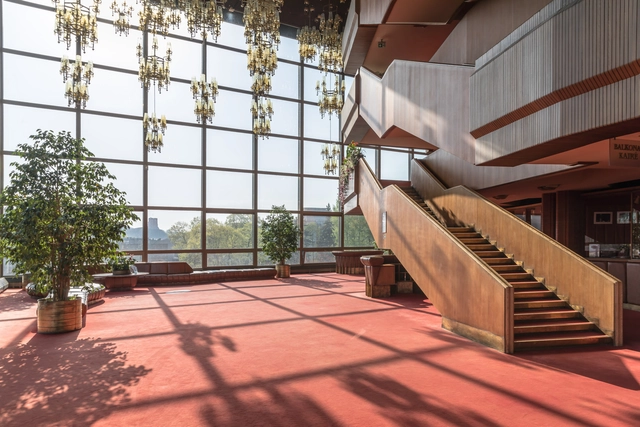
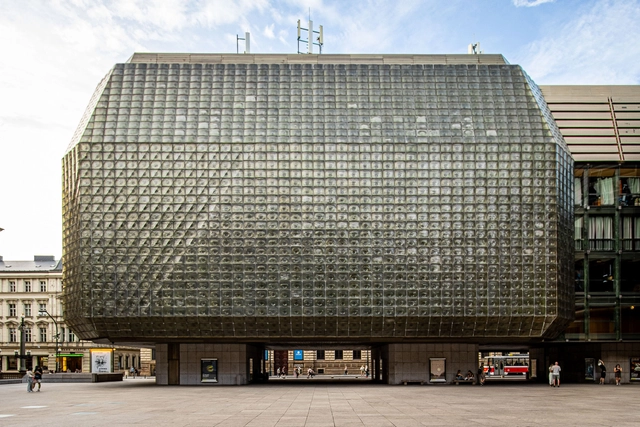
From 1977 to 1983, the National Theatre in Prague underwent a major transformation with the opening of Nová Scéna, a modern counterpart to the traditional Neo-Renaissance theatre. For many years, Nová Scéna hosted the renowned Laterna Magika, the world’s first multimedia theatre. This groundbreaking performance style combined classical theatre with computer-generated visual effects, creating a unique dramatic experience. The striking glass building, a symbol of the communist era, became an iconic representation of the political power of the time. In recognition of its significance, this building was part of the Open House Prague festival in 2024—an annual event that invites the public to explore and appreciate the value of architecture.
Open House Essen 2024 Poster. Courtesy of Forum Kunst und Architektur.
Open House Essen returns on the weekend of September 7 and 8, inviting architecture enthusiasts to explore the hidden gems of Essen's northern districts. The fourth edition of the festival, themed "Transformation in the Ruhr Area: Buildings. People. Dialogue," offers a unique opportunity to discover remarkable buildings and the stories behind them, many of which are typically off-limits to the public.
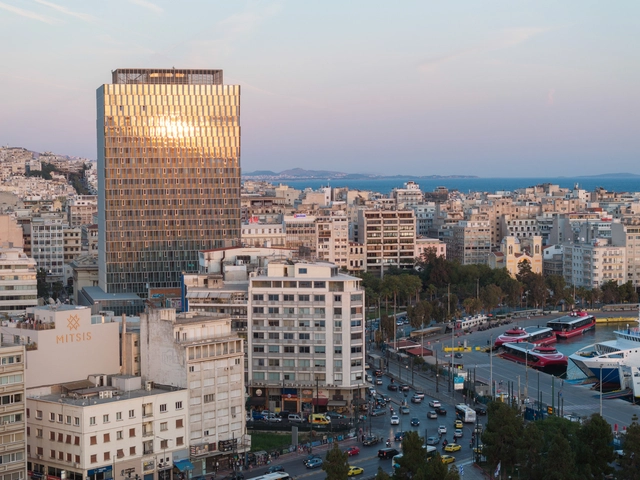
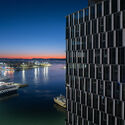
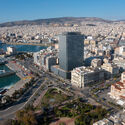
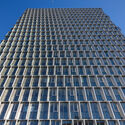
The landmark of Piraeus, located in the heart of the largest passenger port in Europe, began construction in 1972 but remained unfinished and vacant for decades. Finally completed in 2023, after an international competition, it now stands as Greece's first green and digital skyscraper. The architectural firm PILA took on the design of the facades, while the office ASPA-KST designed the commercial spaces, and the new general architectural study was entrusted to Betaplan. After over four years of renovation, Piraeus Tower officially opened its doors to tenants and visitors on June 4th with a night of celebrations, establishing itself as a bustling hub and injecting vitality into the area.
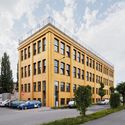
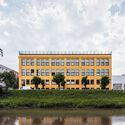
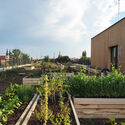
In response to the Czech Republic's soaring real estate prices, architecture firm KOGAA has transformed a former storage facility in Brno into DADA Distrikt, an affordable and diverse housing development. The project's economic approach, achieved through shared funding and direct sales, bypasses extra costs associated with developers while refurbishing a part of the city’s industrial heritage, transforming it into an active urban district. The project also features sustainability measures aimed at lowering its maintenance costs, further exemplifying the intersection of affordable housing, heritage restoration, and sustainable urban living.
The project is now part of Open House Brno, a free weekend festival held annually that allows visitors to enter and explore various locations across the city and discover their stories and architectural narratives. This year, the festival follows the curatorial concept of “Inclusion and Accessibility”, showcasing barrier-free integration of urban locations and the societal impact of buildings. A total of 58 locations will be available to visitors, exploring a variety of programs and scales demonstrating
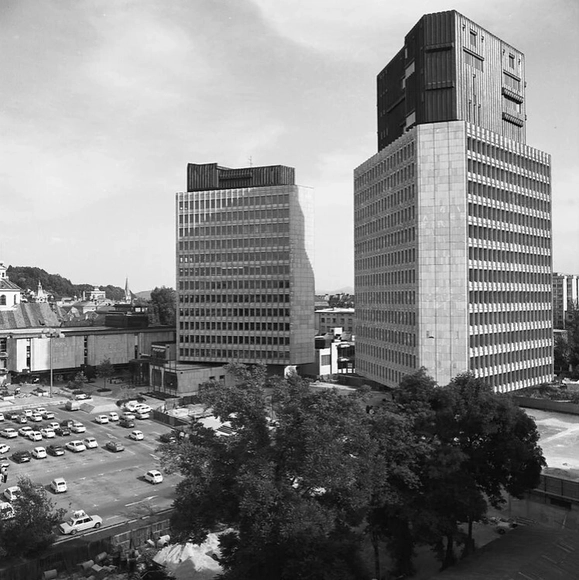
Republic Square in Ljubljana holds immense historical and symbolic significance for Slovenia. It is located in the historic center of the city and features a blend of buildings with different designs, scales, and dimensions, together with interconnected open spaces, passages, and underpasses. These elements form a multifunctional complex whose construction lasted more than 20 years and underwent several volumetric and programmatic reconfigurations. Visible from a distance and standing out above the Ursuline Church’s bell tower, two prominent office towers rise as part of this work designed by Edvard Ravnikar, the most prominent Slovenian architect of the second half of the 20th century.
Pihlmann Architects is a young Copenhagen-based architectural run by Søren Pihlmann. In this interview with Louisiana Channel, the rising architect elaborates on his unique practice, the values he holds, and what he finds fascinating about architecture. Most notably, Pihlmann explains that his view on the practice has transformed from being an architect into becoming a type of curator, selecting very few things with great sensitivity.
As one of the major signature events taking place in connection with Copenhagen as the UNESCO World Capital of Architecture in 2023, Open House Copenhagen has revealed more than 50 sites included in its program. The event represents an invitation for visitors to take a look inside iconic buildings that are typically only visible from the outside. Included in the list are examples of floating architecture on Refshaleøen, one of Arne Jacobsen’s masterpieces, along wth unusual spaces such as the interior of a power plant or an underwater passage tunnel. Open House Copenhagen takes place on the weekend of March 25–26 2023. The event is open for everyone and is free of charge, but registration is required.