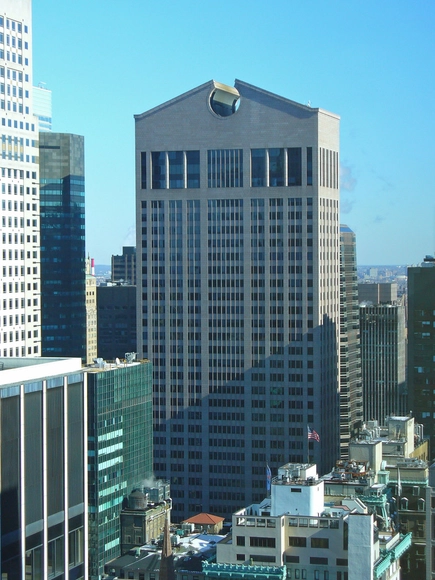
It may be the single most important architectural detail of the last fifty years. Emerging bravely from the glassy sea of Madison Avenue skyscrapers in midtown Manhattan, the open pediment atop Philip Johnson and John Burgee’s 1984 AT&T Building (now the Sony Tower) singlehandedly turned the architectural world on its head. This playful deployment of historical quotation explicitly contradicted modernist imperatives and heralded the mainstream arrival of an approach to design defined instead by a search for architectural meaning. The AT&T Building wasn’t the first of its type, but it was certainly the most high-profile, proudly announcing that architecture was experiencing the maturation of a new evolutionary phase: Postmodernism had officially arrived to the world scene.
The Spur & The Plinth. Image Courtesy of James Corner Field Operations and Diller Scofidio + Renfro
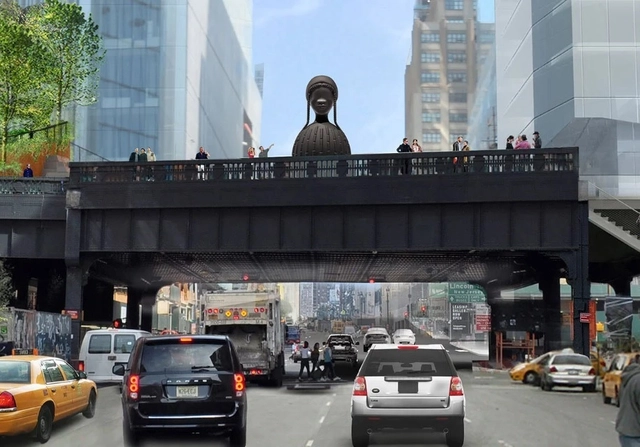
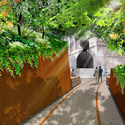
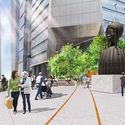
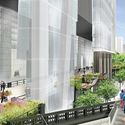
Next year New York's iconic High Line will open a new public space for art designed by James Corner Field Operations and Diller Scofidio + Renfro, with artwork by Simone Leigh. The public space will be the newest section of the elevated park dedicated to a rotating series of contemporary art commissions. The first art project in the space will be Brick House, a sixteen-foot-tall bronze bust of a black woman by Brooklyn’s Simone Leigh.
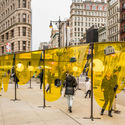
Studio Cadena’s Happy installation has been unveiled in New York's Flatiron Plaza. The project is the winner of the fifth annual Design Competition hosted by the Flatiron/23rd Street Partnership Business Improvement District (BID) and Van Alen Institute. As the centerpiece of the annual holiday program, the installation was selected by a jury with expertise across the worlds of design and public art, including representatives from the Flatiron Partnership, New York City DOT Art, and Van Alen Institute’s board of trustees.
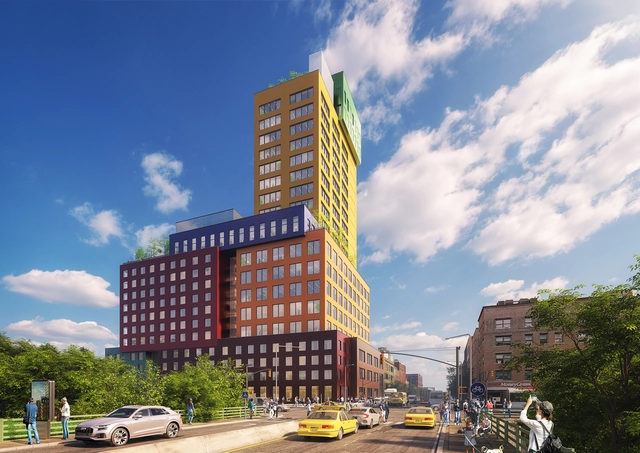
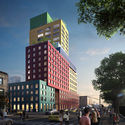
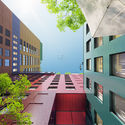
Dutch practice MVRDV has broken ground on Radio Tower & Hotel, a 21,800-square-meter mixed-use high rise located in the Washington Heights area in northern Manhattan. The 22-storey building is MVRDV’s first major project in the United States and combines hotel, retail, and office functions in vibrantly stacked blocks. The project was designed to reflecte the vivacious character of the neighborhood and set a direction for future development.
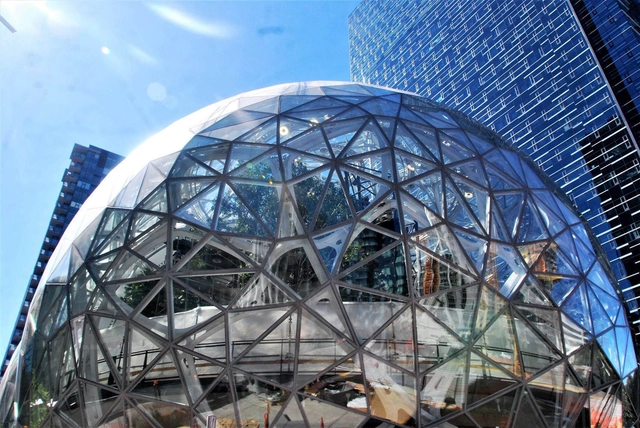
Amazon has selected New York City and Arlington for it's next headquarters, set to become two of the biggest economic development projects in the United States. Instead of choosing one site, Amazon will spread over $5 billion in construction and investments across the two locations. The tech giant will house at least 25,000 employees in each city, and could receive more than $2 billion in tax incentives. The new announcement ends a 14-month competition among cities across the country.
This article was originally published on November 5, 2014. To read the stories behind other celebrated architecture projects, visit our AD Classics section.
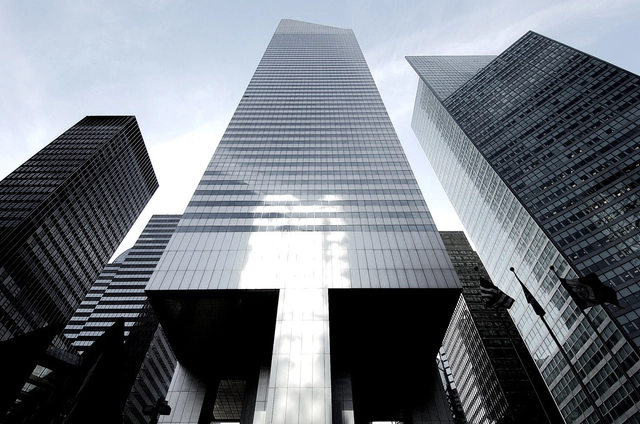
In a city of skyscrapers of nearly every shape and size, the Citigroup Center on Lexington Avenue is one of New York’s most unique. Resting on four stilts perfectly centered on each side, it cantilevers seventy-two feet over the sidewalk and features a trademark 45-degree sloping crown at its summit. The original structure responsible for these striking features also contained a grave oversight that nearly resulted in structural catastrophe, giving the tower the moniker of “the greatest disaster never told” when the story finally was told in 1995. The incredible tale—now legendary among structural engineers—adds a fascinating back-story to one of the most iconic fixtures of the Manhattan skyline.
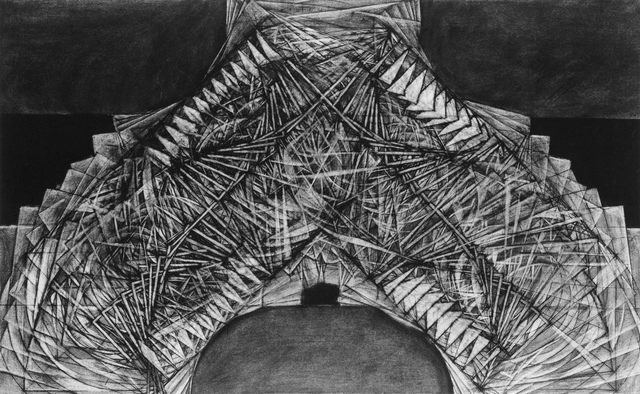
Author: Christian Dickson. Project Title: The Mark of Cain and Cain’s Mark. Course/AY: Thesis, 1991-92. Professors: John Hejduk, Roderick Knox, Sean Sculley, Regi Weile. Image Courtesy of The Irwin S. Chanin School of Architecture Archive, The Cooper Union
Drawing together the works of Elizabeth Diller,Laurie Hawkinson, Daniel Libeskind, and others, the exhibition titled “Archive and Artifact: The Virtual and the Physical” presents hand-drawn, digital, and three-dimensional works.
This article was originally published on May 25, 2015. To read the stories behind other celebrated architecture projects, visit our AD Classics section.
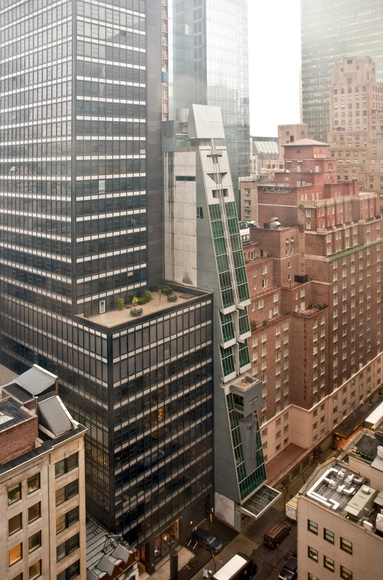
Before the impossibly “super-thin” tower became ubiquitous on the Midtown Manhattan skyline, Raimund Abraham’s Austrian Cultural Forum challenged the limits of what could be built on the slenderest of urban lots. Working with a footprint no bigger than a townhouse (indeed, one occupied the site before the present tower), Abraham erected a daring twenty-four story high-rise only twenty-five feet across. Instantly recognizable by its profile, a symmetrical, blade-like curtain wall cascading violently toward the sidewalk, ACFNY was heralded by Kenneth Frampton as “the most significant modern piece of architecture to be realized in Manhattan since the Seagram Building and the Guggenheim Museum of 1959.” [1]































.jpg?1413872412 "© Flickr user Steven Severing-Haus")




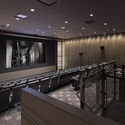
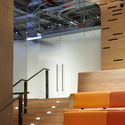
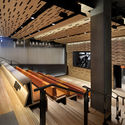

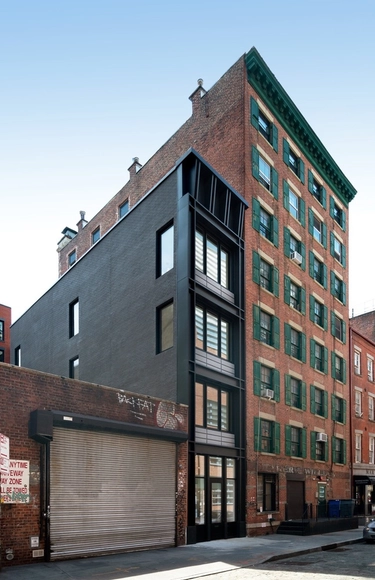


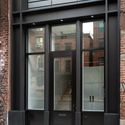


_Eric_Laignel.jpg?1535583348&format=webp&width=640&height=580)
_Eric_Laignel.jpg?1535583459 "© Eric Laignel")
_Eric_Laignel.jpg?1535583538 "© Eric Laignel")
_Eric_Laignel.jpg?1535583437 "© Eric Laignel")
_Eric_Laignel.jpg?1535583320 "© Eric Laignel")
_Eric_Laignel.jpg?1535583348)

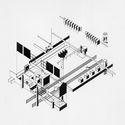










.jpg?1431981450 "The director's office that occupies the box-like protrusion on the southern facade. Image © Photo by David Plakke, davidplakke.com; Courtesy of Austrian Cultural Forum New York")