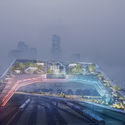
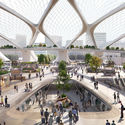
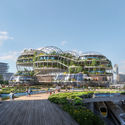
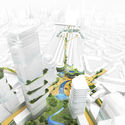
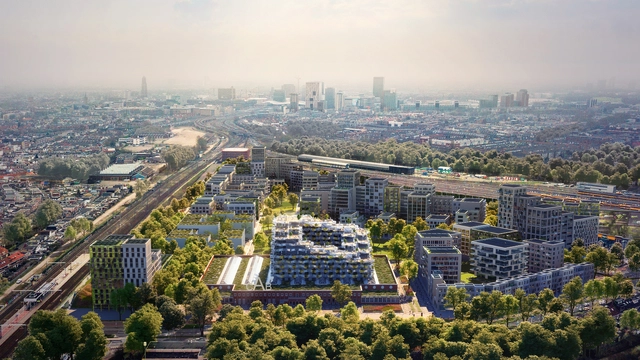
Dutch architectural practice UNStudio have created a new urban vision for the City of the Future, a Central Innovation District (CID) test site in The Hague. Dubbed the "Socio-Technical City", the design covers a 1 square km area in the center of the city. The proposal aims to transform the site into a green, self-sufficient district of housing, offices, urban mobility and public spaces over the existing train track infrastructure.
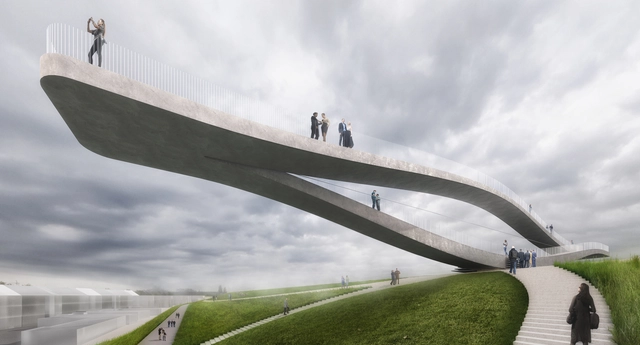
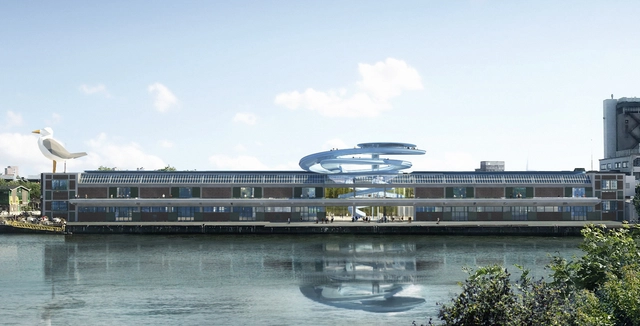
MAD Architects has unveiled images of their proposed panoramic viewpoint for the Fenix Warehouse in Rotterdam, commissioned by the Droom en Daad Foundation. The scheme represents MAD’s first public cultural project in Europe, which sees them tasked with uncovering the forgotten history of what was once one of the biggest warehouses in the world.
The viewpoint is to form part of a restoration project of the historic warehouse itself, to be led by Rotterdam-based Bureau Polderman. The scheme is situated on the site of one of the oldest Chinatowns in Europe, on the southern banks of the port of Rotterdam.
https://www.archdaily.com/906500/mad-architects-design-panoramic-viewpoint-for-historic-warehouse-in-rotterdamNiall Patrick Walsh
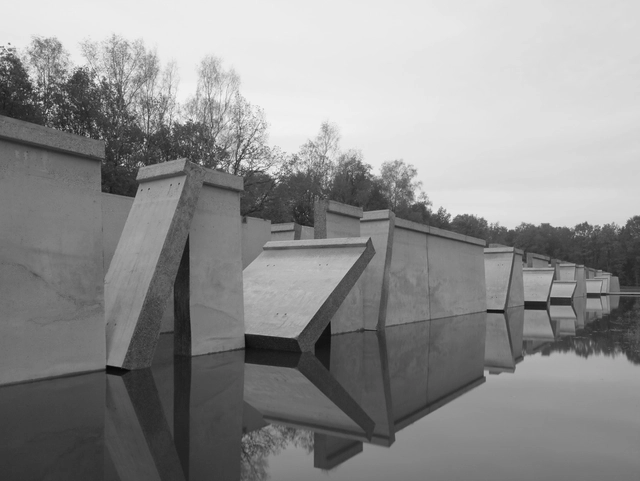
Deltawerk //, which opened September 27th, is envisioned as a “tribute to the majesty and seemingly indestructible power of the Dutch delta works,” shedding new light on the “practice of preserving cultural heritage.”
https://www.archdaily.com/903312/raaaf-and-atelier-de-lyons-monumental-deltewerk-is-a-tribute-to-the-majesty-of-dutch-flood-defensesNiall Patrick Walsh
ArchDaily and Airbnb were both founded in 2008, but for two very different reasons. Since then, ArchDaily has amassed a vast database of tens of thousands of buildings, located in cities and countries all around the world. Meanwhile, Airbnb has revolutionized the way in which we explore these countries, and use these buildings, even if just for one night.
Few subjects evoke as much sensitivity and refection, both within architecture and beyond, as those of death and mortality. Frank Lloyd Wright’s timeless reflection that “youth is a quality, and once you have it, you never lose it, and when they put you in the box, that is your immortality” offers one insight into how architects place not just their buildings, but also their lives and careers in perspective.
Furthering this engagement between architecture and mortality is HofmanDujardin, a Dutch studio which has sought to “rethink the way we say goodbye” with the design of a new Funeral Centre. Placing the coffin at its epicenter, the scheme translates the memorial sequence into three moments: the gathering of friends and family, the ceremony of remembrance, and the moment of social encounter.
That’s the goal, at least. Mecanoo has released designs for a large-scale development in Utrecht inspired by “blue zone” regions - areas where residents tend live atypically long and healthy lives. Currently there are only five recognized blue zones worldwide: Sardinia, Nicoya, Loma Linda, Okinawa, and Ikaria.
https://www.archdaily.com/898134/will-mecanoos-blue-district-in-utrecht-promote-a-generation-of-urban-centenariansKatherine Allen
Stretching over one mile (1.5 kilometers), the cable car links the two thriving residential districts of Amsterdam-West and Amsterdam-Noord through a system of three slender pylons and two stations. The cable car has been designed to accommodate a future third station depending on the pattern of growth for surrounding districts.
Videos
Courtesy of Houben & Van Mierlo Architecten
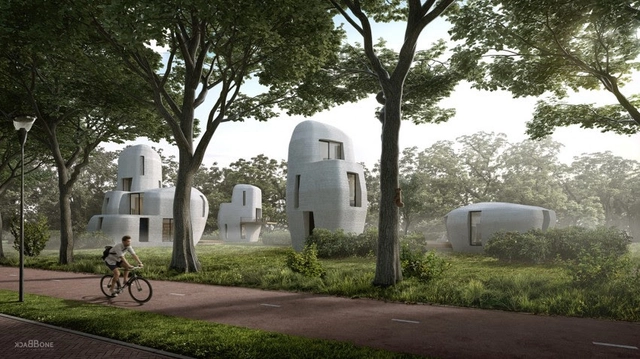
The Dutch city of Eindhoven is to host the world’s first commercial housing project based on 3D-concrete printing, with the first of five planned houses due to start construction this year. The units were developed by a collaborative team including local firm Houben & Van Mierlo Architecten, and the Eindhoven University of Technology. The pods will be purchased and let out by a real estate company upon completion.
The first house will be a single-floor, three-room house measuring 1000 square feet (95 square meters), to be followed by four multi-story units. The irregular shape of the buildings is based on “erratic blocks in the green landscape,” made possible due to the flexibility of form permitted by 3D-printing.
https://www.archdaily.com/895597/worlds-first-3d-printed-concrete-housing-project-to-be-built-in-eindhovenNiall Patrick Walsh
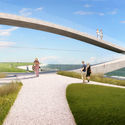
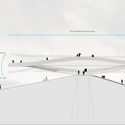
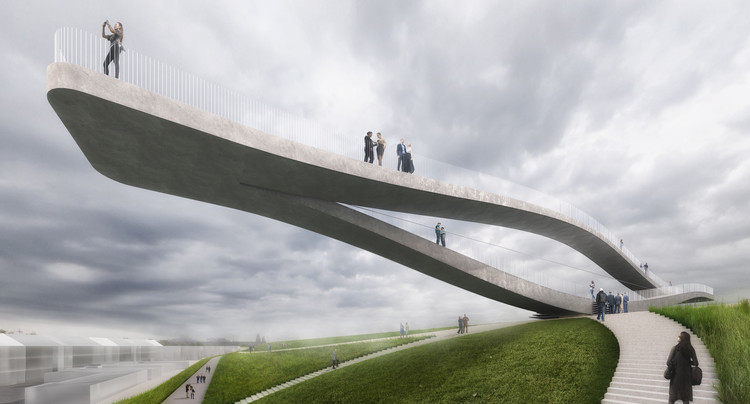
MVRDV has won a competition for the design of an art installation in the Dutch coastal city of Den Helder, seeking to strengthen the connection between land and sea through a new public landmark. The “SeaSaw” consists of a viewing platform balanced in equilibrium atop the city’s flood defenses, a distinguishable structure praised by the jury for capturing “the energetic spirit of the city represented as an infinite form.”
Videos
Courtesy of Eindhoven University of Technology
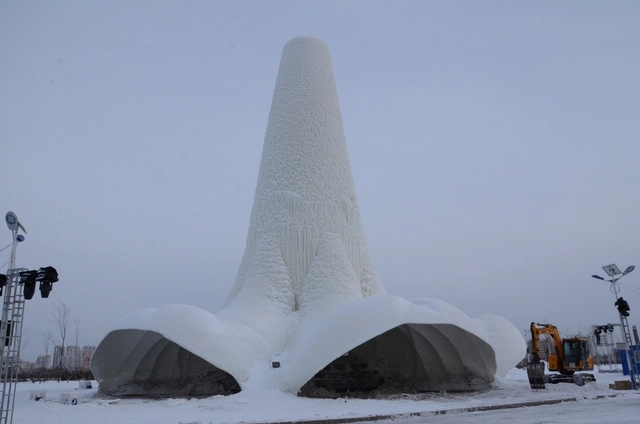
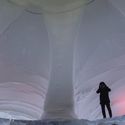
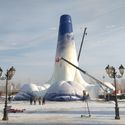
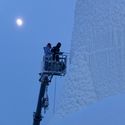
Beyonds igloos, sculptures, and Sweden’s ICEHOTEL, ice is not often seen as building material. An international team of Dutch-end Chinese students and professors from Eindhoven University of Technology (TU/e), Summa College, and the Harbin Institute of Technology (HIT) have used the freezing material to construct “Flamenco Ice Tower” in Harbin, China - the home of the International Ice and Snow Sculpture Festival.
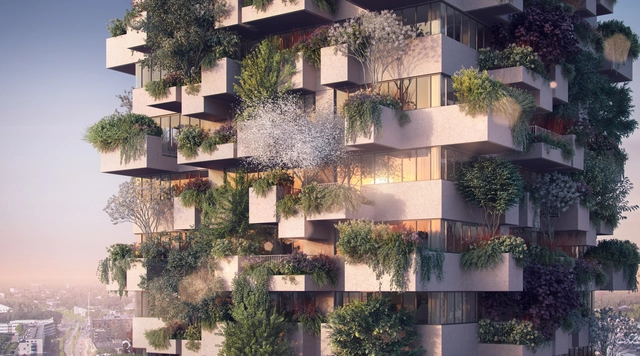
The new social housing project by Stefano Boeri Architetti is the first to integrate a vertical forest into an affordable residential skyscraper, improving the living conditions often incurred within such developments. 5,200 shrubs and 125 trees will be planted up the 75m tall structure in Eindhoven.
Trudo Vertical Forest will contain 125 social housing units over 19 floors to house lower income social groups, particularly young people. Each apartment will include a balcony filled with an array of trees, plants and shrubs for a forest soaring into the city's sky.
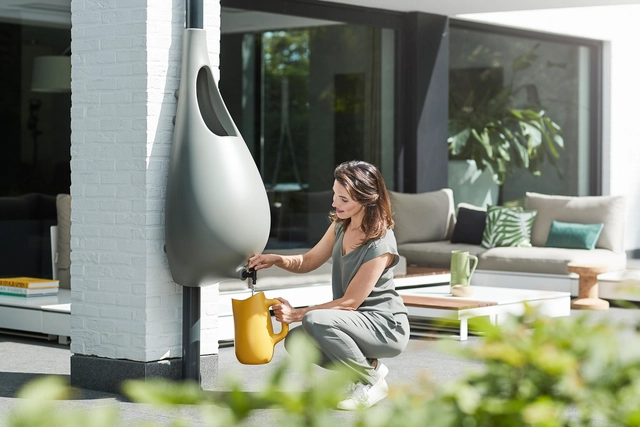
Earlier this month, Studio Bas van der Veer, the Dutch product design studio, unveiled its design for a rain barrel at the three-day fair, spoga+gafa 2017, in Cologne. Van der Veer, a graduate of the Design Academy Eindhoven, initially designed the product – then titled ‘A Drop of Water’ – as part of his thesis in 2009, for which he not only won the prestigious René Smeets Award for best project at the school’s Graduate Galleries exhibition but was also shortlisted for the Melkweg Award. Over the years, the design won numerous accolades, including the Journées des Collections Jardin - Innovation Award, and the Tuinidee Award.
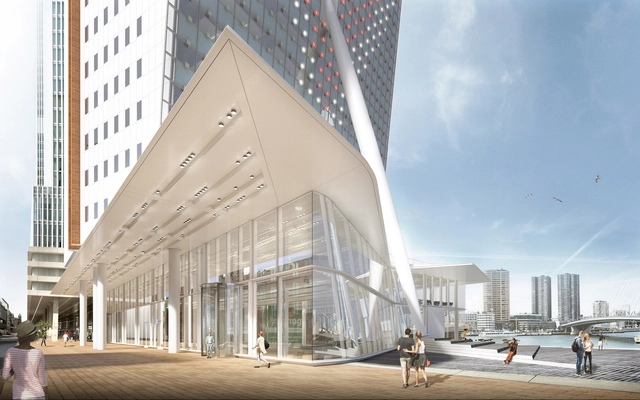
A year ago, Dutch telecom company KPN announced the move from its former headquarters in The Hague, to the famously leaning tower designed by Renzo Piano, at the foot of Rotterdam’s Erasmus Bridge. Completed in 2000, the tower is now set to undergo extensive renovation and expansion as part of the company’s relocation, to be headed by local firm V8 Architects with the intention of creating a new distinctive entry of the Wilhelminapier.
Piano himself was consulted in the design process, with the final proposal receiving his approval. "As a Rotterdam office, we are proud to have been asked to bring this characteristic building—and the first tower on the Wilhelminapier—to new life," said Michiel Raaphorst of V8." And we are honored our intervention is welcomed by Renzo Piano."
https://www.archdaily.com/874799/v8-architects-to-expand-renzo-pianos-tilted-kpn-tower-in-rotterdamOsman Bari
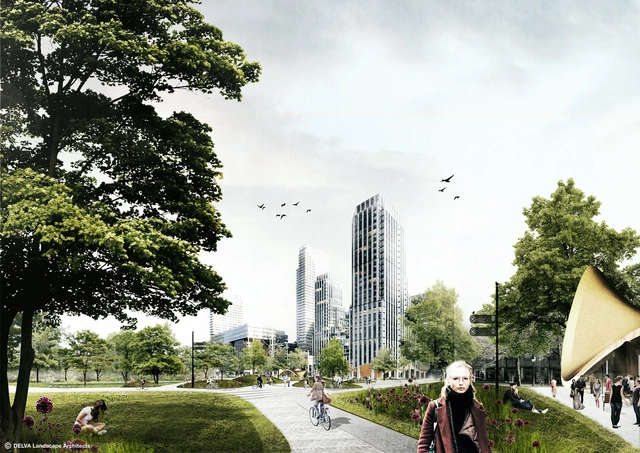
Serving as a new gateway to the city through the connection of various green spaces and public programs, The Green Entrance is DELVA Landscape Architects’masterplan for a historic district of The Hague. Given The Hague’s future inner-city densification, which involves the creation of 50,000 new houses, the Dutch firm’s aim is to aid these developments through sustainable and green urban strategies, manifested “through an integral approach between landscape design, cultural heritage, mobility, programming and technology.”
Commenting on the project’s primary function, the architects state: “’The Green Entrance’ connects areas that have been isolated over the years. It starts in the spacious and open ‘City Hall' that connects to the train station and continues to the ‘Koningin Julianaplein’. No narrow doors or gates, but a wide view over the green and lively surrounding public space.”
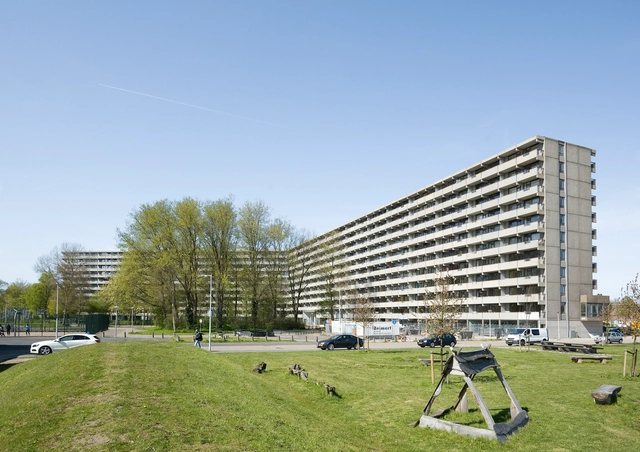
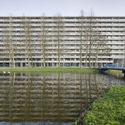
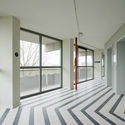
One of the largest residential buildings in the Netherlands, the complex was saved from the wrecking ball through its transformation into a rejuvenated framework called a “Klusflat," within which inhabitants could renovate their apartments by themselves. This is the first time the award has been given to a renovation of an existing building.
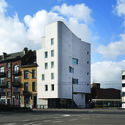
“Our instincts could be summed up by the words of Peter Smithson: ‘things need to be ordinary and heroic at the same time,’” said Jury Chairman Stephen Bates. “We were looking for an ordinariness whose understated lyricism is full of potential’.”
Through April, the jury members will visit each finalist project to evaluate the buildings firsthand and to see how they are used by the public. The Prize Winner will be announced in Brussels on May 16.
.jpg?1543847180&format=webp&width=640&height=580)
.jpg?1543847180)


.jpg?1533734642 "VillaLóla / ARKÍS architects. Image © ARKÍS architects")






.jpg?1529322837&format=webp&width=640&height=580)
.jpg?1529322827 "Courtesy of Plompmozes")
.jpg?1529322882 "Courtesy of Plompmozes")
.jpg?1529322837 "Courtesy of Plompmozes")
.jpg?1529322845 "Courtesy of Plompmozes")
.jpg?1529322837)