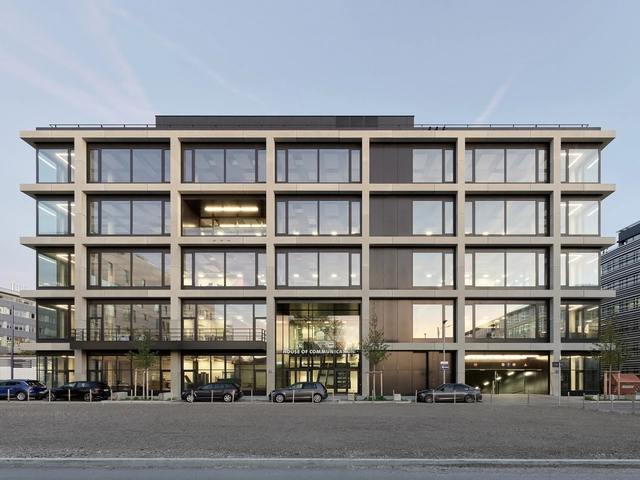
-
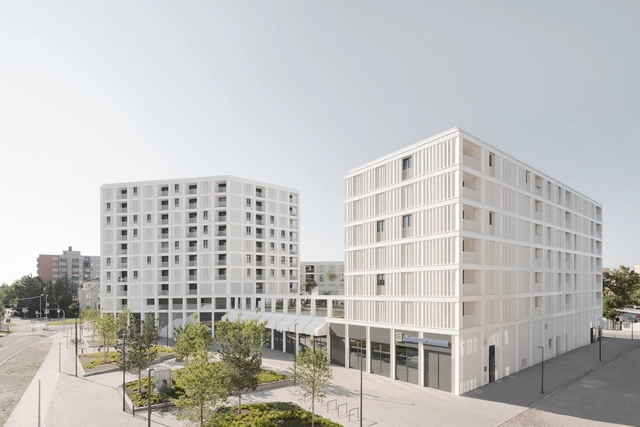
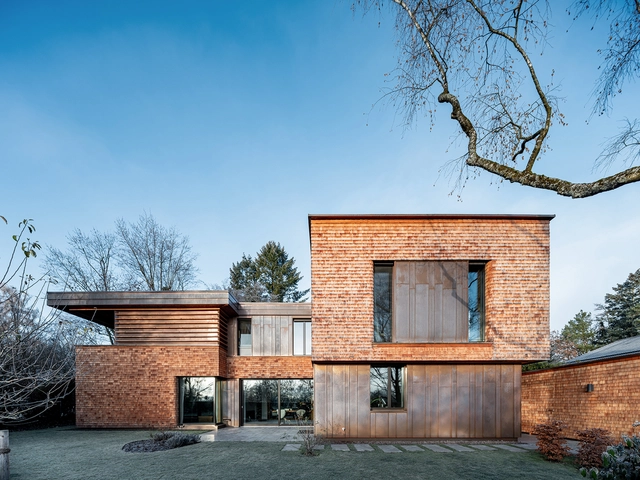
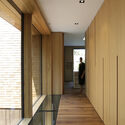
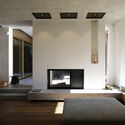
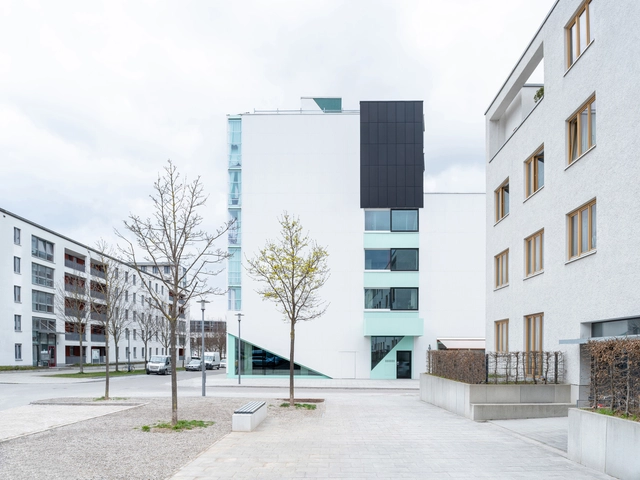
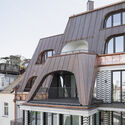
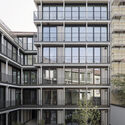
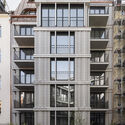
Architects: allmannwappner
- Area: 39750 m²
- Year: 2021
-
Professionals: realgrün Landschaftsarchitekten


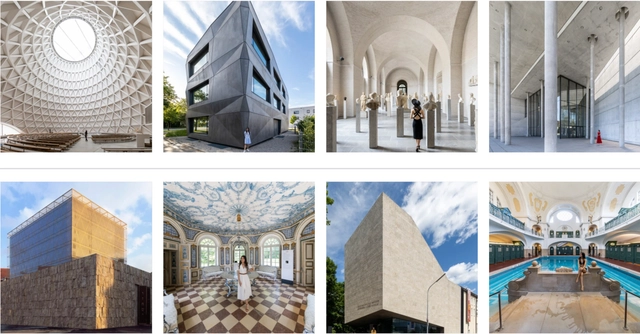
Munich – Bavaria’s capital since 1506 – is a city with layers and layers of history. Its many years as a rising architectural epicenter have left an interesting and unique mix of buildings. From Middle Age churches and cathedrals to contemporary synagogues. From skyscrapers to small pavilions. Brutalism to Art Nouveau. Munich’s architecture is truly extensive and marvelous.
Though not acknowledging Munich’s beer wonders would be wrong, the only mention of this substance would be in the stunning buildings (like the new Paulaner HQ by Hierl Architekten) that contain them. Yes, other aspects of the city are grandiose, but let’s focus on Munich’s top attraction: its architecture.


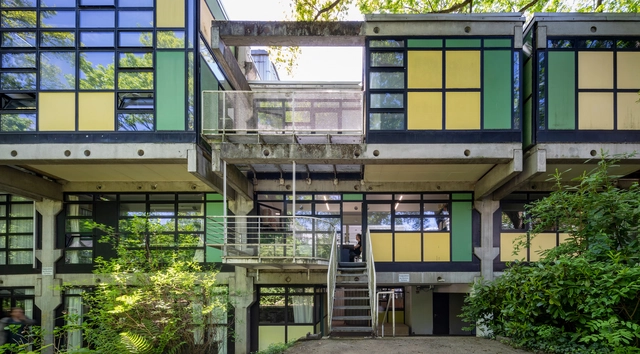
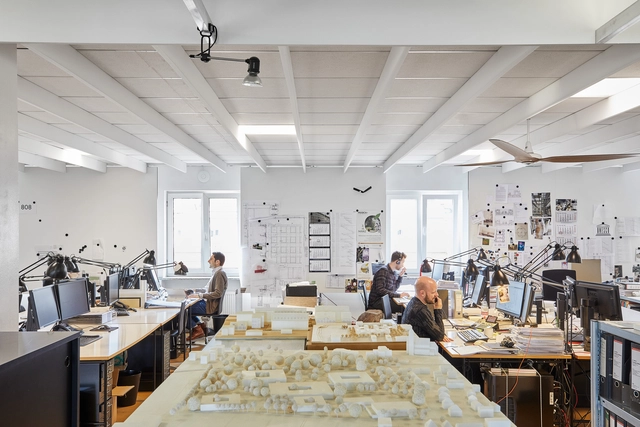
After having explored the spaces of architectural offices in the cities of Frankfurt, Stuttgart, and Munich, Germany, Marc Goodwin documents the facades of the same studios. Looking at what makes them similar and what makes them unique, the series of images showcases 25 buildings of German firms such as Schneider+Schumacher, Blocher Partners, Asp Architekten, Behnisch Architekten, Laboratory for Visionary Architecture, Henn, Auer Weber Assoziierte, FRANKEN Generalplaner, apd architektur+ingenieurbüro, Steimle Architekten and Max Dudler.

After photographing architectural studios in Berlin, Marc Goodwin has captured the spaces of 26 offices between the German cities of Frankfurt, Stuttgart, and Munich, including Schneider+Schumacher, Blocher Partners, Asp Architekten, Behnisch Architekten, Laboratory for Visionary Architecture, Henn, and Auer Weber Assoziierte to name a very few.
Continuing his work on the Atlas of Architectural Atmospheres, Archmospheres, Goodwin has collected so far, images of studios from cities around the world, more specifically from Madrid, Panama City, Dubai, London, Paris, Beijing, Shanghai, Seoul, Barcelona, Los Angeles, Istanbul, and so many others.


Boston is the latest city to announce a city-wide plan that, if passed, would eliminate the use of fossil fuels in new constructions and major renovation projects. This measure expands upon the commitment to enact climate action and make Boston a Green New Deal city. Other US cities like New York, Los Angeles, San Jose, Seattle, and Berkeley have all imposed similar measures in recent years. Seven European cities - Bilbao, Bratislava, Dublin, Munich, Rotterdam, Vienna, and Winterthur - have also developed a project to phase out fossil fuel from urban heating and cooling.


The Glyptothek Museum will showcase the first exhibition dedicated to Santiago Calatrava's array of sculptures and paintings inspired by Greek Antiquity. Running from June 21st to October 23rd, "Beyond Hellas: Santiago Calatrava in the Glyptothek" traces the architect's career as a sculptor, highlighting the influence of histories and cultures on Calatrava's design process.
San Riemo Residental Building by ARGE Summacumfemmer Büro Juliane Greb is this year's recipient of the DAM Prize for Architecture, an annual award highlighting outstanding German projects. Selected from 100 buildings nominated by the Deutsches Architekturmuseum (DAM), the San Riemo Residental Building was commended for an exemplary take on communal living and its spatial flexibility that can accommodate a wide range of dwelling scenarios. The finalist projects include OMA’s Axel Spinger building, Burger Rudacs Architekten’s John Cranko ballet school in Stuttgart and Florian Nagler Architekten’s , Research Buildings Bad Aibling.

MVRDV revealed its plans to redevelop a challenging site surrounded by roads in the south of Munich through a design that combines the renovation of an existing building complex with the addition of two-stepping towers. Retaining six of the nine existing blocks, the project expands the current programme and creates a new landmark for the neighbourhood while placing a green plaza at the heart of the development.

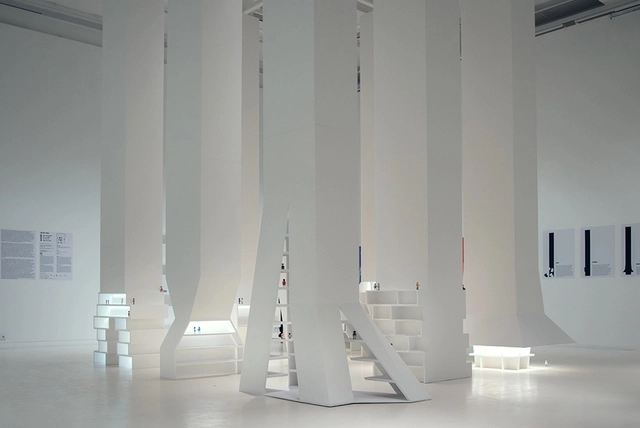
Shape Tomorrow, a new exhibition at AEDES Architecture Forum in Berlin, is a reaction to both staid, self-serious architecture shows and to the staid, self-serious architecture profession. Taking the form of a miniature city, it turns buildings into named characters, encourages visitors to populate structures with miniature people, and leaves space for them to fill the room with their ideas and criticism.
The exhibition, on view through January 13, is the brainchild of German architect Matthias Hollwich, founder of New York-based HWKN—a burgeoning firm known for both its research and its sense of whimsy. The show centers on nine, 16-foot-tall white plaster towers whose glowing bases take on the forms of some of the firm’s playful, kinetic projects from around the world. These include 25 Kent, a fractured office building in Williamsburg, and Die Macherei, a jutting and terraced mixed-use business district in Munich.