1. ArchDaily
  2. Cities

Cities: The Latest Architecture and News

New London Architecture Unveils Updated 1:2000 Scale Model Of The UK Capital

New London Architecture (NLA), an independent resource and forum for debate about the city's built environment, have unveiled a new, large-scale interactive model of the UK capital. Designed to provide a visual history of the city, NLA also intend for it to spark questions about its future. This model replaces an earlier one, which was revealed on the day that it was announced that London's bid to host the 2012 Olympic Games has been successful. Now, a decade later, the present projection of the city's built future has been mapped across the model, highlighting the locations of the 263 tall buildings planned or under construction. Visitors are also able to track the route and impact of new transport links, such as HS2 and Crossrail.
Archiculture Interviews: Jess Zimbabwe

"We as a species assign value to people based on the environments we ask them to live in. And I think most people are worth more than a lot of the environments that we ask them to live, work, attend school and shop in."

These Maps Reveal Just How Disjointed Many US Bike Lanes Are

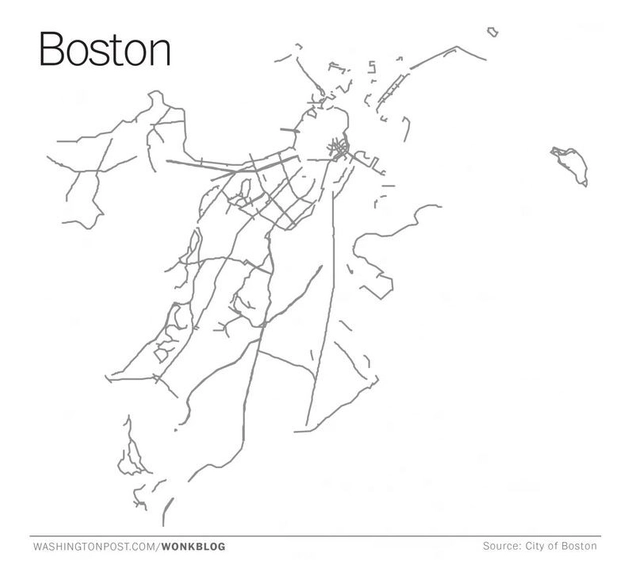
As cities worldwide are plagued with increasingly congested streets, more people are turning to bicycles to ease their commute. To accommodate the trend, bike lanes have been popping up around cities, yet often in a disjointed manner. A series of maps compiled by the Washington Post illustrates this surprisingly sporadic cycle infrastructure in several US cities.

Cropping up as afterthoughts in the existing urban fabric, many US bicycle networks consist of fragmented stretches of bike lanes and “sharrows” (shared car and bike lanes) loosely bound together by their proximity. In the case of Washington D.C., most of these are under a mile in length. A lack of cohesion and continuity leads to commuter chaos, forcing cyclists onto unprotected shoulders or into traffic when their designated lanes pull a disappearing act. Take a look at the maps after the break.

32 Winners of Inaugural Knight Cities Challenge Announced

Thirty-two projects have been announced as the winners of the Inaugural Knight Cities Challenge, sharing in a prize pool of $USD5 million. An initiative of the John S. and James L. Knight Foundation, the challenge received an overwhelming number of entries, with winners selected from a pool of over 7000 submissions. Each of the projects proposed strategies for the civic and economic development of one of the 26 cities in which the Knight Foundation invests, including Detroit, Akron Ohio, San Jose California, Lexington Kentucky, and Biloxi Mississippi.

The winning proposals each addressed one or more of the Knight Foundation’s “three drivers of city success”: (1) Talent: Ideas that help cities attract and keep the best and brightest, (2) Opportunity: Ideas that create economic prospects and break down divides, (3) Engagement: Ideas that spur connection and civic involvement.

Video: Rob Whitworth, Stunning Cities in Hyperlapse

Witness the urban life of five stunning metropolises through the lens of Rob Whitworth with these "Vimeo Staff Pick" hyperlapse videos. From the unexplored urban life of the North Korean capital Pyongyang to the towering skyline of Dubai, each video explores an incredible sequence of daily living in cities across the planet. See more, including video from Kuala Lumpur and Shanghai, after the break.

Help Fund Ittyblox's 3-D Printed Miniature Cities

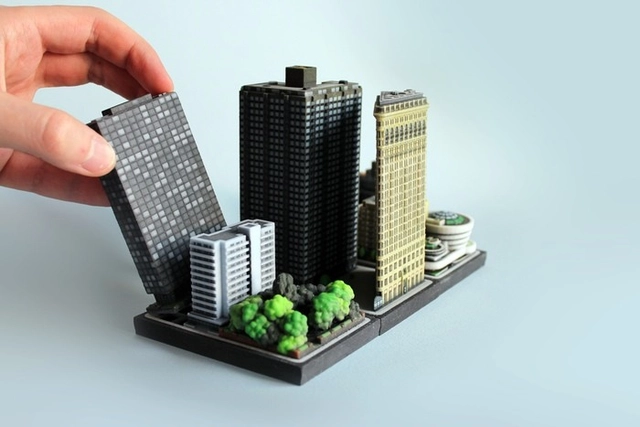
Ever wanted your very own Flatiron Building to sit on your mantelpiece? What about a Guggenheim for your desk, or a block of London apartments for your side table? Ittyblox, a Dutch company based in Den Bosch, is determined to make this dream a reality, 3D printing 1:1000 models of iconic buildings and city blocks. The models are printed in full color and designed to slot into modular baseplates, which can be arranged into complete cityscape dioramas. Buildings currently in production hail from London, Miami, New York, and Chicago, with a new building added each week.

SOM Masterplans Egypt's New Capital City

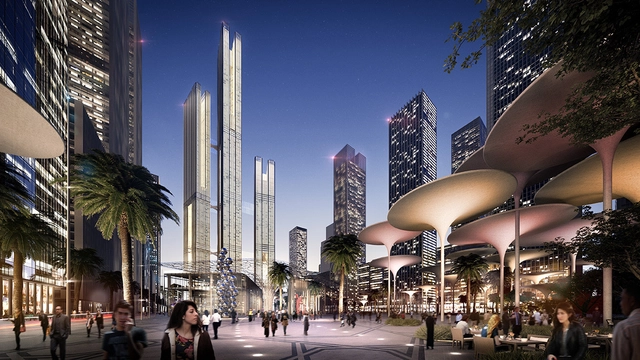
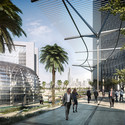
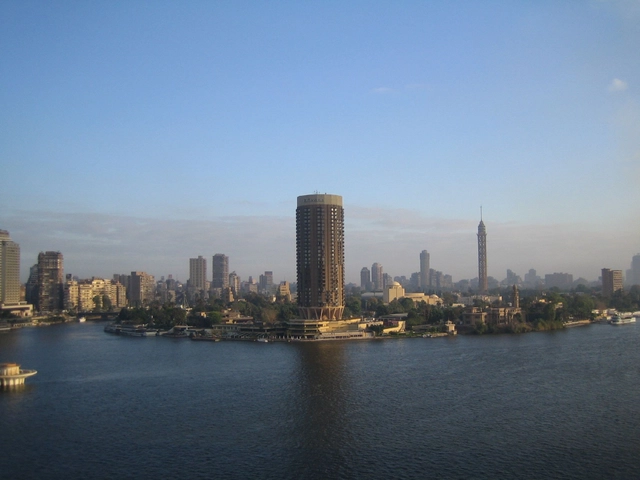
Skidmore, Owings and Merrill (SOM) has released a conceptual masterplan for Egypt's new capital city following its unveiling at the Egyptian Economic Development Conference. The 700-square-kilometer "Capital Cairo" hopes stimulate Egypt's ailing economy and alleviate Cairo's rising population density, while adhering to the cultural and climatic conditions of its site.

All the details, after the break.

SOM Masterplans Egypt's New Capital City - Image 1 of 4SOM Masterplans Egypt's New Capital City - Image 2 of 4SOM Masterplans Egypt's New Capital City - Image 3 of 4SOM Masterplans Egypt's New Capital City - Image 4 of 4SOM Masterplans Egypt's New Capital City - More Images+ 1

Jan Gehl: “Architects Know Very Little About People”

Danish urban planner and committed pedometer user Jan Gehl is an expert in creating “cities for people.” Following a recent talk he gave on sustainable cities in Basel, Gehl sat down with Tages Wocke to discuss what makes a city desirable and livable. “We found people’s behavior depends on what you invite them to do,” says Gehl. “The more streets you have, the more traffic you get. A more attractive public realm will be used by more people.” Read the full interview and see why Gehl thinks social and psychological sciences should be taught in architecture school, here.

Vincent Laforet Captures San Francisco From Above

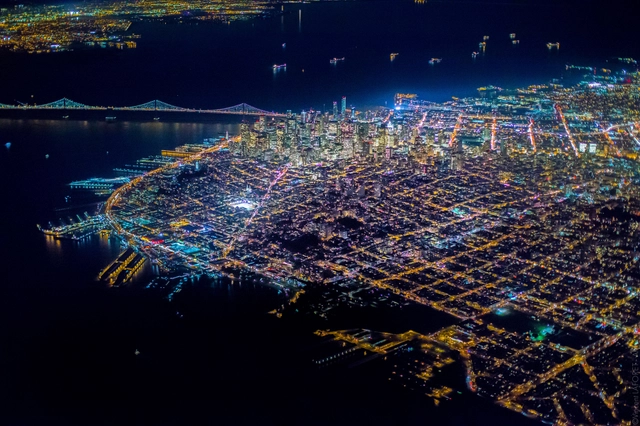
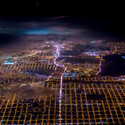
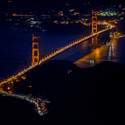
Pulitzer Prize-winning photographer Vincent Laforet has made his way to San Francisco as part three of his dizzying series of city aerials. Capturing the tightly packed metropolis from 7,200-feet, Laforet became mesmerized by the city’s “clashing grids,” stunning bridges and overwhelming feeling of “peace and order.”

“There’s just something about this city’s vibe - a perfect balance between the hectic go-getter pace of New York and the more relaxed, laissez-faire rhythm of Los Angeles,” says Laforet. “It feels like every little piece of the puzzle has somehow found its place in what is an absolutely chaotic topography.”

See a selection of Laforet’s San Francisco series, after the break.

Vincent Laforet Captures San Francisco From Above - Image 1 of 4Vincent Laforet Captures San Francisco From Above - Image 2 of 4Vincent Laforet Captures San Francisco From Above - Image 3 of 4Vincent Laforet Captures San Francisco From Above - Image 4 of 4Vincent Laforet Captures San Francisco From Above - More Images+ 1

Share Your Tactical Urbanism Ideas with MoMA

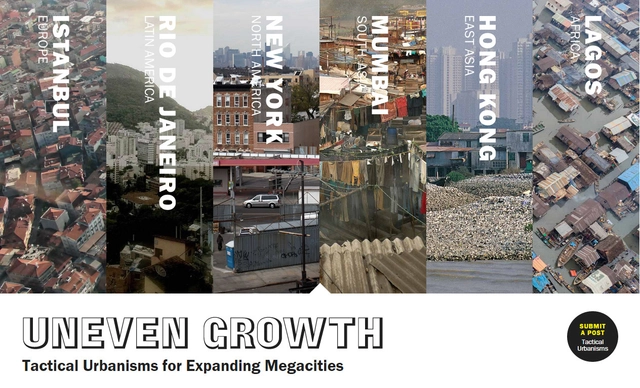
Along with rapid urban expansion comes uneven growth - one of the largest threats that face our society. Determined to combat this issue, the Museum of Modern Art (MoMA) sparked an international debate with the opening of Uneven Growth: Tactical Urbanisms for Expanding Megacities. The exhibition, a culmination of a 14-month initiative, highlights emergent modes of tactical urbanism from around the globe that offer ideas on how to mitigate inequality and preserve livability within an increasingly-expanding world.

ASA International Design Competition: Dense City

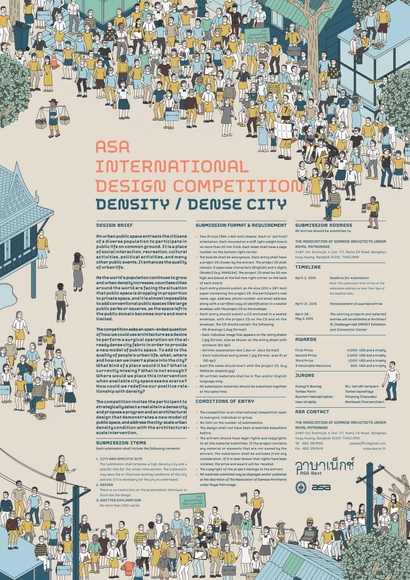
Urban public spaces create common grounds for diverse, public participation. They are places of social interaction, recreation, cultural activities, political activities, and many other public events, enhancing the quality of urban life.

As the world's population continues to grow and urban density increases, public space is dropping in proportion to private space in countless cities around the world. And it is almost impossible to add conventional public spaces like large public parks or squares, as the space left in the public domain becomes more and more limited.

The competition asks an open–ended question of how we could use architecture as a device to perform a surgical operation on the already dense city fabric in order to provide a new model of public space. To add to the quality of people’s urban life, what, where and how can we insert a place into the city? What kind of a place would it be? What is currently missing? What is not enough?  Where would we place this intervention when available city space seems scarce? How could we redefine our positive relationship with density?

Egypt Unveils Plans for "New Cairo"

In an effort to combat the economic conditions that have plunged one-fourth of its population into poverty, Egypt's ambitious development plan for a massive new capital city is soon to be underway. Roughly the size of New Cairo, the privately-funded city hopes to become the new administrative center, as well as a bustling metropolis of shopping, housing, and tourist destinations to generate economic activity. Plans were solidified at a foreign investment conference where the official project details were unveiled on March 13 in Sharm el-Sheikh.

Read on after the break for more on the $45 billion plan.

Genre de Vie: A Film About Cycling's Impact On Urban Livability

Subscriber Access | 

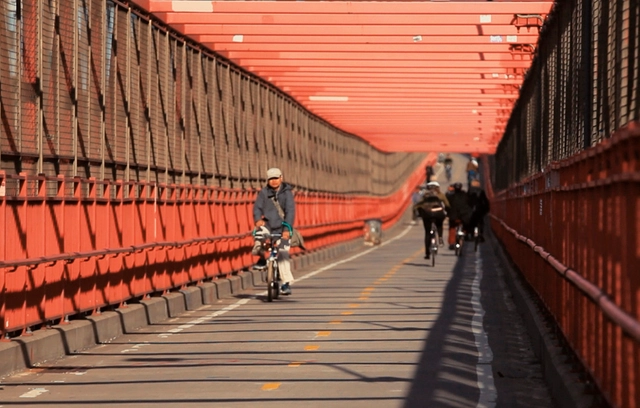
Today we are facing environmental issues more than ever. While architects, urban designers, policymakers and thinkers discuss the future of our cities, more and more people become aware of their own impact and use of space. Genre de Vie is a documentary film about bicycles, cities and personal awareness. Using the bicycle, Genre de Vie delves into how cycling contributes to the future livability of cities.

Watch the full documentary after the break.

What Makes An Attractive City? Try These 6 Points.

Challenging the notion that beauty is subjective, Alain de Botton has made a case for attractive cities, believing that a city’s beauty is key to its success and citizens' quality of life. The Swiss philosopher, author and founder of London's The School of Life believes that attractiveness is the primary reason why many choose to vacation to Paris, and not Frankfurt.

"We think beauty is subjective, and so no one should say anything about it," says Botton. "It's a very understandable qualm, but it's also horribly useful to greedy property developers.”

So, what makes a city attractive? Find out Botton’s six points for beautiful cities, after the break. 

Defensive Architecture Creates Unlivable Cities

Subscriber Access | 

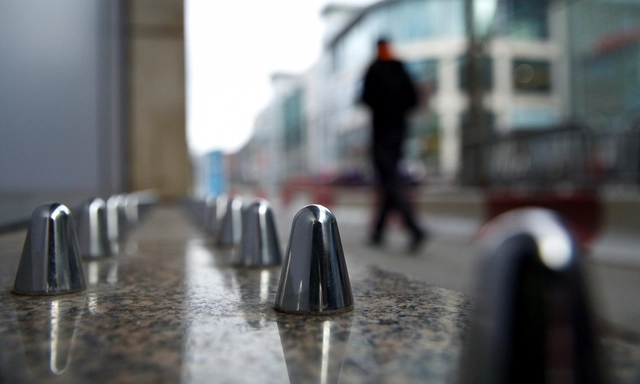
To many, the harsh turns the modern city has taken are not apparent. We see benches and bus stops that masquerade as shelters, but Guardian writer Alex Andreou's sudden plunge into homelessness opened his eyes to the hostile realities of these and other structures. In "Anti-Homeless spikes: 'Sleeping rough opened my eyes to the city's barbed cruelty'," he sheds some light on misconceptions about homelessness and explains the unfortunate trend of designing unlivable architecture to deter those affected.

Vincent Laforet's "Sin City" Shows Vegas from 10,800 Feet

Vincent Laforet is at it again, this time photographing Nevada’s Sin City from an elevation of 10,800 feet (8,799 feet above the city). Part two of Laforet’s dizzying series of city aerials, the Pulitzer Prize-winning photographer was drawn to desert city of Las Vegas because of its “island” effect.

“Just like the island of Manhattan that started this series, Vegas is an "Island of Light" in the middle of nothingness… A sea of black with an amazing source of light emanating from Vegas and its infamous strip… You can almost see the electricity running through it.”

A collection of "Sin City" images, after the break. 

The Urbanist's Guide to the World

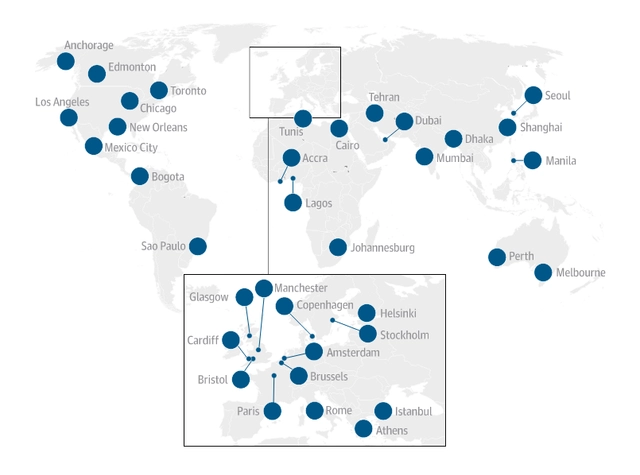
A compilation of all posts in the "Urbanist's Guide to..." series from Guardian Cities, "The Urbanist's Guide to the World" takes readers to cities across the globe. Penned by local bloggers in cities from Manila to Sao Paulo, Tehran to New Orleans, the vignettes are supported by The Rockefeller Foundation and cover everything from "best" and "worst buildings" to cleanliness, soundscapes, and "the best place for a conversation." You can view the interactive guide here.

China’s Pearl River Delta Overtakes Tokyo as World’s Largest Urban Area

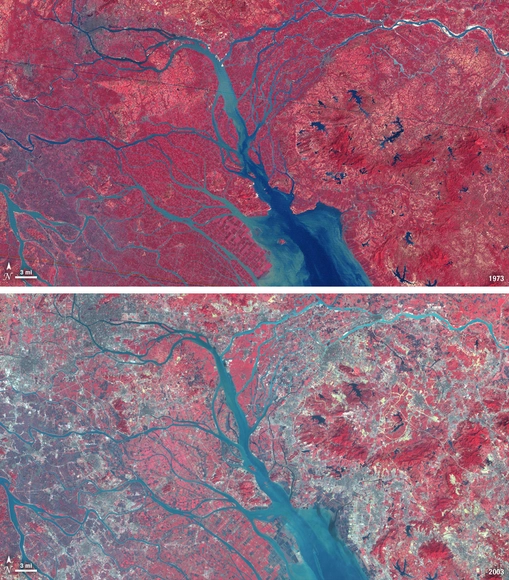
China’s Pearl River Delta has surpassed Tokyo in both size and population, making it the largest urban area in the world, according to the World Bank. The colossal megapolis - a conglomerate of several cities, including Shenzhen, Guangzhou, Foshan and Dongguan - is a central component to China’s manufacturing and trade industries.

It is now home to 42 million - more people than the countries of Canada, Argentina or Australia. And, considering nearly two-thirds of the East Asia region’s population (64%) is still “non-urban,” the area is expected to grow exponentially.