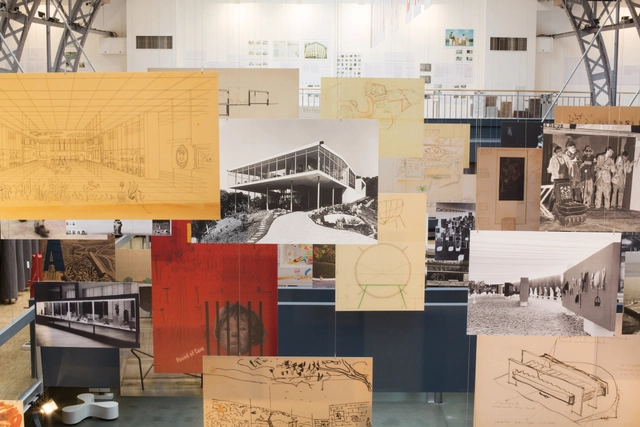
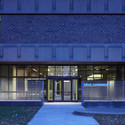
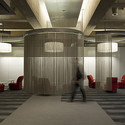
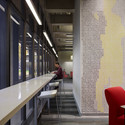
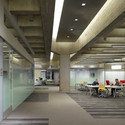
From April 25 through July 25, 2015, the Graham Foundation will host an exhibition at its Madlener House showcasing the vision of Italian-Brazilian architect Lina Bo Bardi. Known for her emphasis on social modernism and expressive use of materials, Lina Bo Bardi: Togetherexplores her legacy through her collected works, as well as that of other artists paying homage to the architect and striving to generate new conversations about her designs. Curated by Noemi Blager, the exhibition features photographs, films, and artistic objects reflecting Bo Bardi's diverse work and immersion in Brazilian culture.
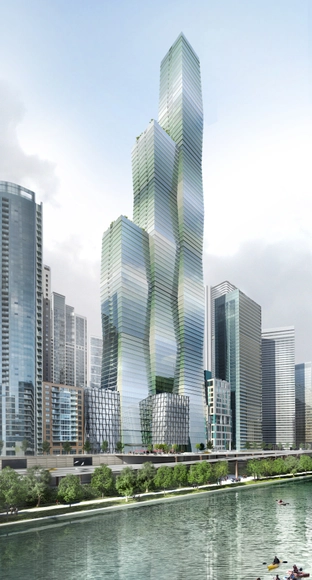
Studio Gang Architects has gone public with what will be Chicago's third tallest tower, Wanda Vista. The massive mixed-use development, planned to open adjacent to the Chicago River in the city's Lake Shore East community by 2019, will reach 1100 feet (335 meters) and encompass more than 1.8 million-square-feet of residential and hotel space.
Defined by three vertical elements, the tower is shaped to maximize resident views of the city and river below.
Chicago Beacon / Solomon Cordwell Buenz. Image Courtesy of Chicago magazine
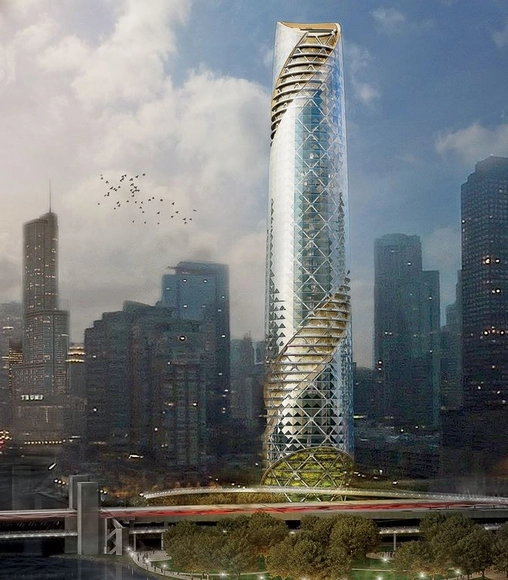
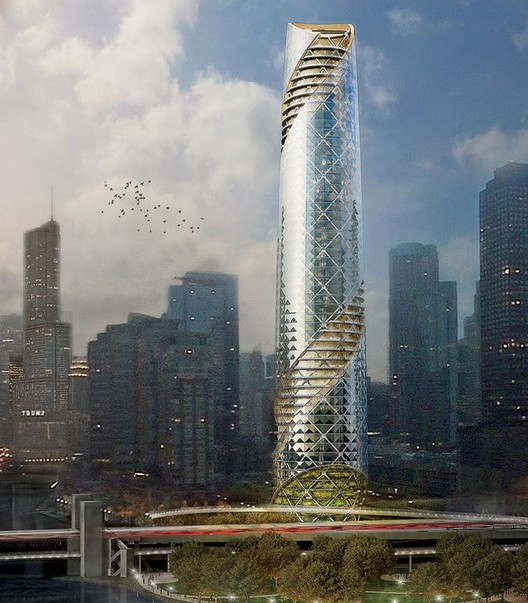
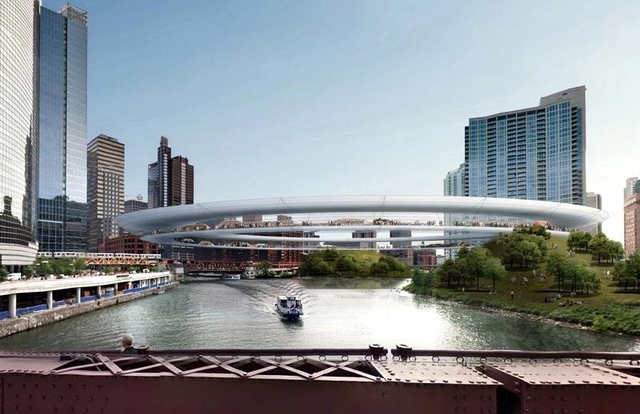
With Santiago Calatrava’s unfulfilled Chicago Spire amounting to just a (costly) depression along the Chicago River, what was to be the second-tallest building in the world certainly has not established the legacy it intended. However, following the site’s relinquishment to local developers Related Midwest, it may yet have a meaningful impact on its community. Six Chicago-based firms of various disciplines have developed designs to make use of the "hole" by injecting a public program into the abandoned site.
Check out the inventive proposals, with ideas from firms including UrbanLab and Solomon Cordwell Buenz, after the break.
The competition to host the new Barack Obama Presidential Library has generated quite a stir, attracting proposals from cities across the United States with Chicago emerging as the current front runner. Amid the debate, that is expected to end with a decision later this month, a new controversy has surfaced on the coattails of the University of Chicago's speculative plan. The proposed concept involves a land transfer for the library to occupy one of two historic parks designed by iconic landscape architects Frederick Law Olmsted and Calvert Vaux in the 1870s. Read more about the heated debate over using public parkland to house the library, here.
The former IBM Building in Chicago. Image Courtesy of DesignCurial
In 2013 the former IBM Building in Chicago, Mies van der Rohe's last completed skyscraper, underwent a significant renovation as a part of the tower was converted into a hotel. In this article, originally published in Blueprint issue #338 as "Lobbying for Mies van der Rohe," Anthea Gerrie catches up with Dirk Lohan - the Chicago architect who helped his grandfather design the building nearly 50 years ago, and who was called back in to design the new hotel's entrance lobby.
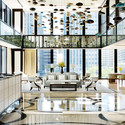
"It's not very Mies," says Dirk Lohan dubiously, in one of the great understatements of the year. We are standing in the double-height reception hall of the Langham Chicago hotel with what looks like dozens of multicoloured glass balloons swimming above us and a mirror-glass frieze adding to a cacophony of glitz and dazzle.
It is indeed the very antithesis of the aesthetic of the architect known for the phrase "less is more". But then the audacious idea of converting an office building by the most functionalist of architects into a five-star hotel was always going to be problematic.
Inspiring designs across the United States, the winning entries aimed to envision a library that could both recognize the President by displaying a collection of mementos from his life and provide the basis for community programs. Contestants were asked to consider the building's context within the city of Chicago to generate a speculative proposal that not only fosters learning and exploration, but also inspires public discussion. To further encourage creativity, the library's program was unspecified, allowing participants to decide how to incorporate these civic and educational elements in their designs.
Ultimately, a distinguished panel selected two winners and three honorable mentions emerged from the competition. The winning proposals and honorable mentions are as follows:
Following the extensive preservation battle over Bertrand Goldberg's iconic Prentice Women's Hospital, the Chicago landmark was demolished a few months ago to pave the way for Perkins+Will's new Biomedical Research Building for the Feinberg School of Medicine. The four year preservation struggle was marked by repeated appeals to the Commission on Chicago Landmarks and Mayor Rahm Emanuel with attempts to place the building on historic registers, proposals to adapt it for modern use, and design competitions to gain public opinion on the future of the building. Ultimately, the outpouring of global support by architects and preservationists to save Prentice fell short of the political agenda of progress, prioritizing future development over preserving the city's past.
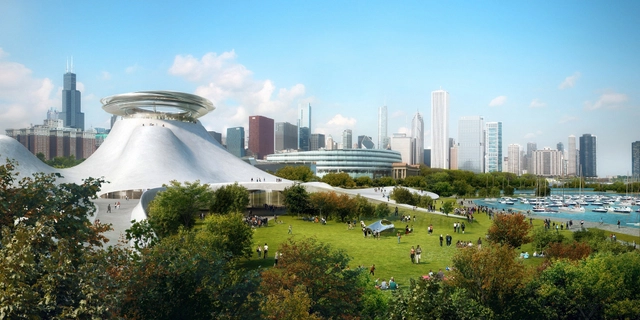
Concerns regarding the environmental sensitivity of George Lucas’ proposed Lucas Museum of Narrative Art in Chicago has caused the project to halt, and may even prevent it from being realized. According to a suit filed against the museum by the Friends of the Parks, environmentalists believe that the “mountainous” lakefront proposal, designed by MAD Architects, will disrupt the site’s ecosystem.
As reported by the Los Angeles Times, Lucas’ hasn’t given up on Chicago yet. However, considering that Lucas wants to see the museum built within his lifetime, the 70-year-old Star Wars director is starting to reconsider a University of Southern California (USC) campus site in Los Angeles.
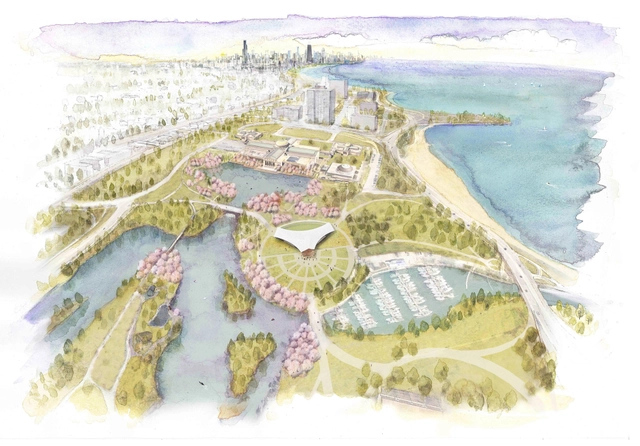
Aerial View of the Park. Image Courtesy of Project 120 Chicago
Chicago’s Jackson Park is expected to see some big changes in the coming years. Nonprofit organization Project 120 is working to revitalize the park, restoring many of the design aspects implemented by its landscape architect, the famous Frederick Law Olmsted. Alongside this restoration, the park will also receive a new Phoenix Pavilion, homage to Japan’s gift to the US for the 1893 Columbian Exposition. An outdoor performance space will be added to the park, as will an installation funded by musician and activist Yoko Ono. See the details, after the break.
Visiting a city as large as Chicago can be overwhelming. For the architect, this is doubly true. The city is a treasure trove of architectural history, perhaps most notable as the birthplace of the skyscraper and the Chicago School. Names like Louis Sullivan, Frank Lloyd Wright, and Daniel Burnham are commonplace in Chicago, their buildings nestled amidst more modern works by the likes of SOM, Jelmut Jahn, and Studio Gang Architects.
Still more works are hidden away in obscure corners of the city, less well known but equally representative of the time and style in which they were built. In the interest of cataloging these buildings, and bringing attention to those that may not be on the typical city tour, blogger John Morris has created Chicago Architecture Data. A near-comprehensive survey of projects built before 1940 organized by neighborhood and architectural style, Chicago Architecture Data is a veritable history book for the architecture of the Windy City.
The Society of Architectural Historians (SAH) will hold its 68th Annual International Conference in Chicago, Illinois, from April 15–19, 2015, with the theme "Chicago at the Global Crossroads." SAH will celebrate its 75th anniversary during the conference, which includes lectures by Jeanne Gang and Blair Kamin, as well as roundtables and 36 paper sessions covering topics in architecture, art and architectural history, preservation, landscape architecture, and the built environment. SAH is committed to engaging both conference attendees and local participants with public programming that includes over 30 architectural tours, a plenary talk, and a half-day seminar addressing Chicago’s waterways and neighborhoods. Register at sah.org/2015.
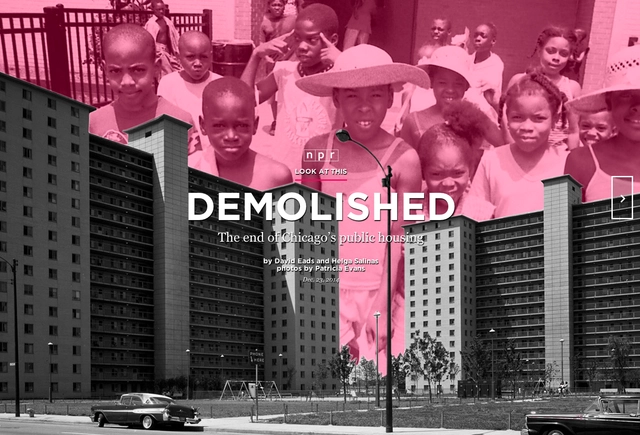
NPR journalists David Eads and Helga Salinas have published a photographic essay by Patricia Evans alongside their story of Chicago’s public housing. Starting with Evans’ iconic image of a 10-year-old girl swinging at Chicago’s notorious Clarence Darrow high-rises, the story recounts the rise and fall of public housing, the invisible boarders that shaped it and how the city’s most notorious towers became known as “symbols of urban dysfunction.” The complete essay, here.
Videos
University of Illinois at Chicago. Image Courtesy of UIC
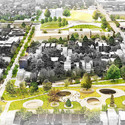
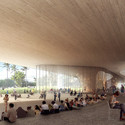
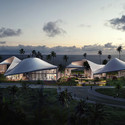
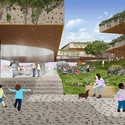
Of the four locations that are under consideration to host the future Barack Obama presidential library, two have released visions of what could be if their sites were selected - the University of Illinois at Chicago (UIC) and the University of Hawaii at Honolulu (UH). UH, who’s offering a stunning oceanside site on Waikiki Beach, paired Snøhetta, MOS, and Allied Works Architecture with local architects to draw up proposals, all of which share a deep connection to nature. UIC, on the other hand, has proposed an idea that reinterprets the library as a systemized network of public infrastructure focused on revitalization.
The City of Chicago has officially linked Studio Gang Architects to the massive mixed-use “Wanda Vista” development planned to rise alongside the Chicago River. A trio of interlocking supertall towers, the $900 million riverfront project is expected to become the city's third tallest building.
According to the Chicago Tribune’s Blair Kamin, the tallest part of the skyscraper will reach 1,148 feet and 88 stories, one story less than rumors originally indicated, stirring speculation that the final count has something to due with its Chinese developer and “eight” being considering a lucky number in China.
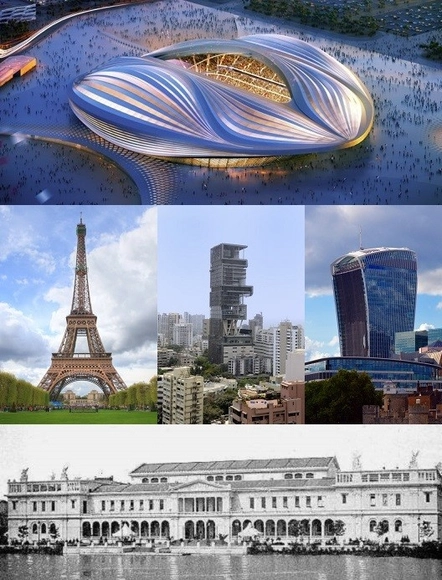
The criticism surrounding Al Wakrah has prompted us to look far and wide for the world’s most debated buildings. Could Al Wakrah be the most controversial building of all time? Check out ArchDaily’s roundup of nine contenders after the break.
Find out which buildings top our controversial list after the break