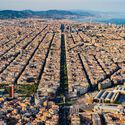
Barcelona is the first city in the history of the UIA World Congress of Architects to host the event twice. The 1996 edition, Present and Futures: Architecture in Cities, arrived at a charged moment, when the post-Olympic city was consolidating an urban model that would become one of the most studied and contested in contemporary urbanism, and when architecture was learning to think through the large metropolis as its primary site of inquiry. Thirty years later, the same city reopens the question under a different condition: one in which the built environment can no longer be understood as a self-contained object, but only through the wider ecological, material, and political systems that sustain it. The theme of the 2026 Congress — Becoming. Architectures for a Planet in Transition — does not abandon the urban concerns of 1996; it reopens them from a planetary scale.
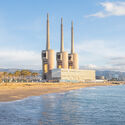
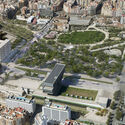
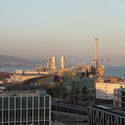
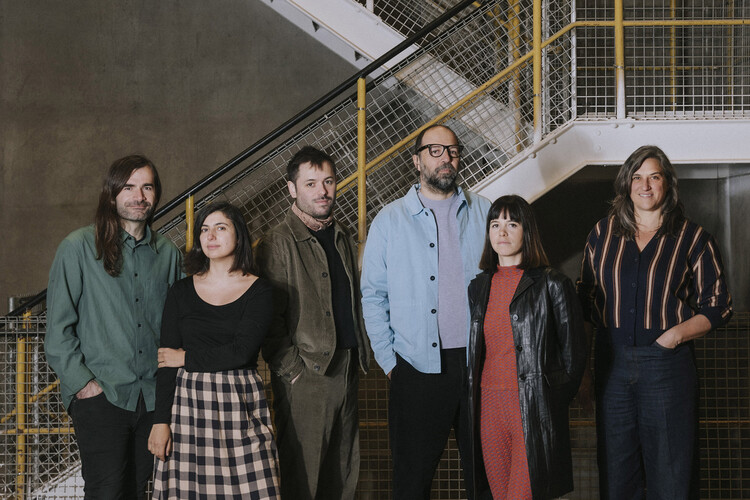
The curatorial team behind this edition, formed by Pau Bajet, Maria Giramé, Mariona Benedito, Tomeu Ramis, Pau Sarquella, and Carmen Torres, approaches architecture as a critical and transformative tool rooted in territory, working across practice, research, and teaching. Their program structures the Congress around six interconnected thematic lines (Becoming More-than-human, Becoming Circular, Becoming Embodied, Becoming Interdependent, Becoming Hyper-Conscious, and Becoming Attuned) and distributes it across three venues of very different characters — Les Tres Xemeneies del Besòs, the Disseny Hub at Glòries, and the CCIB — each chosen for what it represents as much as for what it can hold.
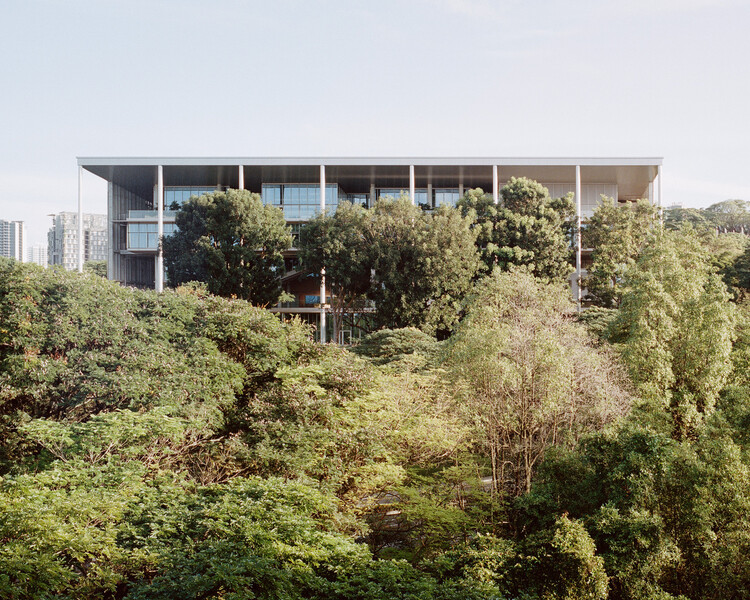
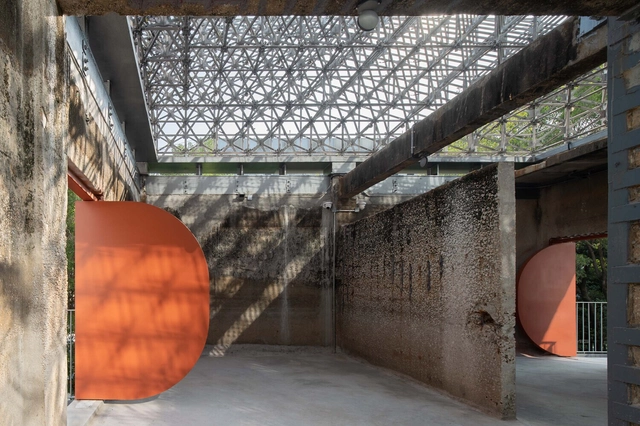
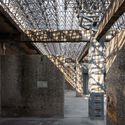
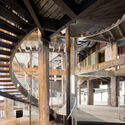
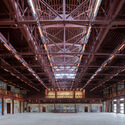
NUS School of Design & Environment / Serie Architects + Multiply Architects + Surbana Jurong. Image Courtesy of Serie Architects + Multiply Architects + Surbana Jurong
This article is part of our new Opinion section, a format for argument-driven essays on critical questions shaping our field.
Before architecture students become authors of space, they are subjected to one. For years, they work inside a building that teaches without announcing itself as a teacher. It organizes their exhaustion, their ambition, their visibility, their solitude, their friendships, their sense of scale, and their relationship to judgment. Long before a student can articulate a position on architecture, the school has already offered one in its implicit built environment.
This is not to suggest that buildings determine architects. The influence is slower and less complete than that. A school building operates more like a hidden curriculum: a spatial discipline that works alongside faculty, syllabi, institutional culture, and student life. It teaches through access and obstruction, program adjacencies, daylight exposures, and scale. It produces habits of attention before it produces explicit beliefs.
There is a standard way of telling the history of architecture and food. It begins with the human decision to cultivate, to store, to distribute, to consume, and ends with the building that decision produced. In this version of events, food is the occasion and architecture is the response.
But what if the story runs differently? What if the tomato built Almería? What if the cod redesigned the North Atlantic? What if the soybean is, at this moment, constructing a port in Santos and demolishing a forest in the Cerrado simultaneously, and the architect has simply not been told? These are descriptions of processes already complete, or well underway, that have produced some of the most spatially consequential contemporary landscapes. Much of the built environment is shaped by the pressures, metabolisms, and territorial ambitions of what we eat. Architecture, in this, is often less a project than a consequence, and the discipline has been telling its own story from the wrong end.
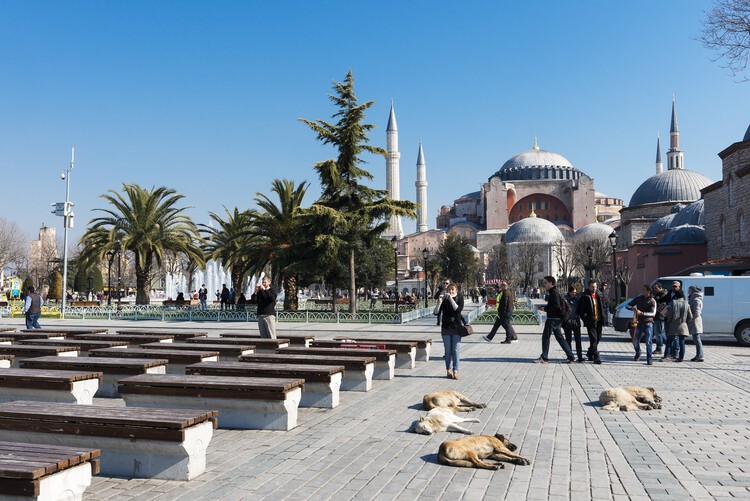
Stray dogs in Istanbul. Image by istanbulphotos, via Shutterstock
Architecture continues to draw cities as though humans occupy them alone. Plans trace circulation routes, zoning maps assign functions, and buildings are evaluated according to human comfort, safety, and efficiency. Walking through cities across India and Southwest Asia reveals something much more complex. Dogs sleep beneath market stalls, monkeys move across rooftops, birds nest in temple towers and mosque façades, and insects pollinate urban landscapes hidden in plain sight. These species are woven into daily urban life as consistently as human occupants. Streets, courtyards, roofs, drainage systems, markets, and vacant lots are already occupied by multiple species simultaneously. Architectural thinking has been slower to account for this reality.
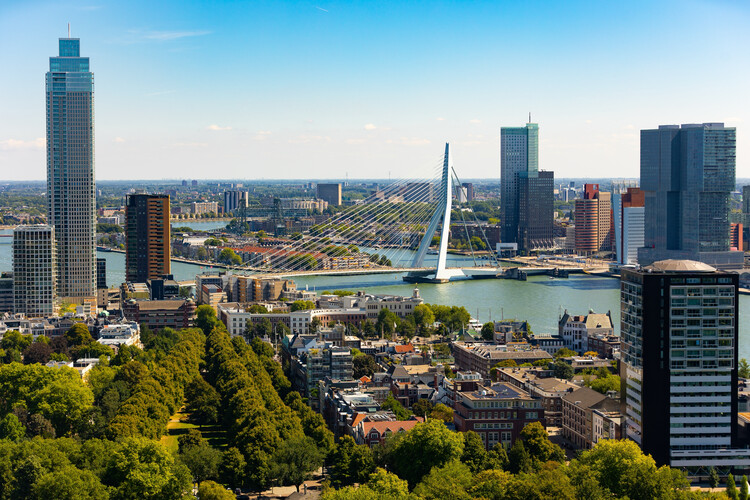
Who has the right to the city? Henri Lefebvre's writings question the structures that control urban space and, instead, put the citizens at the center of decision-making. His ideas have influenced the way architecture and urban design are practiced, bringing about community participation and co-design. These have been some of the most prominent themes at Utopian Hours 2026, the festival of city-making, the first part of which was held in the Dutch city of Rotterdam to mark its tenth anniversary edition.
There is growing awareness around sustainability—and the environmental cost of prematurely demolishing safe, structurally sound buildings only to replace them with new construction. In the broader race to reduce carbon emissions, corporations and institutions are placing greater emphasis on ESG performance (environmental impact, social responsibility, and governance). Many now require carbon accounting, set "carbon-neutral" targets, or purchase carbon credits to offset footprints.
This shift, together with a wave of exemplary adaptive-reuse projects worldwide—Herzog & de Meuron's Tai Kwun in Hong Kong, Powerhouse Arts in Brooklyn, David Chipperfield's The Ned Doha, and Xu Tiantian's transformations of factories, quarries, and rammed-earth fortresses in China—has accelerated serious reconsideration of reuse as a primary development strategy. Yet despite its many benefits, adaptive reuse is still not as prevalent as it could be. Why and what might be the main obstacles and tensions?
"By 2050, almost every child in the world — nearly 2.2 billion children — will be exposed to frequent heat waves." UNICEF's warning is often read as a public health forecast, but it is also a challenge to architecture and the way cities are built. As extreme heat intensifies across Asia, Europe, and beyond, thermal comfort should not be reduced to merely an indoor service delivered by machines. Air-conditioning has become a life-support system for many cities, especially in dense, humid, and rapidly urbanizing regions. Yet to rely on it as the default answer is to treat heat as something that can simply be moved elsewhere (and in the process generating extra heat) — expelled from interiors into streets, service alleys, energy grids, and the atmosphere. Its expansion increases energy demand, produces waste heat, and reinforces unequal access to comfort.
Heat, however, does not stop at the human body. It reorganizes the wider urban ecosystem: trees struggle with compacted soil and radiant paving; birds and insects lose habitat when planting is reduced to decorative greenery; aquatic systems warm, microbial life shifts, and materials absorb and release heat long after the sun has set. Heat is not simply a climatic problem to be escaped indoors. It is an urban actor that reshapes public space, labor, mobility, planting, material choices, and the fragile relationships between human and nonhuman life.
What architecture leaves in the ground outlasts what it puts in the air. A demolished building disappears from the skyline in a matter of days, but its foundations remain embedded in the soil for generations. The contamination caused by an industrial complex does not clear when the complex is torn down. The legal boundaries inscribed across colonial territory do not dissolve when the colonial administration ends. The ground holds what architecture quickly forgets.
This is what makes soil so uncomfortable as a subject. The discipline tends to orient itself upward, toward the form, the façade, the spatial experience of inhabitation. The ground is where architecture begins and, in a certain sense, where it ends: the point at which building becomes geology, legal title becomes territorial claim, and construction becomes extraction. Treating soil as a medium rather than a datum means acknowledging that the acts of building carry consequences that run deeper than the visible object above grade.
Smiljan Radić's architecture often begins elsewhere: in a memory, a journey, a material, a stone, a half-seen structure, or a situation not yet organized as an architectural idea. In "Architecture: Distraction and Knowledge," his 2026 Pritzker Architecture Prize Laureate Lecture, distraction does not appear as a lack of focus, but as a way of receiving the world. It is through these peripheral encounters — travel, ruins, cities, stories, industries, and materials — that architectural knowledge slowly accumulates.
When Radić was announced as the 2026 Pritzker Architecture Prize laureate, the recognition did not simply confirm a body of work already known for its material strangeness. It also clarified an architectural position that has long resisted easy translation into theory, or style, or spectacle. Radić's work is often described through oppositions: heavy and light, primitive and industrial, fragile and monumental, shelter and object, ruin and apparition. Yet these terms only partially account for the force of his architecture. What makes the work difficult, and increasingly necessary, is its refusal to become fully legible as a claim of certainty.
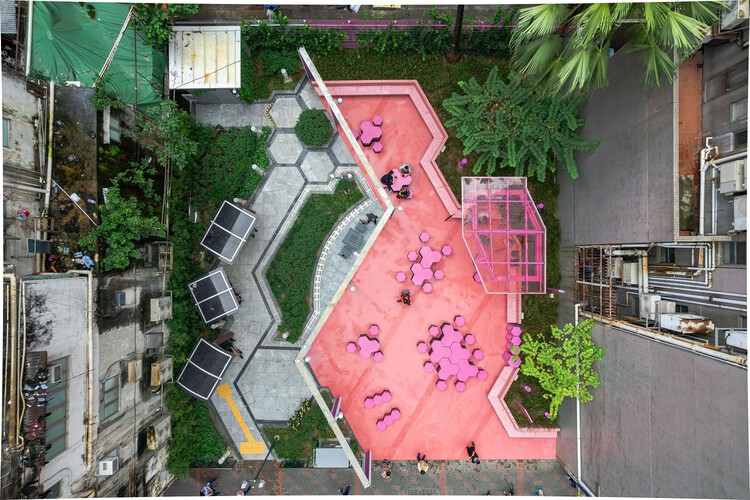
In Hong Kong, where architecture is often driven by real estate logic, infrastructure, and accelerated development, the space for bodily-scaled civic experimentation can be surprisingly narrow. This is where Design Trust has become distinctive. As a grant-making and project-enabling platform, it supports spatial interventions that sit between architecture, research, and public programming—work that is often too modest, collective, or uncertain to fit conventional client–architect pipelines.
At the center of this work is Marisa Yiu, whose leadership positions Design Trust as both an enabler and a cultural actor. Through initiatives such as Micro-Parks Hong Kong, alongside exhibitions and public programs, the organization treats discourse and prototyping as forms of spatial agency, linking designers, communities, institutions, and policy conversations while foregrounding questions of stewardship, maintenance, and the "afterlife" of public space.
"Coffee or tea?" is one of those phrases that follows you across contexts: asked on airplanes, after a meal, in hotel lounges, and in meeting rooms. It sounds like a small question—mere preference, a quick fork in the service script. Yet it also carries a quiet cultural inheritance. Tea arrives with the long history of ritual and domestic pacing, tied to older geographies of trade and everyday etiquette. Coffee arrives with a different lineage of circulation, later industrialized into the modern café and its public-facing rituals. In both cases, the drink is never only a drink; it is a practiced relationship to time and space.
In contemporary East Asia, however, "coffee or tea" increasingly reads as something else: imperceptibly or subconsciously, it is becoming more of a choice about where you want to be. Each beverage now carries a spatial expectation. Coffee implies a room you can occupy—often a place to pause, work, meet, or cool down. Tea, despite being culturally pervasive, appears more diffusely across the city—sometimes as a dedicated destination, sometimes as a high-frequency kiosk, and very often as an embedded default within dining typologies. The result is that a question posed as taste has begun to operate as a subtle indicator of spatial preference: whether you are seeking duration or velocity, enclosure or flow, a third place or a quick node on the street.
Cities in Southeastern Europe do not wait to be read. They accumulate, layer upon layer of socialist planning, post-socialist disruption, and the quieter, less legible work of citizens remaking space from the ground up. Here, space and legacy insist on their own terms. What happens to architectural research when the cities that we observe already seem to know something our discipline has not yet learned to see?
Ambrosian Monastery, Milan. Image Courtesy of Stefano Boeri Architetti
As global urban challenges intensify alongside growing environmental, social, and cultural pressures, this week's news reflects how institutions, exhibitions, and restoration projects are highlighting the relationship between the built environment and collective experience. From international forums addressing housing insecurity and urban resilience to cultural events examining memory, identity, and spatial perception, positioning architecture as both a framework for policy and a medium for critical reflection. At the same time, major restoration and redevelopment initiatives highlight a renewed focus on preserving historical continuity while adapting heritage sites and cultural institutions to contemporary forms of use, accessibility, and public engagement.
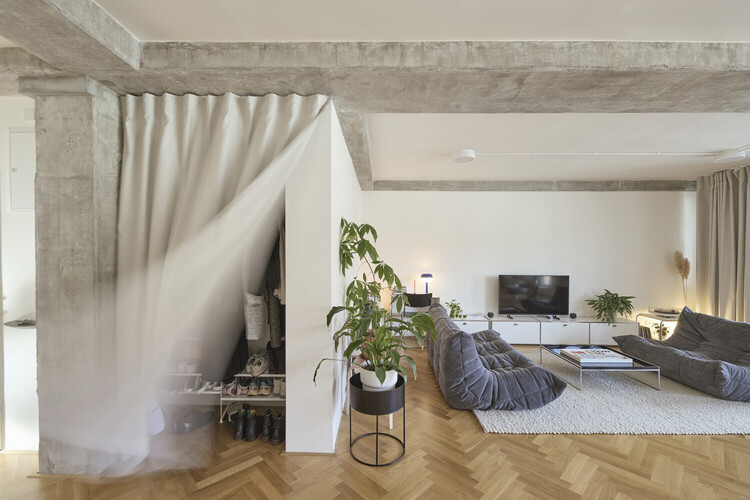
Heritage, in interiors, is increasingly rarer to be only a matter of preservation alone. More often it arrives as friction: the encounter between what a building already is—its plan logic, its scars, its structural inconsistencies—and what contemporary life demands of it.
Some of the most convincing projects today are not those that "restore" an interior back to a single moment, nor those that erase the past under a seamless new skin. They are the ones that stage a relationship between old and new—allowing contrast to do more than tell a story, and letting the clash become a pragmatic tool for construction, budget, and speed.
Vana Vasa Resort by MJ Kanny Architect, Steel Architectural Awards ASEAN 2024 Winner. Image Courtesy of NS BlueScope
The Steel Architectural Awards ASEAN 2026 is a regional architectural awards program presented by NS BlueScope to recognize built projects that demonstrate architectural excellence through the use of coated steel solutions. Under the theme Shaping Resilient Futures: Timeless Design with Coated Steel, the program highlights projects across Indonesia, Malaysia, Thailand, and Vietnam, progressing from the Country Awards to ASEAN-level recognition. This article explains how the two-stage pathway works, what categories are included, and how projects are assessed through Design Excellence, Innovation, and Sustainability.