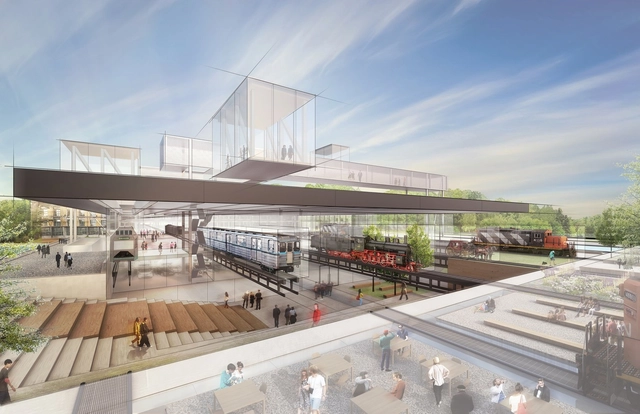
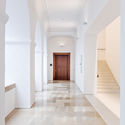
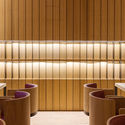
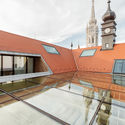
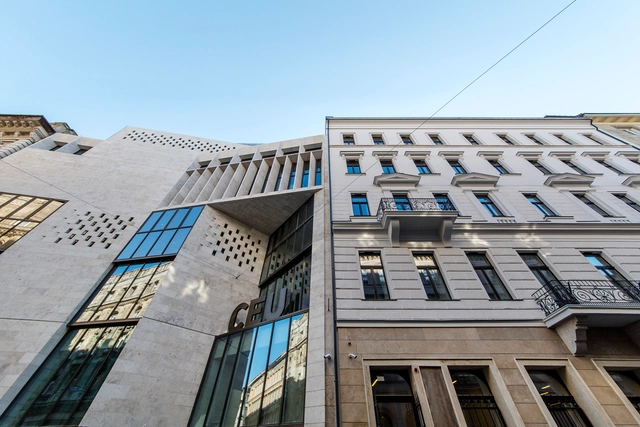
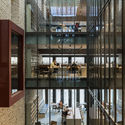
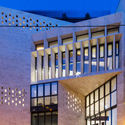
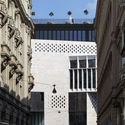
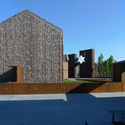
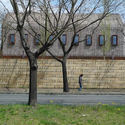
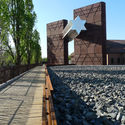
Hungarian Museum of Transport. Image Courtesy of Diller Scofidio + Renfro
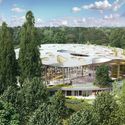
Architecture and design practice Diller Scofidio + Renfro have been selected to design the Hungarian Museum of Transport in Budapest. As the new home for one of the oldest transport museums in Europe, the project will be sited in a former railway yard. The project uses the idea of ground transportation as a central organizing principle, highlighting the central role of the ground in urban planning and infrastructure. The design de-familiarizes ground by excavating, lifting, and cutting to produce unexpected environments.
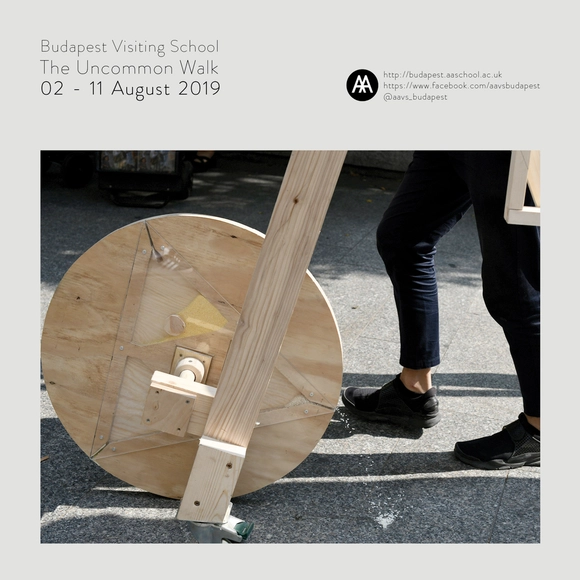
Budapest-based Visiting School, is part of the world most prestigious and renowned architectural school - Architectural Association (AA). It will take place from the 2nd of August to 11th of August this year. In collaboration with prominent art and architectural institutions, such as FUGA, KÉK, IVANKA, and HELLO WOOD, all work will be exhibited during Budapest Design Week.
Budapest South Gate Masterplan. Image Courtesy of Filippo Bolognese, Snøhetta
Snøhetta has won the competition to create a new neighborhood connected to the Danube River in Budapest. The brief asked for innovative proposals for 12,000 students along with educational, recreational and sports facilities. The South Gate masterplan for the 135-hectare site in the Hungarian capital focuses on urban relations and connects the new city quarter to the water to create a strong identity. Aspiring to create a lively, diverse and colorful new urban quarter, the project aims to create a lively waterfront for the people of Budapest.
As reported by CNN, university officials have spoken publically about plans to leave Budapest, with the university’s board recently approving the opening of a satellite campus in Vienna in 2019. The decision would cast doubt over the second construction phase of the O’Donnell + Tuomey vision.
https://www.archdaily.com/904739/fate-of-odonnell-plus-tuomeys-riba-international-prize-contender-uncertain-after-political-crackdownNiall Patrick Walsh
Videos
Principal and senior architects from leading ateliers will give lectures on innovation in architecture, urban design and engineering, technologies for the smart and sustainable built environment, besides focusing on river fronts and coastal engineering.
SHARE Budapest 2018 highlights SHARE Budapest 2018 will gather exceptional speakers from 12 countries: Hungary, Romania, United Kingdom, Slovakia, France, Albania, Thailand, Sweden, Bulgaria, Malaysia, Denmark and Italy. Some of the lecturers and their focus for the event:
The Royal Institute of British Architects (RIBA) has announced the shortlist of four finalist projects in the running for the 2018 RIBA International Prize. A biennial award open to any qualified architect in the world, the International Prize seeks to name the world’s “most inspirational and significant” building. Criteria for consideration include the demonstration of “design excellence, architectural ambition, and [delivery of] meaningful social impact.”
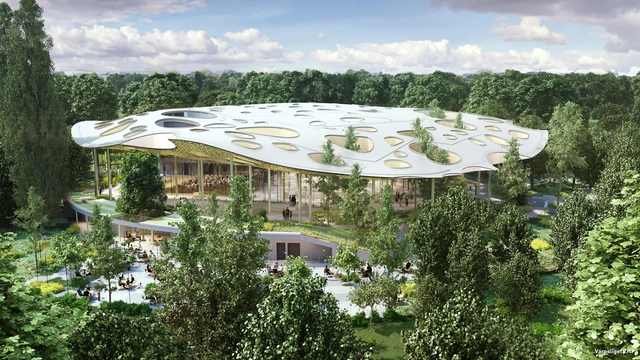
Sou Fujimoto’s House of Hungarian Music is set to begin construction in an idyllic natural setting beside Városliget Lake in Budapest’s largest park. Having won a competition for the scheme’s design in 2014, the Japanese architect has designed a “modern and extravagant home for music” drawing inspiration from both the natural and musical worlds.
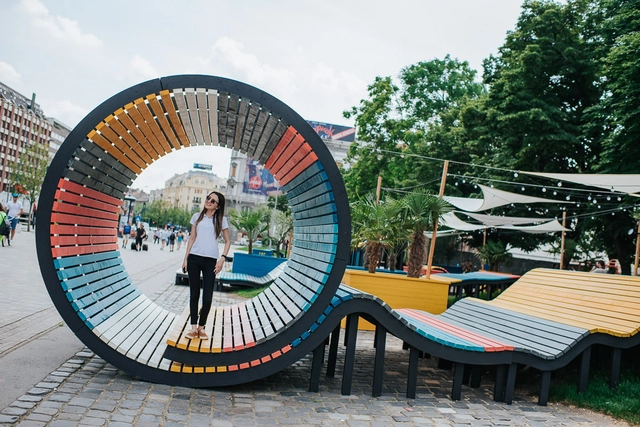
Hello Wood has revived its highly-successful POP-UP Park, bringing a touch of vibrancy to an underused square in downtown Budapest. Having built the structures in the summer of 2017, the park has returned one year later to provide “a democratic space for all social groups embedded within the everyday movement of the city.”
Open 24 hours per day, the park acts as a free-to-use space for people from all walks of life. Supported by the Municipality of Budapest, the scheme is situated in a frequented though empty spot beside the Budapest City Hall.
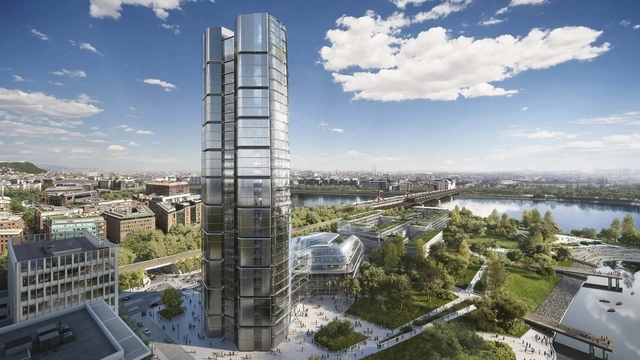
The Hungarian government is introducing a new skyscraper ban in the hopes of preserving the Budapest skyline. Gergely Gulyás, minister of the prime minister's office, recently stated that the ban will affect all new buildings in Budapest over 90 meters tall. The ban will not limit projects already approved with planning permission, including Foster + Partners' MOL Campus Tower, a high-rise being built as part of the new headquarters for the MOL Group. The 120 meter tower will be exempt because it has already won planning permission.
Budapest-based Visiting School, is part of the world most prestigious and renowned architectural school - Architectural Association (AA). It will take place from the 31st of August to 9th of September this year. In collaboration with prominent art and architectural institutions, such as FUGA, BVA, KÉK, Ivanka Concrete and Hello Wood, all work will be exhibited during Budapest Design Week.
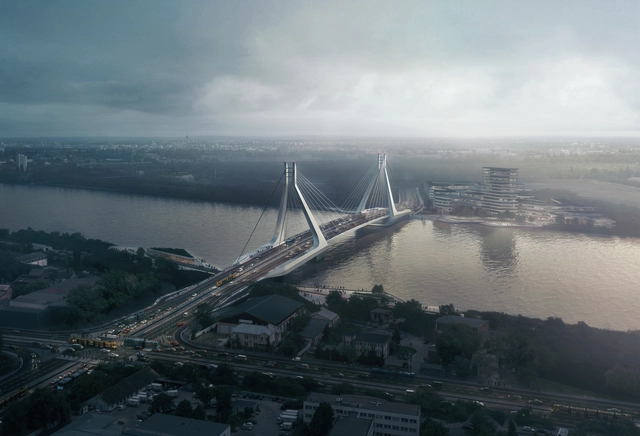
UNStudio, in collaboration with Buro Happold Engineering, has won an international competition for the design of a new bridge spanning the River Danube in the Hungarian capital of Budapest. Their scheme will serve as a blueprint for the "Galvani Bridge" connecting South Buda and Csepel, balancing graceful aesthetics with strong performance.
The competition for the bridge was conceived with the goal of decreasing the 600,000-strong daily traffic load on existing bridges across the Danube by 40,000. As well as easing traffic congestion, the bridge is intended to embody a liveable, loveable, healthy image of 21st-century Budapest.
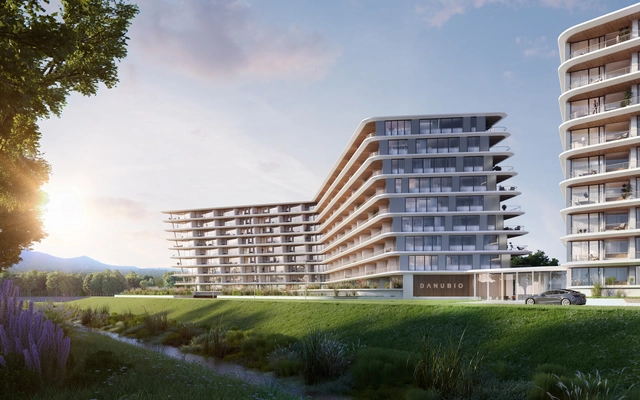
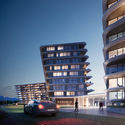
Imagine having input in the design process for your custom apartment built alongside the second largest river in Europe. T2.a Architects has unveiled their design for DANUBIO, a new residential development in Budapest, which aims to do just that.
The driving concept behind the development of DANUBIO is to give the freedom of design back to the residents, inviting them to give input into the configuration of units within the building. Using Grasshopper, a Rhinoceros plug in, a script was developed to allow creative flexibility in the design of each resident’s future home. This algorithm is altered every time a new resident enters the community by allowing them to define the typology, orientation, and location of their future home during the design process.
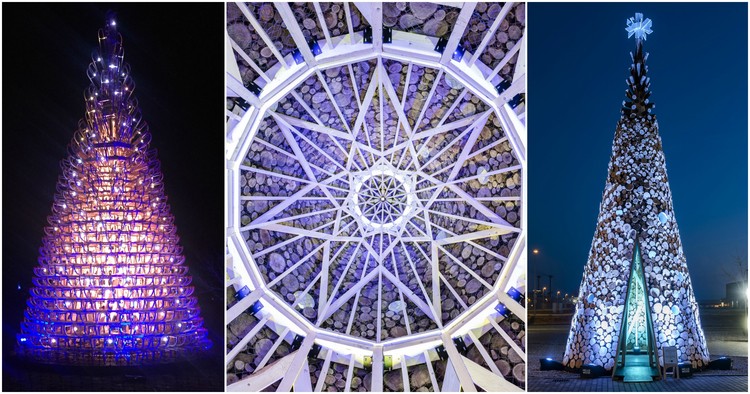
Budapest-based architectural firm Hello Wood has continued its annual tradition of constructing wooden Christmas trees, this year expanding the program with a total of 5 trees throughout Europe. In London and Vienna, trees made of sleds recall a design concept first used by Hello Wood in 2013; meanwhile, two locations in Budapest and in the Hungarian city of Kecskemét are witnessing the return of the firm's "charity trees," installations made of firewood which are later dismantled and distributed to families in need for the winter season.