

- Year: 2014


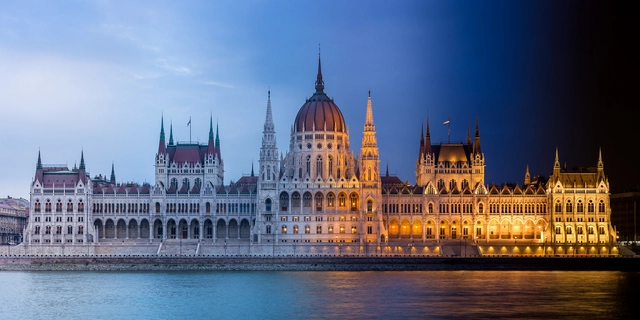
Buda... Pest... two characters separated by the Danube.
Day... night... two atmospheres separated by an invisible thread.
Budapest, "pearl of Danube", knows how to seduce at any hour, so why choose, when one can enjoy all its charms at the same time?
Exploring the role of lighting in architectural photography, French photographer Greg Florent created “Budapest Daynight” during a two-month stint in Hungary. Taking thousands of photographs, Florent created magical composite photos capturing architectural landmarks in-between the two opposing times of day. Accompanying his gallery of resulting work, he has also produced time-lapses of each of his subjects, illustrating the way that lighting affects the character of a building.
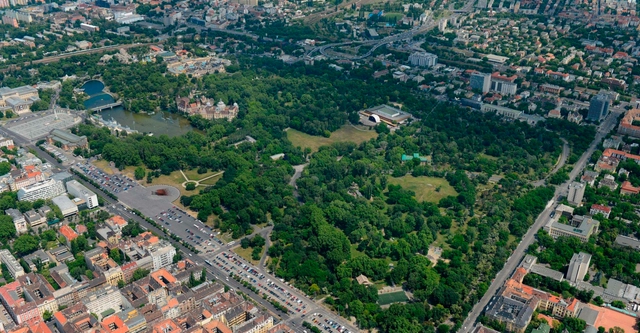
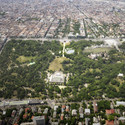
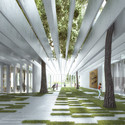
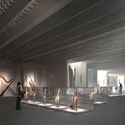
Zaha Hadid, Coop Himmelb(l)au, and OMA are some of 15 major practices that have been shortlisted in the second (and final) stage of a competition to design the new Museum of Ethnography in Budapest. The building will be one of four new museums being built in Hungary's 200-year-old Városliget (City Park) as part of the Liget Budapest project, which includes SANAA's Ludwig Museum and Sou Fujimoto’s House of Hungarian Music.
"For the first time since the foundation of the Museum of Ethnography that is, for over 140 years now, it has become possible to permanently place the museum in a building worthy for the collection, to be built specifically for this function. In addition, the construction of the new building of the Museum of Ethnography will solve another more than half a century problem: by relocating the institution, the Kúria (former Ministry of Justice) building, recently housing the museum, can regain its original function," says Liget Budapest.
The 15 finalists include:
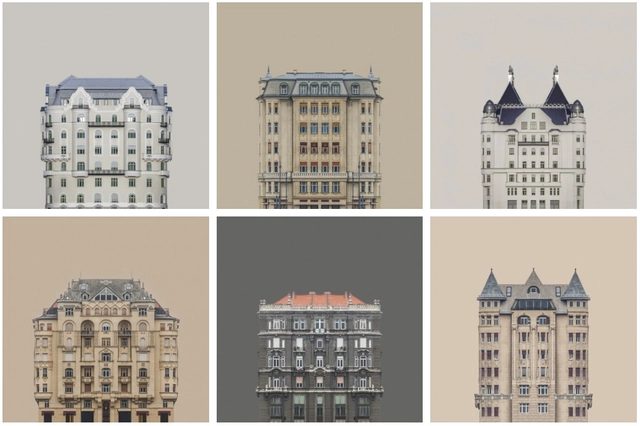
Budapest-born printmaker and photographer Zsolt Hlinka has created Urban Symmetry, a Wes Anderson reminiscent photo series depicting perfectly-symmetrical buildings on the banks of the Danube River. Using partial photos of the buildings, Hlinka creates fictitious compositions through reflections, resulting in new personalities and character in the portraits.

For the third consecutive year, Hello Wood—an international educational platform of design and architecture based in Hungary—have "rethought the Christmas Tree." Their three festive installations, in London, Manchester and Budapest, have been designed to live beyond the holiday season and will be recycled into new structures to help different causes in the New Year. "The role of architecture has changed a lot in the last few years," says Peter Pozsar, co-founder of Hello Wood. "Hello Wood represents this socially responsive architecture."
View the three projects after the break.
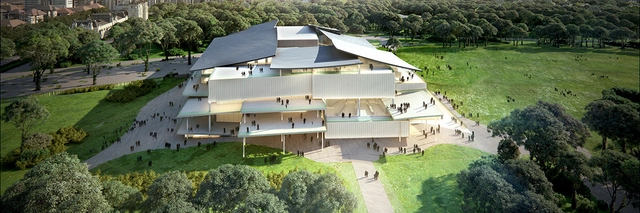
After having tied with Snøhetta in a restricted competition to design the New National Gallery -- Ludwig Museum in Budapest, SANAA’s proposal has ultimately been selected as the winner, following negotiations held over the past few months. The gallery and museum will be located in the 200-year-old Városliget (City Park) and are part of the larger Liget Budapest project, which seeks to revive the park by 2018 with the addition of five new museum buildings, including Sou Fujimoto’s House of Hungarian Music.
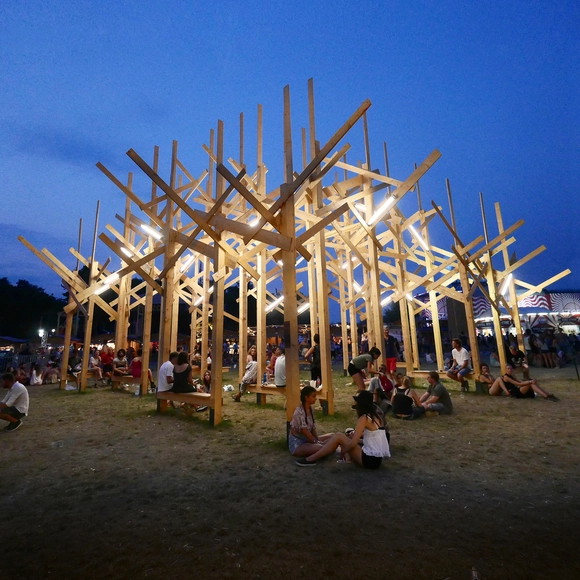
Atelier YokYok, in partnership with Sammode, created a temporary geometric forest called “TREEDOM” for the 2015 Sziget Festival in Budapest. Constructed in nine days before the festival, and then dismounted in two days afterwards, the installation was composed of 37 wood poles, and over 200 boards, with the highest point extending 10 meters.
.jpg?1438146658&format=webp&width=640&height=580)
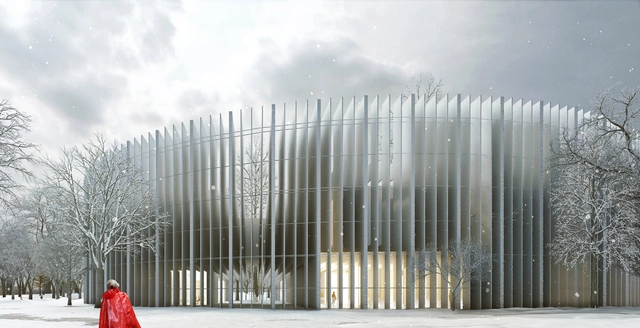
Envisioning the House of Hungarian Music as the new center of distribution within Liget Park, MenoMenoPiu Architects proposed a circular form for the concert hall, facilitating circulation to and from the museum and within the park. Although not the final winner of the Liget-Budapest Competition, “The Circle” demonstrates an interesting organizational strategy and perspective on sound.
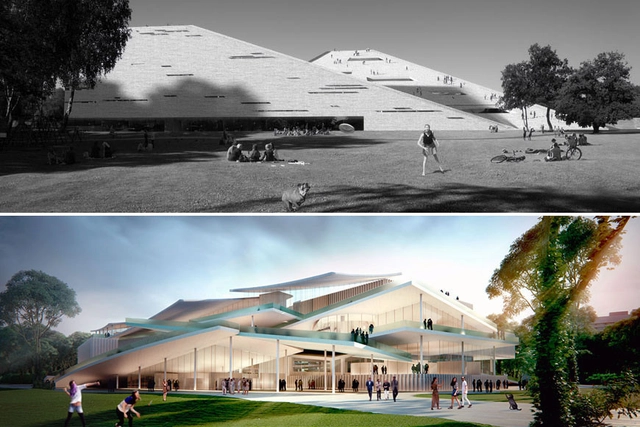
SANAA and Snøhetta have been jointly awarded first prize in a restricted competition to build a "New National Gallery - Ludwig Museum" in Budapest's 200-year-old Városliget (City Park). Lauded for their "equally outstanding" proposals, the winning teams will now meet with the jury to be judged "on professional and financial considerations."
Nieto Sobejano Arquitectos and the joint proposal of Balázs Mihály's Architect Studio and the Faculty of Architecture of Budapest University of Technology and Economics were awarded second prize.
The competition is part of a larger cultural project that aims to renew the city's Városliget by 2018 with five new museum buildings built inside the expanded park area.
A closer look at the winning schemes, after the break.
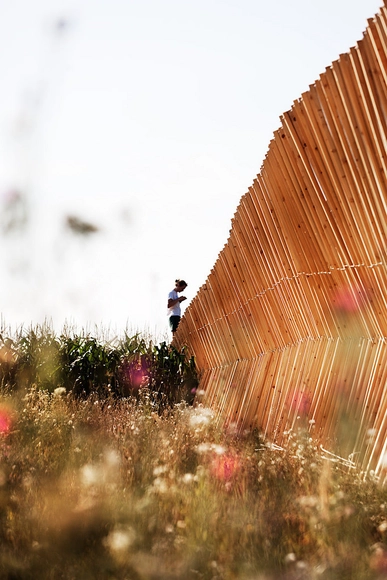
A shortened version of this article by ArchDaily's Managing Editor Rory Stott appears in HW 1-5, a book by the organizers of Hello Wood about the camp's first five years.
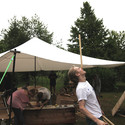
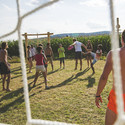
Arriving at Budapest’s international airport on a warm Saturday in July, I confess to being unprepared for my week ahead at Hello Wood 2014. Hungary was the third country and Budapest the fourth city I had been in in 72 hours, and thanks to this (uncharacteristically) chaotic week, I hadn’t had the chance to research anything about the camp. All I knew was what could be learned from the photos of the 2013 camp which I had published almost a year earlier: that is, that the camp is held in an idyllic rural setting, presumably a significant distance from Budapest; and that the quality of work seems unusually high for a week-long architecture workshop, presumably indicating a serious, focused atmosphere at the camp.
The first of these assumptions was absolutely right. But the second could hardly be more wrong. In fact the atmosphere at the camp was so far from being serious that by Tuesday, Gábor Betegh - a friend of the organizers and coincidentally Cambridge University’s new Laurence Professor of Ancient Philosophy - told me how fascinating it was to compare the “centripetal madness” of the philosophers he knows to the “very centrifugal madness” of the architects at the camp. This remark was made in response to one of the team leaders screeching like a monkey from the top of his team’s half-completed tower.


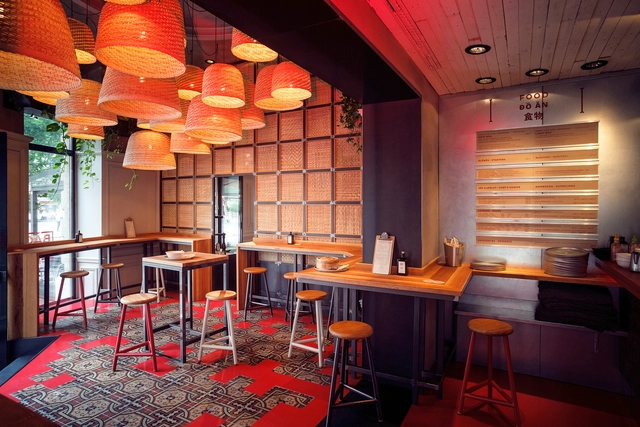



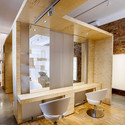

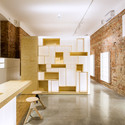


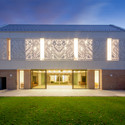
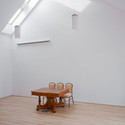

.jpg?1438146544 "Courtesy of A4 Studio")
.jpg?1438146530 "Courtesy of A4 Studio")
.jpg?1438146476 "Courtesy of A4 Studio")
.jpg?1438146566 "Courtesy of A4 Studio")
.jpg?1438146658)