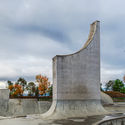
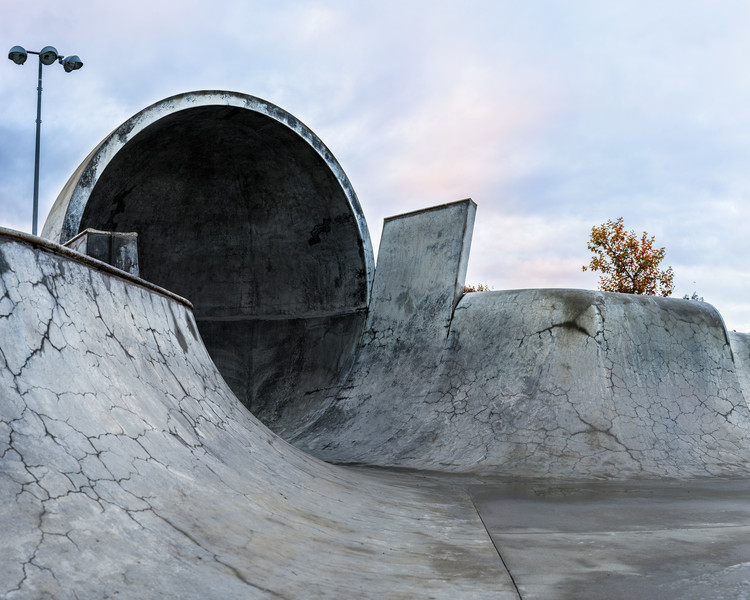
Skating took root as a sport in California during the 1960s and 70s, a time when extreme activities like surfing found their niche among the United States populace. Beginning as an urban adaptation of surfing, skateboarding became the pastime of choice for adolescents and, by the 1980s, acquired a worldwide following. Soon, city-scapes across the globe began transforming as spaces were created for people to engage in this uniquely urban sport.
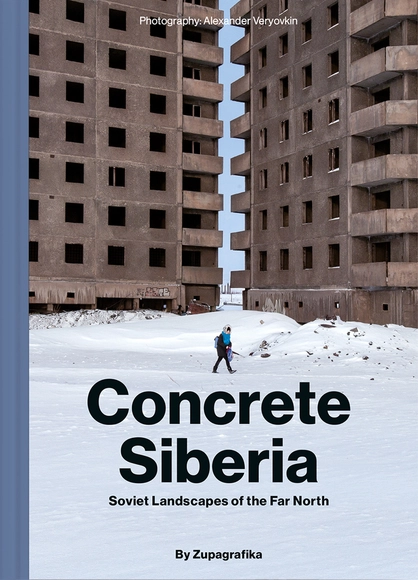
Concrete Siberia: Soviet Landscapes of the Far North by Zupagrafika
A photographic insight into the Soviet-era architecture of one of the most extreme, little-known and vast territories on Earth. From the Ural Mountains to the Arctic Circle, the book features the extensive micro rayon of Siberia’s urban centers, the brutal landscapes of industrial monotowns, cosmic circuses, concrete theatres and opera houses, as well as prefabricated panel blocks, or panelki, erected on permafrost.
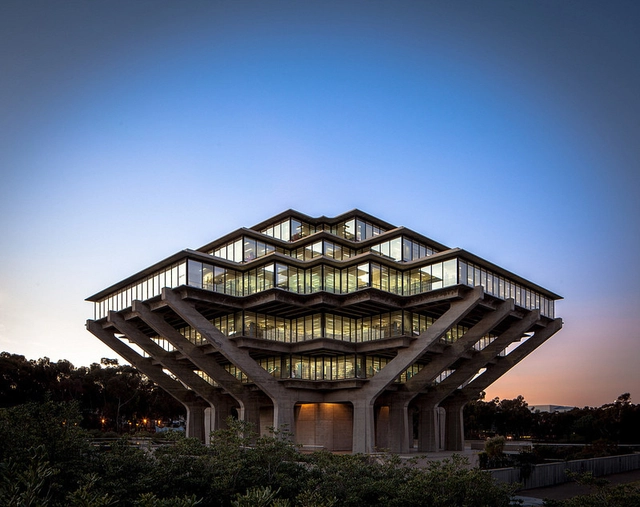
Winner of the 1942 Acadamy Award for Best Special Effects, William Pereira (April 25, 1909 – November 13, 1985) also designed some of America's most iconic examples of futurist architecture, with his heavy stripped down functionalism becoming the symbol of many US institutions and cities. Working with his more prolific film-maker brother Hal Pereira, William Pereira's talent as an art director translated into a long and prestigious career creating striking and idiosyncratic buildings across the West Coast of America.
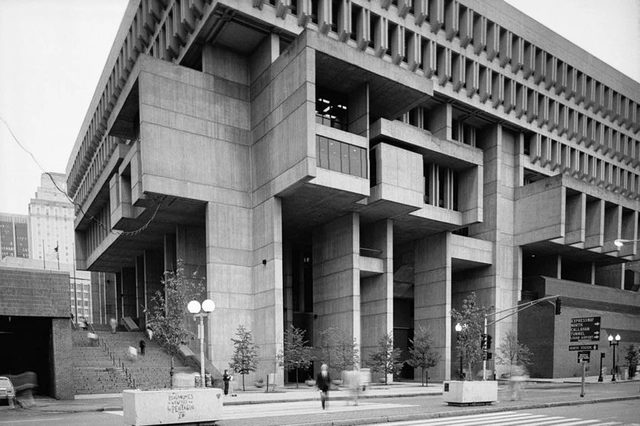
Boston City Hall. Image Courtesy of Kallmann, McKinnell, & Knowles
Michael McKinnell, a British-born American architect, known for his work on the acclaimed Boston’s Brutalist City Hall, and co-founder of the Kallmann McKinnell & Wood architectural design firm, has passed away on March 27, 2020, at the age of 84, from COVID-19-induced pneumonia.
Modernism could be described as one of the most optimistic styles in architectural history, drawing from notions of utopia, innovation, and the reimagination of how humans would live, work, and interact. As we reflected in our AD Essentials Guide to Modernism, the philosophy of Modernism still dominates much of architectural discourse today, even if the world that gave rise to Modernism has changed utterly.
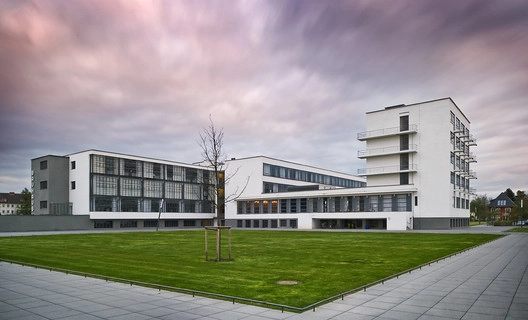
As we say goodbye to 2019, a year that saw the centenary of the Bauhaus, we have collated a list of key architectural styles that defined Modernism in architecture. This tool for understanding the development of 20th-century design is complete with examples of each style, showcasing the practice of Modernism that lay behind the theory.
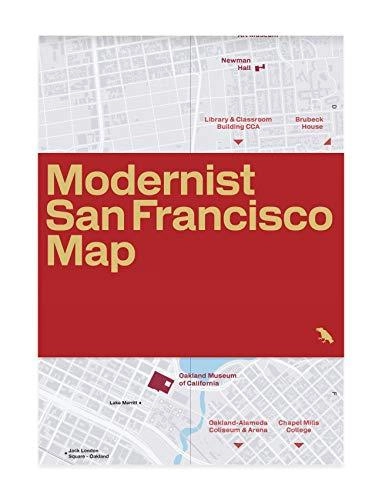
Description via Amazon.Guide map to Modernist architecture across San Francisco and the Bay Area. This two-sided folded map with original photography by Jason Woods is edited by Mitchell Schwarzer, Professor at California College of the Arts, and author of numerous books about architecture. The guide features over fifty influential examples of Modernist and Brutalist architecture from Berkeley and Oakland to Palo Alto and San Mateo. Details for individual buildings are supported by an introduction to Modernism in the Bay Area by Schwarzer. Architects featured include Vernon de Mars, Beverley Thorne, Skidmore, Owings & Merrill, Frank Lloyd Wright, Richard Neutra, Pier Luigi Nervi, Mario Ciampi, Kevin Roche and John Dinkeloo and many others.
The career of Gottfried Böhm (born January 23, 1920) spans from simple to complex and from sacred to secular, but has always maintained a commitment to understanding its surroundings. In 1986, Böhm was awarded the eighth Pritzker Prize for what the jury described as his "uncanny and exhilarating marriage" of architectural elements from past and present. Böhm's unique use of materials, as well as his rejection of historical emulation, have made him an influential force in Germany and abroad.
In recent years, people started to regain interest in a movement that dates back to the last century; a movement, first introduced during the 1940s and 1950s, through the works of Le Corbusier and Alison and Peter Smithson. With monolithic structures, modular shapes, and impressive massing, Brutalism highlights architectural integrity. This movement is highly characterized by rough, raw, and pure surfaces that underline the essence of the substances in question. Spread across the globe, architects have adopted and developed their own vision of this modern movement, creating contextual variations.
In the midst of all the chaos currently taking place in the city of Beirut, we look back on the Lebanese capital’s hidden Brutalist gems. To shed the light on a movement that's often neglected and forgotten, Architect Hadi Mroue created a series of images that highlight the Lebanese Brutalism movement as well as its evolution as an important part of the Lebanese modern heritage.
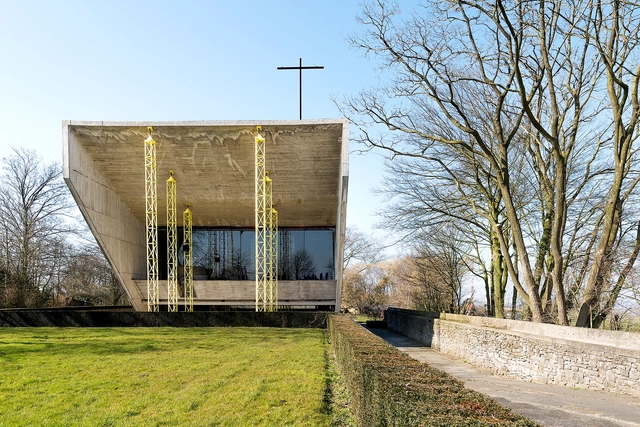
Belgian architect Juliaan Lampens has passed away at the age of 93, in Ghent, Belgium. Known for his brutalist houses and his skillful use of concrete, wood and glass structures, the architect has created some of the most famous works from the last decade, including House Juliaan Lampens – Van Hove, House Vandenhaute – Kiebooms, and Kerselare Chapel.
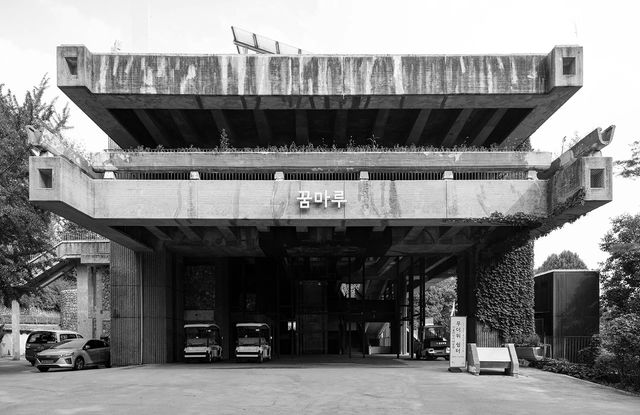
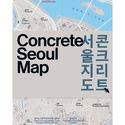
Blue Crow Media has released its latest map exploring brutalist concrete architecture in Seoul, South Korea. The map is edited by Korea University-based architectural historian Professor Hyon-sob Kim, with original photography by Yongjoon Choi. The guide offers a unique look at Seoul’s unsurpassed history of concrete architecture from the 1960s to today.
Rarely does one see brutalist architecture in the city of London. Primarily, these buildings were perceived as rebellious and grotesque, only to become the "go-to" style for commercial and governmental buildings after the Second World War. Nowadays, with the real estate market demands and dominance of contemporary architecture, these monumental grey structures are gradually fading away.
Santiago-based architect and photographer Grégoire Dorthe developed the passion of photography during his military service, when he realized that through his images, he is able to freeze moments and preserve what will be lost with time. In his photographic series titled "Brutal London", the Swiss photographer captures the raw forms and graphic qualities of the city's brutalist architecture, before these buildings meet their end.
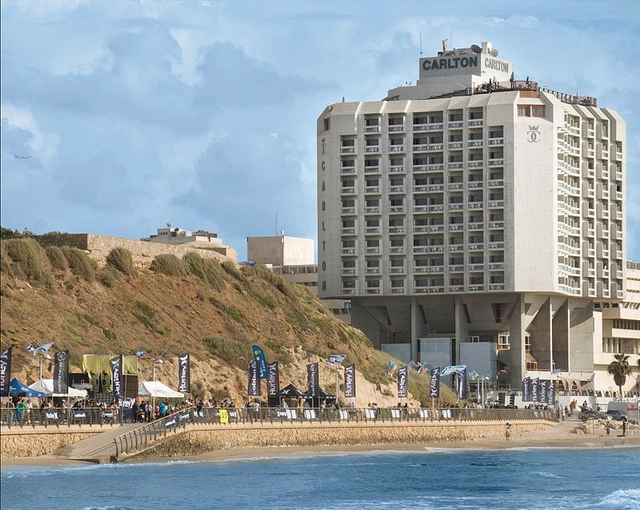
Tel Aviv’s architectural heritage has achieved global attention through the UNESCO recognition of the city’s British Mandate-era International style and Bauhaus-influenced buildings. Less known is the city’s Brutalist heritage and historic builds designed in the succeeding decades. Brutalism played a significant role in the Israeli design sphere of the post World War II-era. Concrete’s inexpensive availability and fast construction capabilities were adopted into the early Socialist mentality of the state to accommodate its rapidly expanding population and willingness to portray a muscular exterior.
Post World War II, Brutalism found its way across Europe, redefining modernist architecture and establishing a new style for mass housing and communal buildings. Although most of the light was shed on concrete landmarks in major cities, European suburbs have also housed many exceptional brutalist buildings such as the 'Hammer-shaped Tower Blocks' or the 'Houses on Chicken Legs'.
Description via Amazon. Two-sided guide featuring a map of Melbourne’s finest concrete and Brutalist buildings. The reverse includes details for fifty buildings, an introduction by Glenn Harper, the editor of Blue Crow Media's Brutalist Sydney Map, and original photography by Clinton Weaver.
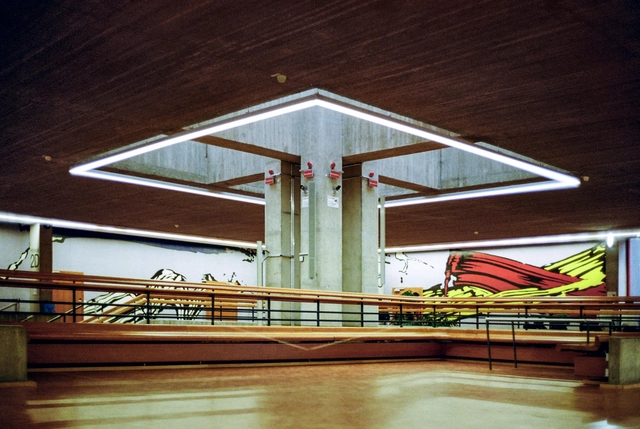
Although Brutalist architecture is often criticized for its raw, unfinished look, it has been frequently used in the design of public buildings, with many becoming iconic landmarks. Some architects chose to break away from typical concrete structures and implemented a pop of color on the walls, window frames, and flooring, adding some dynamism to the monotonous palette.
Shot with a Leica M6 film camera, architecture and interior design photographerLuciano Spinelli photographed the Düsseldorf University campus, displaying the contrast between its brutalist architecture and vibrant design features.
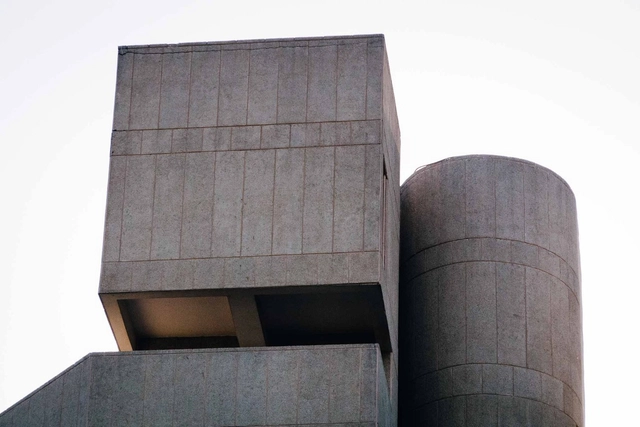
Brutalism is merely a basic equation of reinforced concrete + geometry, but while the result of this equation is rather minimal, the architecture movement remains as one of the most debatable styles, ranging between “fascinating structures” and “is it even worth preserving”.
While many perceive Brutalism as “ugly” or “incomplete”, 17 year-old Arhan Vohra found glory in these modernist structures and launched Brutal Delhi, a photography website of New Delhi’s Brutalist buildings, shot through his camera lens.
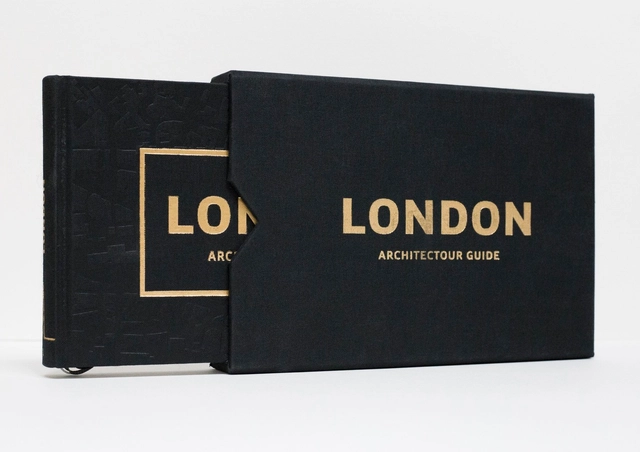
Architectour Guide London: The Urban Explorer's Guide
The new series of city guides for architects by Architectour brings to life the lost essence of travel and discovery. A compilation of exciting places – known and not so known – arranged in an innovative way: a continuous scenic itinerary, which is fun to follow and is full of quirks and surprises along the way. Hand-drawn sketches by architect and author Virginia Duran are the personal touch of the book, revealing the essential without spoiling what is a traveling delight: our first impression of a place.
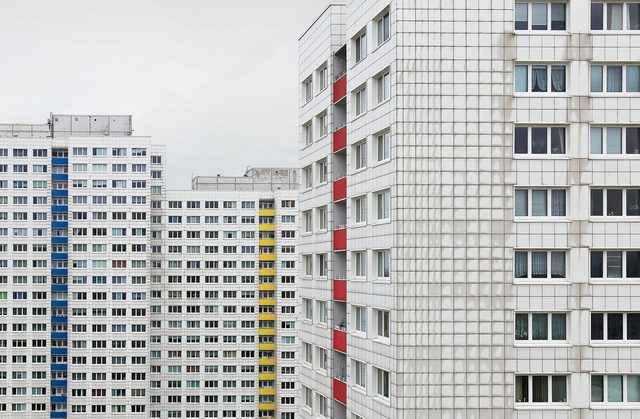
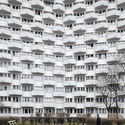
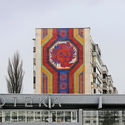
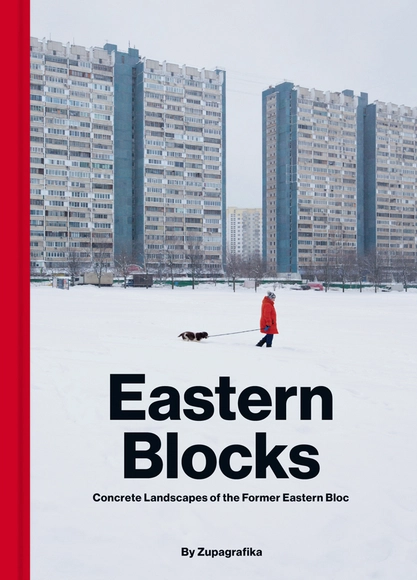
‘Sleeping districts’ of Moscow, Plattenbauten of East Berlin, modernist estates of Warsaw, Kyiv`s Brezhnevki: although these are home to the vast majority of city dwellers, post-war suburbs of central and eastern Europe have been invisible for decades.





.jpg?1577789705 "Villa Savoye / Le Corbusier")
.jpg?1577789737 "Vitra Design Museum / Gehry Partners. Image © Liao Yusheng")

.jpg?1548249670&format=webp&width=640&height=580)
.jpg?1484858103 "Neviges Mariendom. Image © Laurian Ghinitoiu")
.jpg?1484858092 "Neviges Mariendom. Image © Laurian Ghinitoiu")

.jpg?1548249663 "Neviges Mariendom. Image © Laurian Ghinitoiu")
.jpg?1548249670)
.jpg?1573123210&format=webp&width=640&height=580)