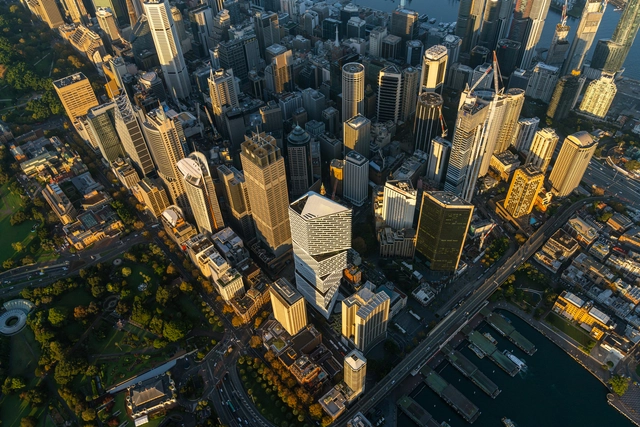
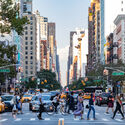
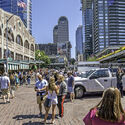
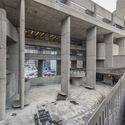
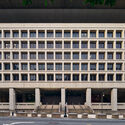
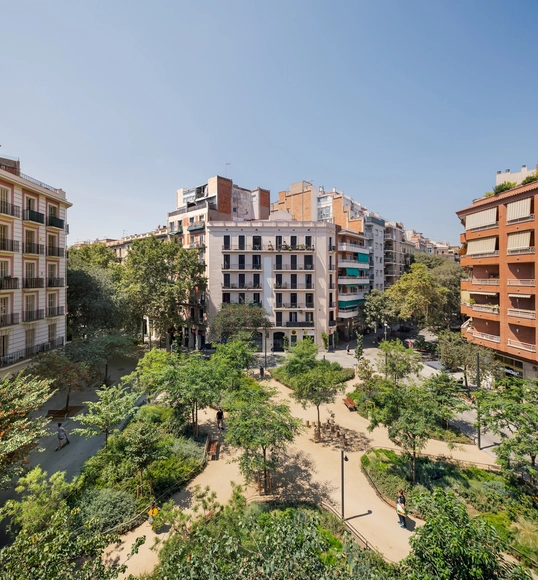
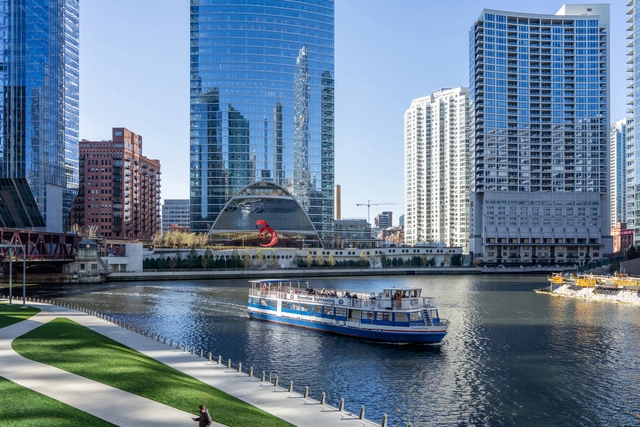
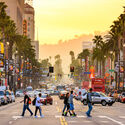
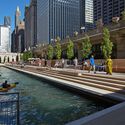
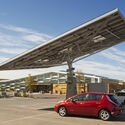
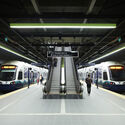
From building codes to mobility restrictions and new diplomatic roles within city governments, climate policy is increasingly being shaped at the local level through a widening range of legislative and institutional tools. Cities as varied as Sydney, Boston, New York, Paris, Miami, and dozens across Latin America are adopting targeted strategies that reflect their distinct environmental pressures and governance structures. These initiatives range from all-electric and net-zero construction requirements, to traffic-control measures designed to curb the social costs of private vehicle use, to emerging forms of urban diplomacy that coordinate responses to rising temperatures and biodiversity loss. Together, these approaches illustrate how territorial management is evolving in response to the accelerating climate crisis, and how local governments are experimenting with regulation and collaboration to confront challenges that are at once global and deeply place-specific.
Utilitarian and mass-produced, the portable toilet at the Gropius House unexpectedly echoes Bauhaus values. But it was always meant to be a stop-gap solution that is clearly inelegant and does not meet contemporary accessibility standards. It fails to adequately welcome visitors to this iconic property.
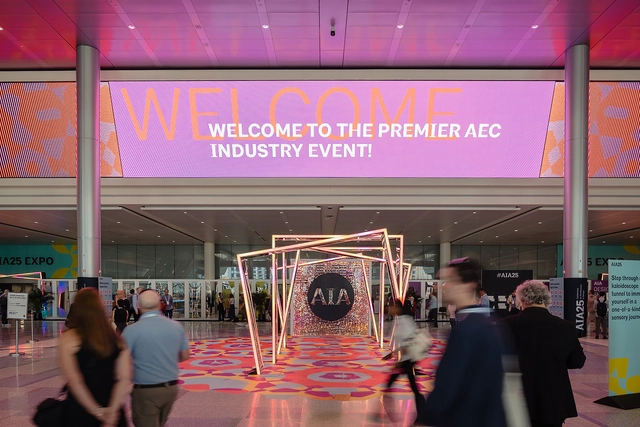
Courtesy of AIA Conference on Architecture & Design
The future of architecture isn't just being drawn—it's being coded. Since mathematician John W. Tukey coined the term "software" in 1958 in The American Mathematical Monthly, its influence has steadily expanded, from revolutionizing science and engineering to quietly transforming architecture. What was first embraced as an innovation for structural calculations and drafting has since revealed a much broader potential, becoming a creative driver in architectural narrative and practice.
While that transformation has already taken root—software now embedded in the way we design and think—it continues to evolve. At the recent AIA Conference on Architecture & Designin Boston, current innovations made it clear that we're entering a new chapter: one where software and artificial intelligence aren't just enhancing workflows but actively shaping sustainability, regulation, and decision-making. Architects and software developers now treat code with the same logic as a material—shaped not by modeling or carving, but through parameters, cycles, constant evolution, and feedback. At the same time, architects are working with AI as a co-pilot in the design process, collaborating with it to support decision-making and enhance the design.
https://www.archdaily.com/1030942/ai-and-architecture-software-at-aia25-from-code-to-concrete-in-the-digital-futureEnrique Tovar
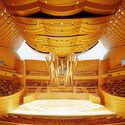
Theaters, concert halls, and opera houses are more than just venues — they are meticulously orchestrated environments where architecture, technology, and human emotion converge. Unlike conventional buildings, these spaces must accommodate a dynamic interplay between acoustics, sightlines, stage mechanics, and audience engagement, all while maintaining an architectural identity that resonates with performers and spectators alike. Whether it is the immersive embrace of a vineyard-style concert hall or the grandeur of a proscenium theater, every design decision shapes how performances are experienced and remembered.
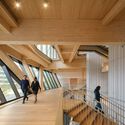
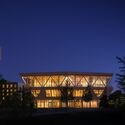
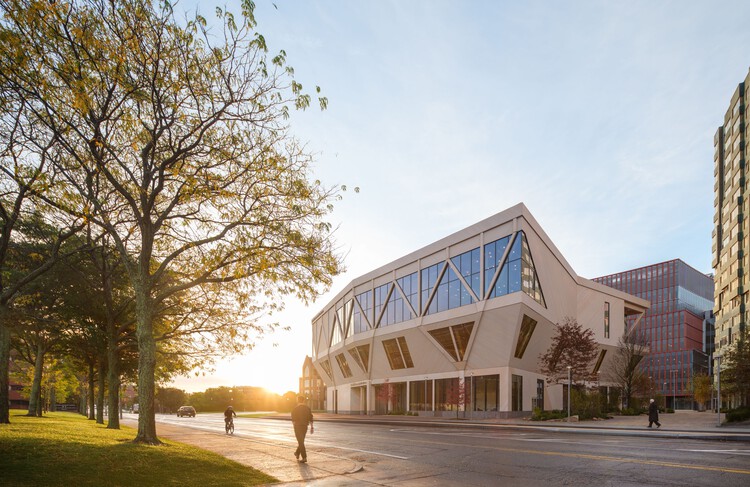
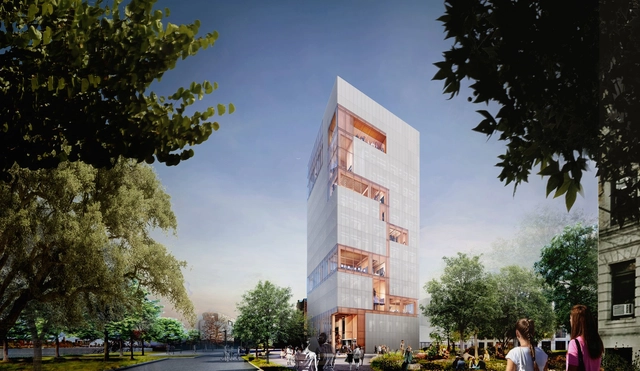
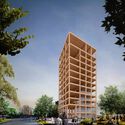
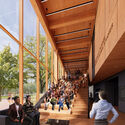
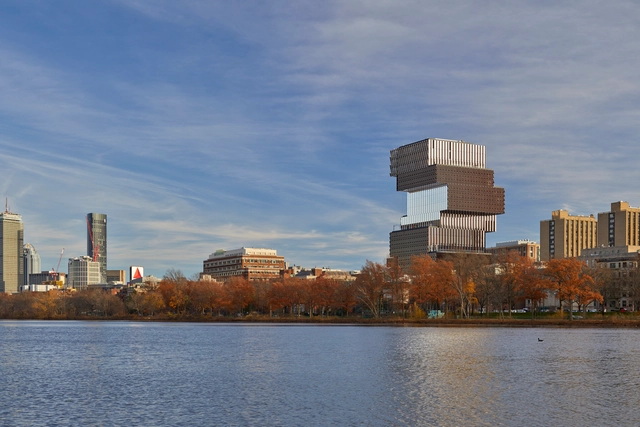
Diller Scofidio + Renfro has unveiled the design for the new Frederick S. Pardee School for Global Studies at Boston University, a project aiming to integrate sustainability, urban density, and interdisciplinary collaboration. The 70,000-square-foot building will rise 186 feet, making it the tallest mass timber tower in the Northeast United States. Situated on a former parking lot at the heart of the university's campus, the structure will occupy just 10% of the site, allowing for the creation of a central green space in the future.
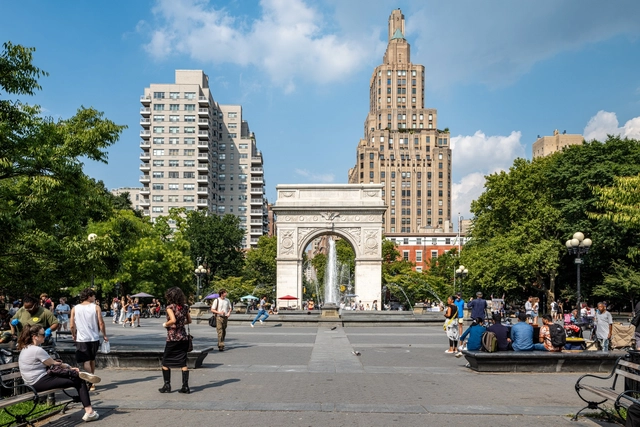
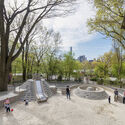
Washington Square Park, New York, NY, 2024. Photo by Barrett Doherty, courtesy The Cultural Landscape Foundation
Protests, civil disobedience, and dissent are not only a defining part of our shared history since the colonial era, they also continue to the present day on campuses, at political conventions, and elsewhere. In this context, some historic marches, sit-ins, and other actions are enshrined in our collective narrative, while others have faded from memory; however, the cultural landscapes that served as stages where these events occurred still exist. These places are the focus of Landslide 2024: Demonstration Grounds and a portal for re-engaging with the stories of little-known or even forgotten events that were pivotal in USA history. The thirteen different sites across the country, represented in the new report and digital exhibition from The Cultural Landscape Foundation (TCLF), touch on events that shaped individuals and sparked movements.
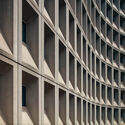
Brutalist architecture in the United States is a monument to collective postwar optimism and reassurance that the city and federal governments are in authority. Conceived as an embodiment of strength and efficiency, Brutalist structures were quickly adopted for the architectural language of civic and governmental institutions in the mid-to-late twentieth century in the United States. Towering monoliths of raw concrete rose across the nation, projecting an image of institutional permanence while simultaneously provoking debate over their social and psychological impact.
Air rights transactions have become essential in urban development, allowing cities to grow vertically while preserving limited land resources. Typically defined as the right to use or sell the space above a property, air rights enable property owners to transfer unused floor area ratio (FAR) to neighboring parcels, creating increased density and financial gain opportunities. However, the definition can vary based on locality and region, as each country interprets air rights and the ability to build or transfer them differently. As urban centers face mounting pressures from limited land supply and population growth, air rights continue to offer a creative solution that fosters architectural innovation and economic efficiency.
Greenways, as a typology of urban design, have become an essential element in the planning of modern cities. They emerge in response to the increasing fragmentation of urban landscapes by elements such as highways. They usually integrate natural and constructed spaces, providing much-needed connections across various parts of the city. At the same time, they promote pedestrian accessibility, recreation, and social interaction. The Rose Kennedy Greenway in downtown Boston, United States, exemplifies this human-centered approach to design. The project, which began construction in 1991, showcases the potential of greenways to reconnect urban environments and enhance community life. As a series of parks designed by various architecture firms, it aims to create physical links and meaningful spaces that foster social development and a sense of place.
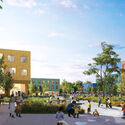
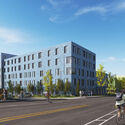
MVRDV, in collaboration with JGE Architects, landscape architects Copley Wolff, and Langan Engineering, has developed a masterplan for the redevelopment of Faneuil Gardens, a public housing site in the Brighton neighborhood of Boston. This project, commissioned by The Community Builders in partnership with the BostonHousing Authority, aims to replace the outdated 1940s apartment complex with five contemporary buildings that incorporate mixed-income affordable housing, artist live-work spaces, and significant green spaces. At the center of the redevelopment is a new community center, located along a public boulevard that runs through the heart of the site.
Anyone who walks during the summer in a city like Boston knows that a significant amount of time is spent charting routes with shade. But I can’t use that as my only excuse for being off-task. Honestly, I’m distracted. The swirling headlines of the U.S. presidential election, an unprecedented UN climate conference looming, and the phrase “decade of decisive action” weighs heavy on my shoulders. While it’s easy to get caught up in current events, those of us with solutions must stay focused.
A perhaps helpful Japanese phrase to call upon is “kotsu kotsu,” essentially meaning to slow down and focus on the task at hand, and do it well. Temperatures are soaring, people are suffering. As a recent UN COP letter stated, “time lost is lives, livelihoods, and the planet lost.” Cooling our cities and communities is more important than ever.
The continuation of remote work practices has altered cities' bustling downtown areas along with the traditional office landscape, leaving behind many vacant spaces whose future purpose is a matter of speculation. Four years after the onset of hybrid working policies, office occupancy rates in urban centers remain lower than pre-pandemic levels, signaling a long-term shift in the work environment. Some developers have aimed to reposition these buildings while other are seeking alternative uses of vacant buildings in central location. While both approaches prove beneficial in their own ways, the potential for repurposing office buildings is vast and exciting. From residential living to cutting-edge research facilities, architects and developers explore diverse possibilities and challenges of transforming these underutilized structures into thriving new spaces.
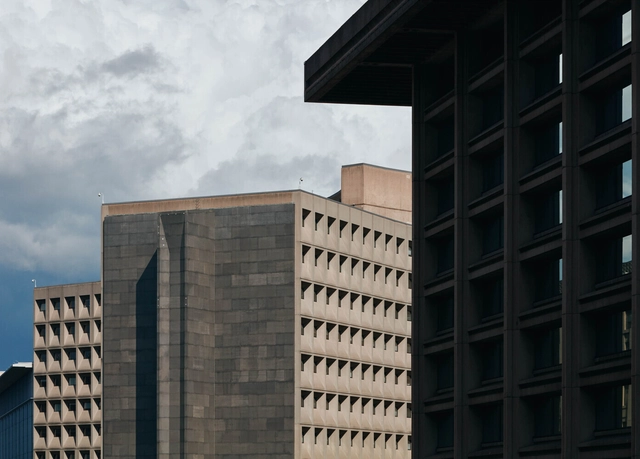
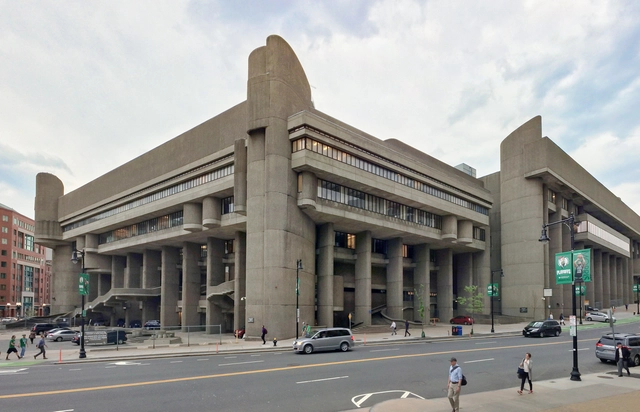
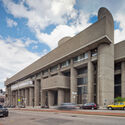
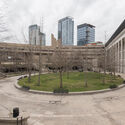
The Massachusetts administration, under Governor Maura Healey, has unveiled a new housing-centric proposal for the controversial Boston Government Service Center designed by Paul Rudolph and opened in 1971. Previously proposed to be redeveloped by the architecture office NBBJ with offices and commercial spaces, the updated vision aims to transform the Erich Lindemann and Charles F. Hurley buildings into housing facilities as part of the state’s goal to address the housing crisis while allowing for the historic preservation of the Brutalist structure.
Urban mobility in the United States has seen a radical transformation with the introduction of ridesharing services in the late 2000s. The widespread adoption of services such as Uber and Lyft has altered the way citizens move around cities, offering convenience, flexibility, and accessibility like never before. The innovative business model that excels at designing for individual users failed to foresee larger implications at the scale of the city - congestion, public transit systems, and car ownership. While European countries such as Brussels have pledged to encourage public transportation to curb traffic congestion issues, American cities hunt for solutions of their own.