If we ever wonder what the future could look like, all we have to do is take a look into our past, and observe how far we have come since thousands, a hundred, or even ten years ago. Life was radically different back then and it will be just as different in the future. And since we are well aware that the future merely resembles the present, we have the possibility to shape our future the way we want to. TASCHEN's latest BIG book installment Formgiving. An Architectural Future History explores the past, present, and future, drawing a timeline of the built environment from taking shape to giving form.
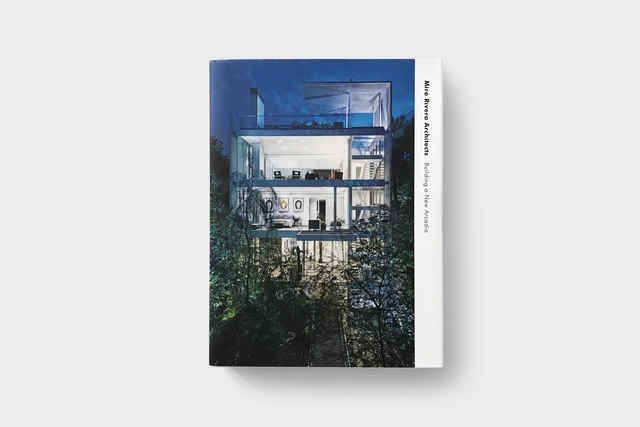
The acclaimed studio Miró Rivera Architects has published a 448-page monograph, entitled Miró Rivera Architects: Building a New Arcadia. Designed by the award-winning architects, the book features 20 of the firm’s most remarkable projects brought to life through 230 color photographs and 95 drawings. Featuring essays by notable thinkers and cutting-edge practitioners in the fields of architecture and urban design, Building a New Arcadia situates the firm’s diverse portfolio in a global context related to concepts of nature, sustainability, history, and urban design.
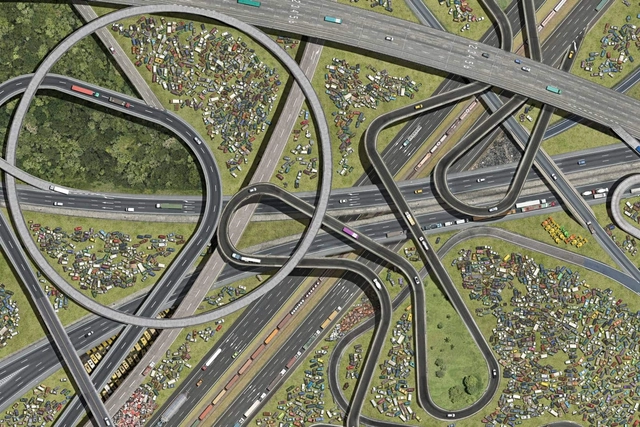
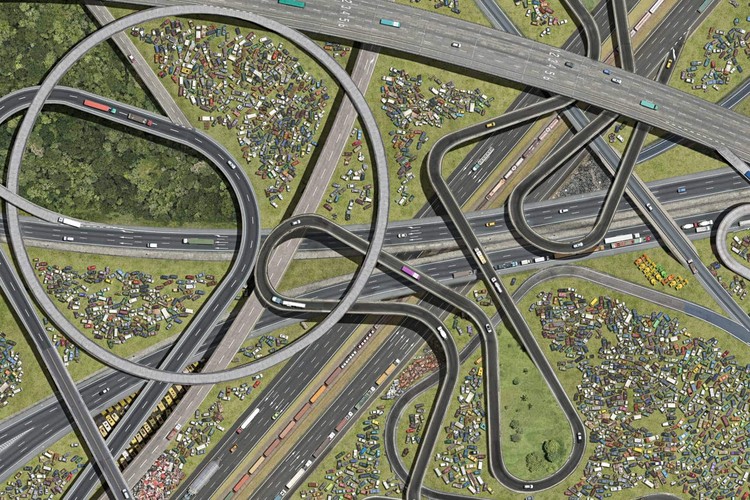
Collectives, is a series of aerial imageries by Brazilian photographer and artist Cássio Campos Vasconcellos, made from articulated photos captured during helicopter flights. On-going for almost 5 years, the project consists of large-format works portraying chaotic urban landscapes and exploring “jam-packed situations typical of our civilization”. Aiming to showcase the impact of human activity on the world, the collection of images is a visual investigation of our consumer society.
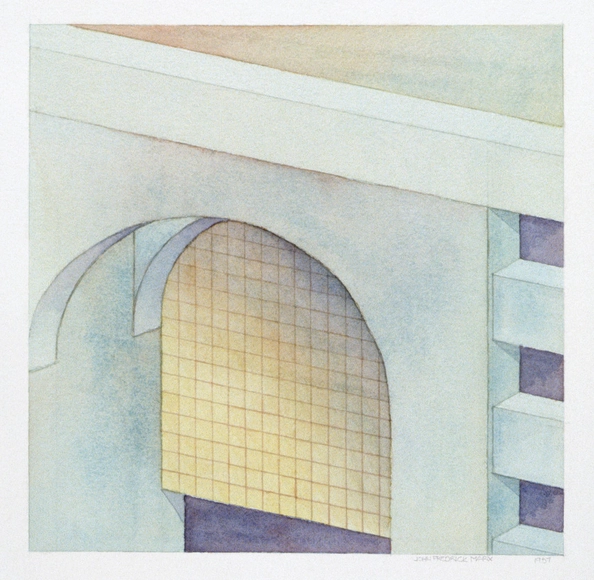
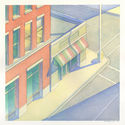
Etudes is a rare thing amongst architecture books. Its subject is neither built nor unbuilt projects but instead imaginary places and abstract compositions by San Francisco architect John Marx. Rendered in delicate watercolours, Marx’s places are dreamlike and akin to the structure and sentiments of his taut poetry that sits alongside pages of his paintings.
Curiously, the quiet streets and vacant landscapes of Marx’s imagination speak to us in an acutely timely fashion as we find ourselves in a new world of empty cities closed for business, a world that feels as if it has come to a standstill.
After the success of the original guide-book on underrated Soviet architecture, Garage Museum of Contemporary Art is publishing an English version of the bestselling guide: Moscow: A Guide to Soviet Modernist Architecture 1955–1991in a new digitalized format with six new chapters.
The International Committee of Architectural Critics CICA is pleased to announce an invitation to publishers, editors, curators and authors to submit their publications for consideration for the 10th CICA Awards 2020 by 30th November 2019. Award winners will be announced during the UIA XXVII World Congress of Architecture to be held in Rio de Janeiro from July 19th to 23rd, 2020.
The Awards fall into four categories:
“Bruno Zevi CICA Book Award” For published books on architectural criticism, theory and history “Pierre Vago CICA Journalism Award” For an article
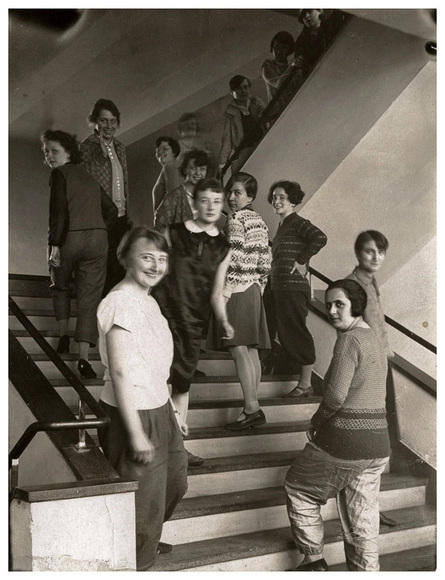
Weavers on the Bauhaus staircase, 1927. From top to bottom: Gunta Stölzl (left), Ljuba Monastirskaja (right), Grete Reichardt (left), Otti Berger, (right), Elisabeth Müller (light patterned sweater), Rosa Berger (dark sweater), Lis Beyer-Volger (center, white collar), Lena Meyer-Bergner (left), Ruth Hollós (far right) and Elisabeth Oestreicher.. ImagePhotograph by T. Lux Feininger; collection of the Bauhaus-Archiv Berlin
The Bauhaus was founded on the promise of gender equality, but women Bauhauslers had to fight for recognition. A new book recounts the achievements and talents of 45 Bauhaus women.
After the end of World War I, a spirit of optimism and a euphoric mood prevailed in Germany. Thanks to a new republican government and women’s suffrage, the war-torn nation was experiencing a radical new beginning.
As part of that convention-breaking wave, in 1919 German architect Walter Gropius assumed leadership of what would become the legendary Bauhaus. Initially, he declared that there would be “absolute equality” among male and female students.
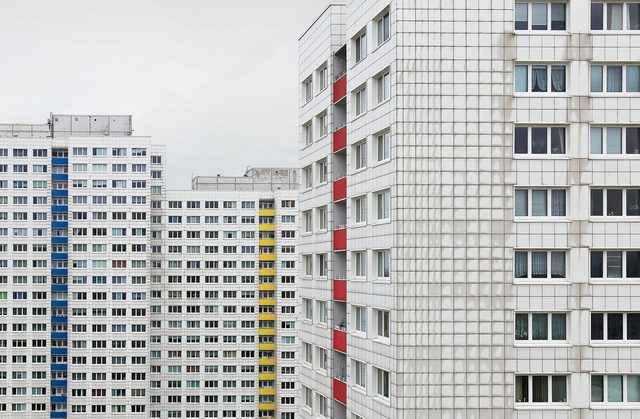
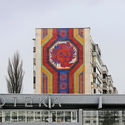
Post World War II, Brutalism found its way across Europe, redefining modernist architecture and establishing a new style for mass housing and communal buildings. Although most of the light was shed on concrete landmarks in major cities, European suburbs have also housed many exceptional brutalist buildings such as the 'Hammer-shaped Tower Blocks' or the 'Houses on Chicken Legs'.
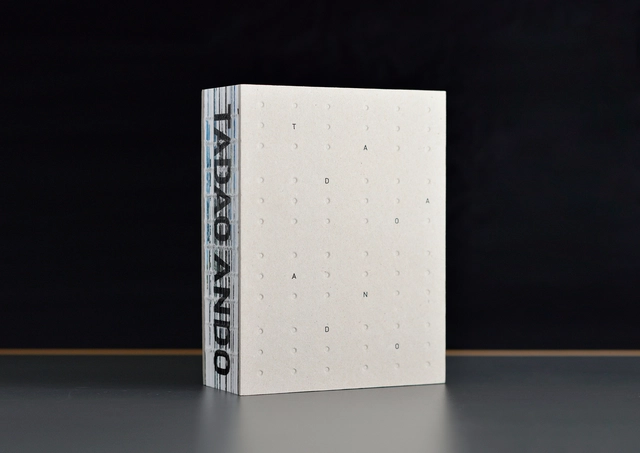
Throughout his distinguished career, Pritzker award winner Tadao Ando managed to trigger every human’s sensations upon entering his structures. It was never just the buildings’ forms that let the architect earn his status, but the manipulation of light and shadow and the impulsive sensation of sanctity that his buildings impose, are what led him to become one of the world’s most renowned architects.
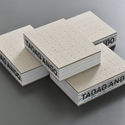
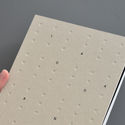
To showcase Ando’s recent works and to honor their ongoing relationship with the architect, Oris House of Architecture have created a monograph titled Transcending Oppositions, celebrating his buildings and their relationship with the contemporary culture of Japan. Judging this book by its cover, readers will have a clear notion of what to expect, as the monograph reflects Tadao Ando’s architecture on fine print.
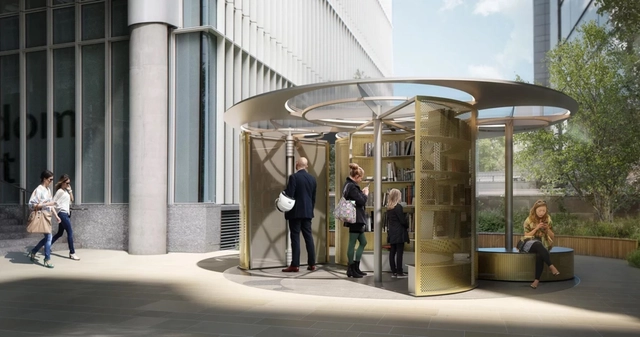
Celebrating Paddington Central’s first year as a Design Route at the London Design Festival, the design practice Snøhetta created a rotating book pavilion for British Land. Snøhetta wanted to create a project that would reimagine the traditional principles of a library through a mechanized pavilion that generates varied spatial types. Designed for visitors to immerse themselves into a world of books, the pavilion encourages exploration, interaction and reflection.
Once or twice a year, the team Odyssey Works chooses one participant to undergo a transformation, to embark on an Odyssey. Interwoven into the participant's life, the Odyssey can contain art, architecture, and design objects, friends and family, or a group of complete strangers.
Participants have been buried alive, kidnapped by people in pink onesies, and even in the case of one participant--novelist Rick Moody--found himself in Canada not knowing what he was doing there until he discovered a cello concert in a field playing just for him. Some Odysseys are short. Some go on for months.
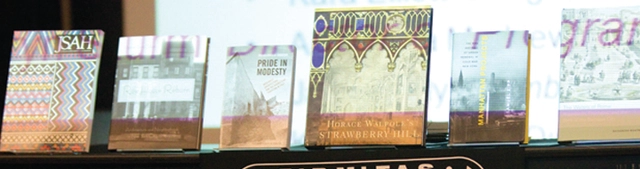
The Society of Architectural Historians is accepting nominations for its 2017 Publication Awards. The program includes five awards that will be presented at the Society's 2017 Annual International Conference (Glasgow, June 7-11). The deadline to submit is Monday, August 1, 2016.
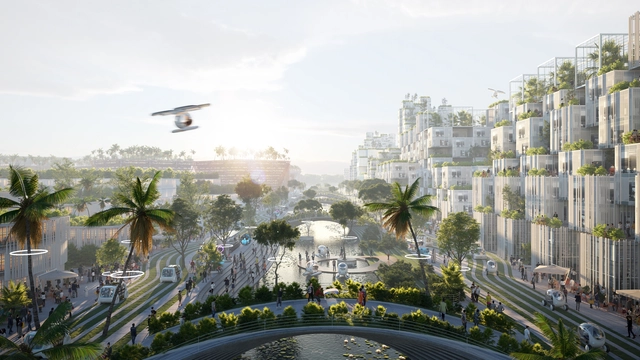
why? Today we are in the midst of a paradox: although fast, web-based media seems to threaten the very existence of slow architecture media, the amount of p.o.p. magazines has increased in the last few years. Furthermore, and discarding arguments about fast consumption of information, some editorial projects aimed at a slow and attentive audience have managed to succeed in the middle of a huge flow of information. It seems that once the novelty of fast media has decreased, p.o.p. architecture magazines have regained the space they once had. However, are they the same kind of magazines we once knew? How can we explain the fact that an old format may stay alive against all odds? Is it stubbornness, nostalgia, or is it something else? The reasons behind this paradox are what we would like to discuss and explore in this session.
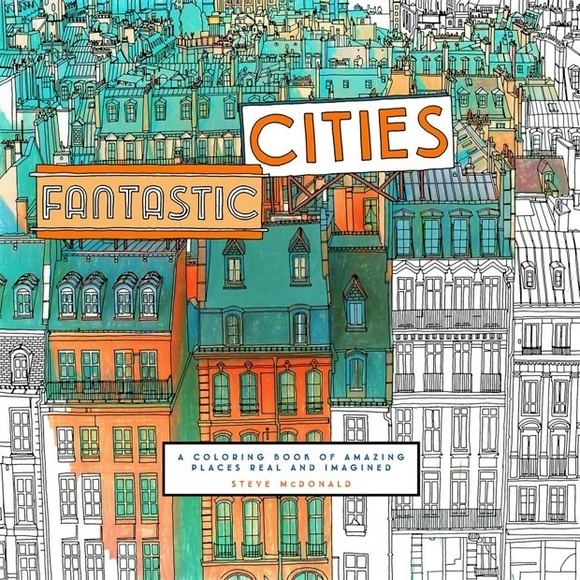
Canadian artist Steve McDonald has released "Fantastic Cities," an illustrated coloring book featuring 60 cities from around the world. From Paris to New York, Tokyo to Istanbul, the illustrations will take any architect or urban planner back to childhood times.
The book, with 48 full-view pages of real and imaginary places, is on sale Amazon and Chronicle Books. Take a look inside, after the break.
Last monday, Columbia University's Avery Hall was buzzing.
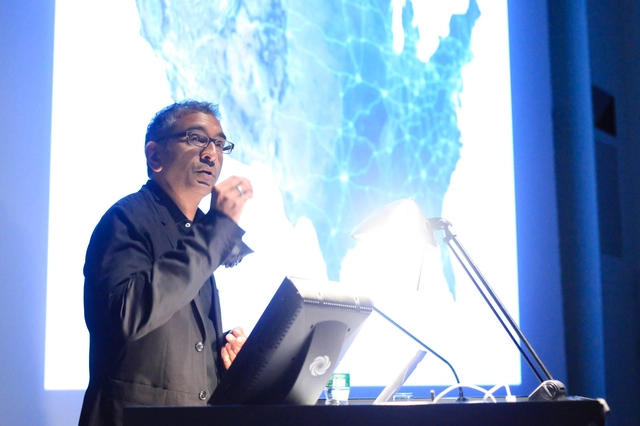
The Graduate School of Architecture, Planning and Preservation (GSAPP) hosted a highly attended event that welcomed respected academics and professionals from architecture and real estate to what the dean, Mark Wigley, warned might take the form a a celebrity roast. Vishaan Chakrabarti, a partner at SHoP Architects and director of the Center for Urban Real Estate at Columbia, was on deck to deliver an abridged, more "urban version" of a longer lecture on his new book, A Country of Cities: A Manifesto for an Urban America. Proceeding the twenty minute lecture, an "A-list" panel of architects and historians - that included Kenneth Frampton, Gwendolyn Wright, Bernard Tschumi, Laurie Hawkinson and Reinhold Martin - lined up to discuss Chakrabarti's work.
https://www.archdaily.com/430538/a-country-of-cities-a-manifesto-for-an-urban-americaJose Luis Gabriel Cruz
Videos
"Pictographs—Statement of contemporary architects" - Edited by Valerio Oligiati; Video Still
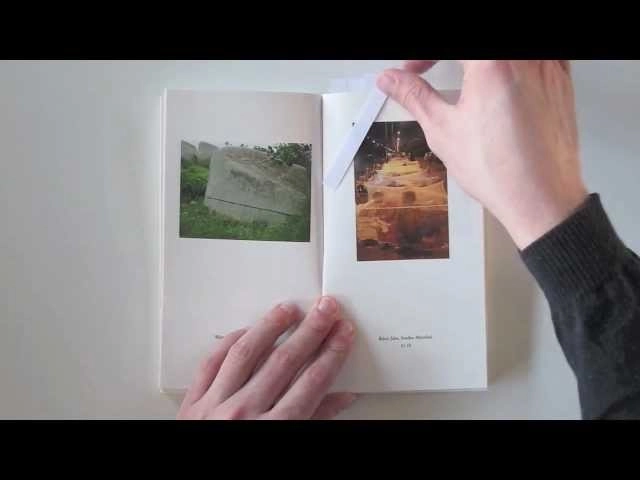
For the 2012 Venice Biennale, Swiss architect Valerio Oligiati curated a collection of images selected from well-known architects. The concept of the collection - "Pictographs - Statement of Contemporary Architects" - were inspirational images that have guided the work of these architects. These images portray a wide range of subjects that represent the basis of the architects' work from inspiring images to diagrammatic interpretations of concepts to details and materials. The collection will be assembled into a book that will contain a total of 44 "musees imaginaires".
Like no other style, Art Deco represents a built manifestation of the interwar period’s enthusiasm and splendor. In London, buildings of this era reflect the elegance, progress and assertiveness that describe the modern metropolis age. Even today, these buildings have lost none of their aura and appeal, yet they lack any proper documentation.
Together, Niels Lehmann and Christoph Rauhut have worked tirelessly for the past three years researching and photographing London’s architectural Art Deco heritage. With your help, they will feature over 230 buildings with large-scaled photographs in the soon-to-be published book “Modernism London Style.” Follow this link to become a supporter and learn more.
The monograph 2G presents a new way of approaching Chilean architecture. In the wake of the interesting publications of Mathias Klotz (2G 26, 2003), Smiljan Radic (2G 44, 2007) and Cecilia Puga (2G 53, 2010), now comes that of Pezo von Ellrichshausen, a firm that has proven itself around the world for its consistently outstanding, contemporary works (you can see some examples here).
https://www.archdaily.com/219446/2g-pezo-von-ellrichshausenAmber P

















![P.O.P. [Published on Paper] A Talk of Slow Architecture Media - Featured Image](https://snoopy.archdaily.com/images/archdaily/media/images/573b/7f1c/e58e/ce0d/e400/0001/slideshow/normal_POP.jpg?1463516953&format=webp&width=640&height=580)