1. ArchDaily
  2. Architecture

Architecture: The Latest Architecture and News

Getty Center to Close Temporarily for Its Largest Modernization Since 1997 Opening

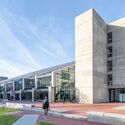
The Getty Center has announced a comprehensive modernization program marking its most significant transformation since its opening in 1997. Located within the Santa Monica Mountains and overlooking Los Angeles, the campus will temporarily close to the public from March 15, 2027, through spring 2028 to accommodate the planned works. The initiative focuses on enhancing visitor experience, improving accessibility, and advancing energy resilience, while supporting the long-term stewardship of the institution. Before the closure begins, the Getty Center will continue its program of exhibitions and events through early 2027.

Getty Center to Close Temporarily for Its Largest Modernization Since 1997 Opening - Imagen 1 de 4Getty Center to Close Temporarily for Its Largest Modernization Since 1997 Opening - Imagen 2 de 4Getty Center to Close Temporarily for Its Largest Modernization Since 1997 Opening - Imagen 3 de 4Getty Center to Close Temporarily for Its Largest Modernization Since 1997 Opening - Imagen 4 de 4Getty Center to Close Temporarily for Its Largest Modernization Since 1997 Opening - More Images

Buildner Launches Unbuilt Award 2026 With €100K in Awards and Announces 2nd Edition Winners

 | Sponsored Content

Buildner has launched the Unbuilt Award 2026, the third edition of its annual competition, offering a €100,000 prize fund. At the same time, the results of the Unbuilt Award 2025 have been announced, marking the second competition in a series that celebrates architectural designs that have yet to be realized. The initiative provides a global platform for architects and designers to showcase their most compelling unbuilt projects—whether conceptual, published, unpublished, or fully developed.

Zaha Hadid Architects’ International Gateway Centre in West Kowloon Hong Kong Nears Completion, Captured by Paul Clemence

Photographer Paul Clemence documented the International Gateway Centre (IGC) in West Kowloon, a mixed-use development by Zaha Hadid Architects in Hong Kong, as it approaches completion. The photo series captures the project at a stage where its overall massing, facade systems, and spatial organization are largely realized, while final works continue across public and interior areas. Clemence's close-range views highlight the vertical shading pleats, the curvature of the glazed envelope, and the transitions between structural and environmental elements, underscoring how the building's formal language is resolved through construction.

Zaha Hadid Architects’ International Gateway Centre in West Kowloon Hong Kong Nears Completion, Captured by Paul Clemence - Imagen 1 de 4Zaha Hadid Architects’ International Gateway Centre in West Kowloon Hong Kong Nears Completion, Captured by Paul Clemence - Imagen 2 de 4Zaha Hadid Architects’ International Gateway Centre in West Kowloon Hong Kong Nears Completion, Captured by Paul Clemence - Imagen 3 de 4Zaha Hadid Architects’ International Gateway Centre in West Kowloon Hong Kong Nears Completion, Captured by Paul Clemence - Imagen 4 de 4Zaha Hadid Architects’ International Gateway Centre in West Kowloon Hong Kong Nears Completion, Captured by Paul Clemence - More Images+ 22

Kengo Kuma and Associates Wins Competition to Design New Wing for London's National Gallery

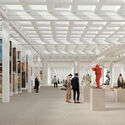
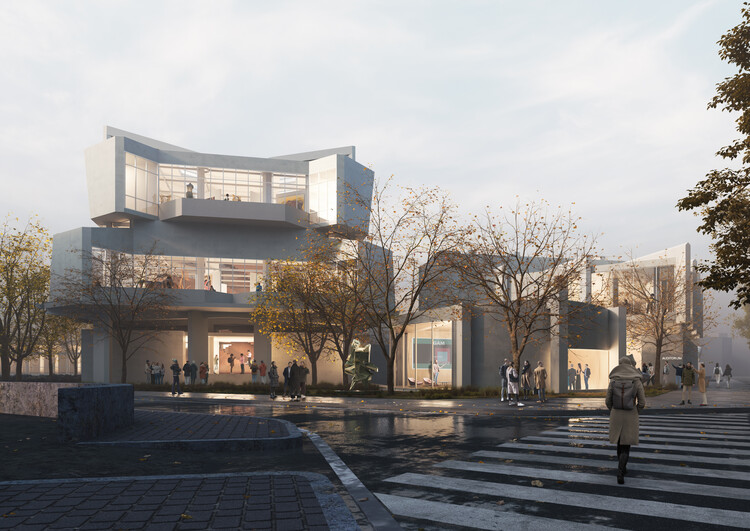
London's National Gallery has announced Kengo Kuma & Associates, in collaboration with BDP and MICA, as the winners of the international competition to design a new wing for the institution. Launched in September 2025, the competition attracted 65 submissions from international practices, from which six teams were shortlisted to develop proposals. The selection marks a key milestone in the institution's long-term development strategy, Project Domani, positioning the new addition as a central component in the reconfiguration of its architectural and curatorial framework. Conceived as the most significant transformation of the museum since its establishment in 1824, the project aims to expand both spatial capacity and curatorial scope, enabling the presentation of a continuous narrative of Western painting within a single setting.

Kengo Kuma and Associates Wins Competition to Design New Wing for London's National Gallery - Image 1 of 4Kengo Kuma and Associates Wins Competition to Design New Wing for London's National Gallery - Image 2 of 4Kengo Kuma and Associates Wins Competition to Design New Wing for London's National Gallery - Image 3 of 4Kengo Kuma and Associates Wins Competition to Design New Wing for London's National Gallery - Image 4 of 4Kengo Kuma and Associates Wins Competition to Design New Wing for London's National Gallery - More Images+ 1

Frank Lloyd Wright’s Fallingwater Restoration and Salone del Mobile.Milano 2026: This Week’s Review

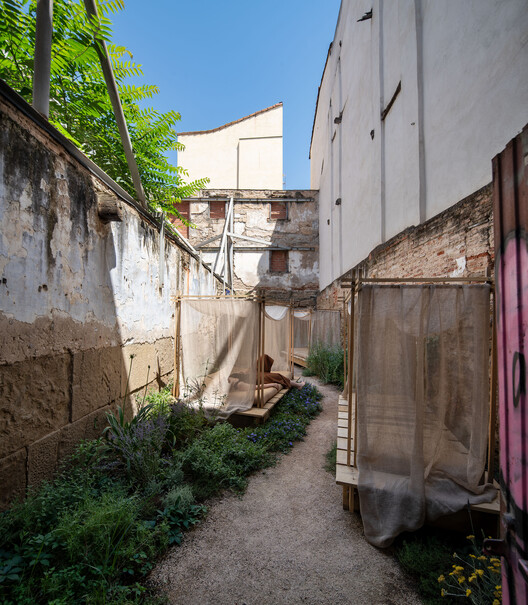
This week marked World Health Day, observed annually on April 7 by the World Health Organization. This year's edition issued the call to "Stand with science," inviting renewed engagement with scientific knowledge as a foundation for collective action across disciplines. In architecture and urban design, this imperative resonates through projects that translate research into spatial strategies: from the deployment of digital twins to inform urban planning and decision-making, to rewilding initiatives that integrate biodiversity as a tool to mitigate climate change, and materially informed practices that engage resource-conscious construction. Within this broader framework, recent works also foreground architecture's social agency at multiple scales, including a landscape-driven cancer support center in Kent that aligns wellbeing with environmental sensitivity, an urban installation in Brescia operating as a civic awareness device around life in prison and pathways to reintegration, and the transformation of a street in Mantua into a pedestrian-oriented, biodiversity-rich public space.

Frank Lloyd Wright’s Fallingwater Restoration and Salone del Mobile.Milano 2026: This Week’s Review - Imagen 1 de 4Frank Lloyd Wright’s Fallingwater Restoration and Salone del Mobile.Milano 2026: This Week’s Review - Imagen 2 de 4Frank Lloyd Wright’s Fallingwater Restoration and Salone del Mobile.Milano 2026: This Week’s Review - Imagen 3 de 4Frank Lloyd Wright’s Fallingwater Restoration and Salone del Mobile.Milano 2026: This Week’s Review - Imagen 4 de 4Frank Lloyd Wright’s Fallingwater Restoration and Salone del Mobile.Milano 2026: This Week’s Review - More Images+ 30

From Data to Digital Twins: Japan’s PLATEAU Project Offers Open-Access Models of More Than 250 Cities

"Map the New World" is the motto of Project PLATEAU, led by Japan's Ministry of Land, Infrastructure, Transport and Tourism (MLIT), to develop and expand access to 3D models representing the diversity of cities across the country. Japan comprises a total of 744 cities, including 14 with populations exceeding one million, 190 with between 100,000 and one million inhabitants, and 540 with populations between 10,000 and 100,000. To date, 3D models of more than 250 cities have been made available as open data through the country's public G-Spatial Information Center, and can also be accessed via an online browser viewer. According to public authorities, the project aims to strengthen urban resilience by providing society with new tools to address local challenges. This involves not only urban space modeling but also collaboration with local governments, private companies, and technology communities. The project also includes a digital reconstruction of the recently closed Osaka World Expo site.

From Data to Digital Twins: Japan’s PLATEAU Project Offers Open-Access Models of More Than 250 Cities - Imagem 1 de 4From Data to Digital Twins: Japan’s PLATEAU Project Offers Open-Access Models of More Than 250 Cities - Imagem 2 de 4From Data to Digital Twins: Japan’s PLATEAU Project Offers Open-Access Models of More Than 250 Cities - Imagem 3 de 4From Data to Digital Twins: Japan’s PLATEAU Project Offers Open-Access Models of More Than 250 Cities - Imagem 4 de 4From Data to Digital Twins: Japan’s PLATEAU Project Offers Open-Access Models of More Than 250 Cities - More Images+ 1

When Sculpture Becomes Discourse: Reflections on Mujassam Watan

 | Sponsored Content

In the city, aesthetics are not measured by the height of towers or the width of roads, but by their ability to evoke meaning within space. From this perspective, the Mujassam Watan initiative emerges as more than a mere artistic endeavor. It involves a deliberate attempt to redefine the relationship between people and place, between material memory and imagined identity. In the city of Khobar, in the Kingdom of Saudi Arabia—where urban modernity intersects with rapid social transformation—this initiative raises the question: How can a sculpture become an open text, one that is both visually read and experientially felt?