The Royal Institute of British Architects (RIBA) has announced its shortlist for the 2021 International Prize, a prestigious biennial award that celebrates the world’s best new projects that “champion buildings that change the world and positively impact the community around them". The jury has selected three projects from a list of 16 projects in 11 countries, and will announce the winner on Thursday 2nd December.
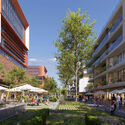
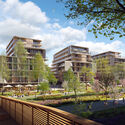
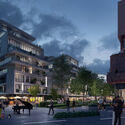
UNStudio revealed its competition-winning design for K31 Courtyard, a residential complex in Moscow that fosters community-building in the context of a rapidly changing city. The proposal features a stepped podium and two towers and reinterprets Moscow’s typical courtyard block, aiming to create a new neighbourhood through various housing typologies, amenities, and outdoor spaces.
Responsible use and consumption of natural resources and the impacts of the building industry have been ongoing concerns in the field of architecture and urban planning. In the past, concepts such as clean slates, mass demolitions, and building brand new structures were widely accepted and encouraged. Nowadays, a transformation seems to be taking place, calling for new approaches such as recycling, adaptive reuse, and renovations, taking advantage of what is already there. This article explores a selection of projects and provides a glimpse into interventions by renowned architects in pre-existing buildings.
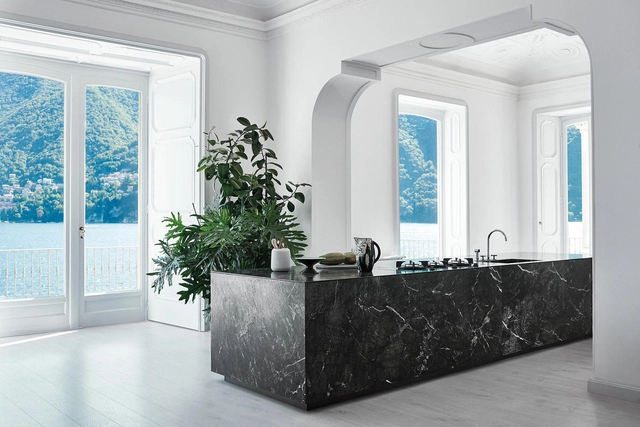
With contemporary lifestyles meaning more entertaining from home, forward-facing kitchen islands with integrated seating make staying in the new going out. But what makes the perfect kitchen island?
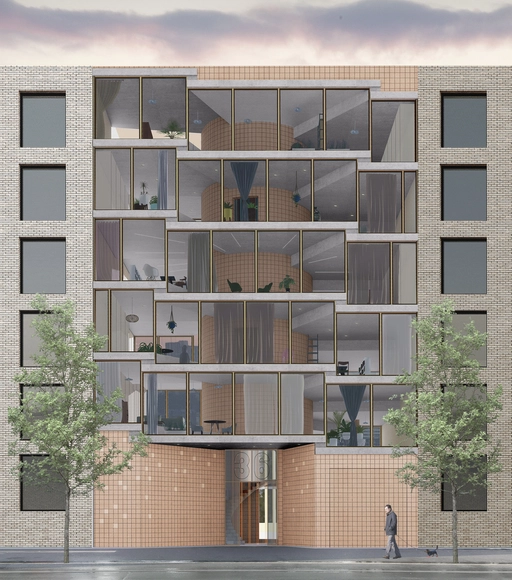
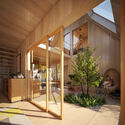
German architecture firm Meyer-Grohbruegge has proposed a new residential typology that "adds a dynamic spatial dimension to a small building gap and emphasizes physical experience in housing". The competition-winning design features a central spiral staircase that connects the entire structure together and offers residents a fluid and dynamic interior that merges the outdoors and indoors.
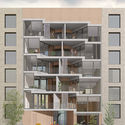
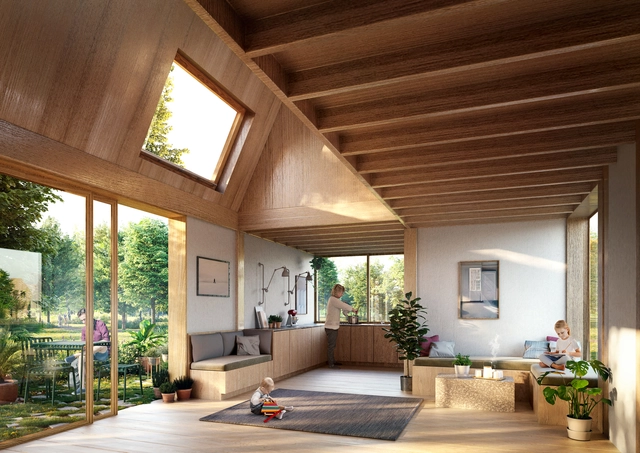
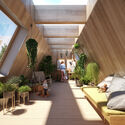
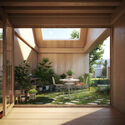
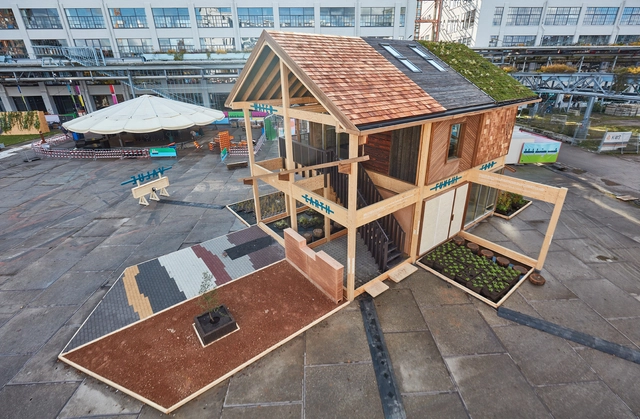
VELUX Group reveals The Build for Life concept aimed at creating sustainable communities and built environment through affordable, socially-oriented designs and new housing models, healthy indoor climates and the use of low-impact materials. Developed together with EFFEKT, MOE engineers and Danish construction company Enemaerke & Petersen A/S, the concept provides architects and city planners with a “compass’ for navigating the sustainability imperatives of the moment while encouraging the design of healthier living places.
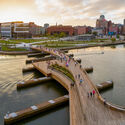
Designing a public space means contemplating the aspects of everyday life in the city. Creating places for gatherings, conflicts, demonstrations, relaxation, and enjoyment. These spaces can be used in many different ways, depending on who interacts with them, and one of the main roles of those who design them is to expand these possibilities and sensations. Including plants, benches, sports facilities, spaces for culture, arts, and performances, conservation areas, or any other element that stands out, is essential to improve the quality of life of the citizens who enjoy these squares and parks.
https://www.archdaily.com/971738/parks-and-squares-20-public-space-designsEquipe ArchDaily Brasil
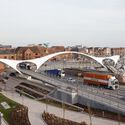
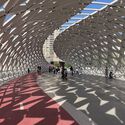
The technical needs of the construction of bridges many times guide the development of the design itself. However, architecture is never put aside, rather the opposite. The aesthetics of bridges that we collect in this article are the result of an intense, demanding, and stimulating dialogue between architecture and engineering, where the search for solutions only ends when both disciplines are fully satisfied.
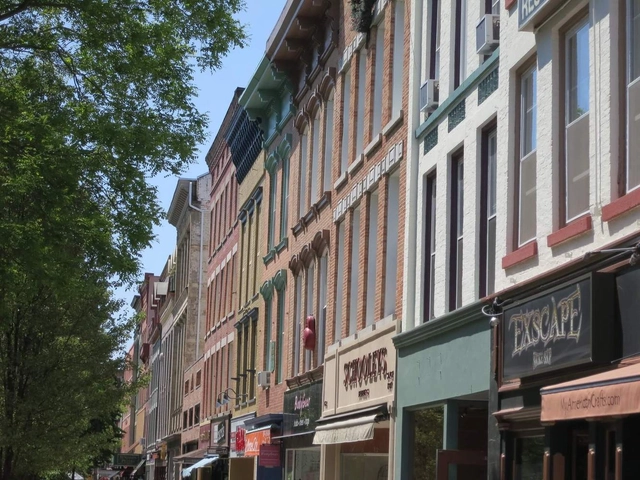
The Ithaca Commons, a downtown pedestrian mall, pictured in 2012.. Image via Paul Sableman/Flickr/CC BY 2.0
Last week, the Common Council of Ithaca, New York, voted to approve a first-in-the-nation decarbonization plan in which the roughly 6,000 homes and buildings located within the notably “enlightened” lakeside college town will be electrified to meet goals established by the city’s impressively aggressive Green New Deal (GND) plan. That carbon-neutral-by-2030 GND plan was adopted unanimously by the Common Council in June 2019 to “address climate change, economic inequality, and racial injustice,” per the city.
We are twenty-one years into the twenty-first century. The world has never been more connected with the advent of new technologies, yet historical inequalities still run rampant. These inequalities manifest themselves in different ways. Global travel, for example – despite the ubiquity of aeroplanes nowadays – is still only widely accessible to citizens of “developed” countries due to prohibitive visa restrictions. In architectural education, many institutions still prioritise a Eurocentric curriculum, the architecture of non-Western populations largely ignored. Another perpetuation of prejudiced systems is Orientalism – and exploring this concept through an architectural lens is useful for interrogating contemporary design approaches and approaches of the future.
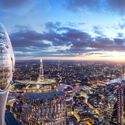
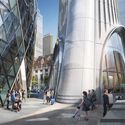
The UK government announced yesterday that planning approval will not be granted for Foster+Partners' Tulip tower. The decision letter published on behalf of the UK's housing secretary cites concerns over the design's embodied carbon and the possible negative impact on the surrounding architectural heritage. First revealed in 2018, the 305-metre tower would have become the tallest building in London's financial district.
The climate crisis has become a staple of the architecture discourse, with the field slowly acknowledging its contribution to environmental issues and seeking to reframe its values and approaches. However, there is an evident lack of commitment and consistency in addressing the matter and an absence of systemic change. Emerging practices, organizations and startups are carving a new architecture practice, slowly unfolding a paradigm shift beyond "green" add-ons and technical equipment. Addressing environmental issues on multiple levels, from policy and design strategies to materials and construction processes, the following are some of the actors reframing the profession's relationship with sustainability.
"What if the built environment could be a solution to the climate crisis, rather than part of the problem? What if buildings could act like trees – capturing carbon, purifying the air, and regenerating the environment?" Responding to these questions, Skidmore, Owings & Merrill (SOM) has proposed Urban Sequoia, an architectural concept inspired by the ecosystem at the 2021 UN Climate Change Conference in Glasgow - COP26. The design features “forests of buildings" that isolate carbon and produce biomaterials that create a new ecological and resilient urban environment.
Zaha Hadid Architects reveals the winning design proposal for a mixed-use development in Budapest, comprising residential, office and retail functions, tied together by civic spaces and landscaped areas. The Zugló City Centre establishes a network of public squares and urban gardens that re-establish the natural ecosystem of Rákos Creek and connects the new development to the surrounding framework of parks and avenues.
In this week's reprint, author Andrés Duany presents a series of statements from today's architectural world. He considers that these understandings are the product of our times, a direct reaction and a consequence of the observed patterns.
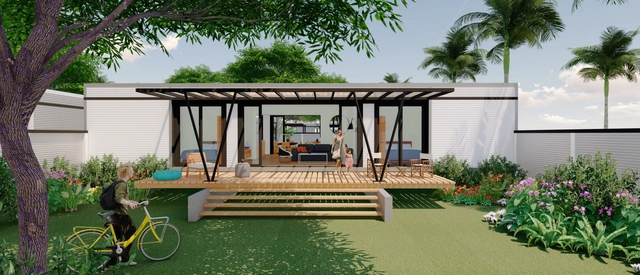
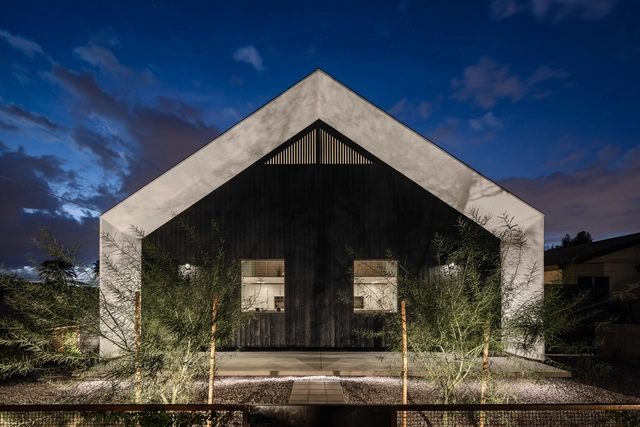
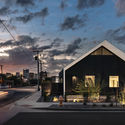
Architect and developer SinHei Kwok has completed Polker, a six-unit multifamily project in the Historic Garfield neighborhood near downtown Phoenix, Arizona. Featuring two-bedroom and loft-style units, the project reconsiders its surrounding context of single family houses. Polker provides a new kind of residence for urban dwellers who do not want to live in a single-family home or big box apartment, but would like to live and work closer to downtown.
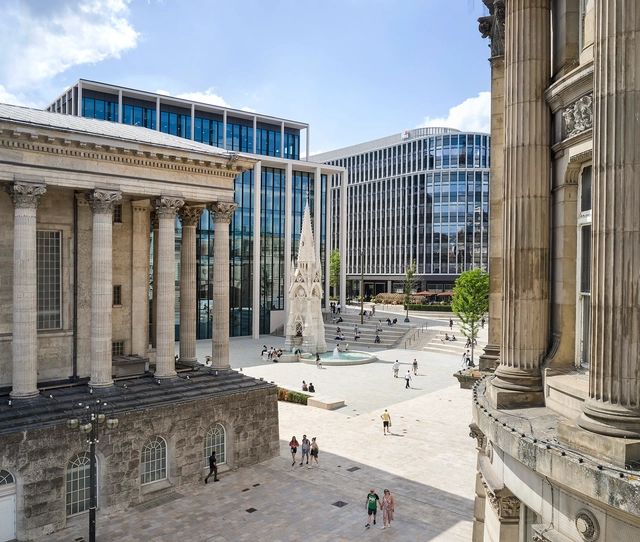
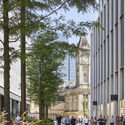
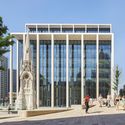
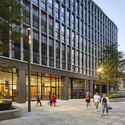
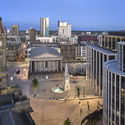
The first phase of the Paradise Masterplan by Glenn Howells Architects (GHA) in Birmingham’s historic square has been completed, marking a major milestone in the city’s redevelopment plans. The newly restored civic square features Two Chamberlain Square, an eight-storey office building with a glazed facade and expansive column frame amidst 19th century cultural buildings.


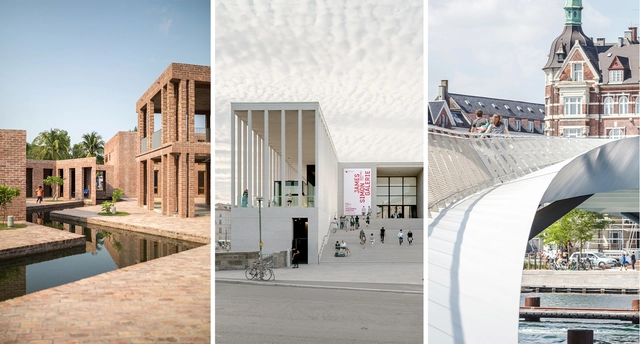
.jpg?1637053142 "James-Simon-Galerie / David Chipperfield Architects (Berlin, Germany). Image © Simon Menges")
.jpg?1637053340 "Lille Langebro / WilkinsonEyre + Urban Agency (Copenhagen, Denmark). Image © Rasmus Hjortshøj")
.jpg?1637053381 "Friendship Hospital, Satkhira / Kashef Chowdhury-URBANA (Shyamnagar, Bangladesh). Image Courtesy of URBANA")


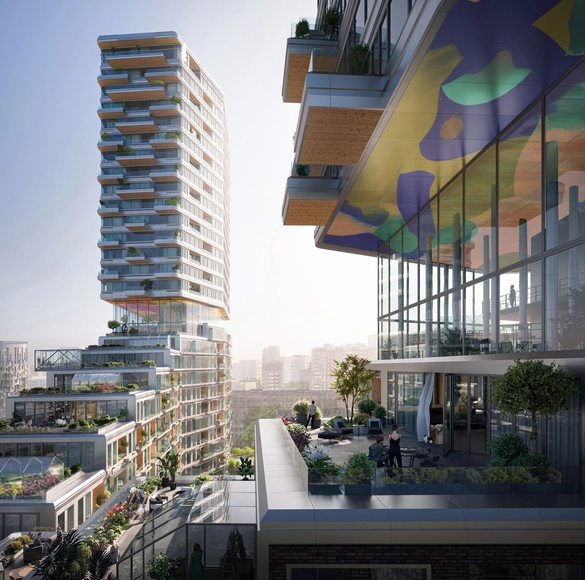



















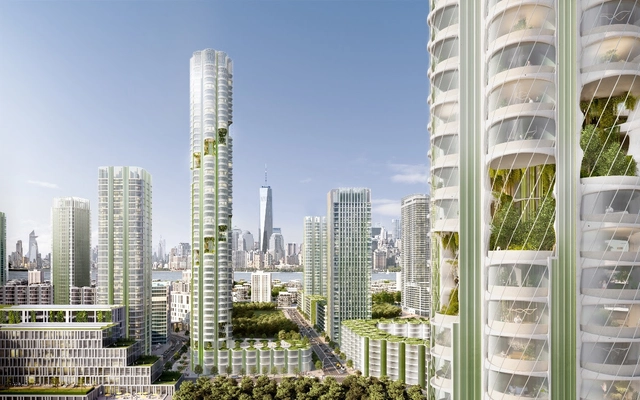
.jpg?1636652992 "Courtesy of SOM | Miysis")
.jpg?1636652975 "Courtesy of SOM")
.jpg?1636652975 "Courtesy of SOM")
.jpg?1636653008 "Courtesy of SOM")