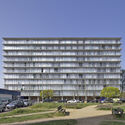
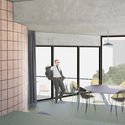
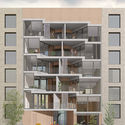
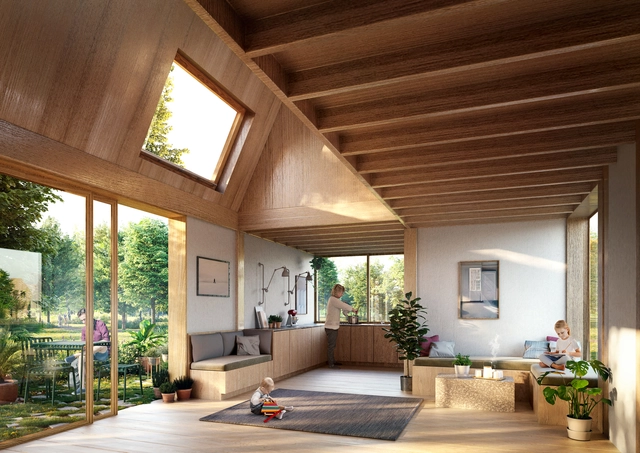
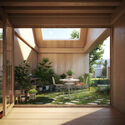
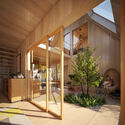
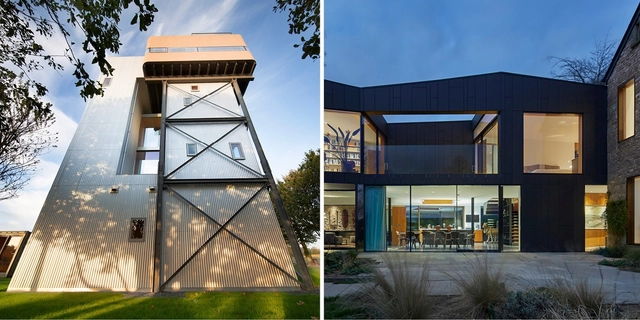
The Royal Institute of British Architects (RIBA) has announced the first two shortlisted projects for the 2021 House of the Year, an annual award that honors the best new architect-designed house or extension in the United Kingdom. The following two projects will be announced on November 24th, and the complete shortlist will be announced on December 8th, 2021, on UK's Channel 4.
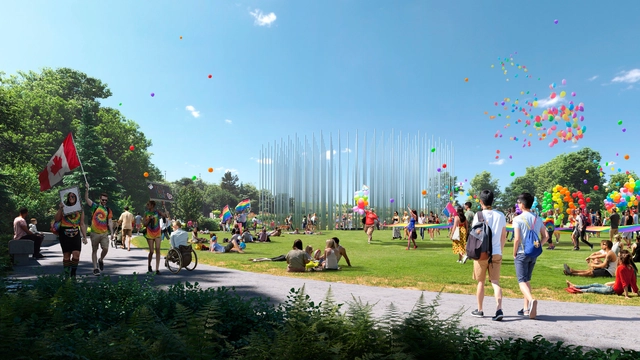
Canada's Department of National Heritage has announced the five finalists for the LGBTQ2+ National Monument competition, a project meant to honour the community and recall its oppression during the LGBT Purge period. Among the shortlisted designs is SOM's proposal, consisting of an array of flagpoles stripped of their flags, symbolising the trauma, deprivation of culture and concealment of identity that the LGBTQ2+ community was experienced. Designed in collaboration with Rebecca Belmore, Noam Gonick, and HTFC Planning & Design, the design titled Bapiiwin, meaning survival /overcoming in native Ojibwe, seeks to provide a space of remembrance while serving as a symbol of resilience.
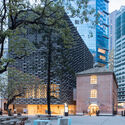
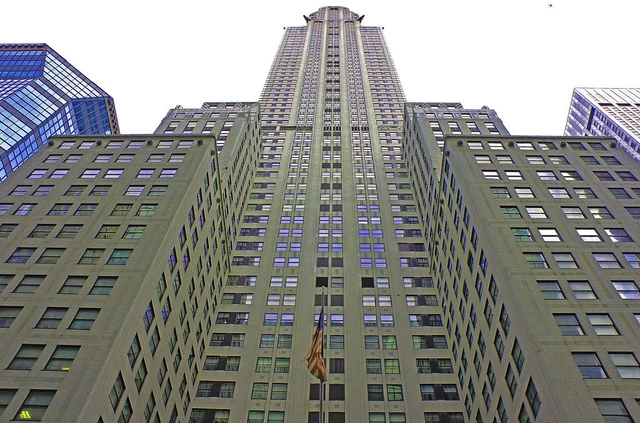
"Chrysler Building NYC NY" by dog97209 is licensed under CC BY-NC-ND 2.0
Art Deco architecture derives from a style of visual arts of the same name that emerged in Europe in the 1920s, which also influenced the movie industry, fashion, interior design, graphic design, sculpture, painting, and other forms of art, in addition to architecture. The milestone of this style was the International Exhibition of Modern Decorative and Industrial Arts held in Paris in 1925, from which it took its name.
Led by American Lebanese architect Hashim Sarkis, the jury of the global Holcim Awards for Sustainable Construction has announced the winners of the sixth edition of the global competition at a handover ceremony at the 2021 Venice Biennale in Italy.
Sou Fujimoto Architects has unveiled its design for the Hida Takayama University, a new academic institute tucked in a small rural area of Japan. The project aims to revitalize the rural areas which are often overlooked, especially by academic institutes, and nurture the sense of community and appreciation of the rich culture provided by nature. The design features an organic-shaped structure inspired the surrounding landscape and a walkable roof. The university is set to open in 2024, and will be followed by 11 other regional learning centers across the country.
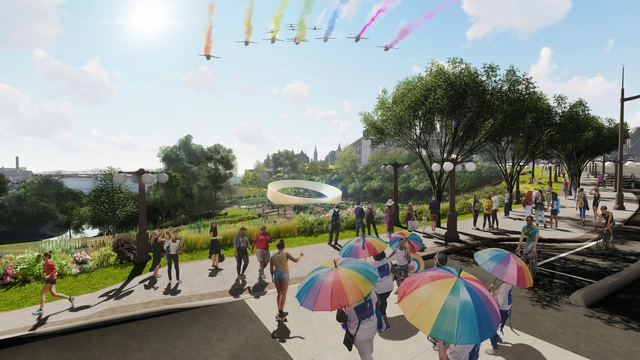
Canada’s Department of National Heritage has announced the five finalists for the LGBTQ2+ National Monument competition, a project meant to tell the story of generations of people who have been persecuted, specifically during the LGBT Purge period. Among the shortlisted designs is The Lens, a proposal that turns a symbol of oppression into an identity element and uses the landscape to express the community’s reverberation into society. Designed by a team comprising Canadian office Fathom studio, MVRDV and Two Row Architect, the proposal seeks to express resiliency, creating a space for memorialization and education while providing an inclusive space for the 2SLGBTQQIA+ community.
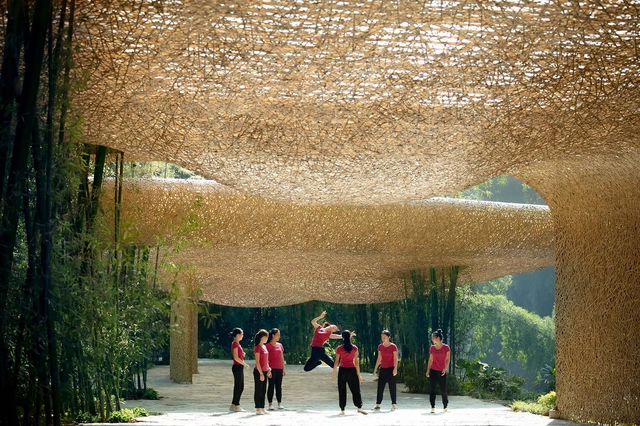
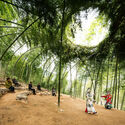
Bamboo is a very resistant, versatile, and sustainable natural building material, which can be used to build structures and decorative elements. This article explores its diverse applications in a selection of projects for public spaces.
When the 2008 Great Recession destroyed advertising revenue for all of publishing and limited the cash that architects had for PR and photographers, the established way of promoting architects and architecture was brutally compromised. That same moment saw the instant availability of smartphones, with insanely good cameras, huge memory, and soon 5G transmission. Those technological revolutions turned graphic duffers into artists. Anyone can now photo, video, and narrate any perception anywhere, instantly, free - and share universally. The cliché of saying that the internet “everything changed” is true in how the world sees architecture.
This one-two punch of fiscal devastation and technological revolution has realized a New Practice; the Self-Promoting Architect, independent of the Machine of Defining Cool in architecture.
The Royal Institute of British Architects (RIBA) has announced its shortlist for the 2021 International Prize, a prestigious biennial award that celebrates the world’s best new projects that “champion buildings that change the world and positively impact the community around them". The jury has selected three projects from a list of 16 projects in 11 countries, and will announce the winner on Thursday 2nd December.
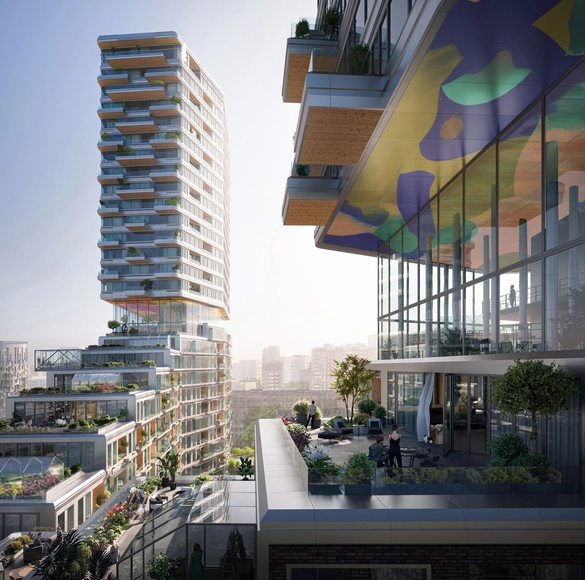
UNStudio revealed its competition-winning design for K31 Courtyard, a residential complex in Moscow that fosters community-building in the context of a rapidly changing city. The proposal features a stepped podium and two towers and reinterprets Moscow’s typical courtyard block, aiming to create a new neighbourhood through various housing typologies, amenities, and outdoor spaces.
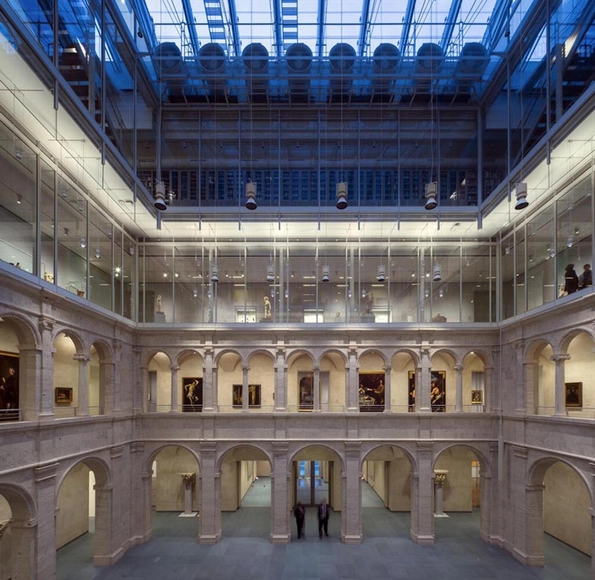
Responsible use and consumption of natural resources and the impacts of the building industry have been ongoing concerns in the field of architecture and urban planning. In the past, concepts such as clean slates, mass demolitions, and building brand new structures were widely accepted and encouraged. Nowadays, a transformation seems to be taking place, calling for new approaches such as recycling, adaptive reuse, and renovations, taking advantage of what is already there. This article explores a selection of projects and provides a glimpse into interventions by renowned architects in pre-existing buildings.
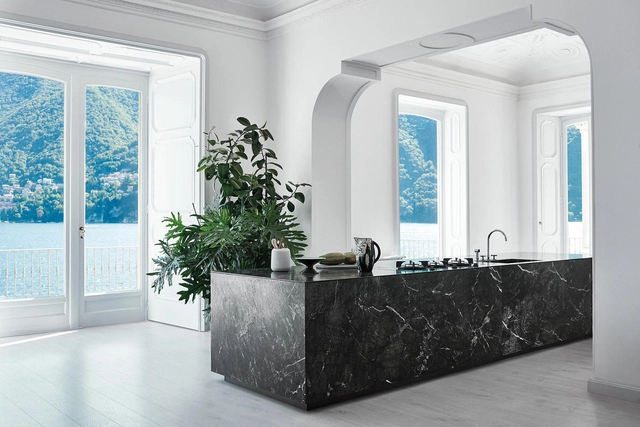
With contemporary lifestyles meaning more entertaining from home, forward-facing kitchen islands with integrated seating make staying in the new going out. But what makes the perfect kitchen island?
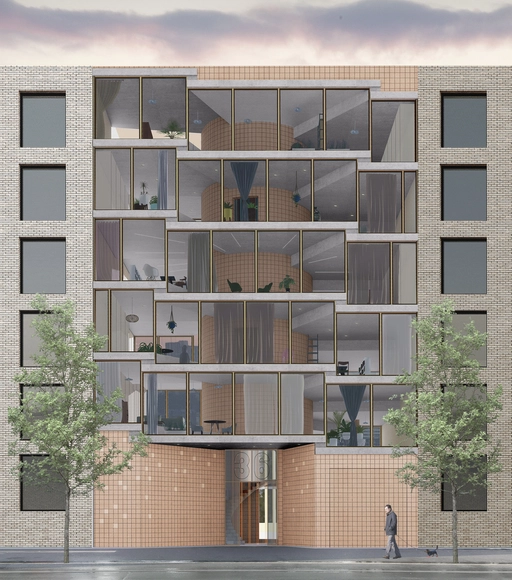
German architecture firm Meyer-Grohbruegge has proposed a new residential typology that "adds a dynamic spatial dimension to a small building gap and emphasizes physical experience in housing". The competition-winning design features a central spiral staircase that connects the entire structure together and offers residents a fluid and dynamic interior that merges the outdoors and indoors.
VELUX Group reveals The Build for Life concept aimed at creating sustainable communities and built environment through affordable, socially-oriented designs and new housing models, healthy indoor climates and the use of low-impact materials. Developed together with EFFEKT, MOE engineers and Danish construction company Enemaerke & Petersen A/S, the concept provides architects and city planners with a “compass’ for navigating the sustainability imperatives of the moment while encouraging the design of healthier living places.
Designing a public space means contemplating the aspects of everyday life in the city. Creating places for gatherings, conflicts, demonstrations, relaxation, and enjoyment. These spaces can be used in many different ways, depending on who interacts with them, and one of the main roles of those who design them is to expand these possibilities and sensations. Including plants, benches, sports facilities, spaces for culture, arts, and performances, conservation areas, or any other element that stands out, is essential to improve the quality of life of the citizens who enjoy these squares and parks.
https://www.archdaily.com/971738/parks-and-squares-20-public-space-designsEquipe ArchDaily Brasil
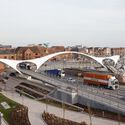
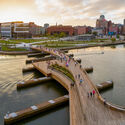
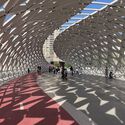
The technical needs of the construction of bridges many times guide the development of the design itself. However, architecture is never put aside, rather the opposite. The aesthetics of bridges that we collect in this article are the result of an intense, demanding, and stimulating dialogue between architecture and engineering, where the search for solutions only ends when both disciplines are fully satisfied.
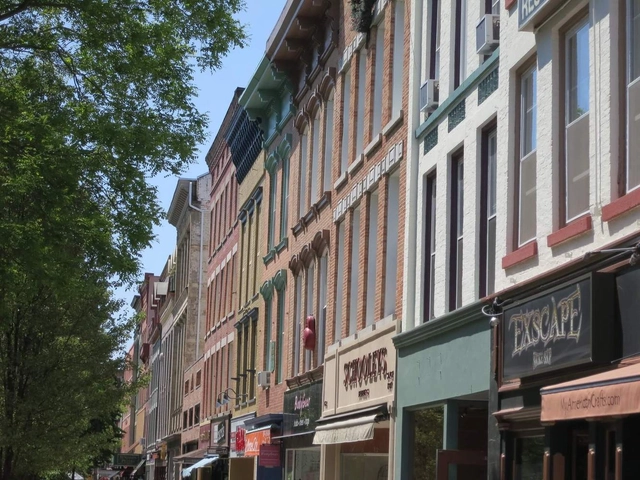
The Ithaca Commons, a downtown pedestrian mall, pictured in 2012.. Image via Paul Sableman/Flickr/CC BY 2.0
Last week, the Common Council of Ithaca, New York, voted to approve a first-in-the-nation decarbonization plan in which the roughly 6,000 homes and buildings located within the notably “enlightened” lakeside college town will be electrified to meet goals established by the city’s impressively aggressive Green New Deal (GND) plan. That carbon-neutral-by-2030 GND plan was adopted unanimously by the Common Council in June 2019 to “address climate change, economic inequality, and racial injustice,” per the city.








Sou_Fujimoto_Architects_004.jpg?1637138724&format=webp&width=640&height=580)
Sou_Fujimoto_Architects_004.jpg?1637138724 "Courtesy of Sou Fujimoto Architects")
Sou_Fujimoto_Architects_001.jpg?1637138564 "Courtesy of Sou Fujimoto Architects")
Sou_Fujimoto_Architects_003.jpg?1637138684 "Courtesy of Sou Fujimoto Architects")
Sou_Fujimoto_Architects_002.jpg?1637138565 "Courtesy of Sou Fujimoto Architects")
Sou_Fujimoto_Architects_004.jpg?1637138724)



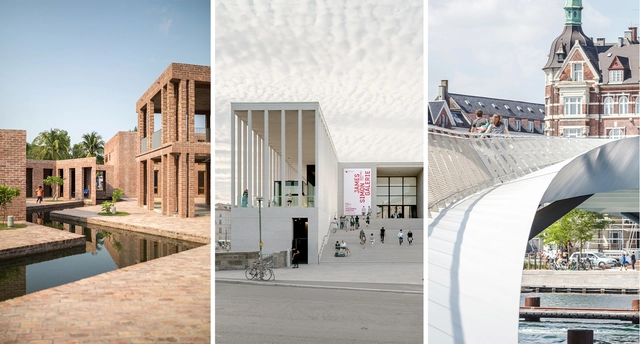
.jpg?1637053142 "James-Simon-Galerie / David Chipperfield Architects (Berlin, Germany). Image © Simon Menges")
.jpg?1637053340 "Lille Langebro / WilkinsonEyre + Urban Agency (Copenhagen, Denmark). Image © Rasmus Hjortshøj")
.jpg?1637053381 "Friendship Hospital, Satkhira / Kashef Chowdhury-URBANA (Shyamnagar, Bangladesh). Image Courtesy of URBANA")