We are twenty-one years into the twenty-first century. The world has never been more connected with the advent of new technologies, yet historical inequalities still run rampant. These inequalities manifest themselves in different ways. Global travel, for example – despite the ubiquity of aeroplanes nowadays – is still only widely accessible to citizens of “developed” countries due to prohibitive visa restrictions. In architectural education, many institutions still prioritise a Eurocentric curriculum, the architecture of non-Western populations largely ignored. Another perpetuation of prejudiced systems is Orientalism – and exploring this concept through an architectural lens is useful for interrogating contemporary design approaches and approaches of the future.
The UK government announced yesterday that planning approval will not be granted for Foster+Partners' Tulip tower. The decision letter published on behalf of the UK's housing secretary cites concerns over the design's embodied carbon and the possible negative impact on the surrounding architectural heritage. First revealed in 2018, the 305-metre tower would have become the tallest building in London's financial district.
The climate crisis has become a staple of the architecture discourse, with the field slowly acknowledging its contribution to environmental issues and seeking to reframe its values and approaches. However, there is an evident lack of commitment and consistency in addressing the matter and an absence of systemic change. Emerging practices, organizations and startups are carving a new architecture practice, slowly unfolding a paradigm shift beyond "green" add-ons and technical equipment. Addressing environmental issues on multiple levels, from policy and design strategies to materials and construction processes, the following are some of the actors reframing the profession's relationship with sustainability.
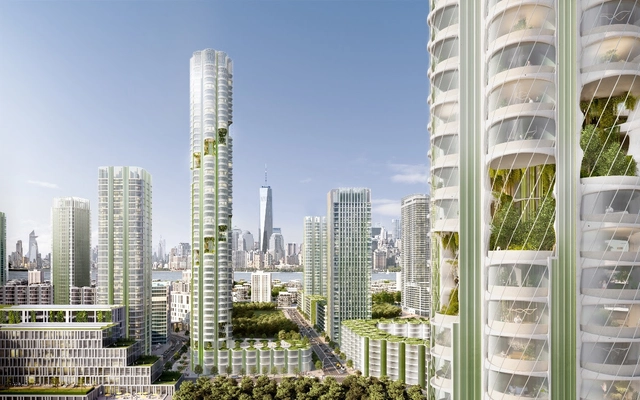
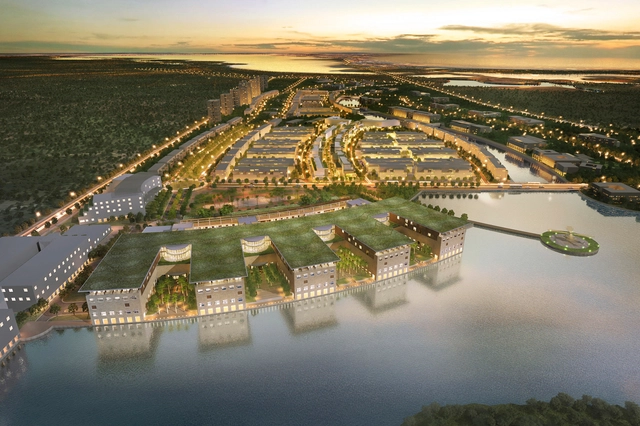
"What if the built environment could be a solution to the climate crisis, rather than part of the problem? What if buildings could act like trees – capturing carbon, purifying the air, and regenerating the environment?" Responding to these questions, Skidmore, Owings & Merrill (SOM) has proposed Urban Sequoia, an architectural concept inspired by the ecosystem at the 2021 UN Climate Change Conference in Glasgow - COP26. The design features “forests of buildings" that isolate carbon and produce biomaterials that create a new ecological and resilient urban environment.
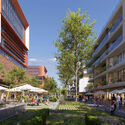
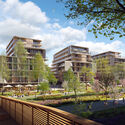
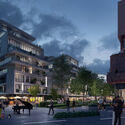
Zaha Hadid Architects reveals the winning design proposal for a mixed-use development in Budapest, comprising residential, office and retail functions, tied together by civic spaces and landscaped areas. The Zugló City Centre establishes a network of public squares and urban gardens that re-establish the natural ecosystem of Rákos Creek and connects the new development to the surrounding framework of parks and avenues.
In this week's reprint, author Andrés Duany presents a series of statements from today's architectural world. He considers that these understandings are the product of our times, a direct reaction and a consequence of the observed patterns.
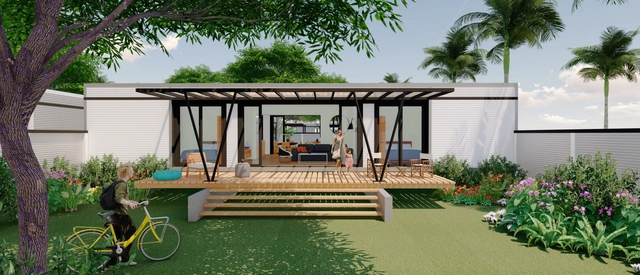
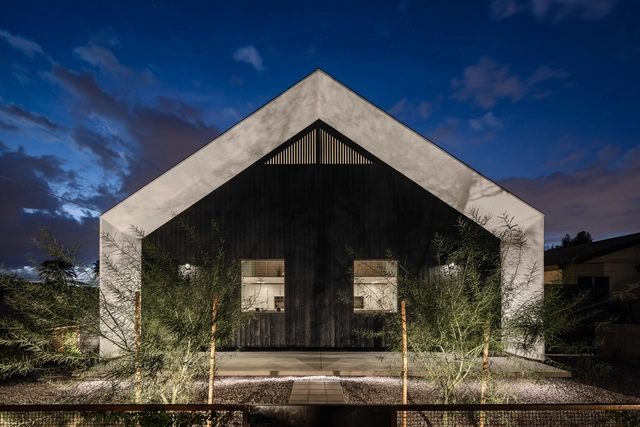
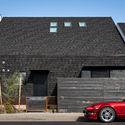
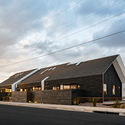
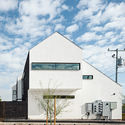
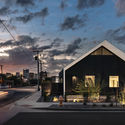
Architect and developer SinHei Kwok has completed Polker, a six-unit multifamily project in the Historic Garfield neighborhood near downtown Phoenix, Arizona. Featuring two-bedroom and loft-style units, the project reconsiders its surrounding context of single family houses. Polker provides a new kind of residence for urban dwellers who do not want to live in a single-family home or big box apartment, but would like to live and work closer to downtown.
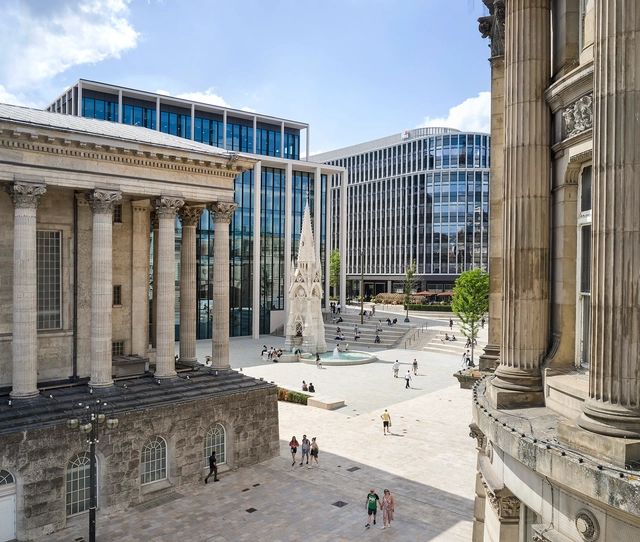
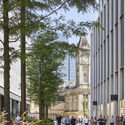
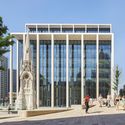
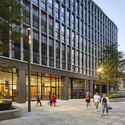
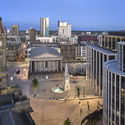
The first phase of the Paradise Masterplan by Glenn Howells Architects (GHA) in Birmingham’s historic square has been completed, marking a major milestone in the city’s redevelopment plans. The newly restored civic square features Two Chamberlain Square, an eight-storey office building with a glazed facade and expansive column frame amidst 19th century cultural buildings.
MVRDV revealed plans for adaptive reuse of Berliner Union Film Ateliers (BUFA), receiving planning approval to redevelop the first two buildings. The project expands the scope of the site to address a broader user base, including all kinds of creative industries, as well as organisations and individuals involved in activism and social justice. Building on the site's heritage and spatial diversity, MVRDV proposes a series of sustainable transformations of the existing structures, reaffirming the adaptive reuse ethos.
The team at Cazú Zegers Arquitectura gave us an inside look at their three Chilean projects--Ye house, Llu House, and Fire House. The film, completed by ClaraFilms, seeks to capture the human dimensions of the homes and centers on how spaces are inhabited throughout time.
Clara Larraín, one of the team members, wrote the following text to accompany the architect's vision of encapsulating the feeling of the three videos into one poetic montage:
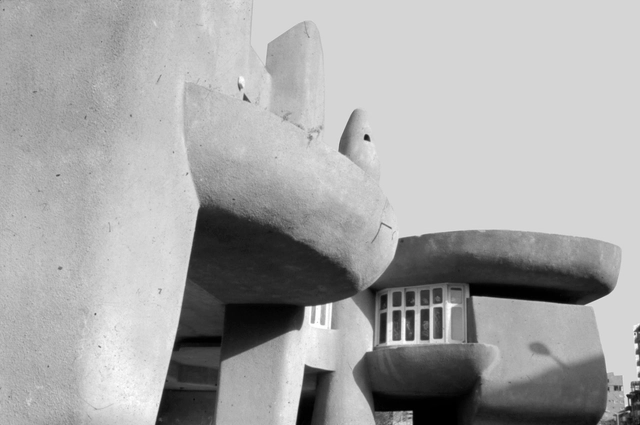
Villa Badran designed by Gamal Bakry . Image Courtesy of CENTER FOR ARCHITECTURE
On view at the Center for Architecture in New York City, the exhibition features 20 projects in Cairo and a warning about the threatened future of Egypt’s Modernist heritage.
Cairo Modern, a new exhibition at the Center for Architecture in New York, features 20 demolished, extant, and proposed projects in Cairo dating from the 1930s to the 1970s and also shines a light on the wrecking ball-threatening Modern architecture here and elsewhere.
The Serena del Mar Hospital Center (CHSM) is the first hospital designed by Safdie Architects. Focusing on the human being, the concept revolves around the idea that "access to nature and natural light are vital in creating improved therapeutic experiences for patients, families and staff alike". Seeking to provide a sense of well-being that leads to better clinical outcomes, the hospital has started opening in phases to the public, earlier this year. The firm's first project in Latin America is not the only one, in fact, Safdie Architects are working on Qorner, a residential project under construction in Quito, Ecuador, and the Albert Einstein Education and Research Center in Brazil, to be inaugurated in early 2022.
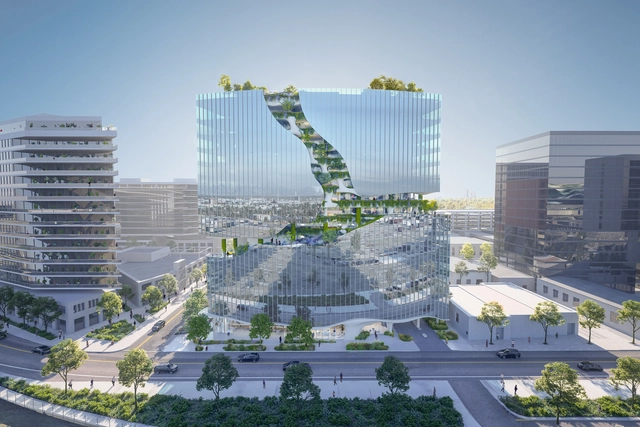
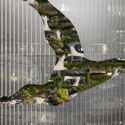
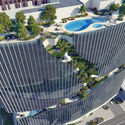
MAD Architects has broken ground on One River North, a sixteen-storey residential tower which features a descending nature trail carved into its façade. The project is set to "blur the lines between the built and natural environments" with more than 13,000 sq. ft. of open-air spaces, a water feature, and trail-like walkways, echoing Colorado's rich terrains. The project is expected to be complete towards the end of 2023.
Aedas reveals plans to transform the Pragati Maidan, an important civic space in New Delhi, into an exhibition and convention centre intended as a new city icon. Transformed into a national exhibition space in 1972, the site located on the bank of Yamuna River and neighbouring a series of cultural and historical venues was the subject of a 2016 international design competition that sought a contemporary upgrade to the programme. Aedas’ and Arcop’s winning project proposes a circular convention centre framed by an extensive landscaped public space, capitalizing on accessibility.
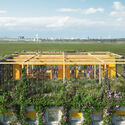
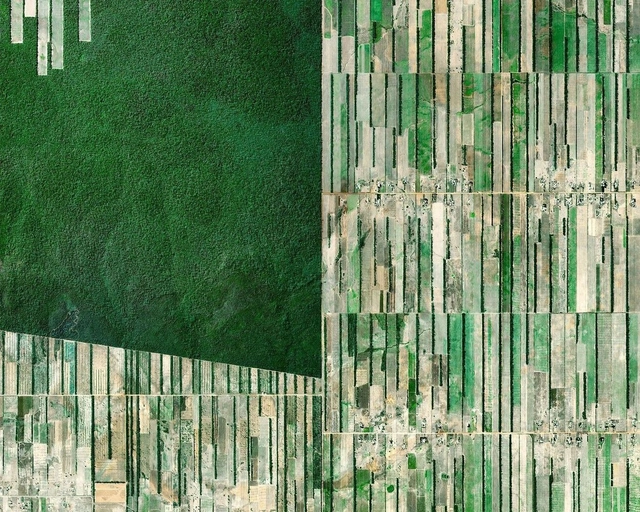
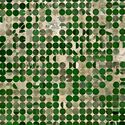
Food cultivation is one of the great historical milestones of our society's development. The knowledge of agriculture was fundamental for the evolution of a nomadic society into a sedentary civilization. Centuries later, agricultural production has become one of the main contributors to the organization of the land. This phenomenon can be seen in the aerial images we have selected below.
The built environment of Far East Asia is challenging the paradigm through urban developments that are centered around principles of sustainability, community, and user-centric design. Following concerns of high-density neighborhoods and compromised landscapes, architects of that region became aware that building for the future means changing their outlook on financially-driven projects with unsustainable strategies, and replacing them with structures that put the user and the environment at the forefront.
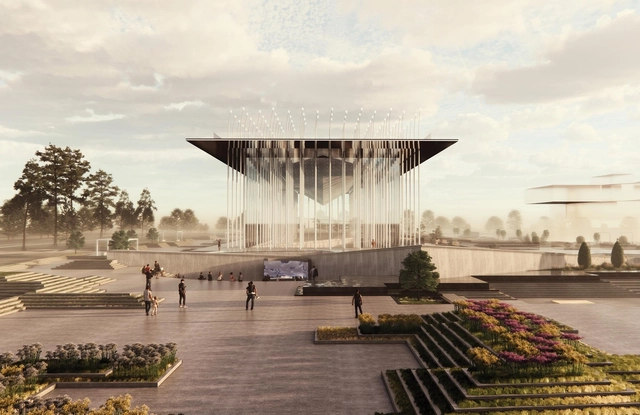
From an all-around panoramic hotel on The Philippines's waterfront to an emotion-provoking memorial inspired by the rain in South Korea, this round up of unbuilt projects showcases how architects merged the Far East's culture, history, and unique geography with contemporary designs, creating state-of-the-art architecture. This round up also includes projects from China, Vietnam, Indonesia, and Hong Kong.
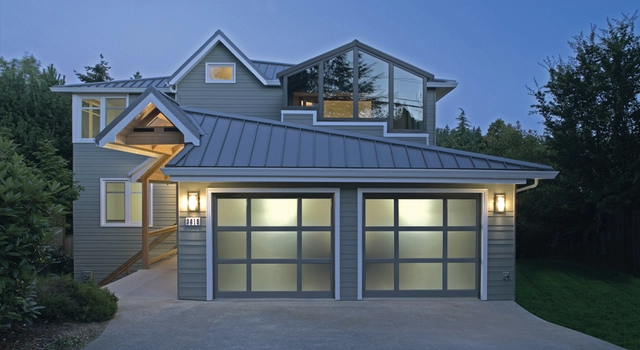
In residential architecture, the garage is a space that is mainly used for storage and car parking. Although the garage door is usually not a very thought-out part of the design of a residential project, it often occupies a large part of the front elevation of a house, and can play an important role in its general curb appeal.
The garage door is typically a large door that is opened manually or by an electric motor, and its size and design are determined by the vehicles that will need to pass through it. Raynor, a North American company that specializes in garage doors, describes several of the most important factors that go into choosing the right garage door.
Studio Gang has revealed 63rd House, its design for Blue Tin Production's new manufacturing studio in the heart of Chicago’s southwest side. The new headquarters, which is an adaptive reuse project of Chicago's two-story brick post office that was built in 1920, will feature a mix of meeting and artist spaces around a central community room, "centralizing workers’ well-being, deepening connections with neighborhood residents and partners, and building long-term economic mobility and racial equity across the city".









.jpg?1636652992 "Courtesy of SOM | Miysis")
.jpg?1636652975 "Courtesy of SOM")
.jpg?1636652975 "Courtesy of SOM")
.jpg?1636653008 "Courtesy of SOM")


















StudioGang.jpg?1636447310&format=webp&width=640&height=580)
StudioGang.jpg?1636447390 "Courtesy of Studio Gang")
StudioGang.jpg?1636447331 "Courtesy of Studio Gang")
StudioGang.jpg?1636447289 "Courtesy of Studio Gang")
StudioGang.jpg?1636447383 "Courtesy of Studio Gang")
StudioGang.jpg?1636447310)


