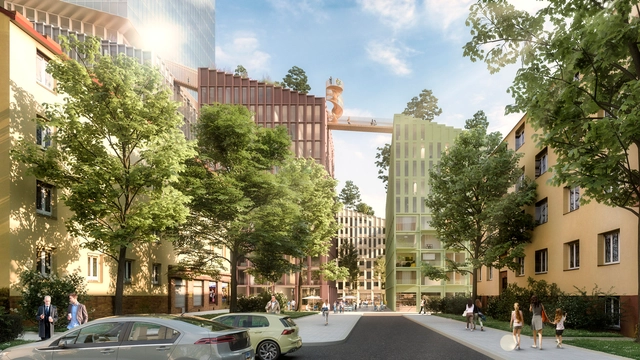
Benthem Crouwel Architects reveals competition-winning design for the Valley, a new mixed-use development comprising housing, workspaces and retail in Prague. Featuring a rooftop landscape designed by Felixx Landscape Architects & Planners, and a network of diverse public spaces, the project introduces high density and varied programming while establishing a strong connection with the surrounding neighbourhood.
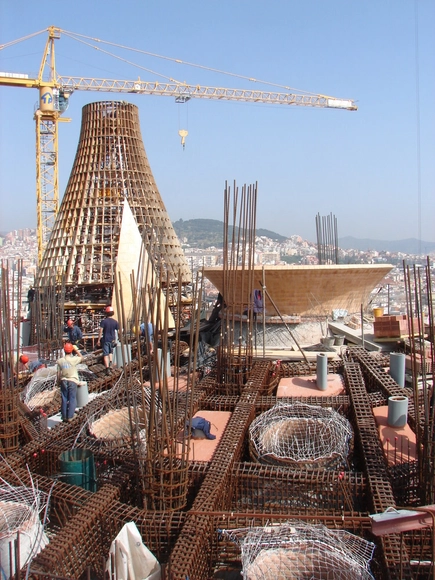
A masterpiece is often defined as the most remarkable work in an artist's career, one which highlights the height of their techniques and ideals. The Mona Lisa by Leonardo da Vinci; Michelangelo's Pietá; the Beatles' Sgt. Pepper's Lonely Hearts Club Band album. There are many examples, which are not always unanimously agreed upon. But what if what many consider to be the masterpiece was started by someone else, the credited creator didn't live to see its completion, and almost all of its documentation was destroyed? Catalan architect Antoni Gaudí and his world-famous Temple Expiatori de la Sagrada Família are examples of these complications. From a highly crafted stone construction to the most modern 3D printing techniques and high strength concrete, numerous technologies were and continue to be incorporated in the project's construction.
As our world evolves at an unprecedented pace, the challenges that come with it are becoming more and more complex. The questions faced by the cities and networks of our global world, the physical and virtual environments where our evolution takes place, are making architecture more relevant than ever.
The issues of the built environment are no longer exclusive to the incumbents who build and design it and have become transversal questions in our society. From the citizens who question the quality of their public spaces to the self-trained builder erecting a tiny house in the woods, to the homeowners using an app to codesign their interiors during lockdown, we want to have a saying and we want to take action. Why does architecture have to be so uncertain, so distant?
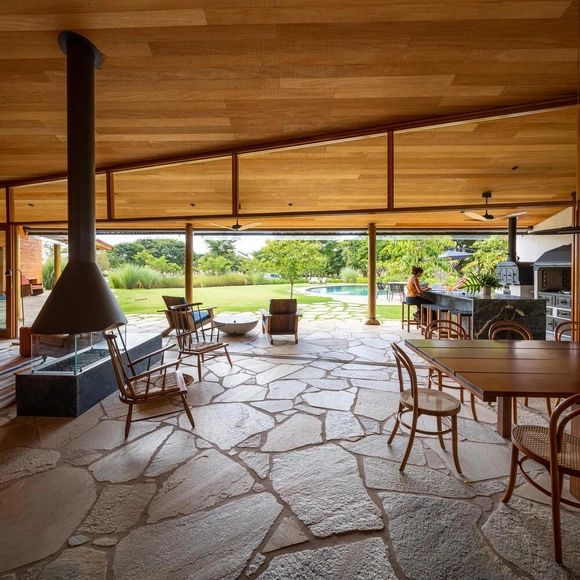
Nowadays, many architects have been looking for inspiration in traditional techniques, adapting them to more contemporary designs. In this sense, floors with rustic stone such as quartzite and sandstone are becoming more and more popular in residential architecture. Although this material was usually used for external areas, to build traditional stepping stone garden paths, for example, today it is also used in interiors, as an element that disrupts the hardness of rectilinear layouts and, in some cases, creates a connection between interior and exterior, which is something many professionals seek to achieve.
https://www.archdaily.com/972637/brazilian-houses-10-designs-with-rustic-stone-flooringEquipe ArchDaily Brasil
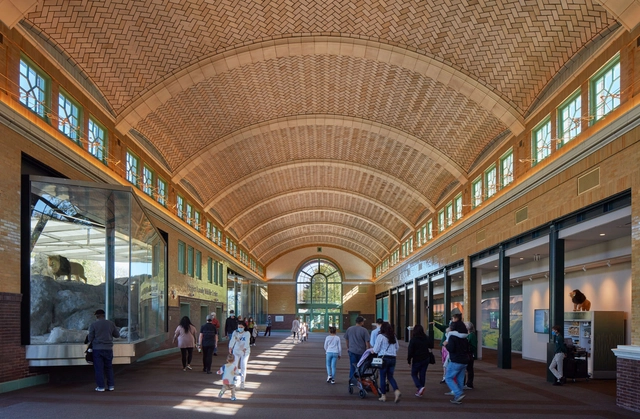
The historic lion house has long been a central element of Chicago’s Lincoln Park Zoo. When global architecture firm Goettsch Partners (GP) set out to renovate and expand the structure, the aim was to preserve the original building while increasing the usable area and creating a new spatial experience. The facility is home to a pride of four African lions, as well as Canada lynx, red pandas and snow leopards.
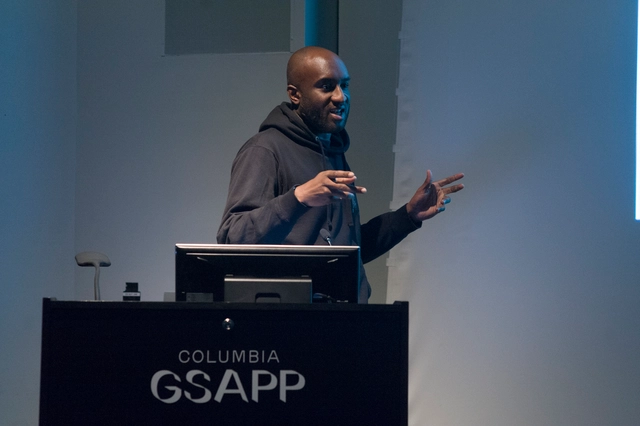
Virgil Abloh, a great American influential figure in the fashion, art, culture, design, and architecture scene, passed away at 41, after a silent battle with cancer. Known for his collaboration with AMO, especially for the Off-White Flagship Store in Miami, a brand he founded back in 2012, the trained architect was the first African-American to become the artistic director of a French luxury brand.
The news was announced on Sunday on Abloh’s official Instagram Account. The Creative Director of Louis Vuitton menswear battled a “rare, aggressive form of cancer, cardiac angiosarcoma […] privately since his diagnosis in 2019”, according to the post.
Renovation projects are often perceived as being more limited and therefore less exciting. In this article, we present renovation projects with unexpected solutions that show that it is possible to be creative when adapting and reusing an existing space.
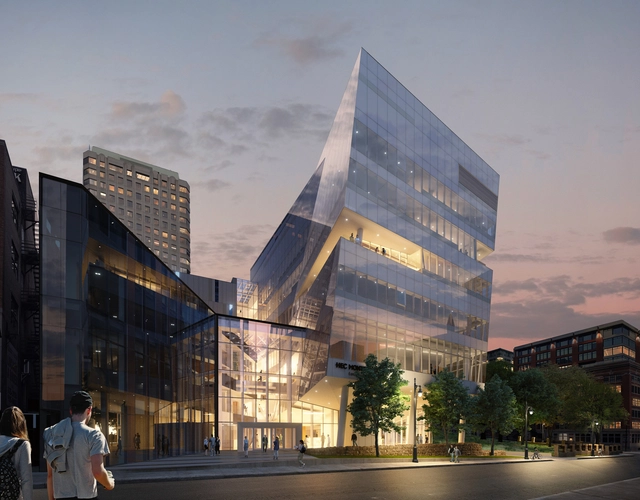
Provencher_Roy’s new downtown hub for HEC Montréal has neared completion and is set to open in 2022. The business school's new center for entrepreneurship and research aims to strengthen the ties between the school and the city's business community, as well as promote innovative solutions through collaborative programs for students and professionals. The facility will feature theoretical and professional development courses, as well as interdisciplinary and collaborative spaces that tackle new fields in the industry like Artificial Intelligence.
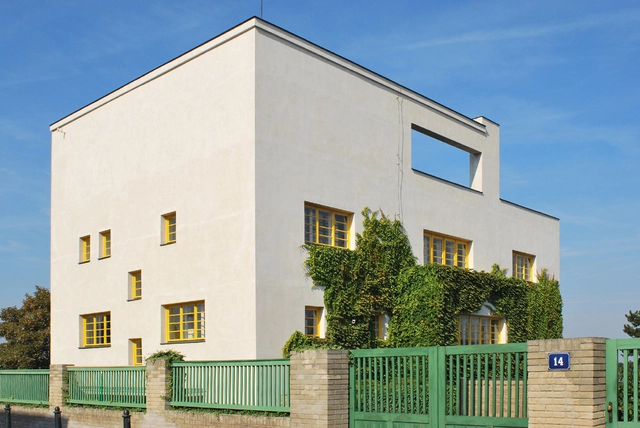
Throughout history, architectural styles, have experienced numerous movements throughout time, giving us various expressions of interior and exterior spaces. These movements are often created out of dissatisfaction with the status quo, shifts in religious ideologies, or the emergence of new building technology. Perhaps one of the most famous instances in history was the precedent set by Adolf Loos and his desire to break away from Viennese tradition with his strong dissent of ornament in architecture in favor of simplicity, and his literary discourse that lay the cornerstone for the modernist movement in architecture.
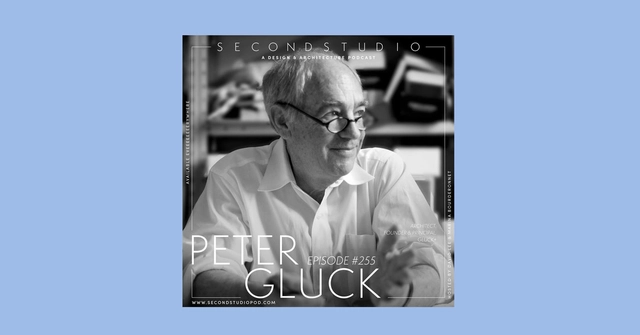
The Second Studio (formerly The Midnight Charette) is an explicit podcast about design, architecture, and the everyday. Hosted by Architects David Lee and Marina Bourderonnet, it features different creative professionals in unscripted conversations that allow for thoughtful takes and personal discussions.
A variety of subjects are covered with honesty and humor: some episodes are interviews, while others are tips for fellow designers, reviews of buildings and other projects, or casual explorations of everyday life and design. The Second Studio is also available on iTunes, Spotify, and YouTube.
This week David and Marina are joined by Peter Gluck—Founder & Principal of GLUCK+, an architect-led design-build office—to discuss the decline of the profession of architecture, architects having less responsibility and knowledge in construction, contractors having more design authority, the negative impacts of the AIA (American Institute of Architects) contracts, young architects working for contractors, the gap between academia and practice, the low pay level of architects, and why a design-build operation can be the solution to all of these issues.
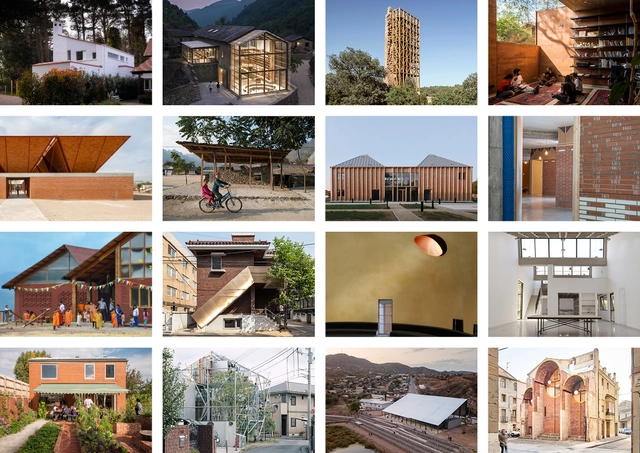
Carles Enrich Studio has been announced as the winner of the 2020 AR Emerging Architecture awards. Selected from a shortlist of 16 practices, the jury recognized the work of the Barcelona-based practice as one that "reconnects history with the future and understands heritage as infrastructure: something dynamic and appropriated rather than museumified". Khadka + Eriksson Furunes was also awarded with the Peter Davey Prize, and Taller Capital has received an honorable mention.
Today, a new generation of architects is trying to tackle the challenges of contemporary society while navigating different hurdles within the profession. Emerging architects are redefining the values and focus of design in response to the various issues facing the contemporary built environment, such as sustainability, affordability and equity. At the same time, new practices are operating a within rapidly changing field in which the architect's role is increasingly more ambiguous. The following explores the issues faced by young architects in their practice, as well as what they see as being architecture's most significant challenges, that inherently shape their work in a contrasting way to that of their older peers.
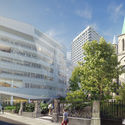
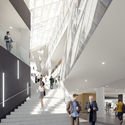
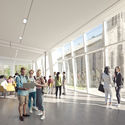
Grimshaw Architects, Archipel Generalplanung AG, and landscape architects LAND have won the competition to design the masterplan for University of Bern's Muesmatt campus in Switzerland. The winning design was selected from a shortlist of 26 participants, and was commended for how it opens up Bern's quarter and re-establishes urban and visual connections.
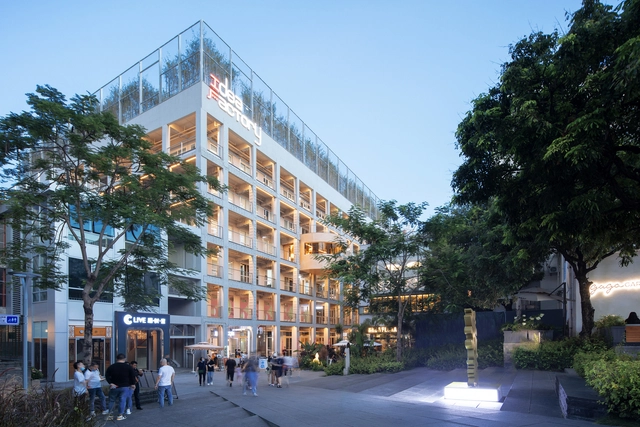
MVRDV has recently completed the Idea Factory, transforming a disused factory into a creative hub with an important community-oriented focus. Located in Shenzhen's urban village of Nantou, the adaptive reuse project refurbishes the existing structure to accommodate offices while adding a new layer of public space. The latter takes the form of a rooftop bamboo landscape packed with activities and amenities that provides a new leisure space for the historically disadvantaged neighbourhood.
In this new collaboration, originally titled Cartografías del Metaverso (Cartography in the Metaverse), Spanish architects and founders of the blog MetaSpace, Enrique Parra and Manuel Saga, explore the potential of mapping in video games. Mapping can sometimes go beyond the mere role of orientation, as in the Diablo sequel, and become a very important element of the game, as in Civilization and World of Warcraft.
The cartographic and planimetric language of architecture is also common to the world of video games. Many video games base much of their experience on interaction with one or more maps, through which users orient themselves to find out where they are and where they are supposed to be.
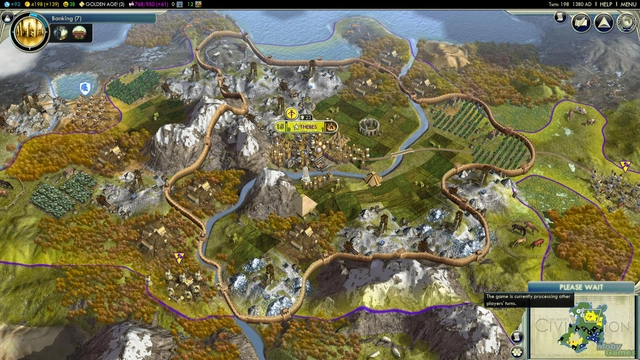
One example is the Civilization saga, a series of empire management games created from 1991 to date. All versions are played on a map, a geographical view of the world that represents different areas, available resources, geopolitical balance, and other factors. These variants are the rules of the game, the situation the player faces; the map becomes a dynamic fabric, ie, the interface that makes up the game.
https://www.archdaily.com/782818/cartography-in-the-metaverse-the-power-of-mapping-in-video-gamesEnrique Parra y Manuel Saga
Henning Larsen and Ramboll have revealed the design of Marmormolen, a large timber building in Copenhagen. The building, which is expected to be one of the largest contemporary wood structures in Denmark, features office, retail, and commercial facilities on the Nordhavn waterfront with a green plaza, rooftop gardens, promenades, and a waterfront park.
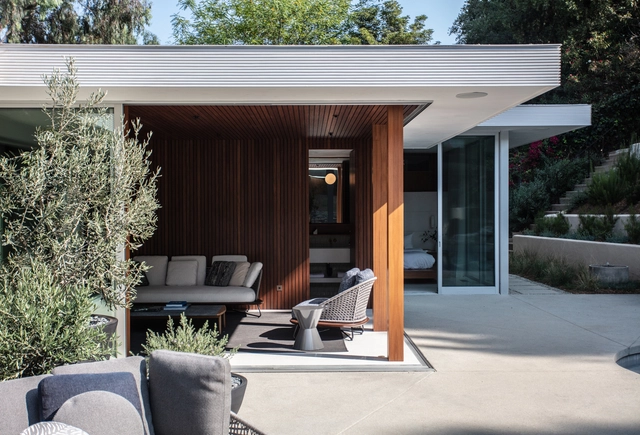
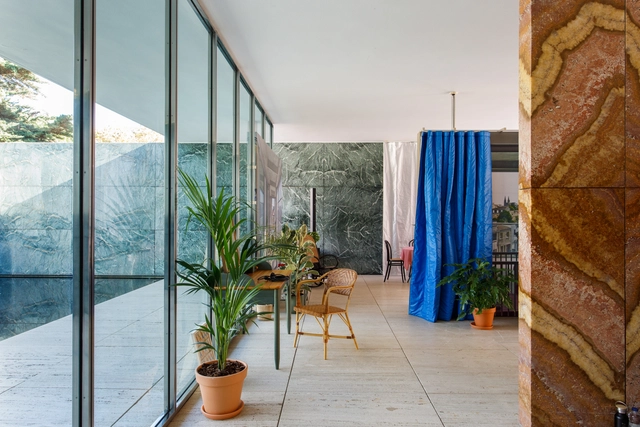
Interior Designer Sophie Goineau has recently completed the restoration of the historic MCM Alfred Wilkes House on Cove Way Drive in Beverly Hills. Giving new life to a residential icon in Los Angeles, the project was completed after two years of uninterrupted restoration throughout the pandemic. Revisiting themes from the great Modernists Richard Neutra, Harold Levitt and Mies van der Rohe, Goineau leaned into the dual configurations of straight lines and curvilinear shapes throughout the 5,000 square foot 4-bedroom.

























.jpg?1637919804&format=webp&width=640&height=580)
.jpg?1637919815 "Courtesy of Grimshaw")
.jpg?1637919985 "Courtesy of Grimshaw")
.jpg?1637919878 "Courtesy of Grimshaw")
.jpg?1637920091 "Courtesy of Grimshaw")
.jpg?1637919804)



Sora.jpg?1637834361&format=webp&width=640&height=580)
Sora.jpg?1637834374 "© Sora")
Sora.jpg?1637834334 "© Sora")
Sora.jpg?1637834417 "© Sora")
Sora.jpg?1637834405 "© Sora")
Sora.jpg?1637834361)