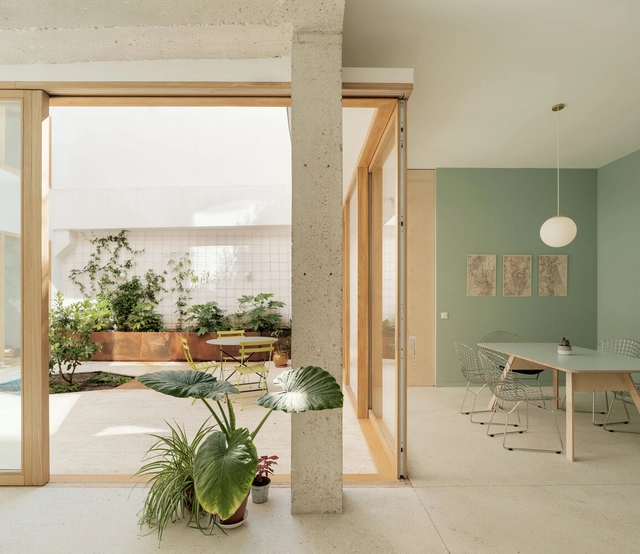
What would a project be like if user emotions were part of the program? Planning environments that can accommodate different sensations is, according to Pinterest Predicts 2022, one of the decoration trends for the coming years. More and more people have been looking for ways to set up rooms that provide the apotheosis of their feelings, no matter if the goal is to be more calm, express their anger, listen to music or a leisure activity, the focus of the so-called "emotional decor" is on make emotions flow freely and safely.
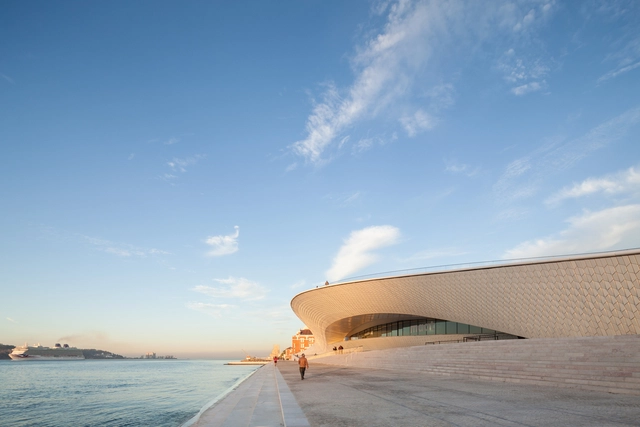
Selected the European Capital of Culture in 1994 and Ibero-American Capital of Culture 2017, Lisbon has been the destiny of tourists from many parts of the world over the past years. With thriving cultural programming, the city hosts important events related to art, music, movies and architecture. The Lisbon Architecture Trienniale and the Open House – event that coordinates free guided tours to remarkable buildings in cities around the world – are some of these relevant events in the architectural field, responsible to disseminate, discuss and reflect on issues of the area.
Besides programs related to architecture, in recent years, Lisbon has seen the emergence of new facilities, like museums, cultural centers and theaters, besides the requalification of public spaces. The construction or regeneration of these structures, directly or indirectly related to the cultural city movement, can be controversial, raising issues such as gentrification and the increase of mass tourism.
OMA / Reinier de Graaf and Squint/Opera have released a new video of the "Al Daayan Health District", a low-rise hospital prototype which responds to the medical field's rapid change through the potential of modularity, prefabrication, and automation. The project features prefabricated modular units, local farms for food and medicine, and high-tech facilities across gardens and water features.
Oolite Arts revealed the design of its new Miami headquarters designed by Spanish architecture practice Barozzi Veiga, making it the studio’s first built project in the United States. The design’s morphology echoes the idea of a village for artists through a collection of rooms and a rhythm of vertical structures. The structure incorporates rich vegetation and strives to balance public and private, thus prioritizing both artists and community needs. The project, created in collaboration with local firm Charles H. Benson & Associates, is set for completion in 2024.
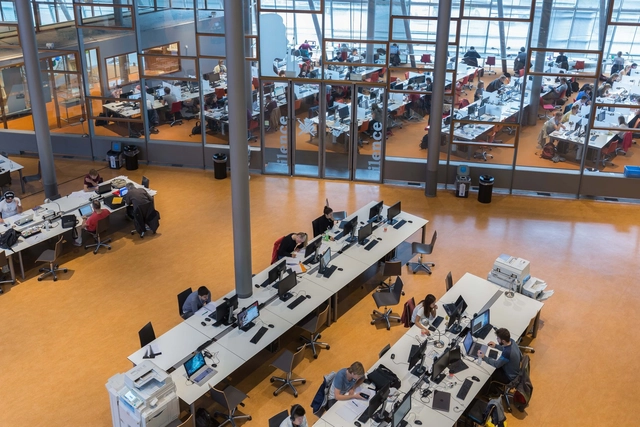
DELFT, THE NETHERLANDS - AUGUST 19, 2017: Students at work in the Library of the Technical University Delft, The Netherlands. Image via Shutterstock/ by T.W. van Urk
Delft University of Technology in the Netherlands took the second place while UCL, in the United Kingdom, came third. ETH Zurich, Harvard, and the National University of Singapore (NUS) maintained fourth, fifth, and sixth place. The Manchester School of Architecture was upgraded to seventh position this year, moving the University of California, Berkeley (UCB) to eighth place and the Tsinghua University in Beijing, China to the ninth. Politecnico di Milano, in Italy, remains a non-mover at 10.
The stage is set in one of the most iconic “end of the world” movie scenes: Citizens of New York City are scrambling on top of taxis, quickly attempting to escape the slow-moving giant tsunami heading their way. In the rear-view mirror of a bus, a giant wave can be seen rushing up the narrow city grid. Searching for higher ground, the main characters, Sam and Laura, run up the famed stairs into the famed New York Public Library, and just as the revolving doors shut behind them, the pressure of the water smashes the windows, and water begins to rise. Without seeing it, we know that New York City and its iconic architecture will soon be destroyed.
Sou Fujimoto Architects has unveiled its design for the Hida Furukawa Station Eastern Development, a regional community-based center that aims to enrich the life, leisure, and culture of the residents of Hida City, in Gifu Prefecture. The Center will include a university research base, student accommodation, an all-weather playing field, and commercial facilities, all interconnected to form one harmonious community.
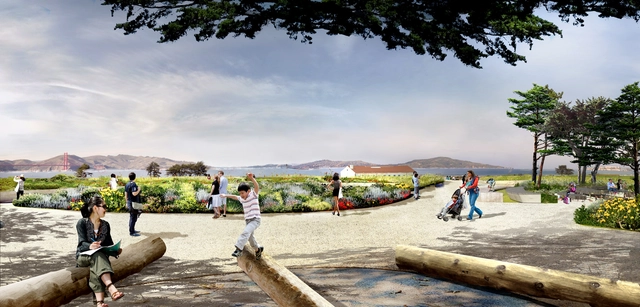
Presidio Tunnel Tops is San Francisco’s upcoming national park destination, set to welcome visitors starting July 17th. The project reconnects the park formerly split in two by the Doyle Drive by creating new landscaped land over the highway now moved underground. Designed by James Corner Field Operations, the firm behind New York’s High Line, the project brings 5.6 hectares (14 acres) of new parkland to the Bay Area, featuring trails, picnic areas, and scenic views over the city as well as a nature play area for kids.
EseColectivo is an architecture studio formed by Belén Argudo, José de la Torre, Santiago Granda and Pablo Silva based in Quito, Ecuador. Their interests are focused on experimentation with alternative building materials, with an emphasis on technologies and logic. In their design process, they seek to reconcile low-impact sustainable strategies with the specific needs and constraints of each project, so that their results are heterogeneous and differ in the type of methodological and technical approach.
The experience of this team has not only been built from their works such as The Endemic House and House in a Corridor, but also through collaborative practices with architecture studios, cultural managers and related projects at local and international level, leading to the development of initiatives closer to architectural documentation, research and dissemination. Consequently, they created "La Parleta" - the first architecture podcast in Ecuador.
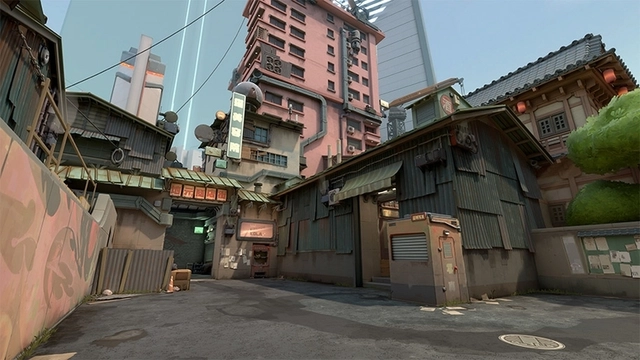
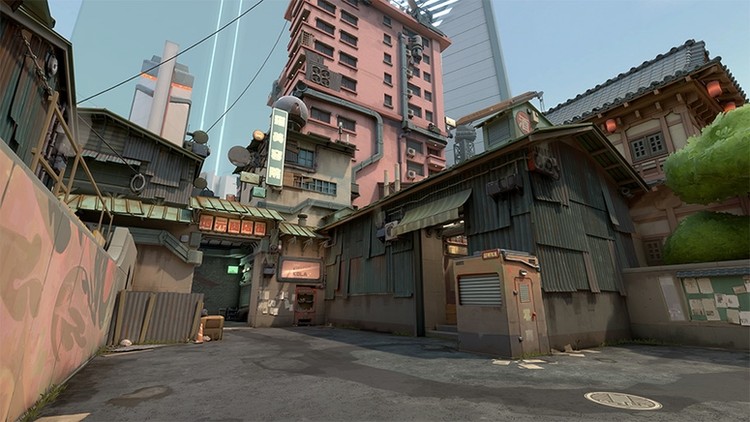
Map design and the significance of built environments continue to be inherently integral to gameplay within the realm of virtual worlds and video games, specifically in the genre of first-person shooters, and Riot Games’ VALORANT is no exception to this. Defying former expectations of its predecessors within the tactical shooter genre, Riot continually endeavors to make fundamental changes to decades of old formulas that have been implemented in practice all these years.
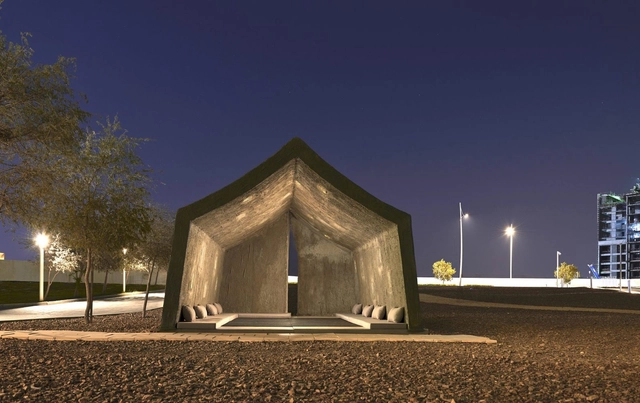
It’s a ubiquitous architectural form. An architectural typology that spans centuries and borders, a staple across cultures. The tent. In its simplest form – it’s a shelter, with material draped over a frame of poles. It’s an architectural language that is intrinsically linked to nomadic living. Yurts, for instance, functions as an easily portable dwelling for the Kazakh and Kyrgyz peoples. At the same time, tents have proved a popular stylistic precedent for architects, the lightweight structures of German architect Frei Paul Otto being a case in point. The tent is a complicated architectural language – one that straddles the line between temporary and permanent, and one that also functions as a symbol of wealth and a symbol of scarcity.
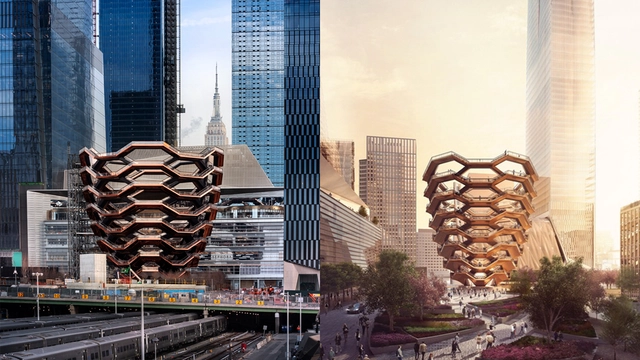
It is nearly impossible nowadays not to present accompanying renders when proposing a new project. No matter the method, software or style that is used, it is a valuable reference that bares more practical weight than one might think. Not only can it be one of the closest possible representations of the architect's vision, if approved, it can also become a promise to clients, investors, and the general public.
When it comes to works from renowned architects, the render becomes a critical reference to the project participants and to the expectant community. A lot of details can be developed and considered when creating the images. In most cases, special attention is brought to the lighting, materials, and context in order to make the most accurate representation possible.
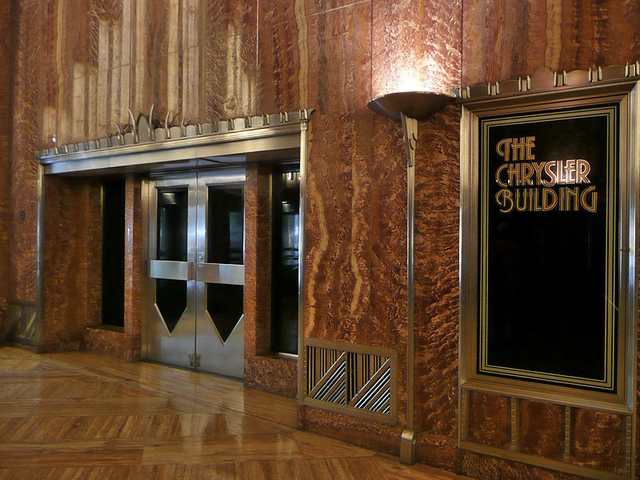
The Chrysler Building interior, Manhatten, New York . Image Courtesy of Dorff / Wikicommons CC BY-SA 3.0
Art Deco or Arts Décoratifs originated in the 1920's, following the Exposition Internationale des Arts Décoratifs et Industriels Modernes held in Paris (1925). However, it wasn’t until the 1930’s that the movement gained momentum across both Europe and the US, broadening Art Deco to cover all elements of decorative art including furniture, interior design, jewelry and architecture. Its popularity stems from its unique origins. Rather than a design movement driven by political or philosophical forces, it was created for the desire of glamorous and alluring change, a reflection of the golden age in Hollywood and a widespread economic boom.
Characterized by its decadence, rich application of color, and geometrical shapes, the movement is dramatically influenced by the discovery of the artifacts of ancient civilizations, and the introduction and admiration of the automobile. A movement heavily influenced by aspects in vogue it sought to create a form of luxury modernism, a step away from a more traditional architecture. It put an emphasis on handcrafted and individually designed elements, rarely to be mass produced.
Over the past two decades, urban highways' social and economic ramifications have been brought into focus as a large part of this mid-century infrastructure comes to the end of its lifespan, prompting conversations over its role in contemporary urban planning. Freeway removal entails the replacement of the transport infrastructure with new urban developments, green amenities and alternative street grids to promote a healthier urban environment and smart growth. In some cases, the idea of removing highways is met with concern over the potential increase in traffic and gentrification of the areas adjacent to the road, but the pandemic has further exacerbated the need for quality public spaces and brought once again into question the hegemony of the car. The following highlights various highway removal projects, discussing how these interventions restore the urban fabric, reknit communities and recover urban spaces for city dwellers.
Snøhetta and Dartmouth have unveiled images of their upcoming expansion and redesign of the Hopkins Center for the Arts (the Hop) in Hanover, New Hampshire. The project aims to modernize the existing arts center and create a renewed gateway to the campus’s Arts District. The new architecture will feature new practice and performance spaces, increased connections to surrounding arts buildings, as well as upgraded accessibility and mobility throughout the master plan.
Château La Coste inaugurates a pavilion designed by Oscar Niemeyer, representing the last project drawn by the renowned architect before he passed away in 2012. Set amongst a vineyard, the curved structure features a glazed gallery space, accompanied by an 80-seat auditorium placed within a cylindrical volume. Emphasizing the pavilion's connection with the surrounding landscape is a shallow pool that brings a new dimension to the project through the interplay of light and reflections.
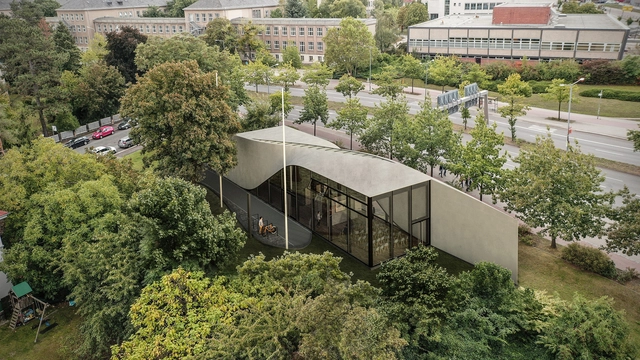
Cube / HENN Dresden University of Technology. Courtesy of Iurii Vakaliuk
Seen as one of the great promises for the future of construction, carbon concrete mixes strength, lightness and flexibility. In addition, at a time marked by a serious environmental crisis that puts the construction methods of the industry in check, carbon concrete emerges as an alternative that approaches the guidelines of sustainability.
























_.jpg?1649402900 "Courtesy of Snøhetta & Methanoia")