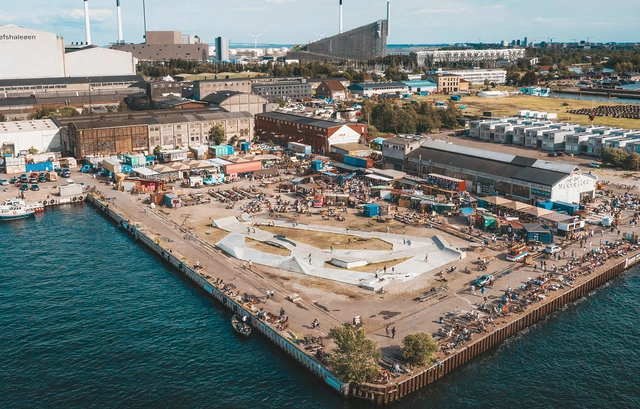
What will cities of the future look like? Or rather, what should cities of the future look like? The classic sci-fi, Star Trek-inspired movies many of us grew up watching painted a picture of flying cars, grotesque steel skyscrapers and urban fabrics far too vast and dense for the human scale. It’s safe to say, however, that the ideal for today’s and tomorrow’s cities has taken a 180-degree turn. New, modern urbanism promotes diverse, mixed-use cities with walkable blocks, sustainable transport and accessible public spaces. Copenhagen, with its pedestrian- and bicycle-friendly streets, idyllic water canals, iconic buildings and overall happy residents, ticks many of those boxes. No wonder the Danish capital has been designated as UNESCO’s World Capital of Architecture for 2023; another testament to the city’s position as a laboratory for innovative contemporary architecture and human-centered urban planning.
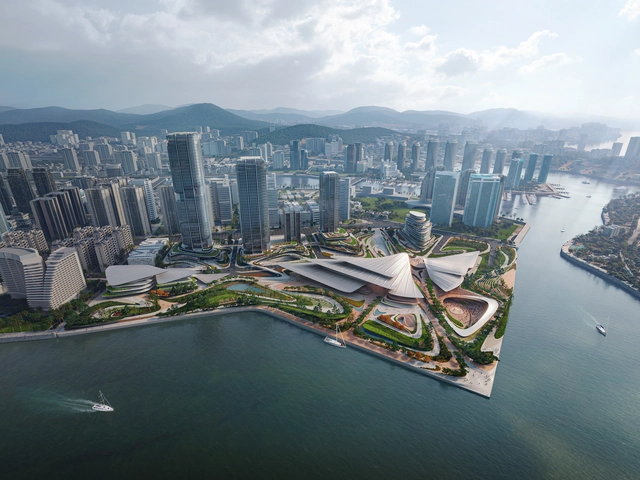
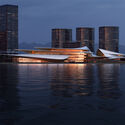
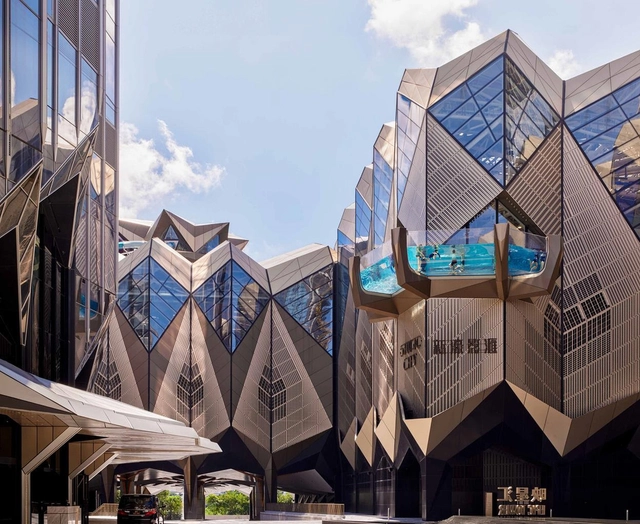
The city of Sanya in Hainan, China, has selected Zaha Hadid Architects as the winner of the competition for the design of the city’s new harborside cultural district. The new development, measuring a total of 409,000 square meters of built area, aims to become a central location for Sanya’s cultural life, providing diverse programming for performing arts, theater, exhibition galleries, conferences, and commercial trade fairs. The fluid shape of the buildings creates a transition from the tropical waters of Sanya Bay to the urban fabric of the city, with a central axis dividing the layered roofs that feather outwards and dematerialize the architectural volume.
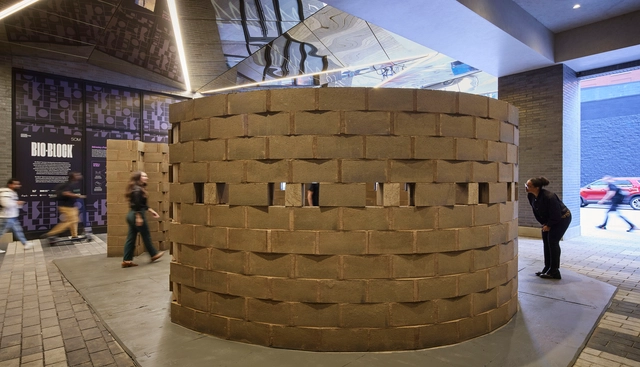
For the opening of CAB 5, the 5th edition of the Chicago Architecture Biennial,Skidmore, Owings & Merrill (SOM) presented an eco-friendly alternative to traditional concrete. Named the “Bio-Block Spiral,” the installation is at The Mews in Fulton Market in Chicago. The creation was developed with Prometheus Material, a materials company that provides sustainable building materials for a carbon-negative future.
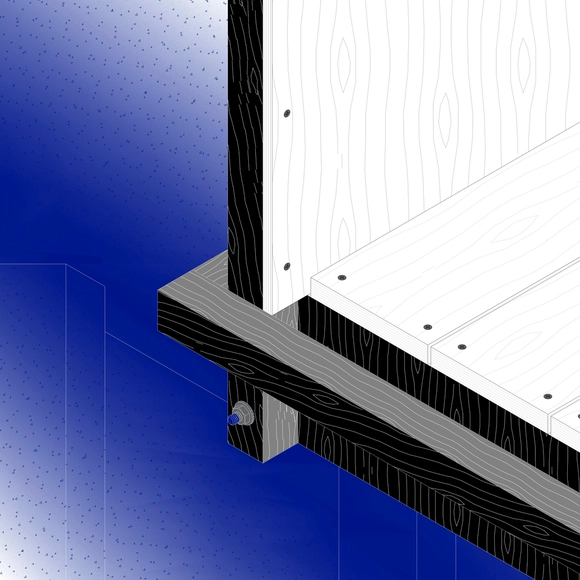
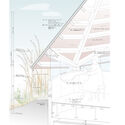
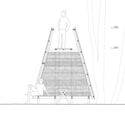
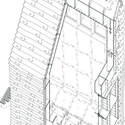
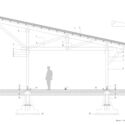
Drawing plays a pivotal role in architectural design as it is the primary means for transforming ideas into tangible spaces. Within wooden architecture, numerous techniques exist for creating joints, and connections, and seamlessly incorporating the material into other structural components. Beyond merely conveying precise details, drawing can also produce instructional guides for construction, simplifying comprehension for the workforce and facilitating project execution. This is why we've curated a collection of diverse projects that exemplify various approaches to depicting the use of wood and its myriad possibilities.
By the time I was 17 years old, I had moved 11 times. Because of my own experience relocating from one place to another, I’ve spent the better part of the last several decades focused on making sure that everyone has a place to call home, that everyone enjoys the human right to housing. But it was not until my time at Enterprise Community Partners, a nonprofit focused on community development and affordable housing, that I realized the methods and materials we employ to realize that human right matter.
New Ground-Academy Extension Arena of the Arts / READ Architecture. Image Courtesy of re-a.d
As the summer days come to an end, the focus naturally shifts to the realm of academia, a space full of curiosity, energy, and ingenuity. For architects, educational spaces are an opportunity for exploration, as they gather eager students together with professors and experts in their respective fields. The environment of educational facilities thus becomes a canvas for the cultivation of creativity, curiosity, and growth. From the playfulness of kindergartens and preschools to the halls of faculties that shape the scholars of tomorrow, the architecture of educational spaces must balance structure and flexibility to respond to the needs of students, teacher, and their larger communities.
This week’s curated selection of Best Unbuilt Architecture highlights designs submitted by the ArchDaily community dedicated to educational institutions. From innovative programs dedicated to child development and community engagement to specialized high schools or inclusive institutions learning to work with locally available materials such as rammed earth, this selection highlights projects dedicated to the exchange of knowledge in its varied forms.
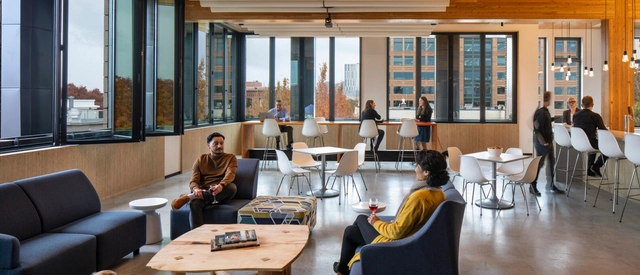
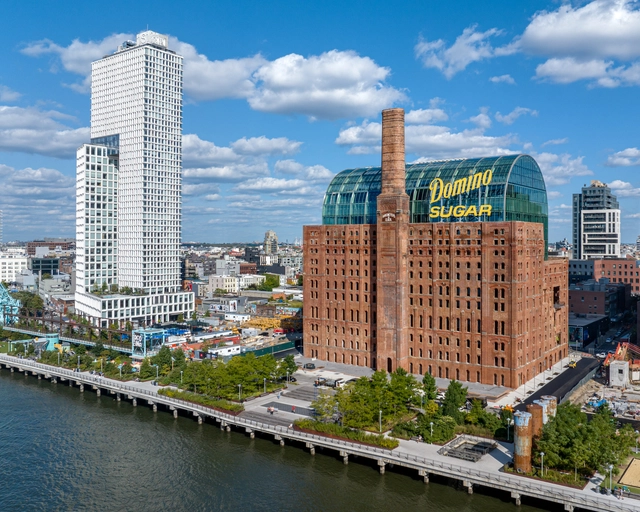
Two Trees Management announced the official reopening of The Refinery at Domino Sugar, one of Brooklyn’s most iconic buildings transformed into a modern workspace. The design of the adaptive reuse project, led by Practice for Architecture and Urbanism (PAU) began in 2017 with the purpose of reimagining the monument to become a point of connection between the existing neighborhood and the recaptured waterfront. The building now features 15 stories of office space, approximately 460,000 square feet, complete with retail spaces, communal workspaces, a private club, and event spaces.
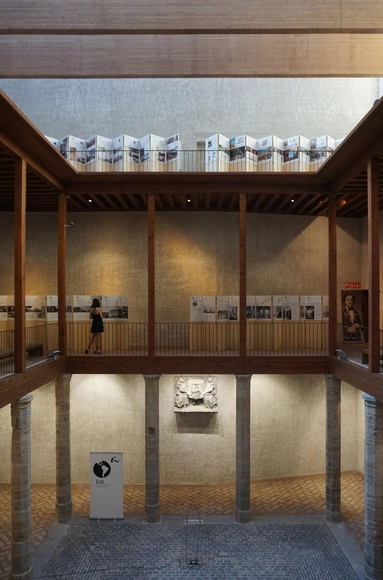
A new edition of the Latin American Architecture Biennial was inaugurated today, on September 26, in the city of Pamplona, Spain. The main program of the Biennial, featuring Ecuador as the guest country, will run until September 29 at The Condestable's House and the School of Architecture of the University of Navarra. Additionally, it will be complemented by extensions in Seville, Granada, Barcelona, and Madrid from October 2 to 5.
Laurent Troost is a Belgian architect with a vast history of projects in the Netherlands, Spain, and Dubai. He made the decision to move to Brazil in 2008, settling in the city of Manaus. In this region filled with challenges and inspiration, Troost developed a unique architectural practice by combining his experiences in designing luxury buildings abroad with structures in the heart of the Amazon. His work gained international recognition and has been honored with multiple awards. On September 4th, 2023, he was in Florianópolis for a lecture at the NCD Summit, where we had the opportunity to discuss his work and his views on architecture and sustainability.
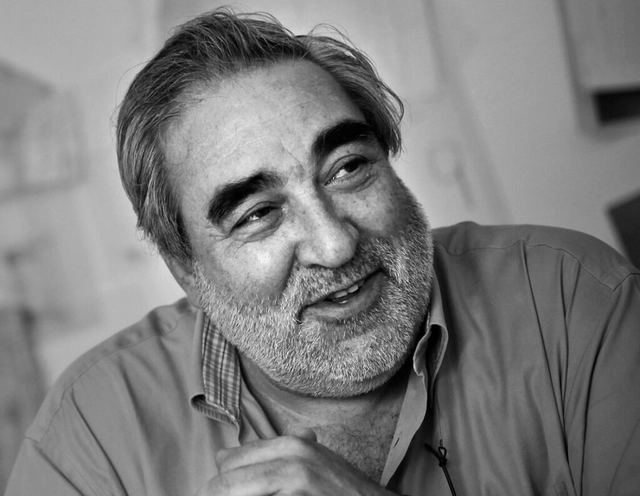
Eduardo Souto de Moura. Image via CAU/BR, divulgação
The Portuguese architect Eduardo Souto de Moura will receive yet another international recognition for his career. On October 20th, the Circle of Fine Arts of Madrid or Círculo de Bellas Artes de Madrid (CBA) will award the architect the Gold Medal, its highest distinction. This tribute not only adds to Souto de Moura's extensive list of accolades, which includes the 2011 Pritzker Prize and the 2013 Wolf Prize, among others but also represents an expression of appreciation from the world of culture and the arts for a career and body of work that transcend architecture and "reach the dimension of poetry through the acceptance of the technical demands of buildings
The announcement of the establishment of a new university campus is one of celebration, marking economic opportunities and urban growth. The United States is home to over 700 college towns that have witnessed prosperity through the inauguration of educational institutions like the University of Colorado’s Boulder, and Chapel Hill, home to the University of North Carolina. With this development, gentrification has unfortunately become a contentious issue in college towns across the country. While the transformation of these towns brings economic expansion and cultural vibrancy, it often comes at the cost of displacing long-time residents, erasing historic character, and altering the essence of these towns. American college towns offer a unique perspective on how cities can strike a balance between progress and preservation.
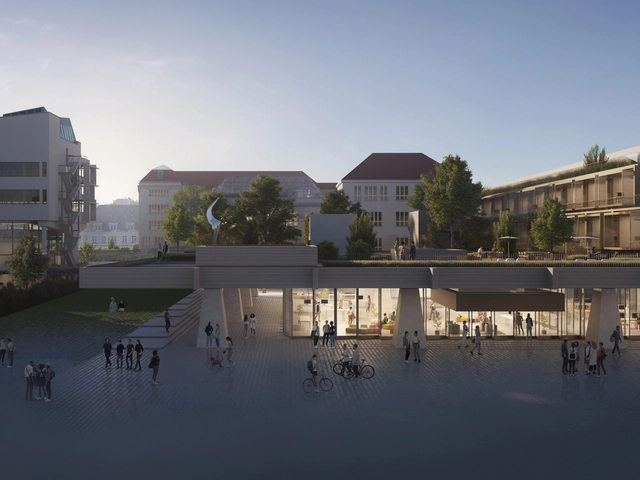
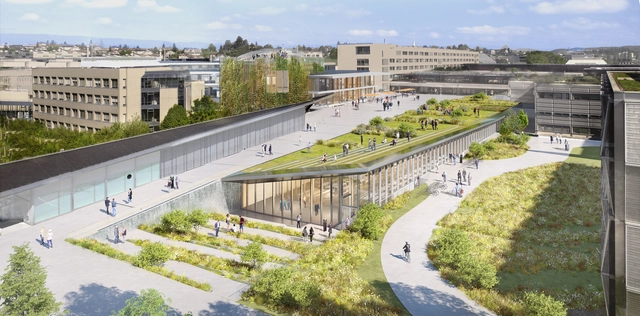
Following an international competition, the team led by Dominique Perrault Architecture has been commissioned to reimagine and rehabilitate the Esplanade-Coupole area in École Polytechnique Fédérale de Lausanne (EPFL)’s Campus in Switzerland. The winning project includes the addition of a new building and the renovation of the Coupole to increase its capacity, as well as improvements to the public spaces. The intervention reuses the former Esplanade underground car park, taking advantage of its central location within the campus and creating a new topography to seamlessly integrate the new additions into the dense fabric of the complex. The project, including the new additions and the renovation of existing structures, is set to be built between 2025 and 2028.
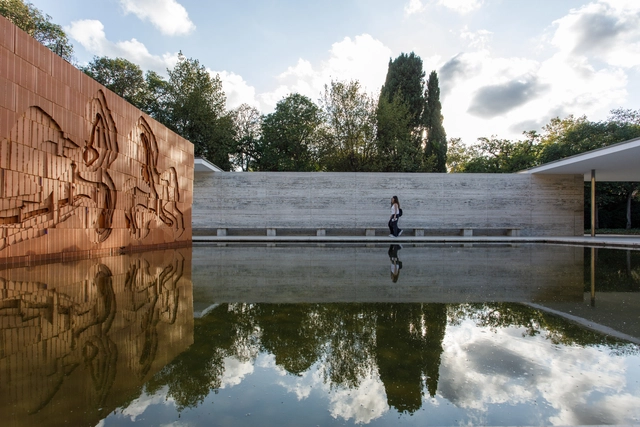
From September 14th to October 8th, 2023, "Psicoarquitectura" will be showcased at the German Pavilion, designed by Mies Van der Rohe and Lilly Reich, located in the city of Barcelona. The Mies van der Rohe Foundation, in collaboration with LAB 36 and Senda Gallery, is hosting this temporary artistic intervention by the artist and architect Oscar Abraham Pabón. This intervention explores the materiality of this iconic work of the Modern Movement, delving into its interpretative and psychological dimensions.
Cognitive decline is a growing public health concern that affects millions of people around the world. Amid an aging population, strategies that help prevent or mitigate cognitive deterioration become increasingly relevant to support healthy aging and maintaining independence for longer. Studies in the field of neuroscience applied to architecture (neuroarchitecture) have shown that the physical environment, both internal and external, public and private, plays a fundamental role in this aspect [1]. In this sense, architects and urban planners can direct their projects to create solutions that significantly contribute to this objective.
https://www.archdaily.com/1007274/architecture-for-preventing-cognitive-decline-contributions-from-neuroscience-to-healthy-agingAndréa de Paiva
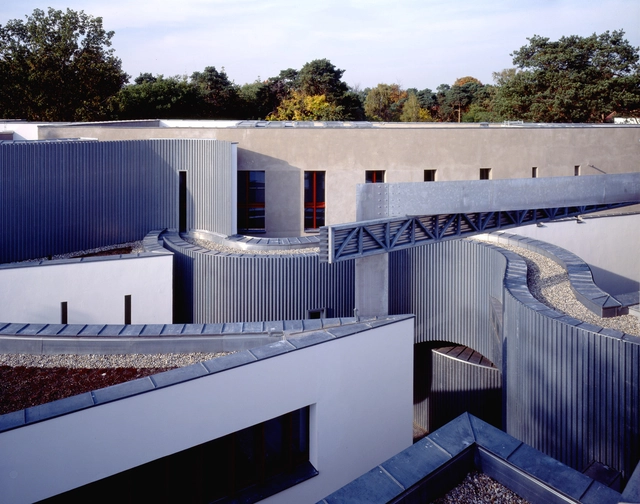
Polish-Israeli architect Zvi Hecker, internationally recognized as an influential figure of Modernism in Israel, as well as a painter, illustration artist, and furniture designer, has passed away at the age of 92, as reported by Moderne Regional. Throughout his career, Hecker combined geometry and modularity with asymmetry and spiraling complex compositions inspired by the pattern of sunflower seeds, a recurring inspiration for his work. His complex geometric explorations are exemplified in a variety of projects on various scales and programs, including the Spiral Apartment House in Ramat Gan, Israel (1981–1989), the Heinz-Galinski-Schule in Berlin, Germany (1992–1995), and the crystal-like Synagogue in the Negev Desert, Military Academy, Israel, (1969).
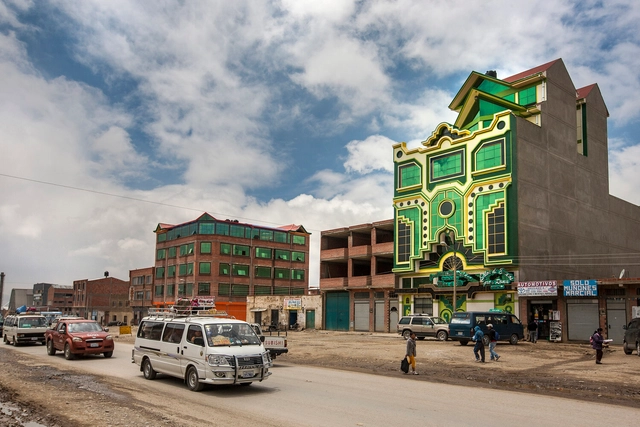
Maximalism is an artistic movement that stands in stark contrast to minimalism. While minimalism famously preaches "Less is more," maximalism embraces the opposite mantra of "More is more."
Within the broader context of the postmodern movement, which encompasses the social and aesthetic shifts occurring after World War II, maximalism can be characterized by its rejection of rigid values and rules. Instead, it celebrates imprecision, embraces diversity, blurs the lines between reality and fantasy, encourages spontaneity, and champions freedom of expression.