While in a lot of countries around the world, the construction, architecture, engineering, and urban planning sectors, are still reserved for men, initiatives that empower women in these fields are surfacing everywhere around the globe. Playing a huge role in the integration of female power into these disciplines, these movements take on many forms such as organizations, websites, platforms, etc. working with professionals, artisans, and workers.
From providing skills, connecting outstanding females, ensuring exposure, and promoting the works of pioneers, these initiatives have the common purpose of encouraging women to have an impact on their built environment.
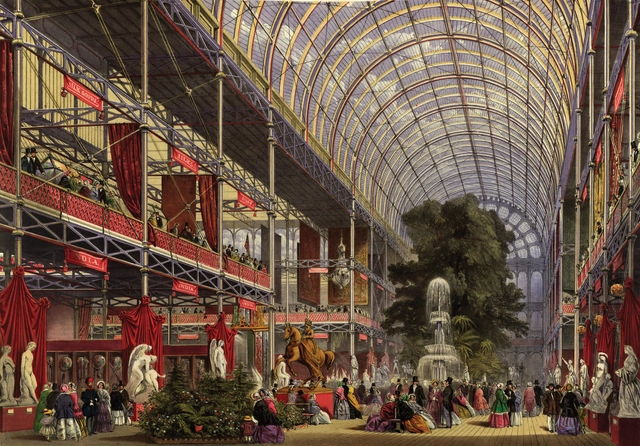
The Crystal Palace Exhibition, London, painting / Special Collections, University of Maryland Libraries; Hornbake Digitization Center. Image Courtesy of Princeton Architectural Press
According to Pliny, Roman Emperor Tiberius’s doctors instructed their charge to consume a fruit of the Cucurbits family each day. To grow these melon and cucumber fruits year-round on his home island of Capri, Tiberius directed construction of specularia: “[He] had raised beds made in frames upon wheels, by means of which the Cucumis were moved and exposed to the full heat of the sun; while, in winter, they were withdrawn, and placed under the protection of frames glazed with mirror-stone.”
https://www.archdaily.com/954920/from-ancient-rome-to-contemporary-singapore-the-evolution-of-conservatoriesGrace Mitchell Tada
Gropius, Mies van der Rohe, Albers, Klee, and Breuer are all names that bring to mind the exceptional artistic talent of the Bauhaus school. But an exceptional yet lesser-known aspect of the Bauhaus is that the early 20th-century experimental German art school was one of the first educational institutions that would openly accept qualified women into the program.
Once entered into the program, women were not exactly treated as equals to their male peers, but in 1919 the acceptance of these passionate women was the beginning of a wave of modern female artisans who made significant, yet not as recognized contributions to the Bauhaus movement. An introduction to seven of these women can be found below:
Every city has its odd building. Paris has Centre Pompidou. London –Lloyd’s of London. New York –the Guggenheim. Naturally, Chicago, the architectural capital of the world, has one too. Here it is –James R. Thompson Center, named so in honor of four-term Illinois Republican Governor (1977-91) who was brave enough to get it built in 1985. Home to offices of the Illinois state government the building is unlike anything you have ever seen before.
In a world that was once so obsessed with architecture that was “for the ‘gram”, the rise of TikTok is creating a shift in how we experience and consume architecture. It's no small trend either, nearly 950 million TiKTok videos utilize the hashtag #architecture, frequently to describe buildings in various cities or a specific architectural style that the video creator is familiar with. Does this mean that the era of the "instagrammable building" over, and is TikTok the new way to connect across generations and locations to explore the possibilities of architecture?
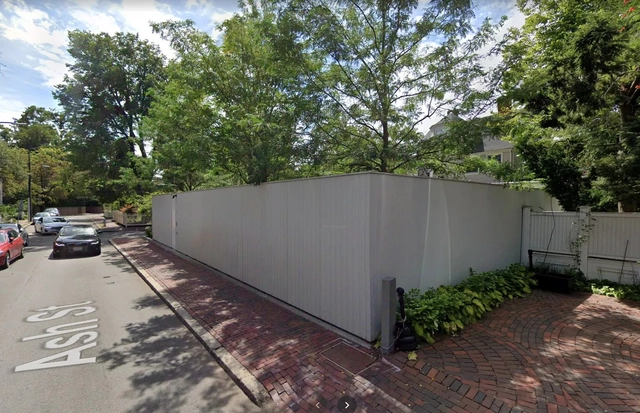
9 Ash Street, formerly the “Philip Johnson Thesis House” is seen as a precursor to the Glass House, but is, unfortunately, protected by a privacy enclosure from street views. Image via Google Maps
The Harvard Graduate School of Design (Harvard GSD) will no longer refer to a private residence at 9 Ash Street in Cambridge as the “Philip Johnson Thesis House.” Moving forward, the home, designed by and inhabited by Johnson while enrolled at the Harvard GSD in the 1940s, will now be known solely by its physical street address.
Architecture, and all aspects of the design world, has experienced numerous movements throughout time that have defined the way we express ourselves through buildings, art, and other mediums. Created out of a dissatisfaction with the status quo or the emergence of new technology, there have been particularly notable design shifts and emerging ideologies over the last 100 years. This leaves us to ask the question- what design moment are we in now, and what characterizes it? How will we retroactively reflect on this moment of time in design, and will the COVID-19 pandemic accelerate innovation to bring us to our next design era?
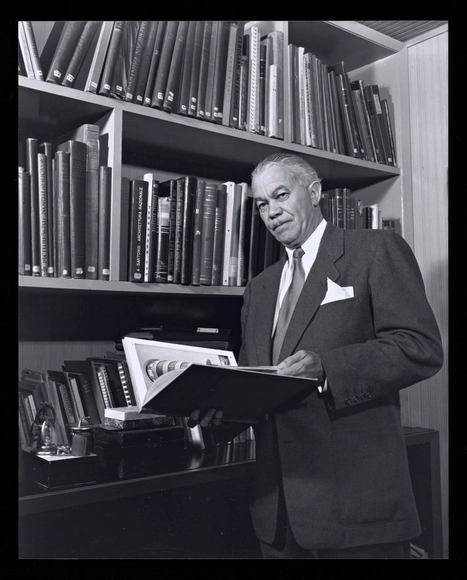
Paul Revere Williams, the late architect who was the first black member of the American Institute of Architects (AIA), has recently been receiving some long-overdue recognition. The AIA awarded him a posthumous gold medal in 2017; a PBS documentary “Hollywood’s Architect: The Paul R. Williams Story” aired in February, and a book titled “Regarding Paul R. Williams: A Photographer’s View” was published in September.
There are plenty of books about the buildings of late American architect Louis I. Kahn, including those he authored. But his drawings hold a special fascination for his peers and fans, which explains why the blog Designers and Books is launching a Kickstarter to fund the reissue of one 1962 compilation of his sketches, which has been out of print for decades.
For the past two weeks, cities across Nigeria were hit by protests against the notorious Special Anti-Robbery Squad (SARS), a police unit setup in 1992 to fight armed robberies. The anti-SARS protesters are calling for the unit’s disbandment, due to its high-handedness, extra-judicial killings, extortion, and numerous human rights abuses.
Tragically, the protests came to a brutal climax on October 20, with the shooting of protesters at the Lekki Tollgate by gunmen believed to be agents of the Nigerian state. This led to casualties, which are currently a subject of controversy: the Lagos State government concedes that two persons lost their lives; groups like Amnesty International insist the figures are much higher.
https://www.archdaily.com/950764/public-protests-and-the-urban-legacies-of-colonialism-and-military-dictatorship-in-nigeriaMathias Agbo, Jr.
In June 1954, an article published in House & Home magazine read, “The Japanese had some of our best ideas—300 years ago.” The piece highlighted three main attributes of Kyoto’s Katsura Imperial Villa, built in the 1620s: the open post-and-beam plan, the use of verandas for climate control, and its modularity based on tatami mats and shoji screens.
Throughout history, drawing has been the essential medium of conveying architectural ideas, operating on multiple levels, from the practical application of serving the construction process to the more artistic quality of expressing a vision and providing an impression of what the architecture will be like. The book Architecture – Drawn, From the Middle Ages to the Present, authored by University of Stuttgart Prof. Dr. Phil. Klaus Jan Philipp, recounts the historical development of architectural drawings, exploring all the different inventions, revolutions and continuities spanning eight centuries of architectural representation.
For centuries, Hutongs have been recognized as one of the most treasured types of vernacular housing in China. Witnessing the cultural and historical transformation in Beijing ever since the Yuan Dynasty (1271 – 1368), the name Hutong is derived from a Mongolian word that means ‘water well’. In fact, this term was given to small streets that originated during the Yuan Dynasty when the emperor attempted to organize the urban fabric in a grid-like pattern in order to manage properly property ownership and to form an efficient transit system.
As far as written records report, “prehistory” dates back between 35,000 BCE and 3000 BCE in the Middle East (2000 BCE in Western Europe). Ancient builders had a profound understanding of human responses to environmental conditions and physical needs. Initially, families and tribes lived together in skin-covered huts and bone structures. Thousands of years later, human settlements evolved into fortified mud-brick walls surrounding rectangular volumes with pierced openings for ventilation and sunlight.
During the upcoming months, we will be publishing short articles on the history of architecture and how it evolved to set the fundamentals of architecture we know today. This week, we are exploring the architectural characteristics of ancient India and Southeast Asia.
How many U.S. architecture professors know that there is a Chinese treatise equivalent to Vitruvius’ Ten Books of Architecture? Very few, I suspect. I taught architectural history for more than 20 years before I discovered the marvelous Yingsao Fashi, a Song Dynasty book by a prominent court official who, as far as we know, was not an architect or builder. In fact, prior to the Ming Dynasty no prominent temple, palace, or shrine in China was designed by an architect because the concept of a single mastermind in charge of a building project was foreign to the East Asian way of designing environments of any kind.
https://www.archdaily.com/948425/why-dont-we-teach-chinese-architecture-in-the-united-statesMark Alan Hewitt
Throughout the south of the United States, hundreds of mid-century “equalization schools”—public schools built in the 1950s following Brown vs. Board of Education in a desperate effort to maintain segregated “separate but equal” schools in southern states—sit empty, abandoned, and crumbling.
Aerial view of the Hanford Construction camp. Image Courtesy of National Archives and Records Administration
In 1942, less than a year after the United States was pulled into World War II, the U.S Army Corps of Engineers quickly and quietly began acquiring large parcels of land in remote areas in three states. Soon after, thousands of young designers, engineers, planners, scientists, and their families, began arriving at these sites that were heavily shielded from public view. Workers there constructed hundreds of buildings including houses, industrial structures, research labs, and testing facilities at unprecedented speed and scale.
As far as written records report, “prehistory” dates back between 35,000 BCE and 3000 BCE in the Middle East (2000 BCE in Western Europe). Ancient builders had a profound understanding of human responses to environmental conditions and physical needs. Initially, families and tribes lived together in skin-covered huts and bone structures. Thousands of years later, human settlements evolved into fortified mud-brick walls surrounding rectangular volumes with pierced openings for ventilation and sunlight.
During the upcoming months, we will be publishing short articles on the history of architecture and how it evolved to set the fundamentals of architecture we know today. This week, we are going back to one of the most prominent and influential periods known to architecture: Greece; Aegean, Archaic, classical, and Hellenistic periods.