
AIxGaudi: A new format integrating advanced AI training and an international architecture competition
AIxGaudi: A new format integrating advanced AI training and an international architecture competition

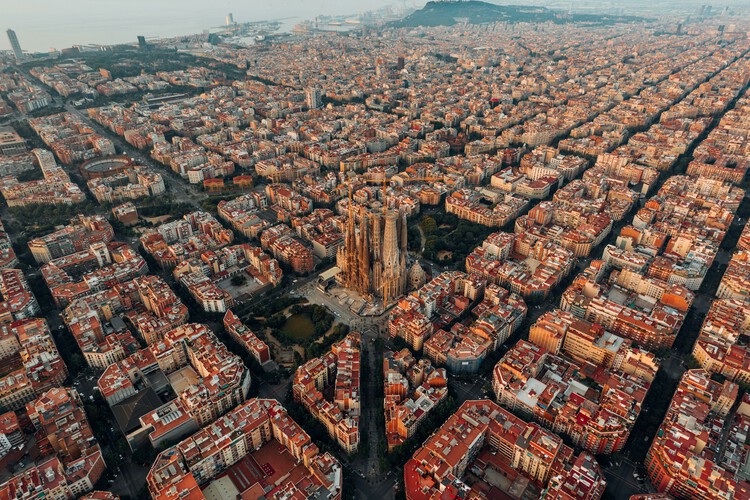
Barcelona is a city where architecture has long served as a laboratory of urban experimentation, each era leaving its mark on the city's fabric. From the dense streets of the Gothic Quarter to the ornate interiors of the Palau de la Música Catalana, the city expanded outward through Ildefons Cerdà's Eixample, a stage where Gaudí and his contemporaries challenged the rules of form, scale, and ornamentation. These experiments defined a local identity and culminated in the Sagrada Família, a vision that continues into the 21st century through the integration of advanced technology.
The city's twentieth-century transformation forged an architectural language with global influence. The principles of International Modernism are embodied in Mies van der Rohe's Barcelona Pavilion, while later developments—from Bofill's explorations in collective housing to the urban interventions of the 1992 Olympics—reshaped the skyline and the city's relationship to its waterfront. Subsequent contemporary projects continue to negotiate form, landscape, and urban scale, contributing to a layered and evolving city.

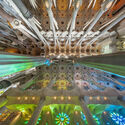
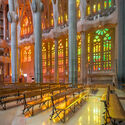
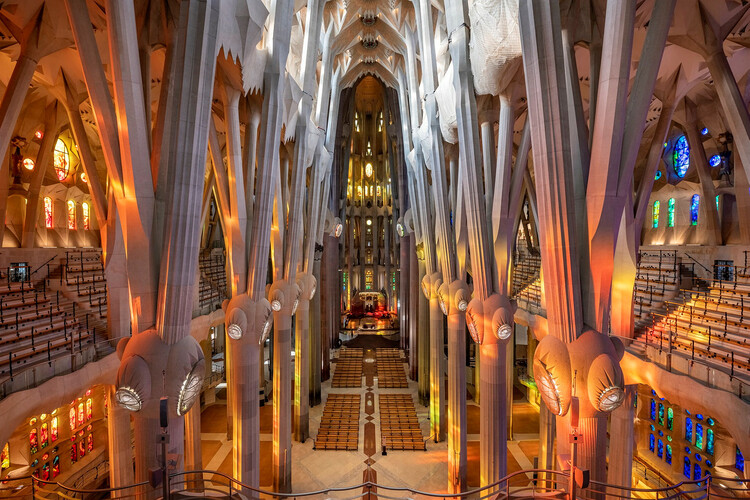
It is afternoon in the summer, and the nave of the Sagrada Família is saturated with warm colors. Shafts of amber and crimson sweep across the stone floor, shift as a cloud passes over Barcelona, then deepen again. Around you, visitors slow without quite realizing it. Some raise their phones — not to capture the architecture, but to step into the light itself, positioning themselves in a pool of orange or gold as if the colours were something you could wear.
They are, without knowing it, doing exactly what Gaudí intended: surrendering, however briefly, to the sensation of being bathed in something larger than themselves.

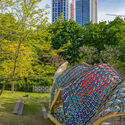
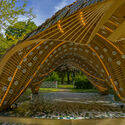
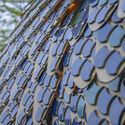
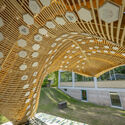
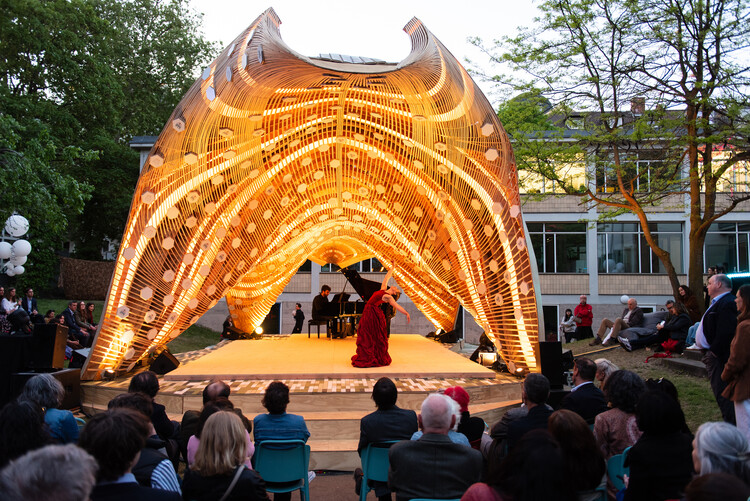
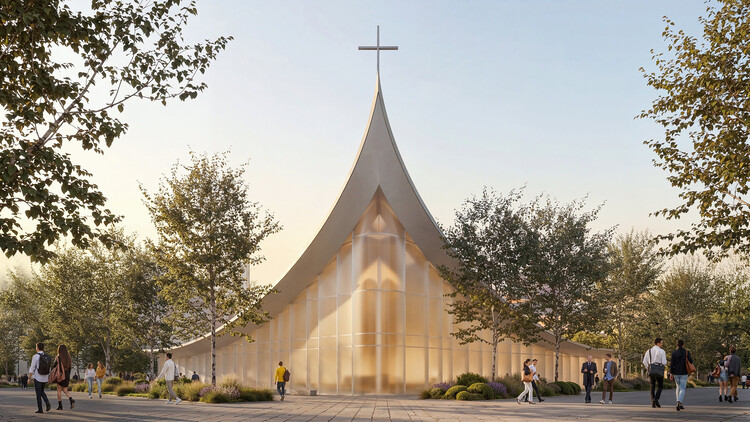
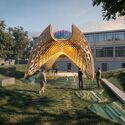
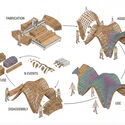
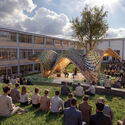
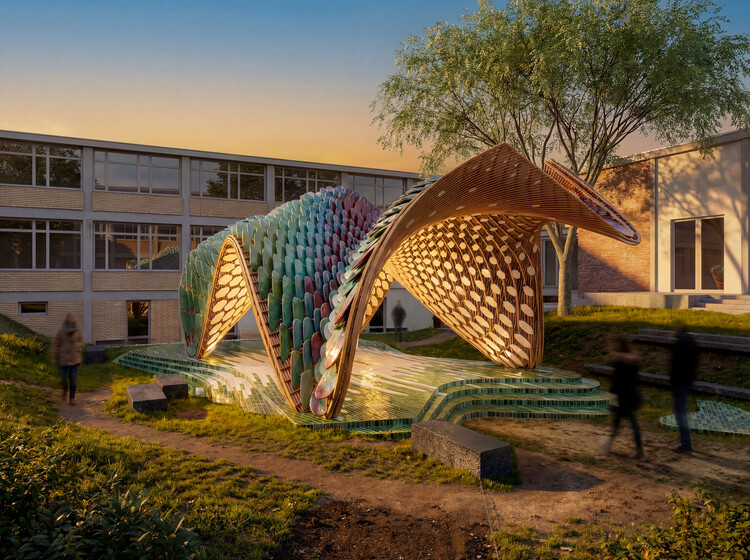
What happens when materiality becomes the driving force of design? How can a cultural infrastructure express its own identity? The Spanish Design Pavilion for World Design Capital Frankfurt Rhein-Main 2026 brings together the country's creative innovation to address contemporary challenges through a reinterpretation of Gaudí's architectural legacy. Conceived as a reversible cultural infrastructure, the project activates public space while expanding the conversation around material use, circularity, and reuse. Rather than reproducing historical forms, the pavilion adopts a contemporary, operational approach. It highlights collaboration among Spanish industry, design and culture, exploring structural and constructive principles rooted in geometry, material efficiency, and the relationship between form and system.

As global urban challenges intensify alongside growing environmental, social, and cultural pressures, this week's news reflects how institutions, exhibitions, and restoration projects are highlighting the relationship between the built environment and collective experience. From international forums addressing housing insecurity and urban resilience to cultural events examining memory, identity, and spatial perception, positioning architecture as both a framework for policy and a medium for critical reflection. At the same time, major restoration and redevelopment initiatives highlight a renewed focus on preserving historical continuity while adapting heritage sites and cultural institutions to contemporary forms of use, accessibility, and public engagement.

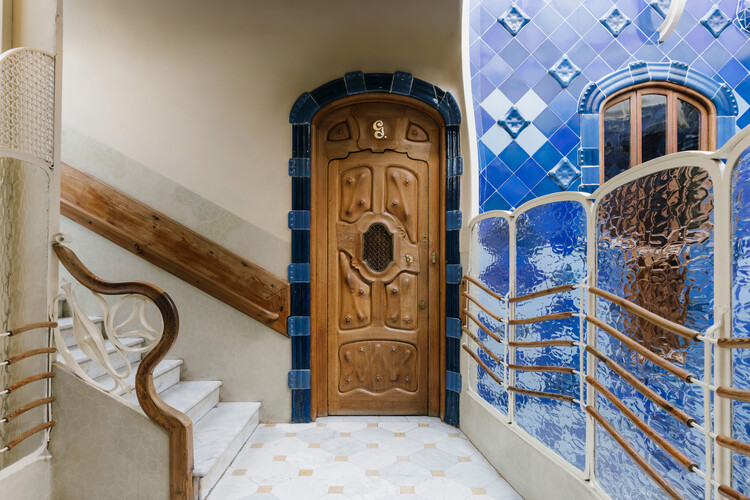
Casa Batlló in Barcelona has unveiled the restored Third Floor of the building, opening the last original residence preserved from Antoni Gaudí's 1904-1906 transformation of the property to the public for the first time. Led by restoration architect Xavier Villanueva and developed over three years through an archaeological-style conservation process, the intervention recovers a largely intact domestic environment that had remained inhabited by descendants of the Batlló family for more than a century. Adapted into a series of private rooms for gatherings, cultural events, and experiences, the restored apartment combines heritage preservation with a contemporary interior design intervention by Paola Navone – OTTO Studio, establishing a new program for one of Barcelona's most recognized architectural landmarks.

At a moment when architecture is being pushed to respond more directly to environmental and social pressures, Spain's pavilion for World Design Capital Frankfurt Rhein-Main 2026 positions itself as more than a temporary installation. While materiality is at the center of its design, the project explores how a reversible cultural infrastructure can activate public space without permanent construction. Discussions about material use, circularity and reutilization in architecture are closely tied to cultural contexts, environmental conditions, and historical influences that reveal how time shapes the built environment. Beyond its construction, Spain's pavilion expresses identity by reinterpreting the architectural method of Antoni Gaudí, the creator of the Sagrada Familia and Park Güell. It also demonstrates how Spain's creative and industrial sectors address current challenges with innovative construction solutions.

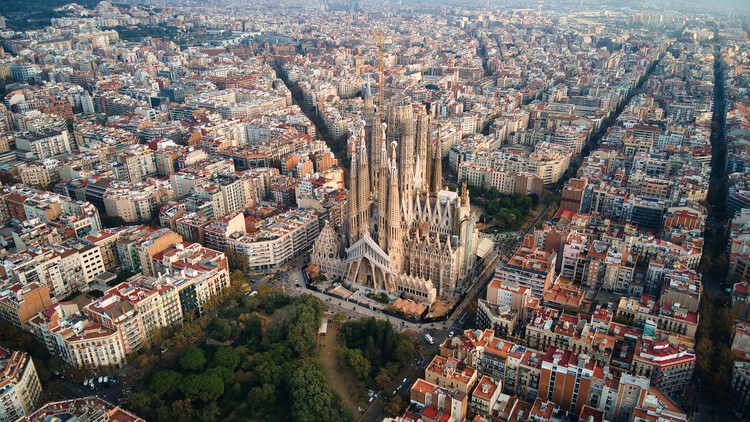
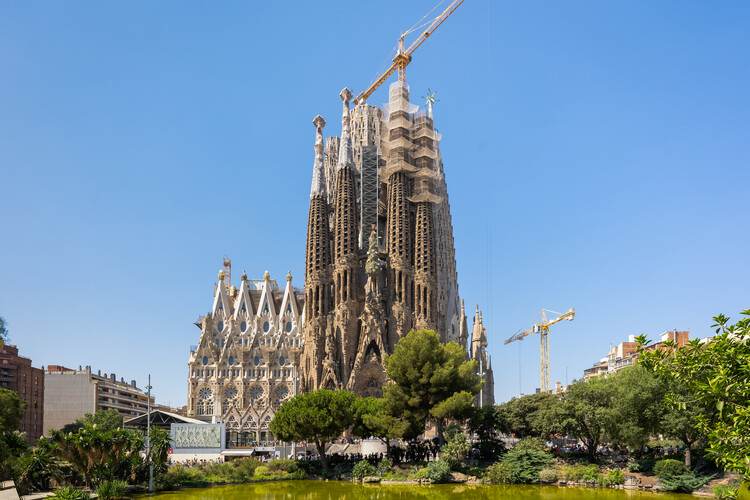
The final piece of the central tower of Barcelona's Sagrada Familia has been laid in place, bringing the church to its maximum height of 172.5 m. La Sagrada Familia, one of architectural history's most notorious unfinished buildings, became Antoni Gaudí's defining project in 1883, when he transformed a neo-Gothic design into one of the best-known structures of Catalan Modernisme. One hundred and forty-four years after construction began, the upper section of the 17-meter-high, four-sided steel and glass cross was winched into position at 11 a.m. on Friday, February 20, completing the tower dedicated to Jesus Christ. This milestone confirms the project's final stage of construction, which, back in March 2024, was announced as one of the most anticipated completions of 2026, commemorating the centenary of Antoni Gaudí's death.

As 2025 concludes, we look ahead to 2026, a year scheduled to deliver a diverse range of significant architectural projects across the world. The year is particularly notable for the completion of new infrastructure and cultural buildings, including long-term projects. Europe will be in the spotlight of the new year with the Milano Cortina 2026 Winter Olympics. This event will feature projects such as the Olympic Village by SOM and the Winter Olympics Arena by David Chipperfield Architects. Also in Milan, BIG is set to complete construction of the City Wave project as part of a new business district in the city. At the same time, after more than 140 years of its establishment, the architects around the world will also be watching for the long-awaited completion of Antoni Gaudí's La Sagrada Familia in Barcelona, announced for 2026.
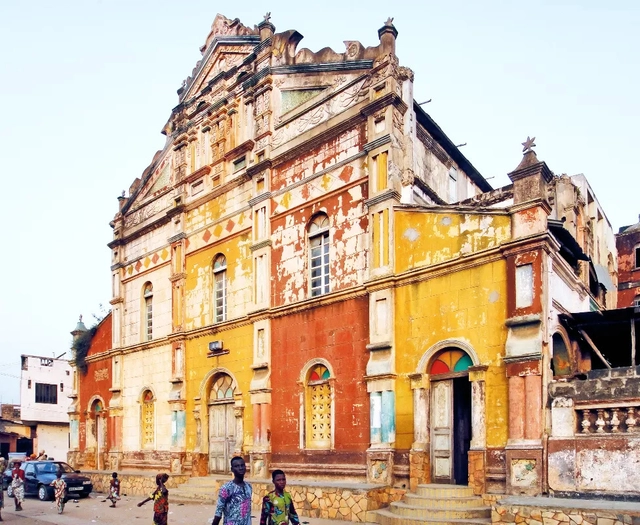
Buildings that are designed to layer stories and memories, evoke a sense of aspiration, define cultural narratives, and build a national identity will always be important in all societies. When buildings have this power to shape communities, make an impact on a city’s image, and change the course of socio-economic growth, then they can be identified as iconic. Though the term “iconic” is subjective, it is one that pushes the boundaries of architecture in any context. It calls for spatial originality, proposes innovative material technology, and necessitates a radical socio-economic investment to be realized.
However, since the economies of developing countries in the global south cannot meet the requirements of these architectural structures, is there a more suitable socio-economic model for monumental structures in this context? Can the incremental principles of small adaptable changes and growth be applied to the finite iconic aspiration of this architecture?
.jpg?1497901399&format=webp&width=640&height=580)
In this Barcelona guide, we have rounded-up the architecture of probably the best known and most influential architect from the beginning of the century in Spain, Antonio Gaudí. Gaudí spent most of his life in Barcelona and the city boasts the largest concentration of his works in the world. His style is unique, often imitated but never matched.
Some architects have left their mark on history; one such case is Antonio Gaudí. Through his nature-inspired conceptions, he became the foremost representative of Catalan modernism. The impact of Gaudí's work can be seen on various architectural scales, including the Sagrada Familia, Parc Güell, Colònia Güell, Casa Milà, and Casa Battló, the latter being an iconic landmark of Barcelona’s architecture.
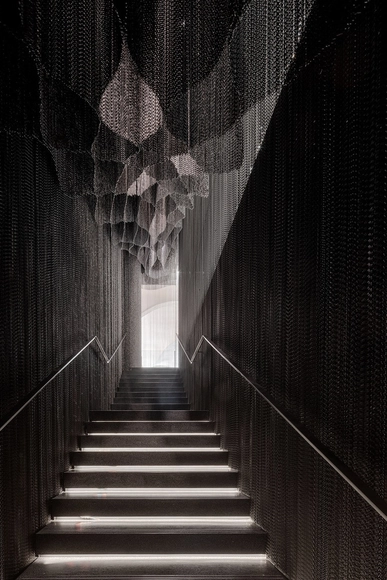
Casa Battló emerged from the renovation of an 1877 building, which was acquired in 1903 and subsequently commissioned to Gaudí for its transformation. Inspired by animal forms, particularly those of the ocean, the facade and interior were renovated using curves and a combination of vibrant colors. This intervention marked a turning point for the house, as it significantly changed the facade, redistributed the interior, and provided a sublime interaction with natural light. Following the nature of the renovation that began with Gaudí, a new interior project for the stairs and atrium of Casa Batlló was developed in 2021. This renovation is the result of a dialogue between the anodized aluminum chains developed by Kriskadecor and the abstraction of the ingenious use of light in Casa Batlló through Kengo Kuma's design.
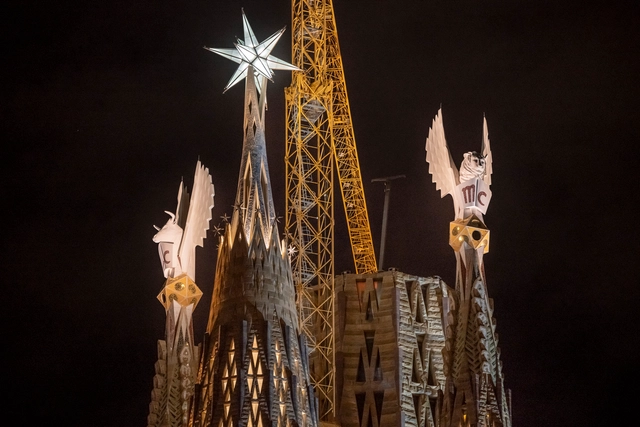
Gaudí's Sagrada Familia in Barcelona has illuminated the terminals on the towers of the Evangelists Luke and Mark, celebrating the completion of these two new structures that reach 135 meters in height. Together with the tower of the Virgin Mary, inaugurated in December 2021, 3 of the 6 central towers will be completed.
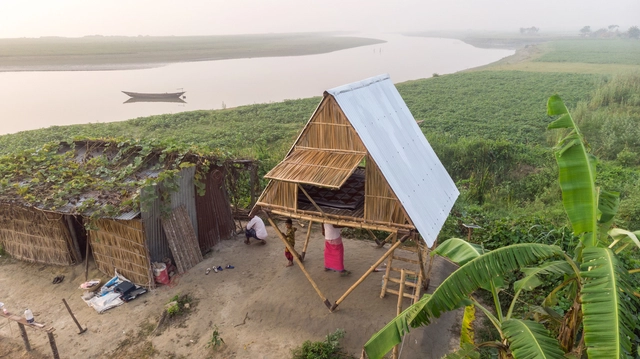
It’s an essential component of the design process, where spatial ideations are translated into built form – the design of the prototype. Architectural projects, throughout history and in contemporary practice, have been prototyped to carry out both technical and aesthetic tests, where further insight is gained into the integrity of the design. It’s the blurred line between the experimental and the practical.

The 25th of June 2022, marked 170 years since the birth of Antoni Gaudí, the greatest representative of Catalan Modernism, and we celebrate this day by sharing the story of his life and remembering his work.
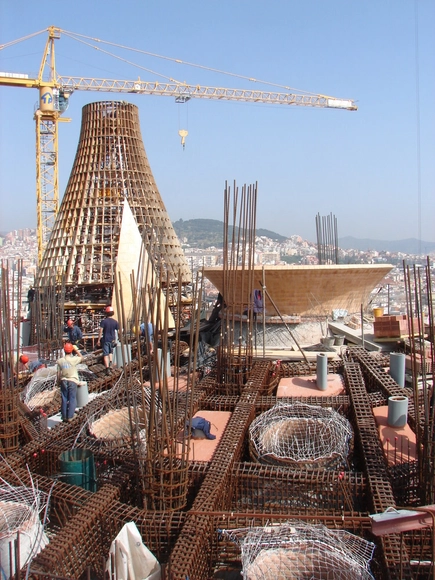
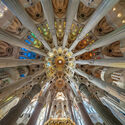
A masterpiece is often defined as the most remarkable work in an artist's career, one which highlights the height of their techniques and ideals. The Mona Lisa by Leonardo da Vinci; Michelangelo's Pietá; the Beatles' Sgt. Pepper's Lonely Hearts Club Band album. There are many examples, which are not always unanimously agreed upon. But what if what many consider to be the masterpiece was started by someone else, the credited creator didn't live to see its completion, and almost all of its documentation was destroyed? Catalan architect Antoni Gaudí and his world-famous Temple Expiatori de la Sagrada Família are examples of these complications. From a highly crafted stone construction to the most modern 3D printing techniques and high strength concrete, numerous technologies were and continue to be incorporated in the project's construction.
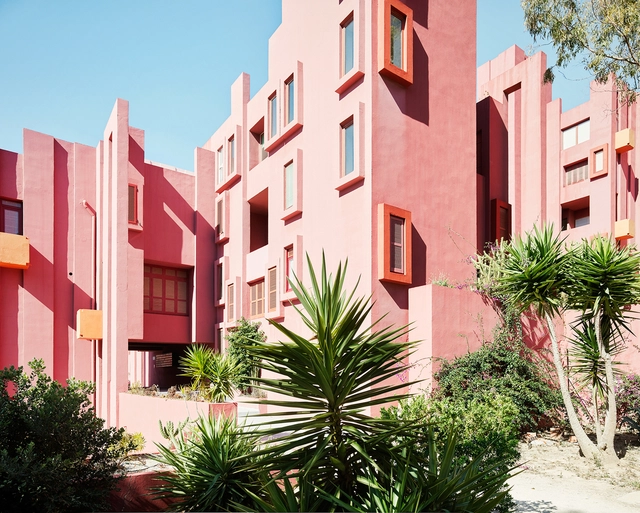
Some architects love color, some are unmoved by it, some hate it, and some love to dismiss it as too whimsical or non-serious for architecture. In an essay on the subject, Timothy Brittain-Catlin mentions the “innate puritanism among clients of architecture,” architects and their “embarrassment of confronting color,” and how “Modernism tried to ‘educate out’ bright colors.” So, while the debate on color in architecture is far from being a new one, it is not finished, and probably never will be.
In today’s world where the exhausted stereotype of the no-nonsense architect clad in black still persists, and while we quietly mull over the strange pull of the Cosmic Latte, there are some architects who haven’t been afraid of using broad swathes of color in their work at all. Read on for a list of 7 such exemplary architects both from the past and the present.

Both today and in centuries past, it is a reality of building that not every project is destined for success. Financial issues or unrealistic timetables can complicate a building’s construction but, while usually the final result eventually meets the initial expectations, other times the worst-case scenario of a building being abandoned during construction becomes a nightmare come true. Unfortunately, these failed projects have an extensive history. Economic factors are the most common cause of unfinished construction, but buildings have also been stranded in limbo by wars, geopolitical shifts, epidemics of disease and other unpredictable obstacles, leaving partial structures as haunting reminders of what might have been.
Whether partially completed and left as ruins or still under construction decades (or centuries) after initial groundbreaking, unfinished buildings offer an alternative history of our built environment, promising long-delayed gratification or examples of design so ambitious that they prove impossible to realize. Initiated by civilizations across the globe, the following list details just a few examples of history’s most interesting and infamous unfinished construction projects.




.jpg?1507476262 "Casa Batlló. Image © <a href='https://commons.wikimedia.org/wiki/File:Barcelona_Casa_Batll%C3%B3_DachterrasseKamine.jpg'>Wikimedia user M.Stallbaum</a> licensed under <a href='https://en.wikipedia.org/wiki/Public_domain'>Public Domain</a>")


.jpg?1531136109)