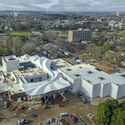
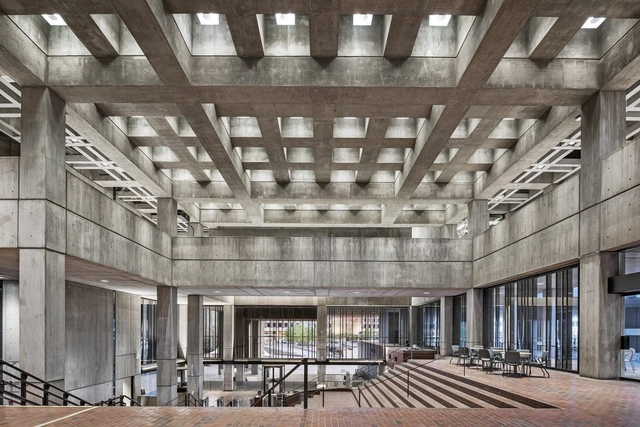
Boston City Hall . Image Courtesy of Utile and Reed Hilderbrand
"Demolition is a waste of many things – a waste of energy, a waste of material, and a waste of history,"says Pritzker-winning architect Anne Lacaton. In recent years, refurbishment and adaptive reuse have become ubiquitous within the architectural discourse, as the profession is becoming more aware of issues such as waste, use of resources and embedded carbon emissions. However, the practice of updating the existing building stock lacks consistency, especially when it comes to Brutalist heritage. The following explores the challenges and opportunities of refurbishment and adaptive reuse of post-war architecture, highlighting how these strategies can play a significant role in addressing the climate crisis and translating the net-zero emissions goal into reality while also giving new life to existing spaces.
Too often buildings end up as waste at the end of their lifecycle. How can the built environment move towards a circular economy, and in turn, reimagine how valuable materials are tracked and recycled? Looking to address this issue, material passports are one idea that involves rethinking how materials are recovered during renovation and demolition for reuse. The result is when a building is ready to be demolished, it becomes a storage bank for useful materials.
"For more than a generation, federally funded historic tax credits (HTCs) have been instrumental in incentivizing developers to revive and reuse historic buildings and keep them economically viable, rather than replace them with shiny new objects. These credits create jobs, promote responsible development, and leverage billions in private investment to enable income-generating buildings". Read the interview between Justin R. Wolf and Meghan Elliott, founding principal of New History, a firm specializing in adaptive reuse.
https://www.archdaily.com/966687/why-use-is-the-best-form-of-preservationJustin R. Wolf
Shopping malls and retail centers are dead- or so they say. Although much of how we shop was put on pause by the COVID-19 pandemic, and we experienced the surge in e-commerce focused purchases, some of your favorite stores are faced with reimagining themselves in a new way. As the pressure for high-density housing continues to rise, and big-box centers and shopping malls are left empty, is there a way that the place where you once purchased a new outfit could be transformed into your next apartment?
Gmp has won a competition to redesign a disused stainless steel factory that would accommodate the Shanghai Academy of Fine Arts. In tune with China's newfound interest in adaptive reuse, the project retains the core structure of the 860-meter long industrial building, as well as its ventilation towers. At the same time, it redesigns the façade and accentuates the central axis through a mix of social spaces. The design is part of a larger redevelopment plan to transform the former industrial site into an art district.
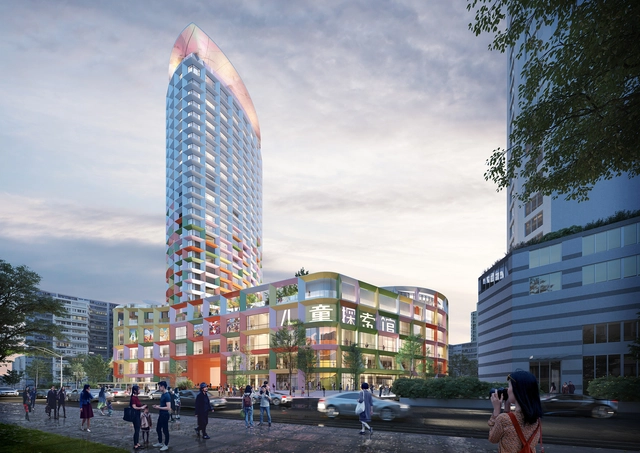
Work has begun for MVRDV's renovation of Shenzen Women & Children Centre, a mixed-use tower featuring an array of public functions, now in need of a comprehensive transformation. Constructed during the city's explosive growth following the Special Economic Zone designation in the 1980s, the building is one of the many nearing the end of their initial lifespan, and MVRDV's adaptive re-use project sets an important precedent for repurposing these buildings by bringing colour, greenery and a new layer of public spaces.
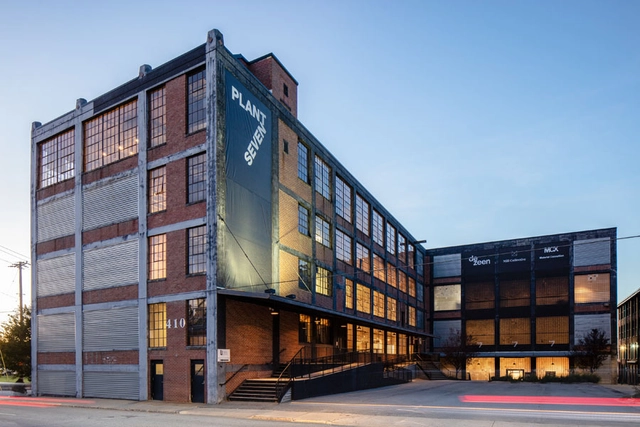
Plant 7 at Congdon Yards, an adaptive reuse project in High Point, North Carolina. Image Courtesy of Keith Isaas
Adaptive reuse or the process of transforming an older building by reusing the structure and changing its original purpose, has gained relevance over the years especially because it allows a complete optimization of the performance of the existing built environment. In a piece, originally published on Metropolis, author Elissaveta Brandon explores how "architects and developers are transforming the staples of the South—located throughout a 120-mile region from Winston-Salem to Fayetteville—into infrastructure fit for today". Transforming historic mills into design hubs, and mixed-use complexes, the article highlights 3 examples from North Carolina.
https://www.archdaily.com/963472/three-adaptive-reuse-projects-in-north-carolina-reinvent-historic-millsElissaveta M. Brandon
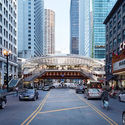
Skidmore, Owings & Merrill (SOM) and TranSystems are redesigning one of Chicago busiest and oldest elevated rail networks. The Chicago State/Lake Station's new design offers improved accessibility, safety, and comfort to all passengers, and respects the surrounding historic fabric of the downtown area. The proposed design includes wider platforms, a hovering glass canopy, a new fly-over connection bridge, elevators, and street level enhancements.
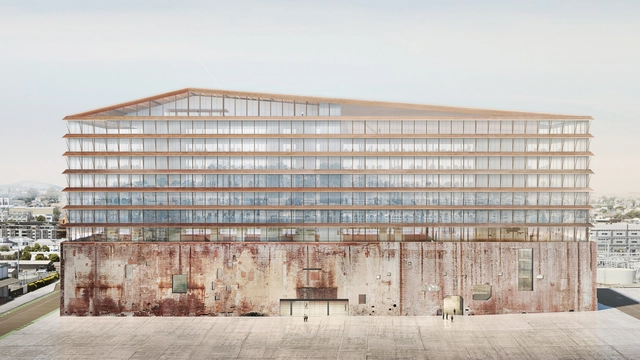
Construction work began for Herzog & de Meuron’s transformation of a former power plant building in San Fransico into a mixed-use project. Designed in collaboration with California-based practice Adamson Associates, the adaptive reuse of iconic Station A is part of the Portrero Power Station project, the redevelopment of a 29-acre industrial site into an extension of the Dogpatch neighbourhood. Herzog & de Meuron’s design retains and repurposes various features of the industrial building while adding a lightweight, steel-framed structure on top, thus giving new life to one of San Francisco’s landmarks.
Courtesy of ZGF Architects, Wexford Science & Technology
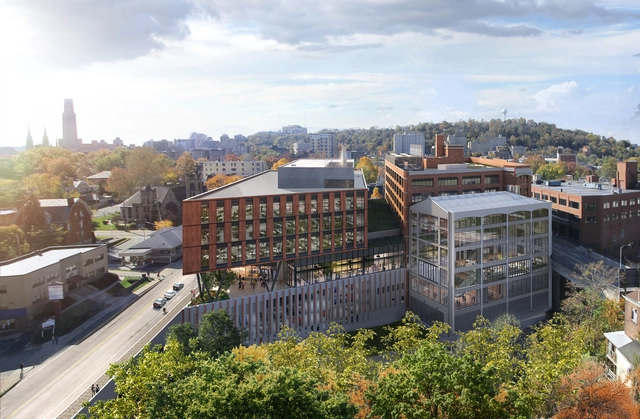
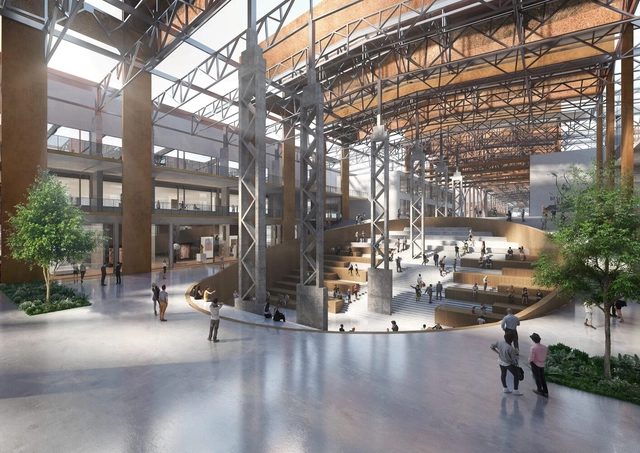
ZGF Architects, Wexford Science & Technology, and The University of Pittsburgh have revealed new details of the Ford Motor Assembly Plant adaptive reuse in Pittsburgh. Called The Assembly, the project aspires to become a hub of university research, entrepreneurial activity, and innovation programming. The six-story crane shed was used to hoist parts unloaded from the Pennsylvania Railroad tracks for assembly.
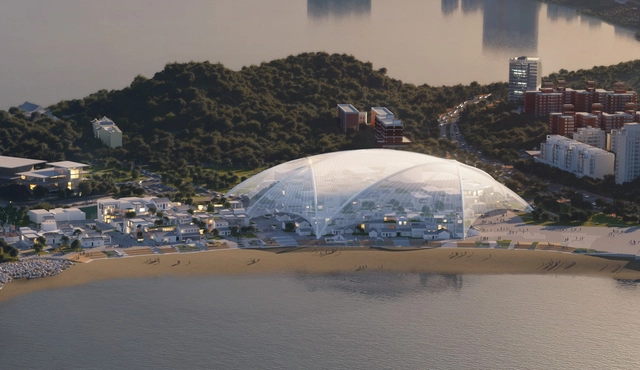
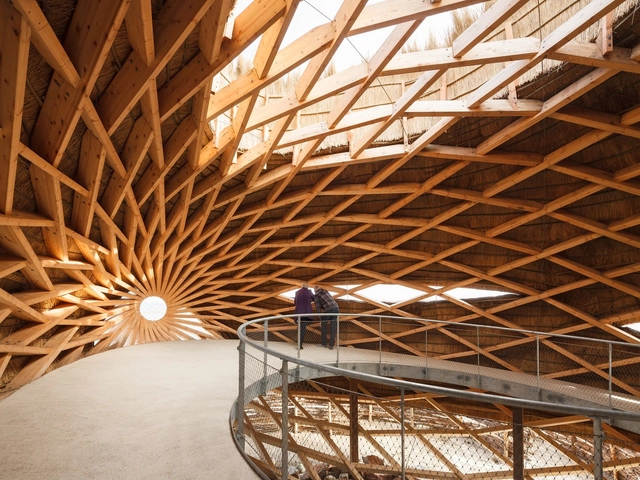
Following China's rapid urbanization and emergence of new districts and public buildings, MAD Architects, led by Ma Yansong, has won an international competition to design the new Zhuhai Cultural Arts Center. Their proposal, titled "Village Under the Dome", will be situated within China’s Pearl River Delta in the Yinkeng Village, a historic town that has recently been demolished and relocated by the municipality to make room for new projects. Instead of rebuilding over the demolition, their design offered a conservation and renewal of the village, creating a new function of the original site.
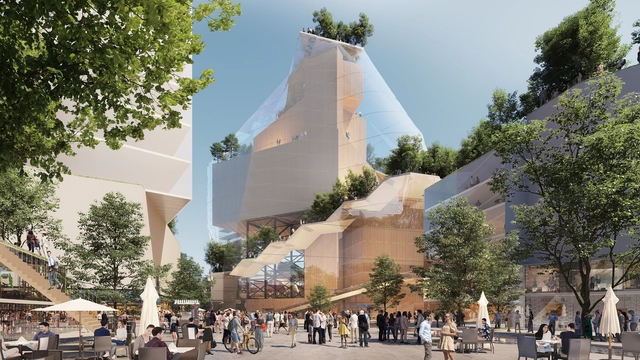
Reflecting on the future of shopping centres and addressing their decline in visitors, MVRDV's Heuvelkwartier design proposes converting Eindhoven's Heuvel shopping venue into a green cultural quarter. The project brings together retail, culture and recreation, expanding the existing buildings while transforming the roofs into a park. The proposal also expands the Muziekgebouw with a stacked cultural building encased in a "glass mountain", creating a new landmark for Heuvel.
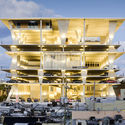
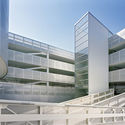
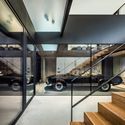
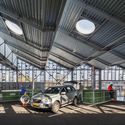
In theory, parking spaces serve only one function: park a car safely until it is used again, and in terms of design, car garages are flexible and straightforward, requiring minimal design interventions. However, parking spaces nowadays are no longer considered one-function buildings. The emptier the space, the more potential it has to integrate additional functions. Architects and urban planners have redefined traditional parking lots, adding recreational and commercial facilities to the structure. Instead of a typical structured grid plan with yellow and white markings on the floor, we are now seeing inviting structures that incorporate green facades and rooftop playgrounds, car washes, cafeterias, and work/study zones.
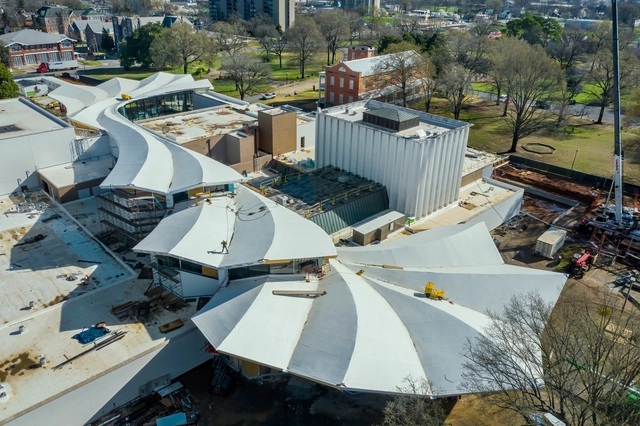
Designed by Studio Gang architects, together with landscape design firm SCAPE and Polk Stanley Wilcox Architects, ArkansasMuseum of Fine Arts (AMFA) reaches an important construction milestone with the recent completion of its signature new roof. Spanning the entire length of the project and connecting the various buildings, both renovated and new, the folded plate concrete roof establishes the museum’s new architectural identity as the leading cultural institution for the state of Arkansas.
Buitenplaats Brienenoord, Frank Hanswijk. Image Courtesy of Superuse Studios
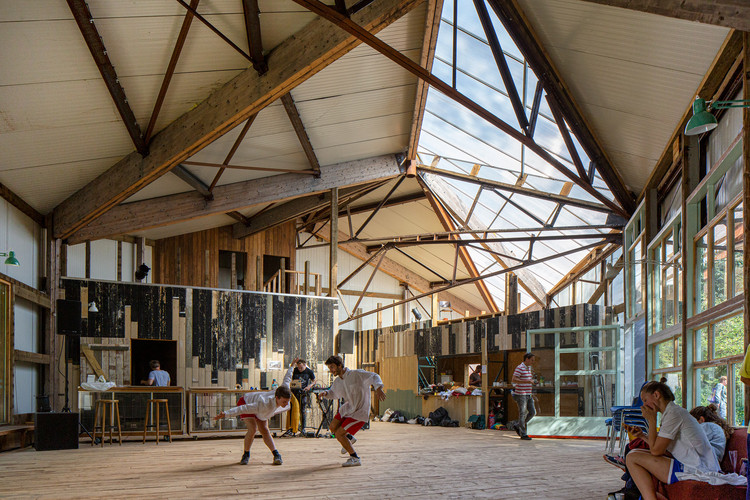
Like natural systems, great architecture is the product of circular processes. For Jan Jongert, a founding partner and architect at Superuse Studios, sustainable design is rooted in a continuous cycle of creation and recreation, use and reuse. Viewing re-use as a circular design strategy, the studio is developing strategies for cities to connect different flows and integrate these systems into the existing urban environment.
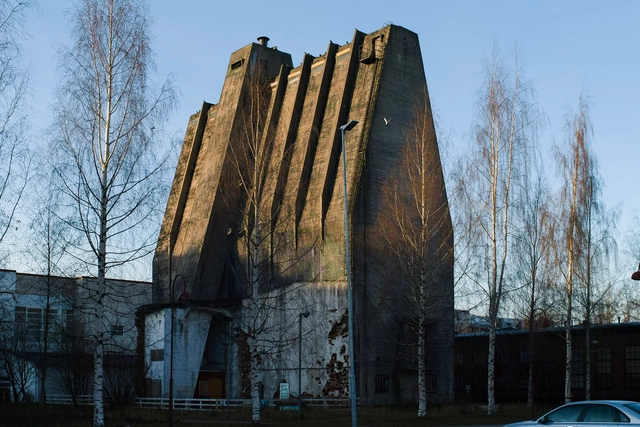
Skene Catling de la Peña and Factum Foundation are transforming Alvar Aalto’s iconic wood chip Silo into a research Centre promoting architectural preservation and re-use. The AALTOSIILO, a cathedral-like concrete structure “will become a point of focus for digitizing and communicating the importance of the industrial architecture of the north and – in turn - the impact industry has had on the environment”.
General view of the revitalised industrial building sitting in a landscaped garden. Image Courtesy of Foster + Partners
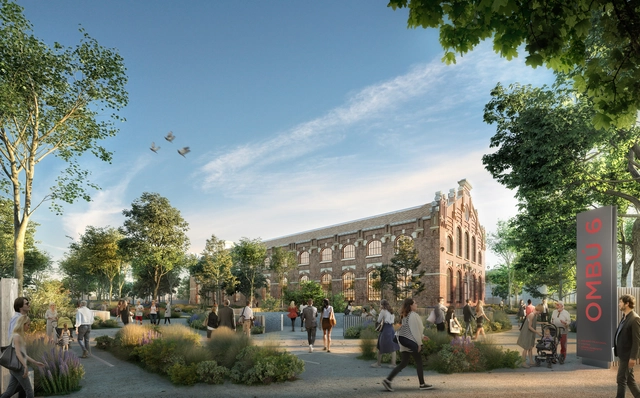
Foster + Partners is leading massive refurbishment works on a historic building in Madrid. The renovation project that will put in place an office building for Acciona, seeks to revitalize an abandoned old industrial building built in 1905, generating over 10,000 square-meters of new spaces.














.jpg?1623397042&format=webp&width=640&height=580)
.jpg?1623397062 "Courtesy of Skidmore Owings & Merrill")
.jpg?1623397056 "Courtesy of Skidmore Owings & Merrill")
.jpg?1623397051 "Courtesy of Skidmore Owings & Merrill")
.jpg?1623397042)