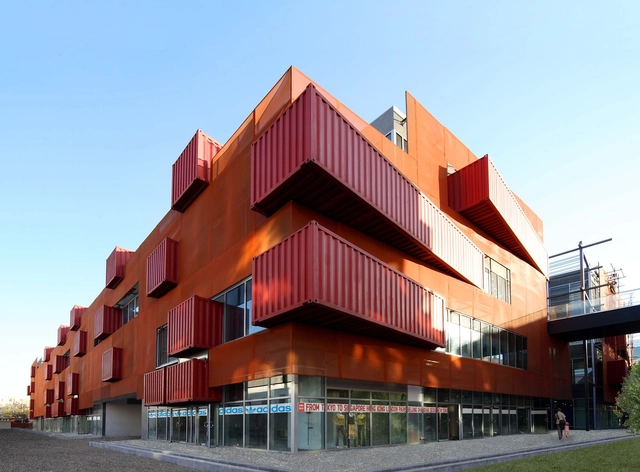
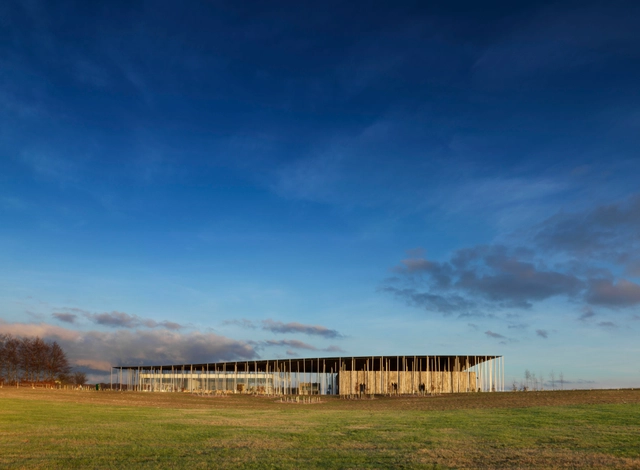
The Australian Institute of Architects' International Area Committee Jury has announced the recipients of its 2014 international awards, given to projects completed by Australian architects overseas. The biggest winners on the night were Denton Corker Marshall, who in addition to winning the Award for Public Architecture with their Stonehenge Visitor Centre also received commendations for public architecture and commercial architecture.
BVN Donovan Hill dominated in the field of interior architecture, scooping both the award and a commendation in the category. Kerry Hill Architects also achieved the same result in the residential category. Read on after the break for the full list of awards and commendations.
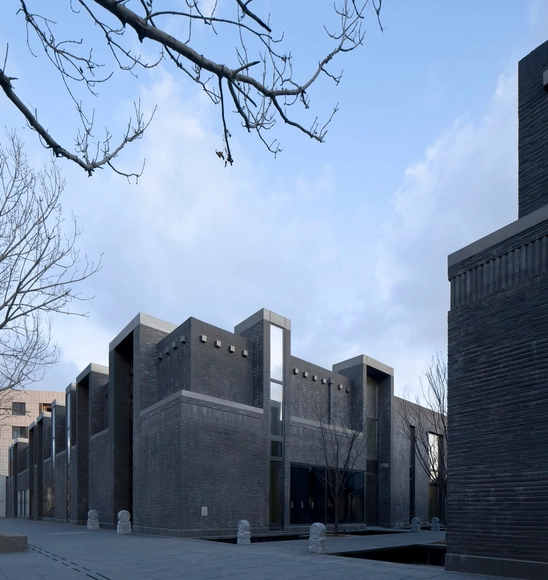
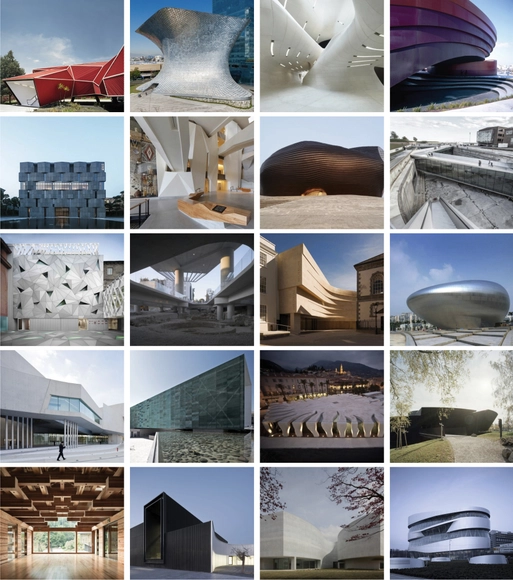
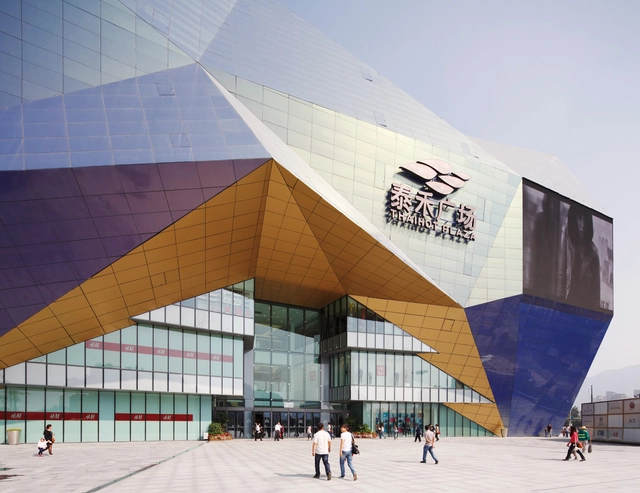
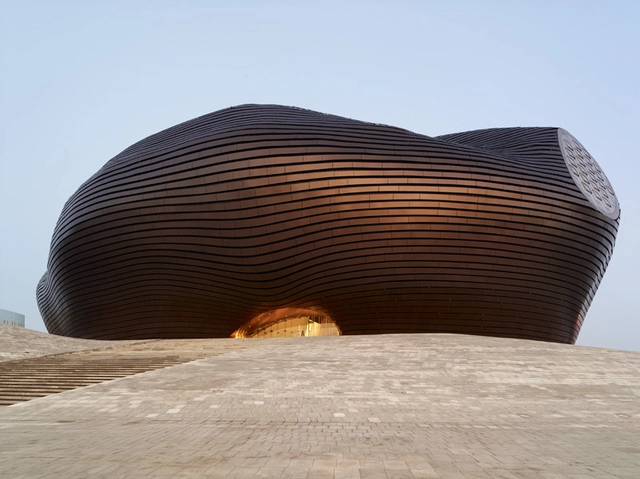
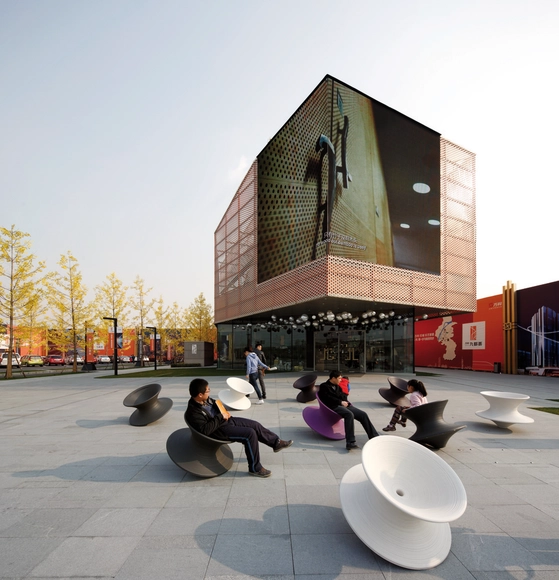
"I have to believe that one day, the only people doing architecture in China will be Chinese architects. That’s one trend I watch, because I’m not a Chinese architect!" This is the declaration Ben Woods, an American architect living and working in China, made during a recent interview with Forbes. In honour of his prediction, work, and personal commitment to never design a skyscraper, we've rounded up a list of fitting cultural projects in China by Chinese architects. See Pritzker Prize winner Wang Shu's Ningbo Historic Museum, MAD Architect's Ordos Art & City Museum, the Jinchang Cultural Centre, the Oct Design Museum, and the Spiral Gallery II. For more information on this post's inspiration, check out the full interview and article here.
I look into myself, trying to express myself. I think sometimes maybe you have an idea from a dream. It sounds ridiculous but you draw something out of your dream. Where does this dream come from? It must somehow relate to some situation. So what I'm interested in is to keep discovering what is really inside of me. I'm not a genius that from the first moment I already know what I want. - Ma Yansong -
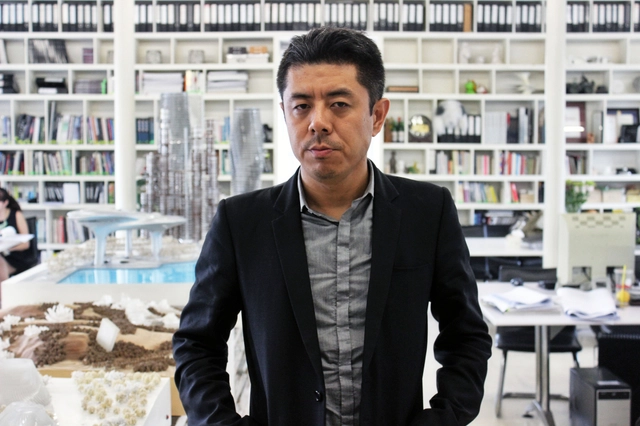
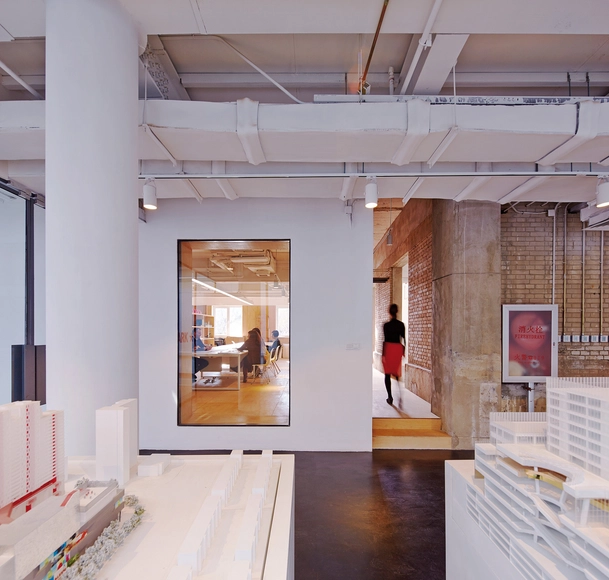
Beixinqiao district, in Beijing, is changing fast: the ancient urban tissue is being demolished as new high-rises are growing.Located in this environment, Ma Yansong’s office sits within an old and anonymous construction. In contrast to its exterior, the inside is characterized by wood, white walls and plants that transform the place into a sophisticated environment.International young architects are busy modeling new organic-shaped buildings on the other side of the world; meanwhile a golden fish swims in the eternal loop of the “fish tank” in the centre of the room.
In the following interview, Ma Yansong explains contemporary cities as environments that are out-of-scale with nature. He believes a new approach must be used, one that breaks the monotonous “chessboard” of contemporary Urban China and re-establishes the balance between human beings and the natural world.
In this article originally published by Metropolis Magazine as "Urban Hopes, Urban Dreams", Samuel Medina reviews a new book on the work of Steven Holl in China. Focusing on five major projects, the book places Holl's work in the wider context of his urbanistic influences - including ideas from his own early paper architecture that are just now resurfacing.
Steven Holl is the rare architect whose concepts are equally known as his buildings. Chalk that up to Holl’s prolific output, in both buildings and monographs, and his knack for branding his ideas. Urban Hopes: Made in China (Lars Müller, 2014), a condensed reader on Holl's latest work in China, is the latest in a stream of small books that have continually repackaged the architect's growing body of work.
Anchoring and Intertwining appeared in 1996 and expounded on architectural themes and spatial notions only partially evinced by his work up until that time. In both, the buildings were few and far between, scattered between pages imprinted with “paper architecture,” the primary outlet for Holl’s creative energies in the prior decades since his move to New York in 1976. These and more titles were followed up by Parallax in 2000, a blend of philosophical, scientific, and poetic references that invest the architecture with the aura of the Gesamtkunstwerk. Holl’s idea of “porosity” made its debut here, if prematurely, where it was applied rather literally to Simmons Hall at MIT and its sponge-like facade. It wasn’t until a few years later, when the architect first got his feet wet in China, that the concept would be baptised as a core tenet of 21st-century urban design. 2009’s Urbanisms advances as much, while further recapitulating the big ideas of the previous book installments.
Read on after the break for the review of Urban Hopes
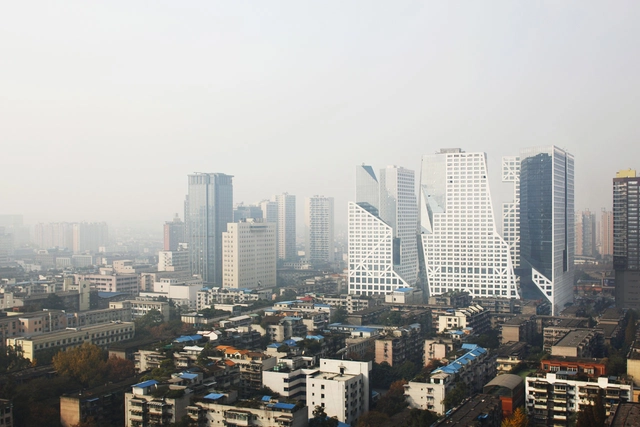
Four years after breaking ground, Steven Holl Architects’ have completed the Sliced Porosity Block in the heart of Chengdu, China. Located at the intersection of the first Ring Road and Ren Ming Nam Road, visitors are able to access the three million square foot complex without using private transport means as it is directly connected to Chengdu’s public transportation system. Stimulating a micro urbanism, the five towers offer offices, serviced apartments, retail, a hotel, cafes, and restaurants. Rather than being designed as object-icon skyscrapers, the Sliced Porosity Block identifies itself as a metropolitan public space with large plazas and a hybrid of different functions.
More on Steven Holl’s Sliced Porosity Block after the break.














.jpg?1370581135)
.jpg?1370580957&format=webp&width=230&height=230&crop=true)
.jpg?1370581077&format=webp&width=230&height=230&crop=true)
.jpg?1370581153&format=webp&width=230&height=230&crop=true)
.jpg?1370581189&format=webp&width=230&height=230&crop=true)
.jpg?1370581135)