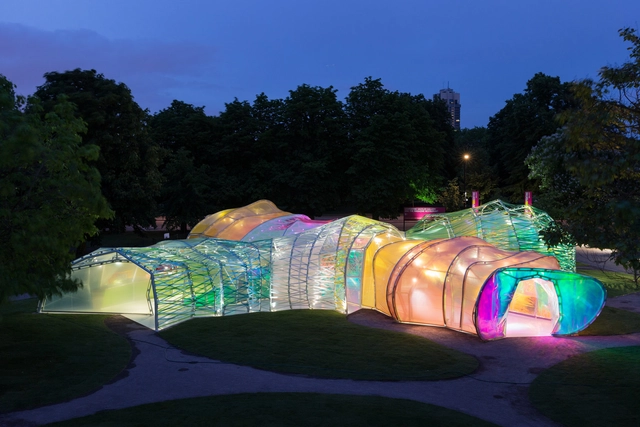
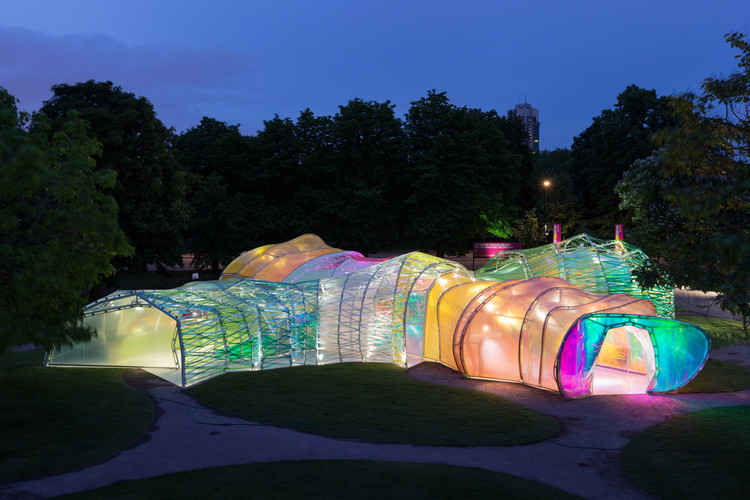
With the opening ceremony of SelgasCano's Serpentine Gallery pavilion earlier today, the Serpentine Gallery has released a set of images by Iwan Baan, capturing the riotous color explosion delivered by the pavilion's ETFE wrapping. Always one of London's most popular architectural attractions over the summer, this year marks the pavilion's 15th anniversary, and will be on display until October 18th.
Read on after the break for more images - and stay tuned to this posts for updates throughout the day!
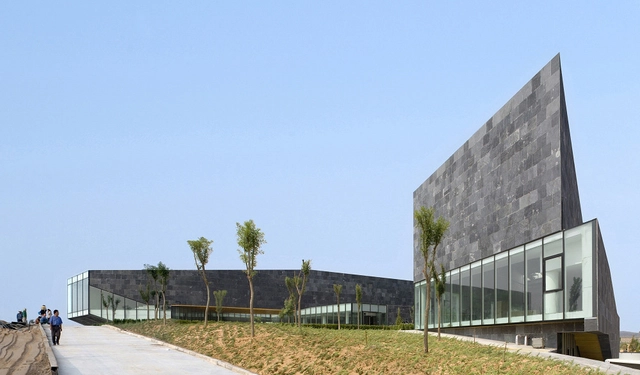
"In China there’s history but there’s no existing context. All the contexts are made for the future. Most of the designs, most of the buildings are only designed for a planning scenario lasting five or ten years. And in that case, first of all, you need to accommodate functions for the future, for the planned purpose. I’d say even though the current project is in a very rural area, it could soon, let’s say in just one or two years, become a populated area. So that’s a different challenge here when you are designing in China." - Xu Tian Tian, Beijing 2013
Spontaneous Artist Community
Xu Tian Tian: What condition is Songzhuang in, in general? I haven’t been there for quite a while.
Pier Alessio Rizzardi:Songzhuang is developing very rapidly, everything was under construction, and especially in the areas around your three projects the residential buildings were growing fast… I must say that all the projects you designed [Songzhuang Artists’ Residence, Museum and Cultural Centre] were extremely damaged.
With the award of the $100,000 Marcus Prize to Sou Fujimoto in 2013, graduate students at the University of Wisconsin-Milwaukee’s School of Architecture were offered the rare opportunity to learn from one of Japan's most respected architectural practitioners. Through a semester-long connection to the studio - which he led alongside University of Wisconsin-Milwaukee Associate Professor Mo Zell - Fujimoto and his students have realized a small architectural installation on an unused lot in Milwaukee's East side entitled faBRICK.
In this interview conducted in Tokyo last year, University of Wisconsin-Milwaukee student Robert Guertin speaks with Fujimoto about the ideas and themes of his work. In an attempt to shed light on the influence he had in the design of faBRICK, his answers are presented alongside images of the resulting installation.
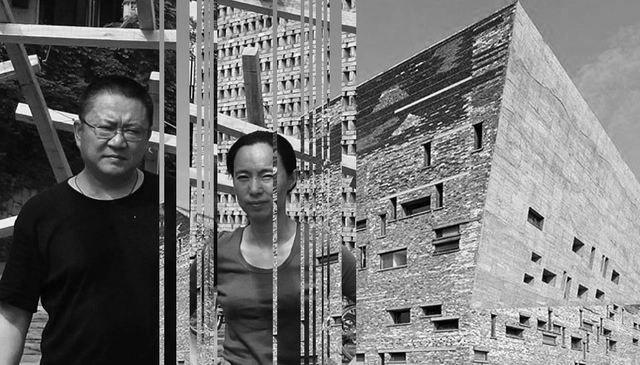
Wang Shu and Lu Wenyu of Amateur Architecture Studio are known for their distinctly contextual attitudes towards design which prize tradition and timelessness above anything else. In many cases, their use of materials is governed by local availability of salvaged building elements. Tiles, in particular, represent a material used repeatedly by Amateur Architecture studio and for Wang Shu, who won the 2012 Pritzker Prize, they offer a political as well as an architectural message.
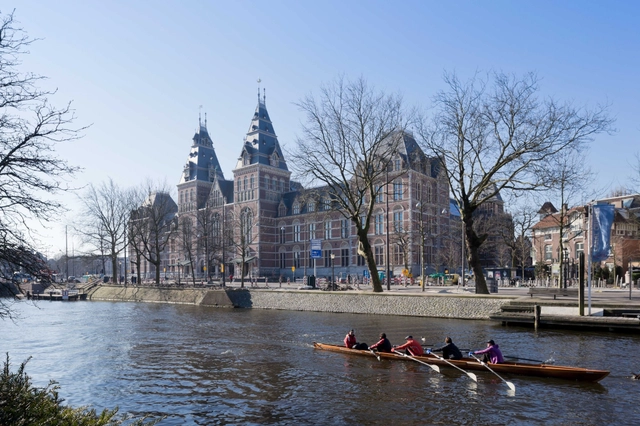
Amsterdam's Rijksmuseum, which was comprehensively restored and reimagined by Spanish practice Cruz y Ortizover the course of a decade, has been named as the 2015 European Museum of the Year (EMYA) by the European Museum Forum. Lauded by the jury as "a great museum, at the height of its powers, providing a rich experience to the public, and a socially aware outreach programme for visitors of all ages," its success has also been in the museum's "ambition to 'reach every child in the Netherlands by the age of twelve'" - an aspiration which has been praised as "notable, impressive and achievable." The coveted award has previously gone to Zaha Hadid Architects' Riverside Museum in Glasgow in 2013.
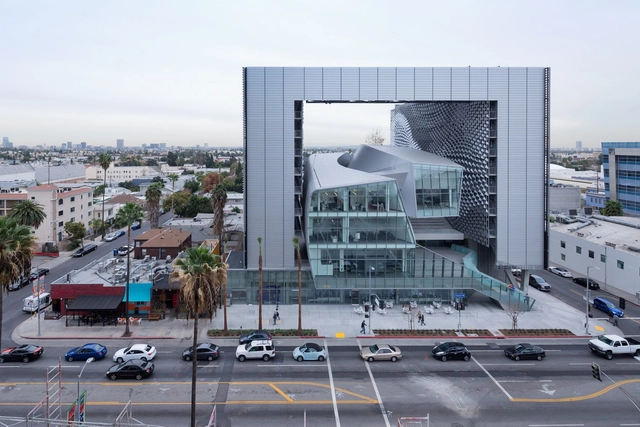
The AIA has announced four projects as the winners of its inaugural Technology in Architectural Practice (TAP) Innovation Awards, with Morphosis Architects' Emerson College Los Angeles taking away the headline "Stellar Architecture" award. Started in 2005, the TAP Knowledge Community has led efforts to acknowledge and disseminate the best use of Building Information Modeling (BIM) technologies, and the AIA hopes that the new TAP Innovation Award will "enliven the discourse on how these innovations can advance the profession and practice of architecture and further the mission of the Institute."
The American Institute of Architects (AIA) and the Africa Union of Architects (AUA) has signed a cooperative agreement to "share practice tools and resources, creating a framework for American and African architects to work collaboratively in achieving development and infrastructure goals in Africa." The agreement articulates their mutual interests to advance the “Africa Sustainability Campaign” in spirit of the 2014 U.S.-Africa Leaders’ Summit in Washington DC.
"I am thrilled to have the opportunity to reinvigorate and formalize the AIA's relationship with our colleagues in Africa,” said AIA 2015 President, Elizabeth Chu Richter, FAIA. “We look forward to increased knowledge sharing on topics such as health and resilience which are critical to the sustainable future of our planet."
We will be publishing Nikos Salingaros’ book, Unified Architectural Theory, in a series of installments, making it digitally, freely available for students and architects around the world. In Chapter 12, Salingaros concludes his discussion of the physiological and psychological effects of architecture, demonstrating how ornament can lead to an enriching human environment. If you missed them, make sure to read the previous installments here.
Ornament and Human Intelligence
Ornament and function go together. There is no structure in nature that can be classified as pure ornament without function. In traditional architecture, which was more tied to nature, such a separation never existed. The breakdown of the human adaptation of architecture can be traced to the forced conceptual separation of ornament from function, a relatively recent occurrence in human history. It is only in 20th-century architectural discourse that people began to think of ornament as separate from function: see “How Modernism Got Square” (Mehaffy & Salingaros, 2013).
Deemed “the biggest architectural awards programme in the world,” the World Architecture Festival (WAF) annually awards and recognizes inspiring and innovative built projects from around the globe. The awards have been held over the past seven years, honoring buildings across 30 categories and ultimately selecting the World Building of the Year. From Grafton Architects' School of Economics at the Universita Luigi Bocconi — the first Building of the Year awarded in 2008 — to A21 Studio’s The Chapel — the most recent winner — the awarded projects have included everything from a chapel to an art gallery and even a public garden, spanning the world from South Africa to Vietnam, Italy and Spain.
This year WAF will be held from November 4-6, featuring three days of conferences, exhibitions and lectures in addition to the awards ceremony. As the 2015 award ceremony nears closer we look back at the World Building of the Year winners from the past seven years. See who has taken home the award after the break and learn how to submit your project here. Projects can be submitted for consideration until May 22nd. Use the code ARCHDAILY10 to receive a discount.
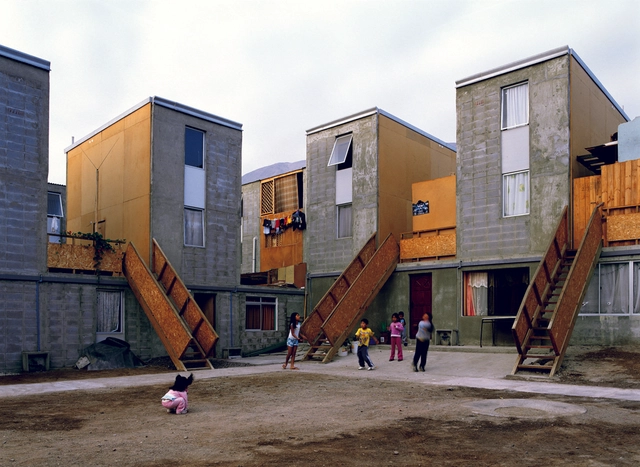
Justin McGuirk’s Radical Cities: Across Latin America in Search of a New Architectureshould be required reading for anyone looking for ways out of the bleak social inequality we’re stuck in. There were 40 million more slum dwellers worldwide in 2012 than there were in 2010, according to the UN. Private markets clearly can’t provide universal housing in any way approaching efficiency, and governments are often hostile to the poor. The only alternative is collective action at the grassroots level, and I’ve never read more vivid reporting on the subject.
https://www.archdaily.com/629354/radical-cities-radical-solutions-justin-mcguirk-s-book-finds-opportunities-in-unexpected-placesJoshua K Leon
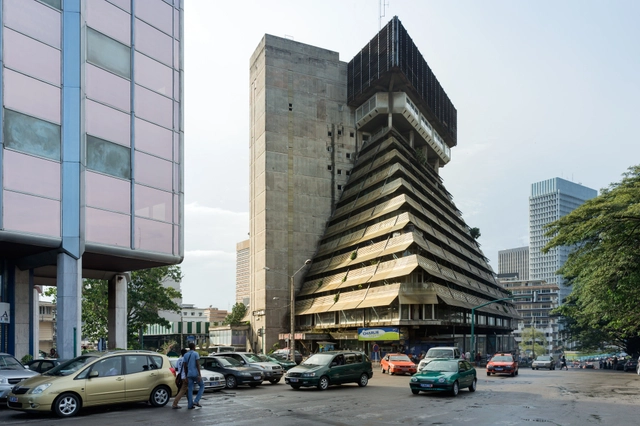
On display until May 31st, the Vitra Design Museum's "Architecture of Independence – African Modernism" exhibition displays a cross-section of Africa's experimental architecture from the post-colonial years of the 1960s. Covering more than 80 projects in Kenya, Zambia, Ghana, Côte d’Ivoire, and Senegal, the exhibition aims to shed light on this little-known period of architecture history, and challenge Western notions of African countries. In this interview, originally published by Metropolis Magazine as "Q&A: Curator Manuel Herz on Africa's 'Grandiose' Modern Architecture," Curator Manuel Herz reveals the origins of the exhibition and shares his thoughts light on some of the buildings which the exhibition highlights.
Clare Dowdy: What triggered your interest in the post-colonial architecture of Central and Sub-Saharan Africa?
Manuel Herz: I was in Nairobi a couple of times around 2007 and noticed the architecture of that period was of outstanding quality but virtually unknown outside Kenya. This triggered an interest to research the whole of Sub-Saharan Africa. I found that the political urgency that existed at the time of the independence process is embodied in the architecture.
World Expos have long been important in advancing architectural innovation and discourse. Many of our most beloved monuments were designed and constructed specifically for world’s fairs, only to remain as iconic fixtures in the cities that host them. But what is it about Expos that seem to create such lasting architectural landmarks, and is this still the case today? Throughout history, each new Expo offered architects an opportunity to present radical ideas and use these events as a creative laboratory for testing bold innovations in design and building technology. World’s fairs inevitably encourage competition, with every country striving to put their best foot forward at almost any cost. This carte blanche of sorts allows architects to eschew many of the programmatic constraints of everyday commissions and concentrate on expressing ideas in their purest form. Many masterworks such as Mies van der Rohe’s German Pavilion (better known as the Barcelona Pavilion) for the 1929 Barcelona International Exposition are so wholeheartedly devoted to their conceptual approach that they could only be possible in the context of an Exposition pavilion.
To celebrate the opening of Expo Milano 2015 tomorrow, we’ve rounded up a few of history’s most noteworthy World Expositions to take a closer look at their impact on architectural development.
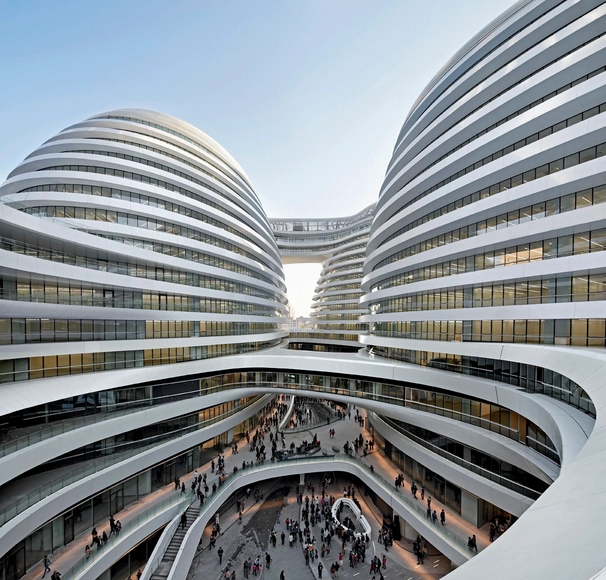
Last week Patrik Schumacher, director at Zaha Hadid Architects and the practice's frontman in the field of architectural theory, took once again to Facebook to disseminate his ideas - this time arguing that "the denunciation of architectural icons and stars is superficial and ignorant." In the post, Schumacher lamented the default position of the architectural media which he believes sees success and reputation as "a red cloth and occasion to knock down icons," going on to outline his beliefs on why stars and icons are useful and even inevitable mechanisms of architectural culture.
Schumacher has made headlines via Facebook before, with a post last year in which he argued for an end to the "moralizing political correctness" that has led to the popularity of socially-conscious design - a post which attracted almost universaloutrage from architects, critics and social media users of all stripes. However this latest post had a very different feel; many people, myself included, seemed to find themselves at least partially agreeing with Schumacher. After all, at the most basic level he was asking for designs to each be judged on their individual merits - what's not to like?