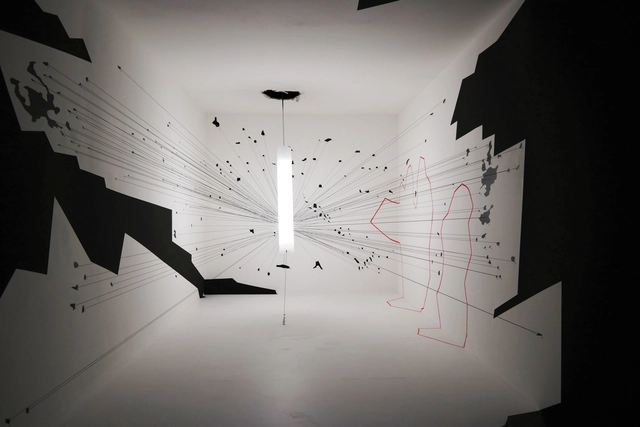
Forensic Architecture has been crowned overall winner of the Beazley Designs of the Year 2018, with their exhibition “Counter Investigations.” The firm has undertaken sterling work in recent years, uncovering miscarriages of justice and international war crimes through architectural analysis of imagery, from official news, satellite footage, and crowdsourced information.
The spatial investigation group, based in Goldsmith University London, is currently nominated for the 2018 Turner Prize. The interdisciplinary group of architects, filmmakers, journalists, lawyers, and scientists have devoted their energy to investigating state and corporate violations worldwide.
Surely every architect has wondered how the fluid but complex forms of the architecture of Zaha Hadid Architects are brought to reality. And it's beautiful to see how an initial conceptual idea –probably drawn as a quick sketch– materializes in precise and detailed planimetric drawings.
We have compiled a series of construction details from 9 projects developed by Zaha Hadid Architects that give insight into her distinct style and approach, showing us that, with a little ingenuity and a lot of expertise, even the most impossible-seeming dreams can be built.
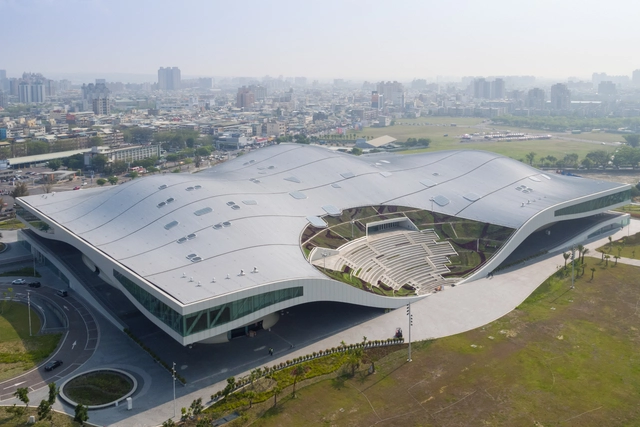
Opened on October 13th 2018, the scheme is set across a subtropical park in the southern Taiwanese city of Kaohsiung, occupying a former military training base to symbolize the city’s transition from a major international harbor into a rich, diverse, cultural hub, connecting local and international artistic talent.
If the surest sign of summer in London is the appearance of a new pavilion in front of the Serpentine Gallery, then it’s perhaps fair to say that summer is over once the pavilion is taken down. The installations have gained prominence since its inaugural edition in 2000, acting as a kind of exclusive honor and indication of talent for those chosen to present; celebrated names from the past names include Zaha Hadid, Rem Koolhaas, and Olafur Eliasson.
Recently, a new trend in architecture has emerged: Several of the latest projects highlighted by ArchDaily, including some winners in the Building of the Year Awards, are using permeable facades as an attractive option for their exterior finishes.
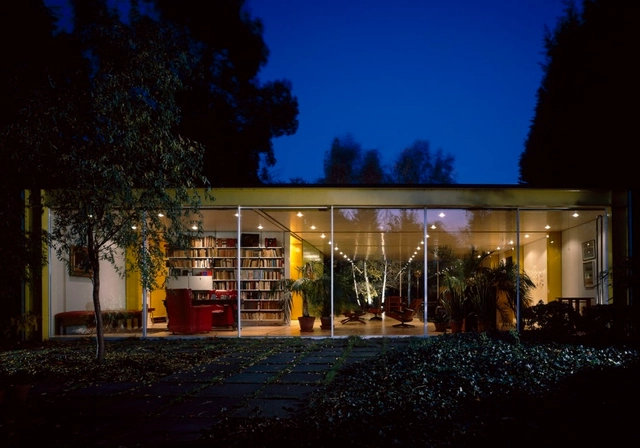
Harvard University Graduate School of Design has announced the 2019 Richard Rogers Fellowship cycle. Open to accomplished practitioners and scholars working in fields related to the built environment, the research-focused residency program is based in London at the Wimbledon House, designed by Lord Richard Rogers in the late 1960s. Fellows have researched a diverse series of topics, including examinations of public and affordable housing; how food and cooking transform cities; and citizen-driven urban regeneration initiatives, among others.
A coalition of 19 U.S. mayors have joined together with C40, a group dedicated to climate action. The coalition has proposed a plan to ensure that all new buildings be net-zero by 2030. The cities are joining forces with the World Green Building Council (WorldGBC) to achieve their emissions goals. All cities in C40 have signed the pledge to ensure new buildings will be required to produce as much energy as they consume by 2030. The initiative is part of a larger plan to make all buildings net-zero by 2050.
Time Magazine’s list of the World’s Greatest Places 2018 celebrates 100 destinations to visit, stay, eat, and drink from around the world. Chosen by Time’s global team of editors and correspondents, the contenders have been evaluated on quality, originality, innovation, sustainability, and influence.
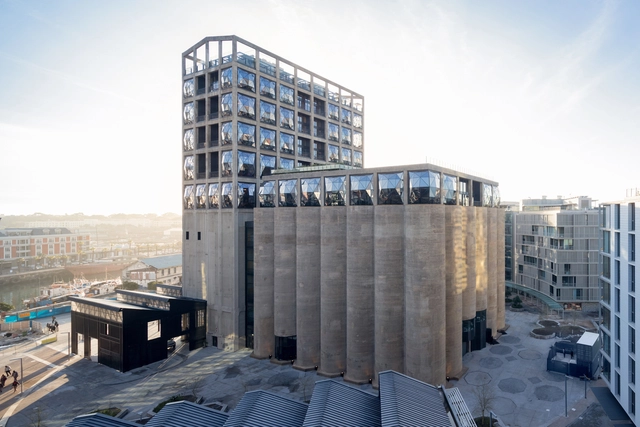
The list features many architectural delights young and old, designed by famous architects past and present. Ranging from a treehouse in Sweden to a soaring art museum in South Africa, the projects are united by their architectural excellence, worthy of exploration by both architects and the general public.
https://www.archdaily.com/901009/22-of-the-worlds-greatest-architecture-projects-selected-by-time-magazineNiall Patrick Walsh
Faced with the challenge of designing homes on terrains with steep slopes - or in compact urban contexts that do not allow much variation in plan - several architects have experimented and proposed split-level homes to enhance the use of space, allowing, among other things, interesting visual perspectives.
These variations can be seen in numerous examples published on our site. Below, we have selected 50 examples that can help you in your next project.
A collection of stones piled one on top of the other, dry stone is an iconic building method found just nearly everywhere in the world. Relying solely on an age-old craft to create sturdy, reliable structures and characterised by its rustic, interlocking shapes, the technique has deep roots that stretch back even before the invention of the wheel. Its principles are simple: stack the stones to create a unified, load-bearing wall. But the efficient, long-lasting results, coupled with the technique’s cultural significance, have lead to continued use and updated interpretations all the way to contemporary architecture today.
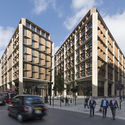
Open House London 2018 has officially released the list of over 800 buildings open to the public this September. Now in its 27th edition, the weekend-long festival offers free guided tours and open doors to buildings and architecture across the city. This year, a range of exciting architecture will be featured, including the new US Embassy by KieranTimberlake, Maggie's Barts by Steven Holl Architects, and Bloomberg European Headquarters by Foster + Partners, the world's most sustainable office building. Find out our list of the top 10 must-see buildings to discover at this year's Open House.
It is rare for a father and son to share the same birthday. Even rarer is it for such a duo to work in the same profession; rarer still for them both to achieve international success in their respective careers. This, however, is the story of Eliel and Eero Saarinen, the Finnish-American architects whose combined portfolio tells of the development of modernist architectural thought in the United States. From Eliel’s Art Nouveau-inspired Finnish buildings and modernist urban planning to Eero’s International Style offices and neo-futurist structures, the father-son duo produced a matchless body of work culminating in two individual AIA Gold Medals.
This week, colorful projects are here to steal the show. Few architects have dared to use color in their works, however, when done so the results can be incredible. Here is a selection of 15 images from prominent photographers such as Gregori Civera, Julien Lanoo and Subliminal Image that show us the huge potential of color.
In a new interview with Louisiana Channel, Ingels steps back from the pragmatism of individual projects, and instead reflects on his view of New York, from multiculturalism and inequality to regeneration and skyscrapers.
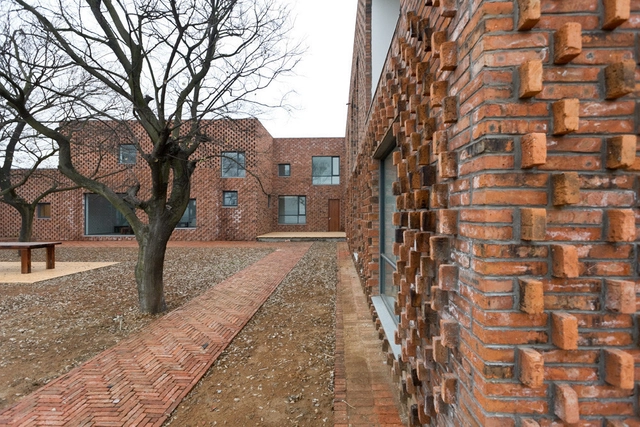
Bricks have historically been the cornerstone of a wide array of living spaces, providing everything from enclosure and protection to the framework for letting in sunlight. Whether it be for their economic or aesthetic aspects in both color and texture, the use of brick can be glimpsed in cities the world over.
In spite of its practicality and widespread use, brick does present a challenge for architects and builders. Everything from humidity, wind, sun, mold, and time leaves its mark on brick, gradually wearing down its practical and aesthetic properties.
But fear not, in the following article we'll give you our tips on how to best treat and care for brick.
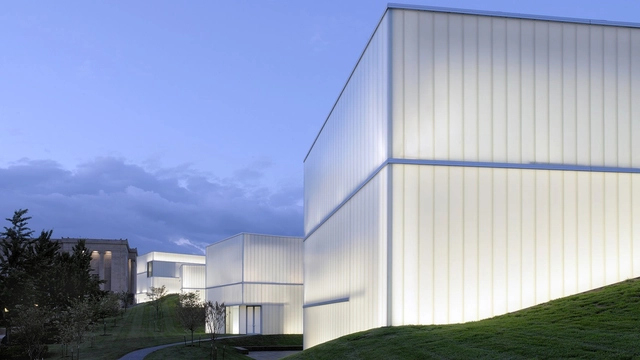
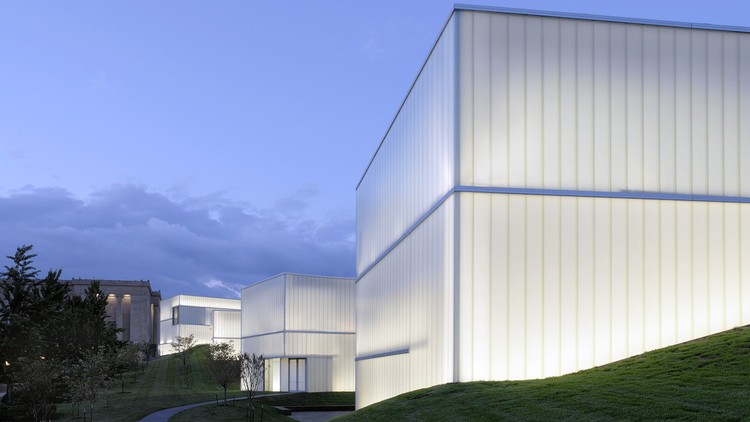
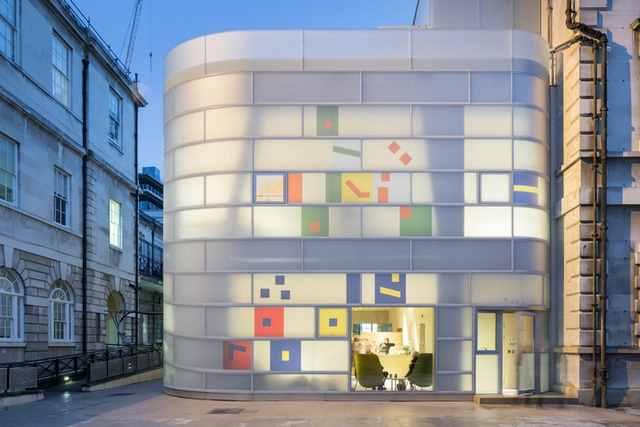
Recurrently we see how architects opt for translucent facades to create the envelopes of their buildings, promoting the entry of a large amount of natural light, while simultaneously controlling it during the day. Illuminated during the night, many of these projects can be seen in the dark, appearing as lanterns or lighthouses for their neighbors and community. Being exposed to changing conditions – day or night – to choose the right material, it's necessary to study in detail the orientation and location of the building, the pre-existing context, and the configuration of the interior spaces.
We present a system of glass panels that allow buildings with this type of façade –spanning from floor to ceiling without interruptions – with minimal frames and different colors, textures, thermal and acoustic performances.




.jpg?1540932376&format=webp&width=640&height=580)

.jpg?1540930206 "MAXXI Museum / Zaha Hadid Architects. Image © Iwan Baan")


.jpg?1540932376)



.jpg?1539856634&format=webp&width=640&height=580)


.jpg?1539856634)












_MWAA.jpg?1534522436&format=webp&width=230&height=230&crop=true)

_Ezra_Stoller.jpg?1534522458&format=webp&width=230&height=230&crop=true)