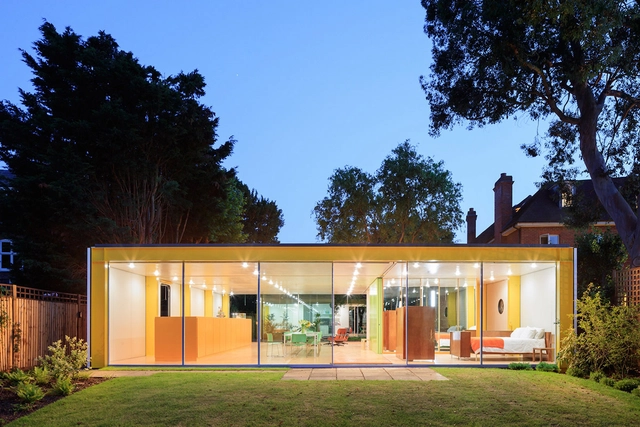
Harvard University Graduate School of Design has announced the 2020 Richard Rogers Fellowship cycle. Open to accomplished practitioners and scholars working in fields related to the built environment, the research-focused residency program is based in London at the Wimbledon House, designed by Lord Richard Rogers in the late 1960s. Fellows have researched a diverse series of topics, including examinations of public and affordable housing; how food and cooking transform cities; and citizen-driven urban regeneration initiatives, among others.
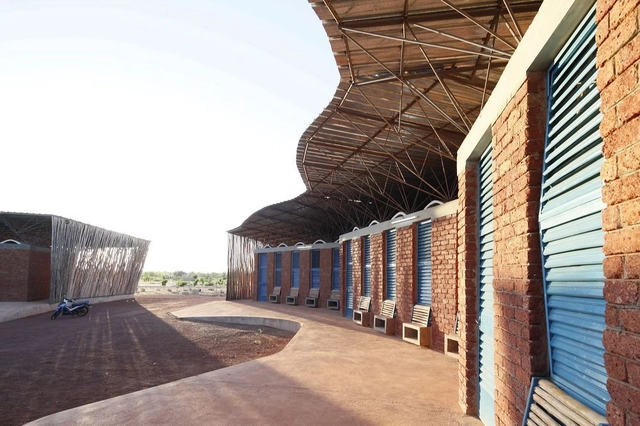
The history and architecture of Burkina Faso is tied to its landscape. As a landlocked country in western Africa, it occupies an extensive plateau with grassy savannas and sparse forests. More than two-thirds of the people live in rural villages, and as such, the country’s modern architecture is the product of ingenuity born from reimagining traditional building materials and techniques.
The Chicago Architecture Biennial has released its cultural agenda for this year’s edition of the international exhibition. Held in the Chicago Cultural Center and all over the city, from the 19th of September 2019 till the 5th of January 2020, this edition under the theme of: ... And Other Such Stories, is going to be curated by the artistic director Yesomi Umolu, the executive director Todd Palmer and co-curated by Sepake Angiama and Paulo Tavares.
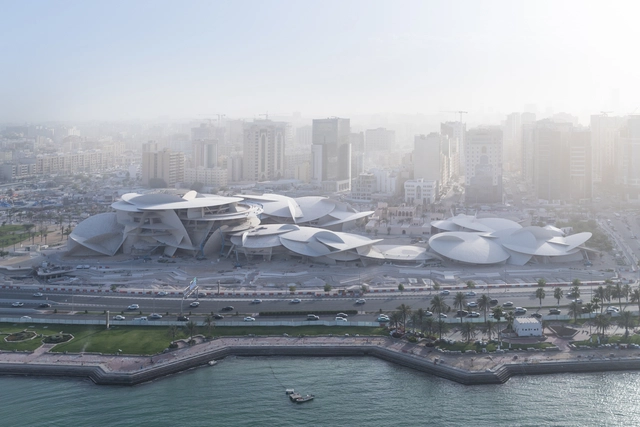
The World's Greatest Places of 2019 list by Time magazine celebrates 100 destinations in the world to visit, stay, eat and drink. Selected by the global team of editors of the publication, the places have been evaluated based on quality, originality, innovation, sustainability and social impact.
We have shortened this list and selected the architectural projects that have previously appeared on ArchDaily. Read on for more details.
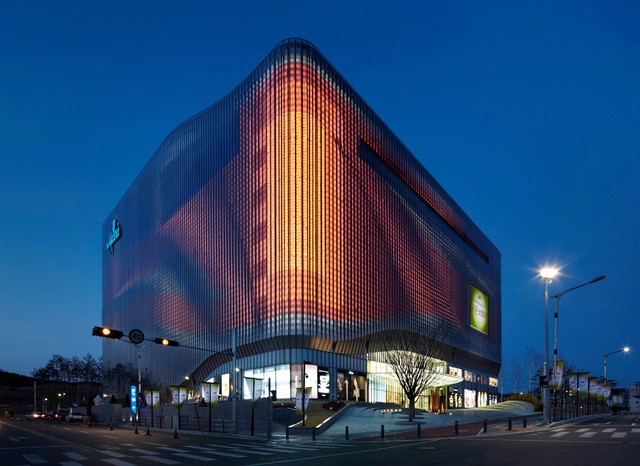
For most of the history of architecture, interesting facades were achieved through materiality or ornamentation. From the elaborately painted friezes of the Parthenon to the glass exteriors of modern skyscrapers, architecture was primarily static, only ‘changing’ as the environment would change and affect the material of the façade in differing ways, be it rain, light, rust, etc.
The winner of the Wolf Prize in 2005 and the Pritzker of 2008, French architect Jean Nouvel has attempted to design each of his projects without any preconceived notions. The result is a variety of projects that, while strikingly different, always demonstrate a delicate play with light and shadow as well as a harmonious balance with their surroundings. It was this diverse approach that led the Pritzker Prize Jury in their citation to characterize Nouvel as primarily "courageous" in his "pursuit of new ideas and his challenge of accepted norms in order to stretch the boundaries of the field."
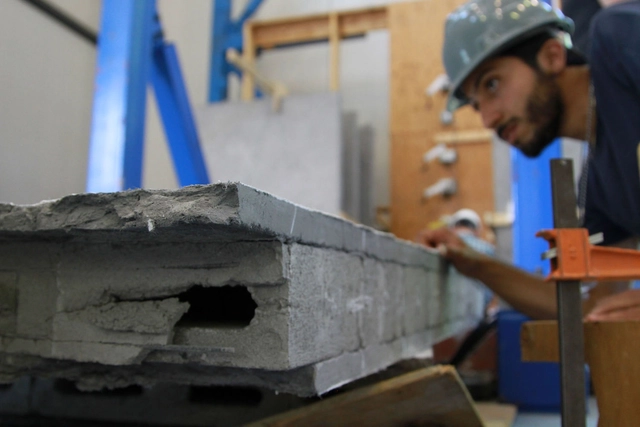
The history of concrete dates back to ancient Rome, approximately 2,000 years ago. The so-called “Roman Concrete” is composed of limestone, volcanic ash, and seawater and it permitted the construction of aqueducts, highways, and temples; many of them still stand to this day. Some time ago, this original mix was discovered to form a mineral called aluminum tobermorite, which gets stronger as time goes by.
The Royal Institute of British Architects has announced the launch of the RIBA International Awards 2020 to recognize architecture outside of the United Kingdom. Now open for entries, the awards are open to any qualified architect in the world for a building outside of the UK, of any size and budget. The biennial awards celebrate buildings that exemplify design innovation, embrace sustainable technologies and deliver meaningful social impact.
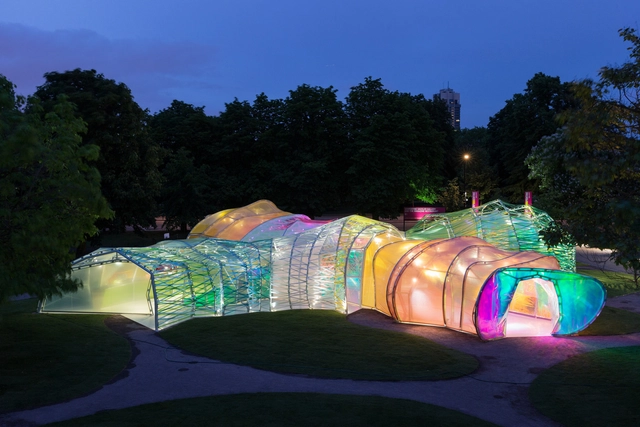
Los Angeles has long been a testing ground for new ideas on architecture and design. Tapping into the city’s creative energy, the cofounders of Second Home, Rohan Silva and Sam Aldenton, are working with Spanish architects Selgascano to finish a new 90,000-square-foot Hollywood outpost. Second Home launched its first office space in east London in 2014 and made its name with smart co-working design featuring bright colors, glass walls and abundant greenery.
In an exclusive interview with ArchDaily, Rohan talks about his background and the early stages of Second Home. Silva touches on the team’s new project, bringing the Serpentine Pavilion to Los Angeles, and what it means to build a creative community through architecture.
As founder of the “Do Tank” firm ELEMENTAL, Chilean architect Alejandro Aravena (born on June 22, 1967) is perhaps the most socially-engaged architect to receive the Pritzker Prize. Far from the usual aesthetically driven approach, Aravena explains that “We don’t think of ourselves as artists. Architects like to build things that are unique. But if something is unique it can’t be repeated, so in terms of it serving many people in many places, the value is close to zero.” [1] For Aravena, the architect’s primary goal is to improve people's way of life by assessing both social needs and human desires, as well as political, economic and environmental issues.
Award-winning architect Tatiana Bilbao spoke in an interview released by Louisiana Channel about her frustrations with today’s concept of sustainability in architecture. Living in Mexico, which Bilbao describes as a “country with no resources,” she states that people are accustomed to not wasting resources and that “sustainability” is a natural part of daily life. “I hate the word ‘sustainability’ because I think it has become a word that can qualify a type of architecture, and for me it should be embedded.”
Mainly known outside of his home country for his design of the 2014 Serpentine Gallery Pavilion, architect Smiljan Radić (born June 21, 1965) is one of the most prominent figures in current Chilean architecture. With a distinctive approach to form, materials, and natural settings, Radić mostly builds small- to medium-sized projects that flirt with the notion of fragility.
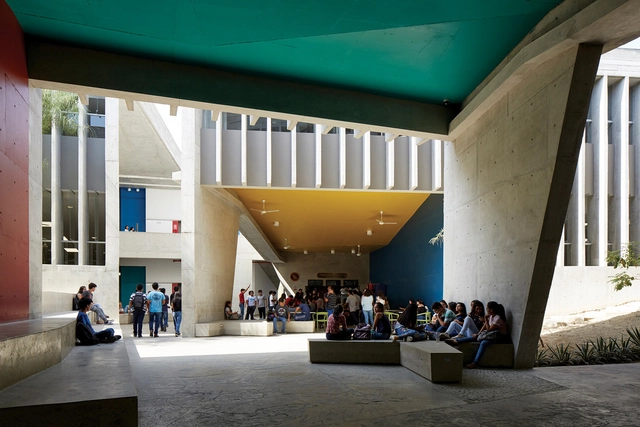
The Royal Architectural Institute of Canada (RAIC) has recently announced the shortlist for the RAIC International Award 2019, highlighting socially-transformative architecture around the world.
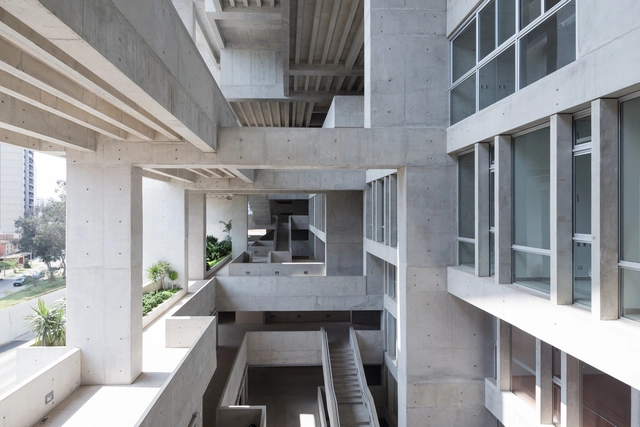
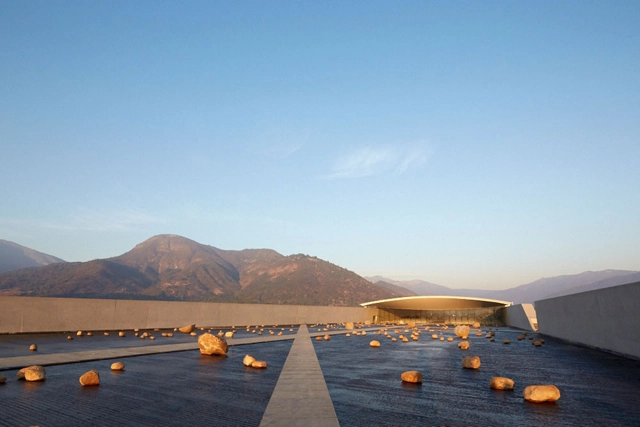
In this edition of the award, the jury was composed of Anne Carrier, Stephen Hodder, Barry Johns, Eva Matsuzaki, Diarmuid Nash, Gilles Saucier and David Covo. Analyzing projects from 12 countries and six continents, the jury selected an educational building in Perú, an artist residency and cultural center in Senegal and a spiritual temple in Chile for the shortlist.
https://www.archdaily.com/918086/buildings-in-chile-peru-and-senegal-are-finalists-for-the-raic-2019-international-awardArchDaily Team
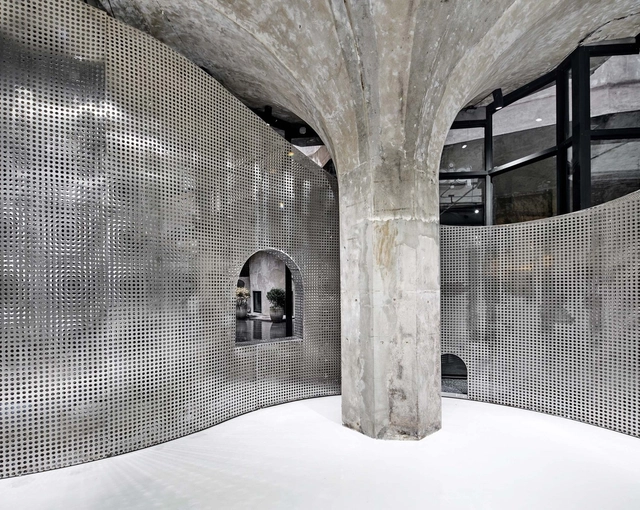
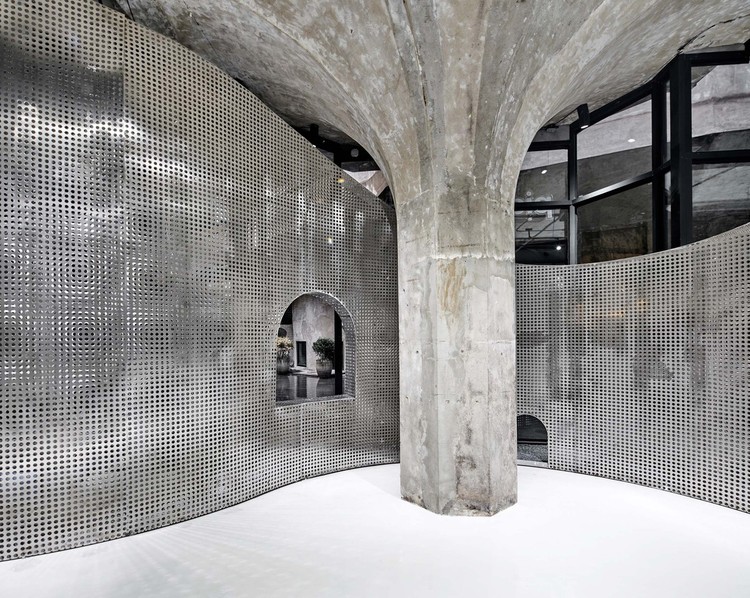
The use of steel in architecture is considered as one of the most innovative construction developments in history, allowing architects to create structures in scales they never thought they could. Fast-forward a few centuries, and steel remains as one of the most crucial materials in architecture. But there is a lot more to the material than just tensile strength and durability, some architects were well-aware of steel's potential and transformed it into lighting fixtures, facades, decorative elements, and finishes.
Here are 15 projects where architects looked beyond steel as structural support and explored its diverse possibilities in architecture.
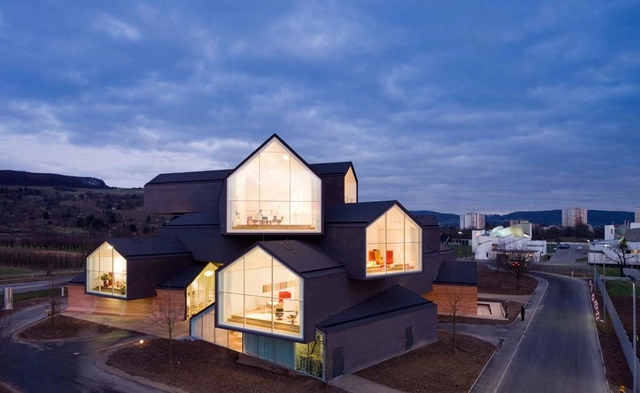
Led by Jacques Herzog (born 19 April 1950) and Pierre de Meuron (born 8 May 1950), most descriptions of Herzog & de Meuron projects are almost paradoxical: in one paragraph they will be praised for their dedication to tradition and vernacular forms, in the next for their thoroughly modern innovation. However, in the hands of Herzog & de Meuron this is no paradox, as the internationally renowned architectural duo combine tradition and innovation in such a way that the two elements actually enhance each other.
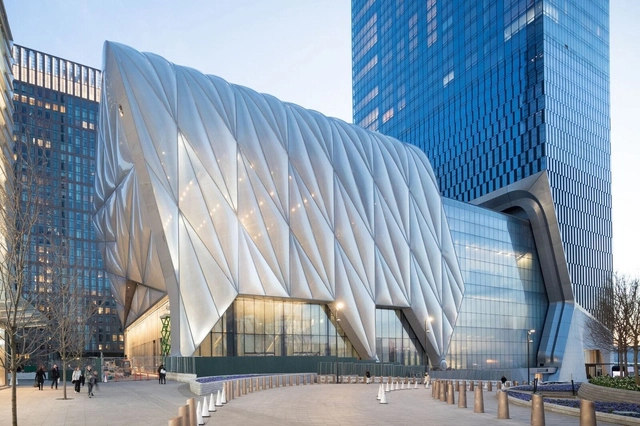
Until recently, the architecture world largely viewed plastic polymers as inferior building materials, handy for wipe-clean kitchen surfaces, but not practical in full-scale building applications. But with technological innovations driving material capabilities forward, polymers are now being taken seriously as a legitimate part of the architect’s pallet. One of the most widely-used of these materials is a fluorine-based plastic known as ETFE (Ethylene tetrafluoroethylene). Brought into the public consciousness thanks to its use on the facade of PTW Architects' Water Cube for the 2008 Beijing Olympics, architects are now realizing the film’s capabilities to express a new aesthetic and replace costlier transparent and translucent materials. Its most recent and spectacular public appearance was on the 120-foot telescopic shell of The Shed, designed by Diller Scofidio + Renfro and Rockwell Group in New York City.









CopyrightsMurrayFredericks.jpg?1439374362&format=webp&width=230&height=230&crop=true)


.jpg?1439321376&format=webp&width=640&height=580)






.jpg?1558680317&format=webp&width=230&height=230&crop=true)




.jpg?1556185607&format=webp&width=230&height=230&crop=true)
.jpg?1556185648&format=webp&width=230&height=230&crop=true)

.jpg?1556185635&format=webp&width=230&height=230&crop=true)