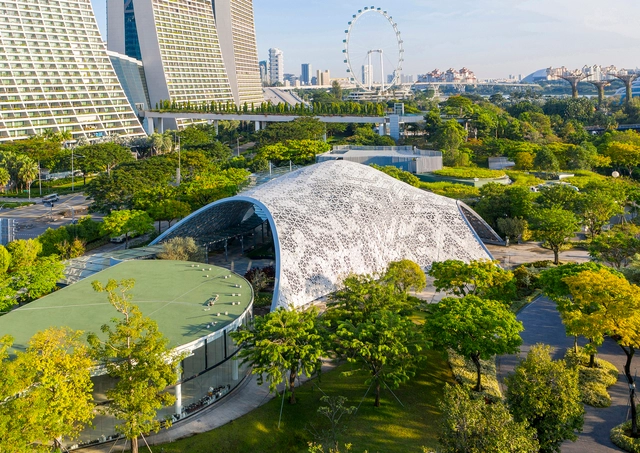
Aiming to collect the most creative and future-adaptive urban design proposals from all around the world, the International Competition For The Urban Design Of Jiuwei International Headquarters Pilot Area in China is officially launched. Registration for the competition is now open for domestic and abroad outstanding design institutions.
Throughout history, the functional essence of bathrooms has remained unchanged due to their design being shaped by biological parameters. Initially, the function of bathrooms was solely related to hygiene and waste management, resulting in the conception of bathrooms as unhealthy and merely utilitarian spaces. This led to their separation from the rest of the spaces designated for coexistence.
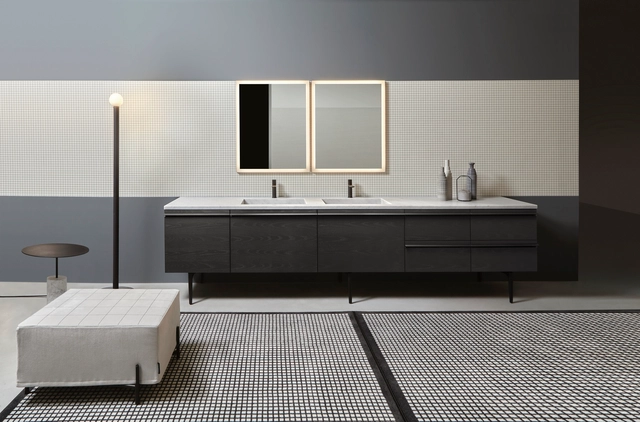
However, the implementation of water supply systems and general drainage networks has vindicated the role of bathrooms in living spaces. They have acquired a primordial role in design proposals for interior design and reflect the user's personality through the combination of colors, coverings, accessories and decorative elements. In the evolution of bathroom design, proposals that stand out for their formal cleanliness, multiple nuances, subtle coexistence of elements, and customization possibilities have emerged. Brands like antoniolupi have developed bathroom furnishings that integrate these proposals and take the limits of design much further by collaborating with renowned architects and designers like Paolo Ulian, Brian Sironi, Luca Galofaro, and Mario Ferrarini, just to mention a few. Continuing with this series of collaborations, Carlo Colombo was in charge of developing Borderline.
https://www.archdaily.com/998711/pushing-the-limits-of-bathroom-furnishing-through-tailor-made-designEnrique Tovar
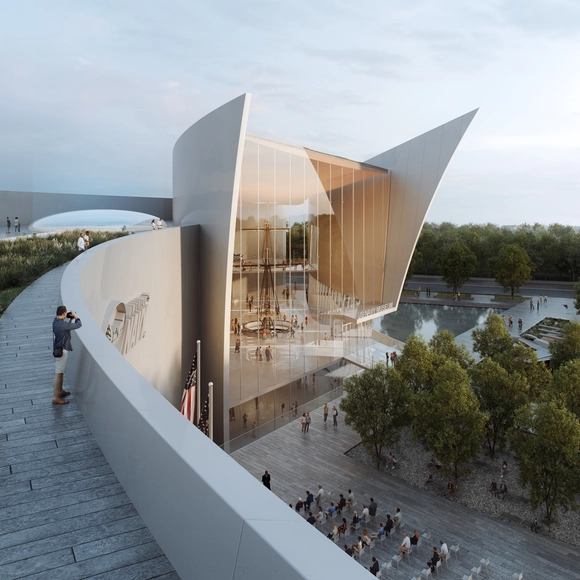
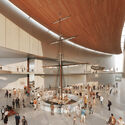
Perkins&Will has been selected as one of the five finalists in the nationwide artistic ideas competition for the design of the new National Museum of the U.S. Navy. The other finalists are DLR Group, Frank Gehry Partners, Quinn Evans, and BIG. Organised by the Naval Heritage History and Command’s (NHHC), the competition’s aim is to create a modern museum for Naval veterans and the public, a new building and ceremonial courtyard to reflect the Navy’s values and legacy. The campus would consist of approximately 270,000 square feet, with 100,000 square feet of gallery space. The Navy’s preferred location for the museum is on a site adjacent to the Washington Navy Yard.
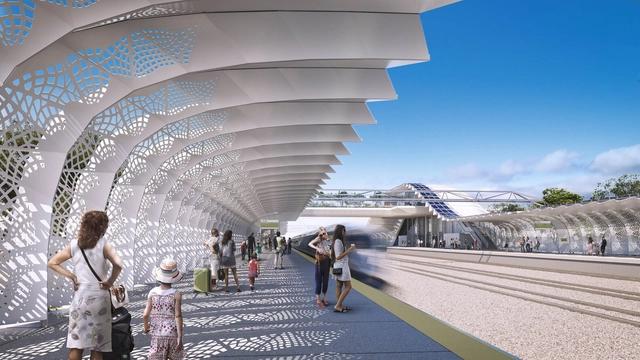
California High Speed Rail. Image Courtesy of Foster + Partners
Foster + Partners and Arup have chosen to work together to design the Merced, Fresno, Kings/Tulare, and Bakersfield stations that will service high-speed train passengers on the first 171-mile leg of California High-Speed train (CA HSR). The Central Valley stations will be the grand entrances to America's first high-speed rail stretch, marking an important step towards providing all Californians with sustainable, carbon-free transportation. Planning, architecture, and engineering for the four new stations, which will serve as design templates for stations planned for the whole 500-mile Los Angeles/Anaheim to San Francisco line, are being done jointly by Foster + Partners and Arup.
The California high-speed rail will connect the state's mega-regions, promote economic growth and a cleaner environment, foster job growth, and conserve agricultural and protected lands. With up to 200 mph speeds, the system can travel from San Francisco to the Los Angeles basin in less than three hours. The Authority is collaborating with regional partners to implement a state-wide rail modernization plan that will spend billions of dollars on local and regional rail lines.
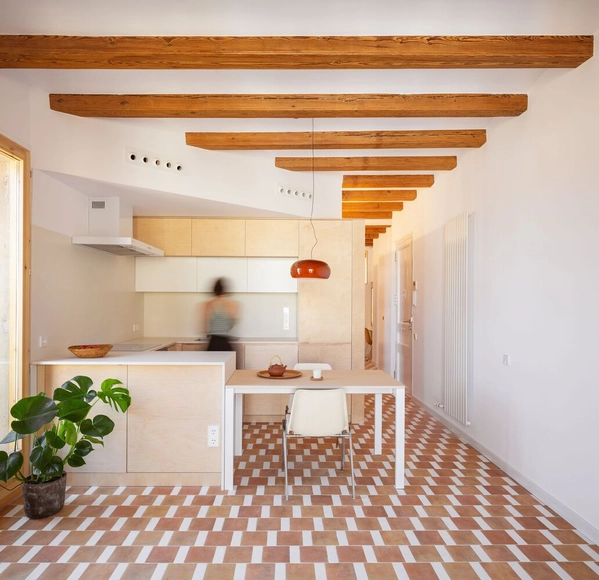
In Spain, the implementation of integrated kitchens in homes has become increasingly common in contemporary architecture. Although there are various configurations and designs that are applied according to the customs and cultures of societies, as we saw in Argentina or Uruguay, the essence of conceiving the kitchen space as a hub of activities and a gathering space among its inhabitants and visitors is a common factor. This has led architects to try to find innovative ways, technologies, or materials that achieve an aesthetic and harmony capable of providing functionality, spaciousness, and flexibility to homes.
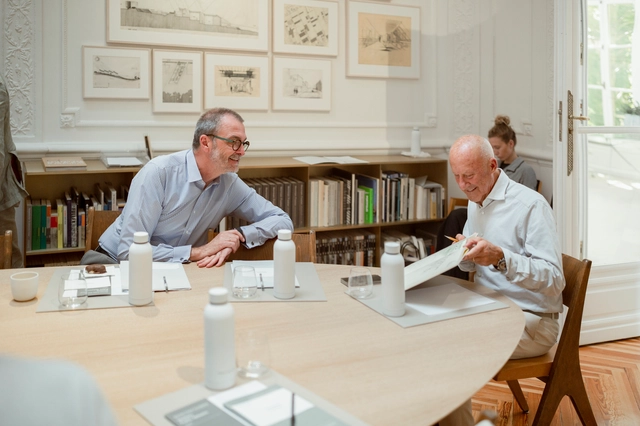
Christophe Levy, Scientific Director at Holcim and Lord Norman Foster. Image Courtesy of Holcim & Norman Foster Foundation
During the 2023 Architectural Biennale in Venice, Holcim and the Norman Foster Foundation will announce the start of their Essential Houses Research Project. Through this collaboration, the Norman Foster Foundation created necessary housing to give displaced communities safety, comfort, and welfare while allowing them to live in temporary settlements for over 20 years. To make sustainable buildings accessible to everyone, Holcim constructed these necessary homes using various green products, such as Elevate Insulation Boards and ECOPact low-carbon concrete.
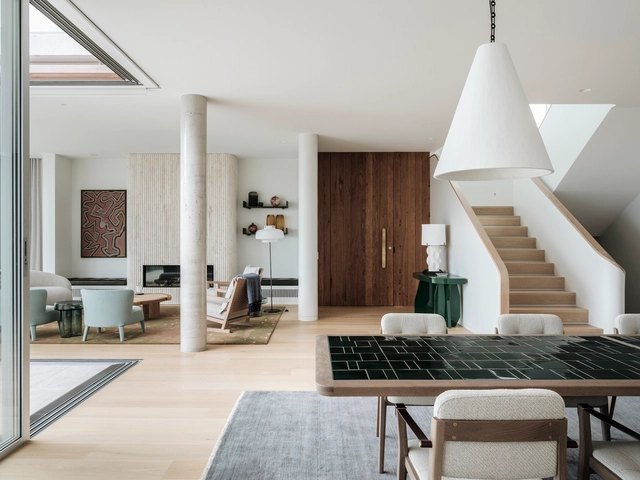
When it comes to forward-thinking interior design, adaptability, and timelessness are two key factors that can guarantee a home will look just as current years from now as it does today. One interior style that makes use of them more than any other is: contemporary. By borrowing elements from several prominent styles and combining them into a harmonic whole, contemporary interiors stay current even as trends move on. But what are the components that remain constant even with this ever-changing fashion? We explore seven evergreen design elements that define contemporary interiors.
Part of the beauty of an architectural education is that it provides you with design skills that can be applied to a wide variety to jobs. So when it came time for Kharkov University Architecture School graduate Dinara Kasko to select a career path, she chose to pursue something a little bit sweeter: architectural pastry chef.
As the industry shifts towards a more sustainable model for construction, transparency becomes increasingly important. With a growing emphasis on building greener, architects, planners and other professionals want to make sure that the materials they are using have a minimal impact on the planet. Environmental Product Declarations (EPDs) are an important tool to accurately measure that impact.
In January, Holcim Germany became the first company in Europe to publish EPDs for its entire cement portfolio. It is also the first German company to provide its customers with product-specific ready-mix concrete EPDs.