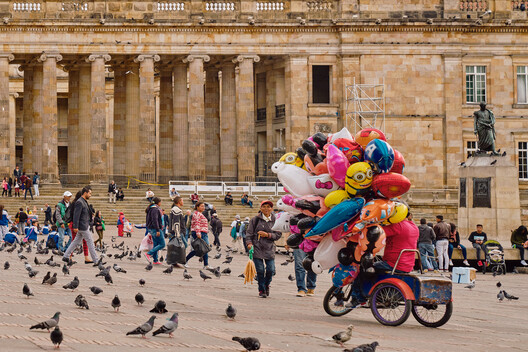
An informal vendor selling balloons along La Séptima in the Plaza de Bolívar. "Bogota, Colombia" by szeke is licensed under CC BY-SA 2.0
It's wet season, but this morning's downpour does little to deter the rhythm along La Carrera Séptima. Cyclists and pedestrians weave past ambulatory vendors with carts of avocados, ginger sweets, and phone cases. Toy cars, lightbulbs, and hand-beaded jewelry glisten with raindrops, arranged neatly on tarps that demarcate vendors' territories. Police officers approach a recycler gathering bottles; a tourist bargains for a jacket; two women find each other in the middle of the road, embracing as their coats grow heavy with rain.
La Séptima, or Bogotá's Seventh Avenue, is the most emblematic road in Bogotá, traversed by more than two million people every day. Along this single road — part marketplace, part protest route, part transportation hub — Bogotá's history unfolds. For nearly a year, I traced its rhythms as a pedestrian, commuter, inhabitant, and researcher. In all these moments and their historical incarnations, one image endured: the road is a living body. It is imagined as Bogotá's backbone, its vital artery, its heart. It bleeds, bears scars, and demands care.
Most of Europe's future housing already exists, yet renovation continues to happen too slowly to address climate, housing, health and resource challenges at the scale required. Re:Living explores how renovation can move from isolated projects to a scalable approach for transforming existing buildings. At the heart of the initiative is a new research project, The Housing We Need for the Future We Want, which examines how better use of the existing building stock can unlock new opportunities for architects, cities and communities.
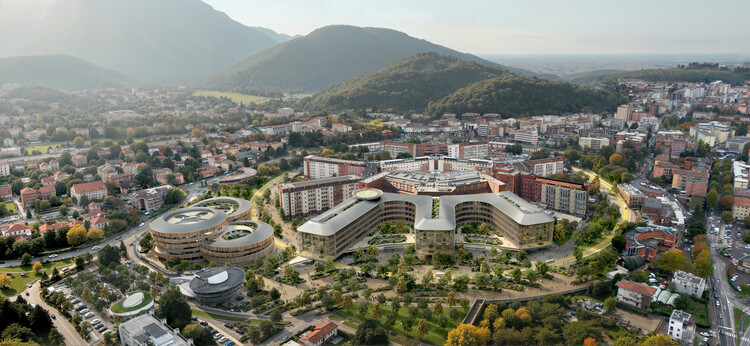
The project developed by CRA-Carlo Ratti Associati, Park Associati, Politecnica Building for Humans, Openfabric, DOTDOTDOT, Studio Mattioli, and Eckersley O'Callaghan has been selected to design the new Main Hospital and Children's Hospital in Brescia, Italy. The international competition mandate was to redevelop an existing hospital, preserving and extending a radial plan conceived by engineer Angelo Bordoni in the early twentieth century. The existing healthcare complex, Spedali Civili di Brescia, follows a hexagonal masterplan and radial layout that informs the new design for the premises. The geometry is reinterpreted to update the campus for future models of care, drawing a new CareRing around it that connects people, nature, and healthcare through the principles of One Health, the idea that human health, environmental health, and social wellbeing are inseparable.
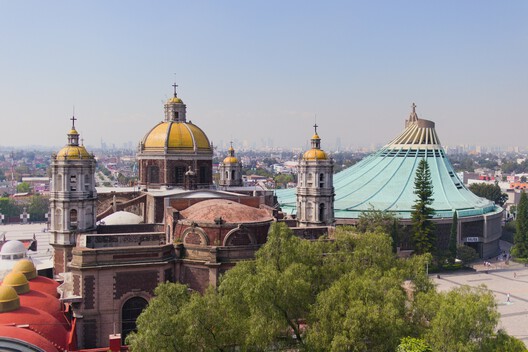
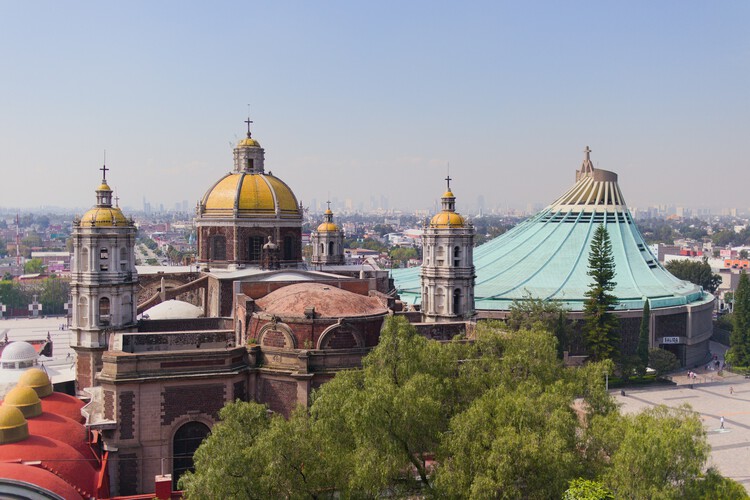
Mexico City. Image by Eduardo Enriquez, via Unsplash
Mexico City is a sprawling metropolis of layered temporalities, where architecture operates as a continuous negotiation between deep-seated history and intense urban mutation. Built over the aquatic traces of Tenochtitlan, the city's fabric is an ongoing dialogue between eras: the monumental scale of the Pre-Hispanic Templo Mayor and the Viceroyalty architecture of the Catedral Metropolitana coexist with the modern and contemporary impulses that define its skyline. This dense juxtaposition creates a unique urban canvas where sacred geography, colonial imposition, and 20th-century ambition intersect.
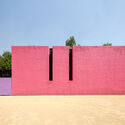
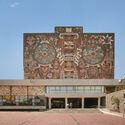
The mid-century marked a definitive era of experimentation, forging a Mexican Modernism that masterfully synthesized international structural rationalism with local identity and materiality. This synthesis is epitomized by the sweeping, plastic integration of art and architecture at the Ciudad Universitaria, the structural poetry of Félix Candela's hyper-parabolic shells, and the raw, monumental brutalism of Teodoro González de León and Abraham Zabludovsky. Parallel to this, the intimate, introspective mastery of Luis Barragán and Juan O'Gorman redefined domestic space, experimenting with light, vernacular color, and tectonic honesty to create spaces of profound spatial stillness.
An experiential rebellion takes center stage in the fourth episode of the Room For Dreams podcast, hitting directly at the heart of today's screen-deep, image-obsessed design culture. Recorded live at Milan Design Week 2026 in cooperation with INDX|GLOBAL, host Claire Broadka sits down with four Indian architectural voices — Indrajit Kembhavi, Manish Gulati, Sanjay Singh, and Sidhartha Talwar — to explore a critical question: have we sacrificed the soul of architecture for the sake of a picture-perfect Instagram post?
Recent events highlighted the many ways architecture responds to changing environmental, social, and cultural conditions. Major earthquakes in Venezuela, Japan, and Northern California renewed attention to the role of planning, infrastructure, and building practices in shaping resilience to natural hazards. As these questions continue to inform the built environment, the opening of the 2026 UIA World Congress of Architects in Barcelona brought together practitioners and researchers to discuss climate, housing, public space, and the future of the profession. Recent project announcements, preservation initiatives, completed works, and new design tools further reflected the range of approaches shaping architectural practice today, from heritage conservation and adaptive reuse to environmental performance and long-term planning.
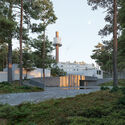
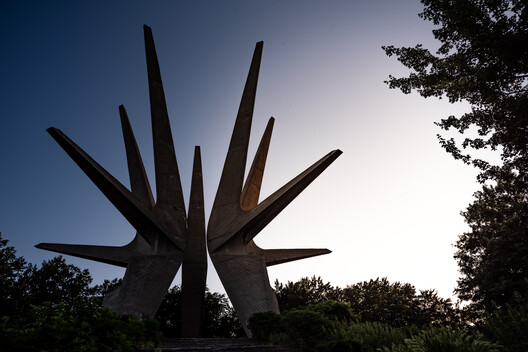
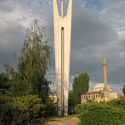
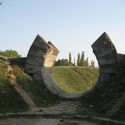
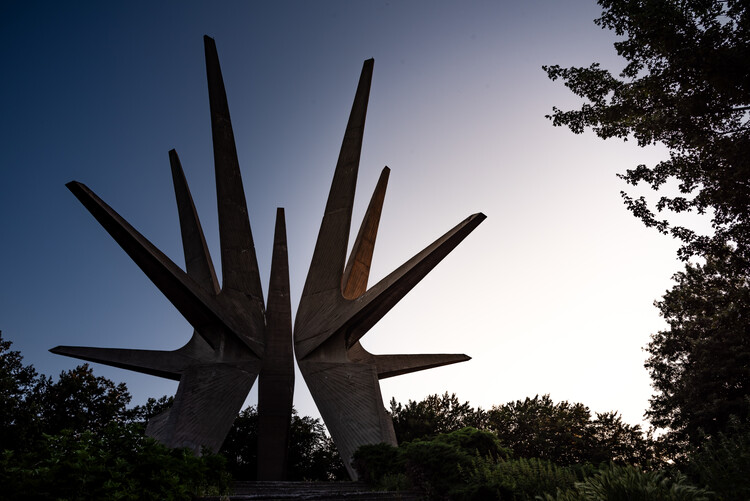
A monument is usually the most conservative building a state will commission. It is expected to stabilize memory, to make history legible, and to give public form to a shared narrative. Eastern Europe's twentieth century produced an entire body of work from the Baltic to the Balkans that resisted precisely those expectations, challenging the conventional relationship between monument, memory, and representation. Commonly grouped under the name spomeniks, these architectural exercises are perhaps the best-known examples of a much broader landscape of memorial architecture that emerged across the region. These were societies emerging from occupation, civil conflict, or revolution, and none of them possessed a single symbolic language capable of accommodating the complexity of their histories. Rather than searching for new heroes or new icons, many architects and artists turned to space itself as the medium through which remembrance could be constructed.
These monuments occupy an unusual position between sculpture and architecture. At one scale, they read as deliberate abstract compositions arranged with the clarity of a drawing by Kandinsky. At another, they seem less resolved, as if testing the limits of a spatial language still in formation. Their forms often appear caught between certainty and experimentation, the same monument readable as a controlled geometric object and as an open-ended search for how collective memory might inhabit space. But these readings coexist and give many of these works their enduring ambiguity.
One of the defining qualities of contemporary interiors is flexibility. Offices, education facilities, hotels, and cultural venues need to be adaptable. They require spaces that can expand, divide, open, and close according to different activities, without sacrificing comfort, or accoustics. How a space is subdivided, then, is no longer a secondary decision, but a central component of architectural performance.
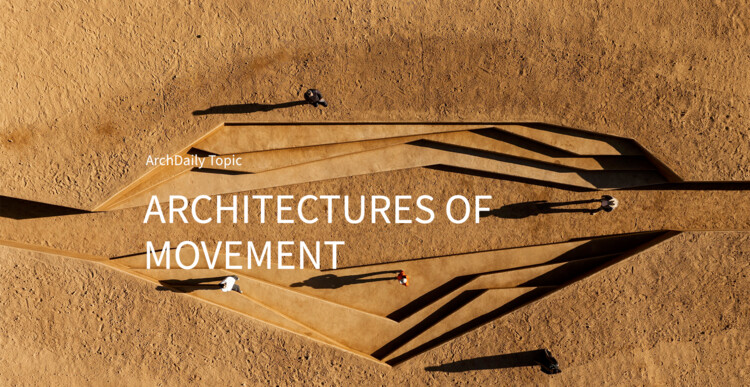
Every twelve years, the banks of the Ganges at Prayagraj become one of the largest cities on Earth — and then disappear. The Maha Kumbh Mela draws over 400 million pilgrims across six weeks, requiring the construction of a full urban infrastructure: pontoon bridges, field hospitals, kilometers of temporary roads, a grid of tent cities visible from space. When the festival ends, it is dismantled entirely. No gathering in human history produces a more complete architecture of movement; built for arrival, engineered for transience, and designed to leave no permanent trace. The Kumbh Mela is exceptional in scale, but not in condition: movement has become a defining spatial problem of the century.
This month, ArchDaily explores Architectures of Movement: Land, Borders, and the Politics of Belonging, a theme that examines how mobility reshapes architecture's relationship to territory, ownership, and identity. The topic does not treat movement as a crisis to be managed, but as a fundamental lens through which to reconsider what buildings, cities, and borders actually do: who they accommodate, who they exclude, and what they make permanent.
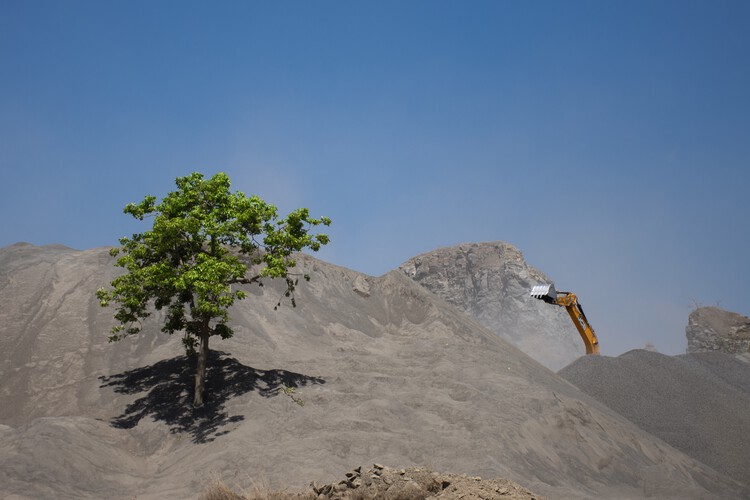
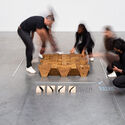
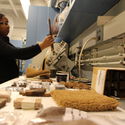
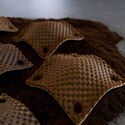
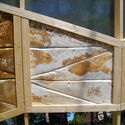
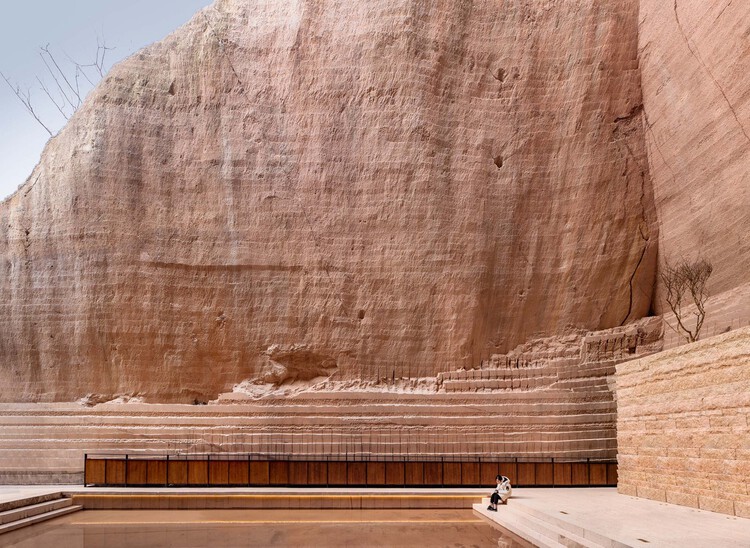
A building material rarely begins where architecture encounters it. By the time concrete reaches a construction site, its limestone has already been quarried, processed, and transformed. Timber arrives long after the forest. Glass appears detached from the sand from which it was made. By the time materials enter construction, much of the landscape and industry that produced them has already disappeared from view.
In 1743, a small cabin suspended by ropes was installed in a courtyard of the Palace of Versailles for the private use of King Louis XV. Manually operated by servants hidden from view, the so-called "flying chair" allowed movement between floors without stairs, and unknowingly introduced one of the central questions of modern architecture: how to move people vertically in a way that is efficient, safe, and integrated into the building.
The mechanization of this principle, with the introduction of a safety elevator in the early 1850s, paved the way for an unprecedented urban transformation. Without the elevator, the skyscrapers of Chicago and New York in the 1880s would have been unfeasible not because of structural limitations, but because of access. The elevator made it possible to build higher, and it also defined the logic of how these buildings would operate, where their cores would be placed, how their lobbies would be organized, and who could reach which spaces.
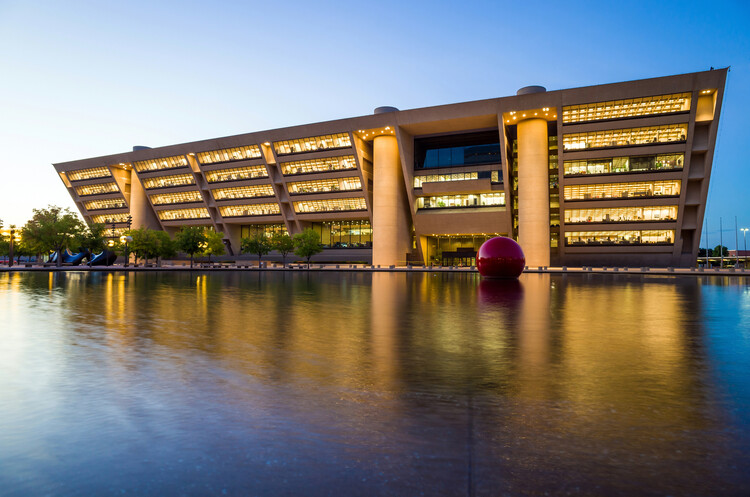
Dallas City Hall, Texas. Image via World Monuments Fund
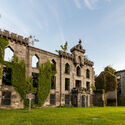
On the occasion of the 250th anniversary of the United States' Declaration of Independence, the World Monuments Fund has announced a new list of ten heritage places representing the country's history. The special initiative, titled "Irreplaceable America," recognizes historic places across the country whose preservation is considered "essential to the richness and complexity of American history," spotlighting urgent preservation needs. From the oldest botanical garden in the country to I.M. Pei's modernist Dallas City Hall, the selected sites bear witness to Indigenous heritage, artistic experimentation, and public health, colonial, and Black history.
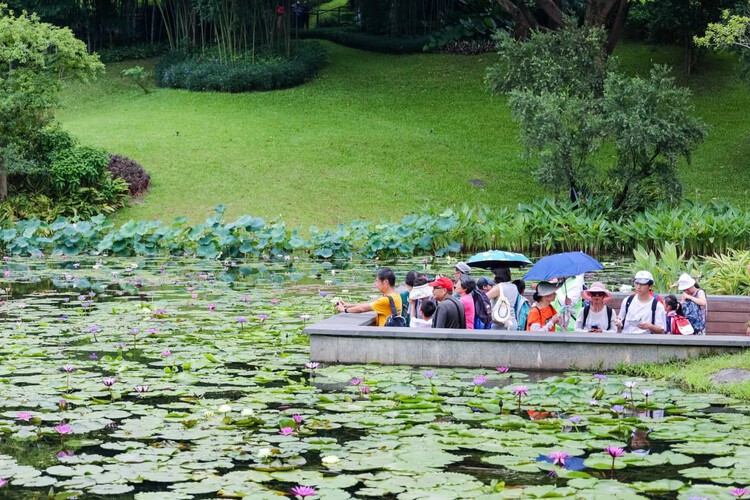
Guangzhou Yunxi Botanical Garden / AECOM + Architectural Design & Research Institute of SCUT + Guangzhou Landscape Architectural Design & Research Institute. Image Courtesy of Yunxi Botanical Garden
While human life depends heavily on plants for the medicines, building materials, and fuel they provide, they also play a vital role in many ecological processes. From climate regulation through carbon dioxide absorption to soil fertility and the purification of air and water, plant diversity offers opportunities to address some of the most pressing challenges of this century, including food security, energy availability, climate change, and habitat degradation. In this context, botanical gardens act as living refuges that foster innovation, adaptation, and human resilience. But what can architectural practice learn from botany and its methods?
In architecture, however, this question still remains relatively marginal. We often know who designed a building, we are familiar with its finishes, the manufacturer of its window frames, the brand of its cladding systems, and even its energy performance—but we almost never ask where the tons of material that made its existence possible came from.
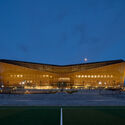
Set on the banks of the Sava River in Belgrade, Serbia, the site of a former cement factory became the starting point for the 21st edition of the Saint-Gobain Architecture Student Contest. Organized in cooperation with the World Green Building Council, OneClick LCA, the City of Belgrade, the Academic Yachting Club Belgrade, the Serbia Green Building Council, and the Green & Blue Corridors Association, invited students to imagine a new Sports and Recreation Hub capable of transforming an industrial waterfront into a year-round public destination. More than 200 universities from 34 countries participated in this 21stedition of the Architecture Student Contest.
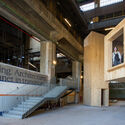
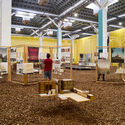
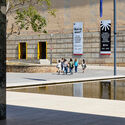
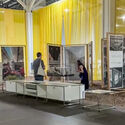
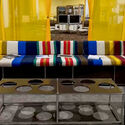
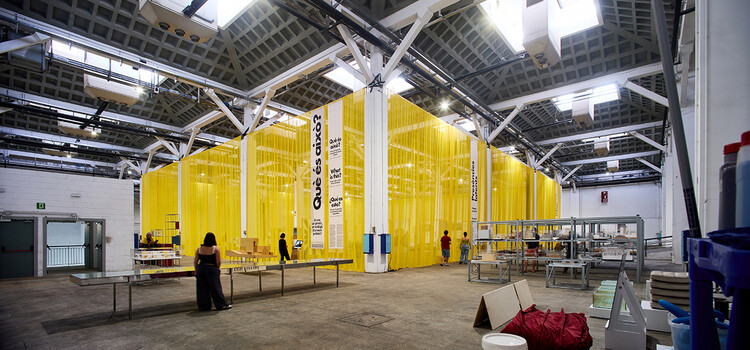
The exhibition What is This? A Spa, a Gym, a Zoo for Tiny Animals? is on view at the Palau Victòria Eugènia in Barcelona from May 11 to July 5, 2026. Organized by the Fundació Mies van der Rohe and curated by Anna Sala and Ivan Blasi, the exhibition presents the institution's archive through a new curatorial framework, bringing together architectural models, drawings, documents, films, and records of artistic interventions that have taken place at the Barcelona Pavilion since 1986. Open daily with free admission, the exhibition invites visitors to engage with the archive as both a historical collection and an evolving record of architectural discourse.
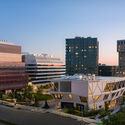
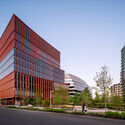
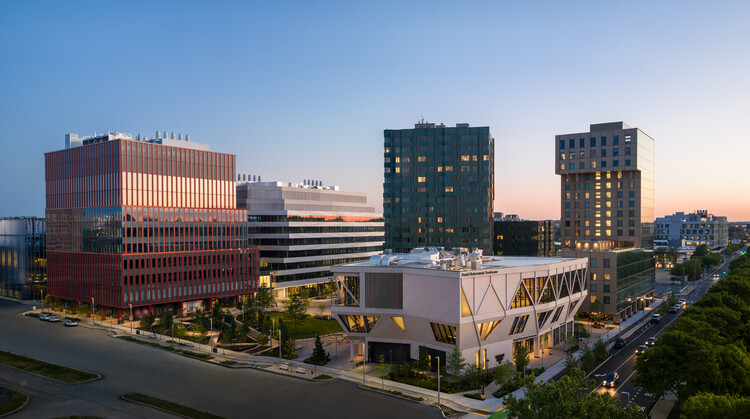
International firms Studio Gang and Henning Larsen have completed Breakthrough Properties' One Milestone. The life science development is part of the first phase of Tishman Speyer and the Harvard Allston Land Company's Enterprise Research Campus (ERC), a 14-acre mixed-use district in Boston's Allston neighborhood. Located on the southwest end of the ERC, One Milestone is intended to serve as a hub for creativity, science, and entrepreneurship. Its recently inaugurated two-building complex, spanning 47,380 sqm, was designed to serve Greater Boston's scientific community. The two firms began collaborating on the project in 2019 with the co-design of a strategic framework plan, breaking ground on One Milestone in 2023.
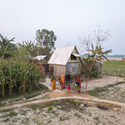
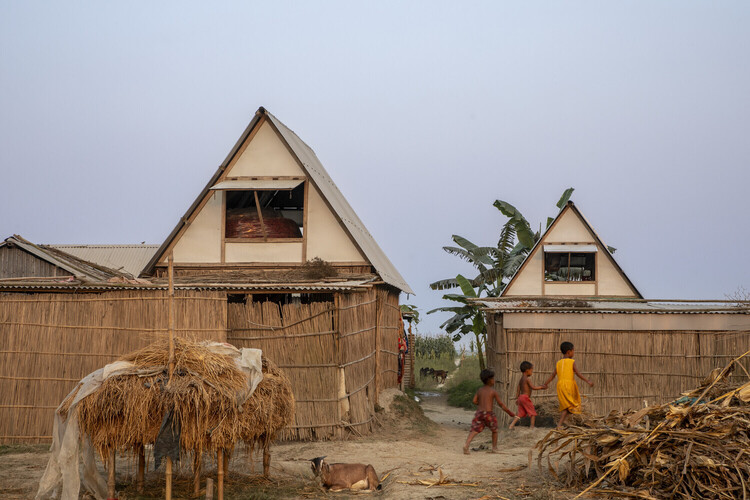
Across different climates and building cultures, many contemporary projects are working with local ways of building in new ways. Earth walls, bamboo structures, shaded thresholds, and collective construction processes are being reconsidered not as references, but as tools for the conditions architecture is facing now and will continue to face.
In these projects, vernacular knowledge appears through practical decisions: how to cool a building without machines, how to build with what is nearby, how to make a structure easier to repair, and how to keep construction knowledge within the community that will use it. The conditions making this knowledge necessary are not coming. They are already here.
The third episode of the Room For Dreams podcast confronts one of the most pressing dilemmas in modern urban planning: how to breathe in new life into old structures without erasing their history. Recorded live at Milan Design Week 2026 in cooperation with INDX|GLOBAL, this dynamic session gathers a panel of architects — Kiran Gala, Vivek Gupta, and Carl Bhesania — to unpack the complex realities of adaptive reuse.
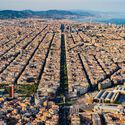
Barcelona is the first city in the history of the UIA World Congress of Architects to host the event twice. The 1996 edition, Present and Futures: Architecture in Cities, arrived at a charged moment, when the post-Olympic city was consolidating an urban model that would become one of the most studied and contested in contemporary urbanism, and when architecture was learning to think through the large metropolis as its primary site of inquiry. Thirty years later, the same city reopens the question under a different condition: one in which the built environment can no longer be understood as a self-contained object, but only through the wider ecological, material, and political systems that sustain it. The theme of the 2026 Congress — Becoming. Architectures for a Planet in Transition — does not abandon the urban concerns of 1996; it reopens them from a planetary scale.
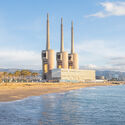
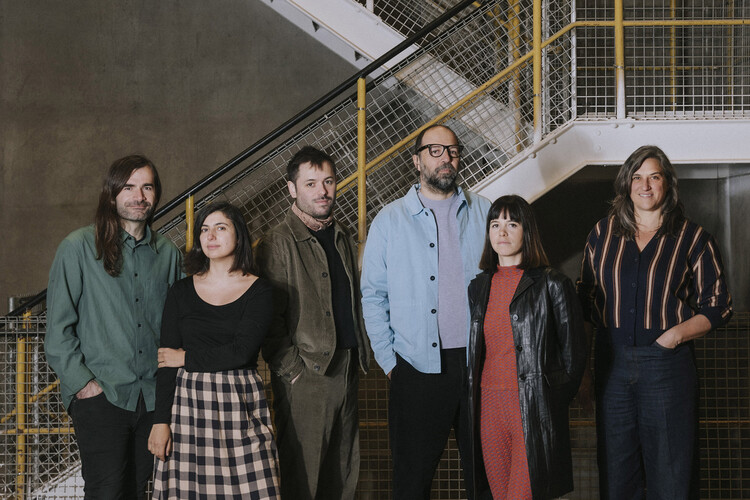
The curatorial team behind this edition, formed by Pau Bajet, Maria Giramé, Mariona Benedito, Tomeu Ramis, Pau Sarquella, and Carmen Torres, approaches architecture as a critical and transformative tool rooted in territory, working across practice, research, and teaching. Their program structures the Congress around six interconnected thematic lines (Becoming More-than-human, Becoming Circular, Becoming Embodied, Becoming Interdependent, Becoming Hyper-Conscious, and Becoming Attuned) and distributes it across three venues of very different characters — Les Tres Xemeneies del Besòs, the Disseny Hub at Glòries, and the CCIB — each chosen for what it represents as much as for what it can hold.