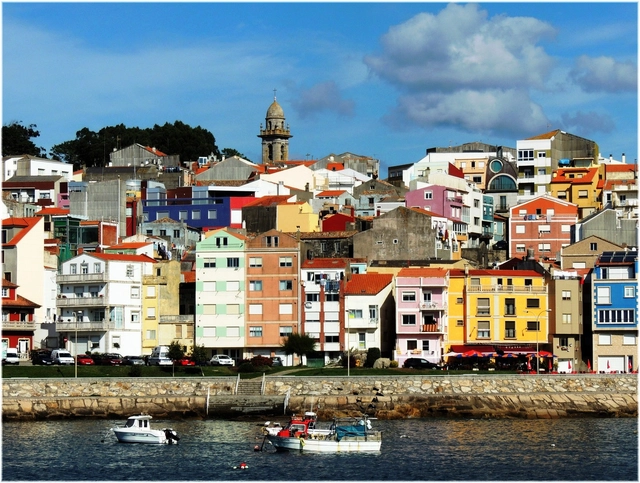
Last October 23, in the small Galician city of Ares (Spain), the "Guide of colors and materials" was publicly presented, with which the administration of the Galician community - in collaboration with the Galicia College of Architects (COAG) - aims to establish aesthetic criteria and recommendations in the search for a better image and urban quality of Galician populations.
This document is composed of fourteen volumes and its publication was made possible by a laborious process in which, for a year, architects, historians, and graduates of Fine Arts, had analyzed more than 3,800 buildings in rural, urban and peri-urban areas, as well as in industrial properties in the four Galician provinces.
https://www.archdaily.com/885343/galicia-publishes-a-guide-to-colors-and-materials-of-its-traditional-architectureJavier García Librero
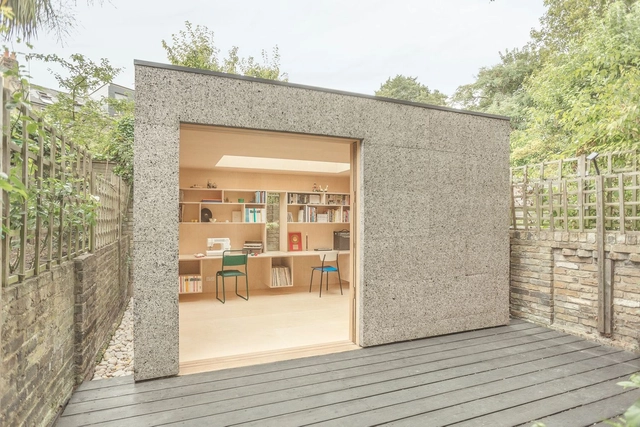
Unbeknown to many, cork is something of a dark horse when it comes to the environment—a model of a sustainable industry and building material. By its very nature, cork is both recyclable and renewable, as it is the only tree that regenerates its bark, while harvesting that bark causes the tree no harm.
Cork has been sneaking its way into our buildings for many years now; due to its hard-wearing properties it can be found, for example, in the checkerboard flooring of the Library of Congress. Even NASA has been wise to cork's light weight and insulation capacity, using it as an insulator for their space shuttles.
Sarovic_Plaut Arquitectos’ latest work, “The Grater,” was the Bazar ED 2017 entry pavilion. Last November, Bazar ED’s 13th annual fair united design, decoration and trends at Santiago’s Bicentennial Park.
The pavilion is the first thing people see when they enter the fair and the last thing they see as they leave, making it a particularly memorable space. The spatial atmosphere created by Sarovic_Plaut Arquitectos plays with light and wind to enhance visitors sensorial experience.
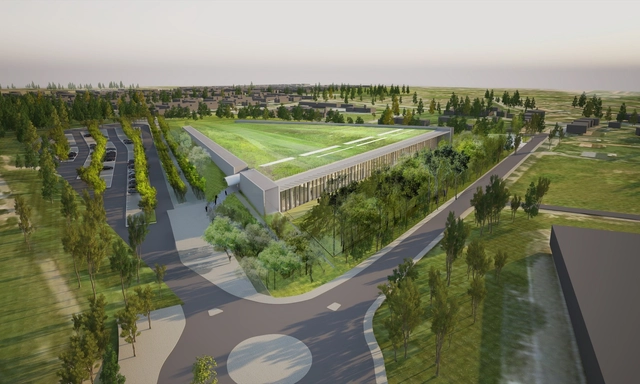
Renderings of the project. Image Courtesy of Rogers Stirk Harbour + Partners
Rogers Stirk Harbour + Partners has broken ground on a new conservation and storage facility for the Louvre in Liévin, France. Capable of housing conservation and storage facilities for as many as 250,000 works, the building will is aiming to become of one of the world’s most advanced research and study facilities.
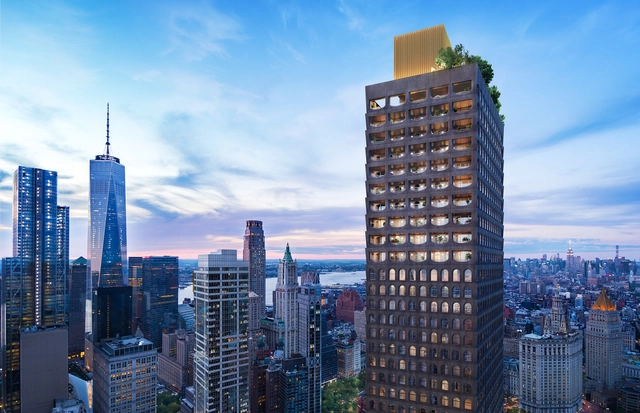
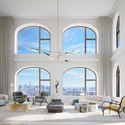
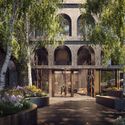
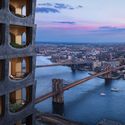
New renderings have revealed of Adjaye Associate’s first New York City residential tower, 130 William, as foundational work on the project is underway. Located in the Financial District not far from the World Trade Center complex, 130 William will rise 66 stories to contain 244 luxury condominiums.
As we face a global climate crisis that must be addressed, sustainability has quickly become one of the most crucial aspects to consider in contemporary architecture. Designs that go beyond current standards, showcasing sustainable responses to technological, environmental, socioeconomic and cultural issues have arisen in recent years, garnering much-deserved praise for the innovative and environmentally-friendly solutions they propose.
The LafargeHolcim Awards stands out as the world's most significant competition for sustainable design. The criteria of the USD 2 million competition are as challenging as the goal of sustainability itself. The competition is for projects at an advanced stage of design, not finished works.
Courtesy of School of the Art Institute of Chicago and The University of Chicago
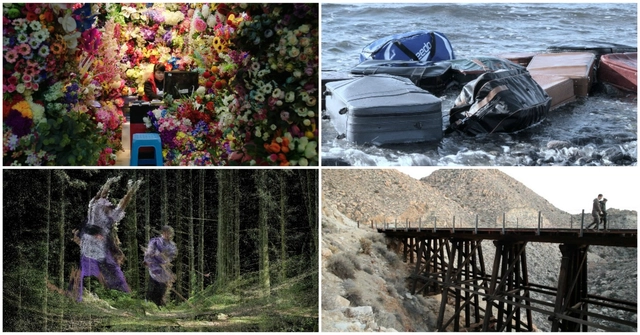
The curators of the U.S. Pavilion exhibition at the 2018 Venice Biennale have revealed five film and video works that will be featured within their Dimensions of Citizenship exhibition at next year’s Venice Biennale.
Entitled “Transit Screening Lounge,” the collection of videos will explore narrative, speculative and impressionistic perspectives on the spatial conditions of citizenship.
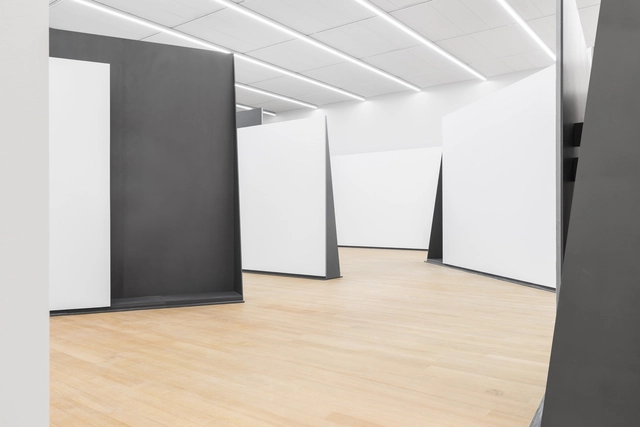
Photograph by Delfino Sisto Legnani and Marco Cappelletti. Image Courtesy of OMA
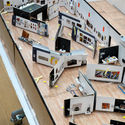
AMO, the research and think tank wing of OMA, has completed a flexible new exhibition space for the permanent collection of the Stedelijk Museum in Amsterdam. Named Stedelijk BASE, the bespoke display system is constructed from “very thin yet solid” free-standing steel partitions that interlock like puzzle-pieces to create an open-ended flow for viewing art from the late 19th and 20th centuries.
2017 was another banner year for skyscraper construction.
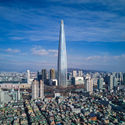
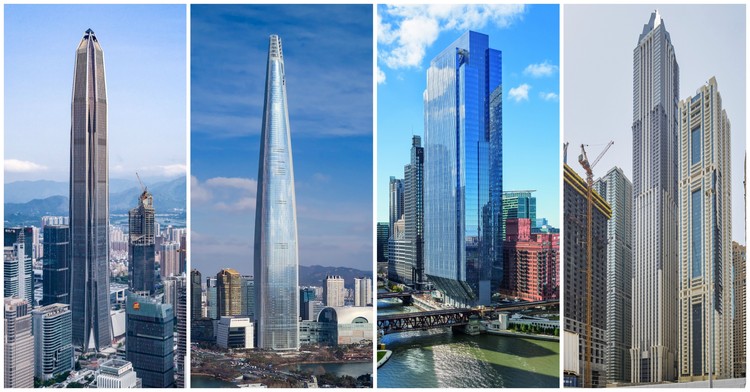
According to the 2017 Tall Building Year in Review, the annual web report from The Council on Tall Buildings and Urban Habitat (CTBUH), a record-breaking 144 buildings 200 meters tall (656 feet tall) or higher were completed in 2017, led by the 599-meter-tall Ping An Finance Center and 555-meter-tall Lotte World Tower.
In the report, CTBUH outlines this year’s trends in tall building design. Notably, 2017 proved to be the most geographically diverse year in history for tall buildings, with 69 cities across 23 countries completing new towers, an significant increase from 54 cities and 18 countries in 2016. Of those numbers, 28 cities and 8 countries completed their new tallest building.
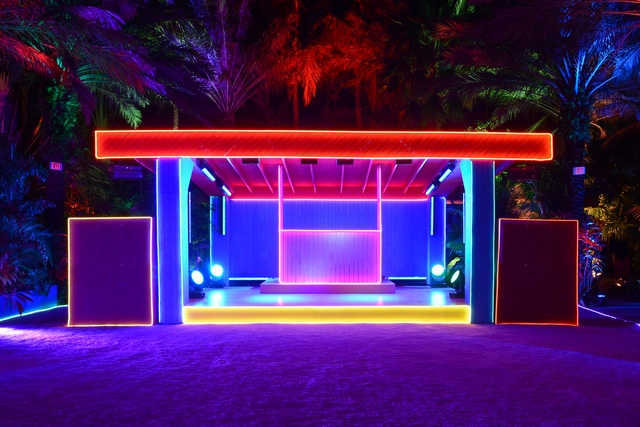
The Prada Double Club Miami / (c) Casey Kelbaugh. Image Courtesy of Fondazione Prada
As part of Art Basel in Miami Beach, a modern and contemporary art fair that highlights galleries and the newest developments in the visual arts, Carsten Höller created an installation piece for the Fondazione Prada. The installation, “The Prada Double Club Miami” is only open for a few days as part of Art Basel and is a fully-functioning nightclub.
Scandinavian firm, White Arkitekter, working closely with urban developers Citu, have designed the masterplan for the new Climate Innovation District in Leeds, in the United Kingdom. A central brownfield site in the city will be developed and converted into a sustainable, resilient, mixed-use neighborhood of more than 500 apartments and homes.
The Royal Institute of British Architects (RIBA) has revealed the 2018 RIBA International List, the longlist of buildings in the running for one of the world’s most prestigious architecture awards, the RIBA International Prize.
The biennial award considers the world’s best new buildings completed in the past two years that exemplify “design excellence, architectural ambition and delivering meaningful social impact.” This year’s longlist features 62 projects from around the world, more than double the number selected for the longlist of the inaugural prize in 2016.
The architecture and manufacturing industries are about to undergo a radical shift in how they make things. In the near future, designers and engineers will be able to create products, buildings, and cities in real time, in virtual reality (VR).
In predicting VR’s dramatic evolution, an analogy to early cinematic history is apt: As one legend has it, when the motion-picture camera first came out, actors were filmed on a set, in front of fake trees. Then someone said, “Why don’t you just put the camera in the forest?” Simple, but game-changing. VR technology is already available, and it’s only a matter of time before it is used to its full potential.
Villa Malaparte, Adalberto Libera's modern Italian classic, is featured as the backdrop in Saint Lauren's spring 2018 campaign starring modern English classic, Kate Moss. The video for the campaign, directed by Nathalie Canguilhem, positions Moss on the dramatic and monumental steps of the villa, an architectural promenade that seems to lead directly to the sky.
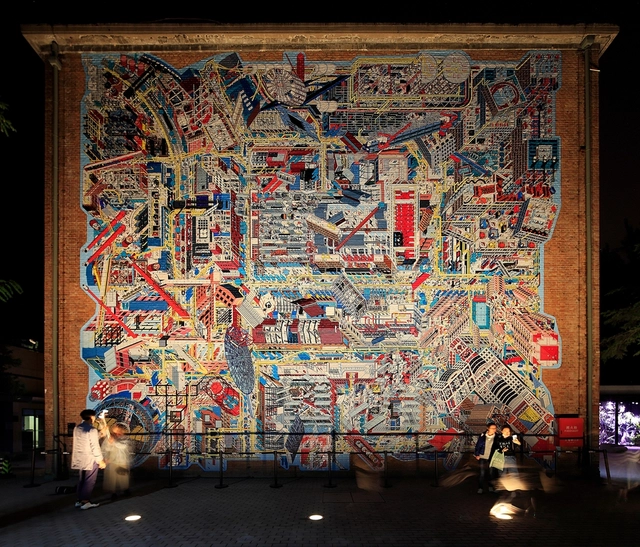
Established by Hyundai Group, Hyundai Motorstudio Beijing was opened in the 798 Art Zone in Beijing on November 1, 2017. The large-scale panoramic mural 798 commissioned by Hyundai and created by Drawing Architecture Studio was officially released at the same time.
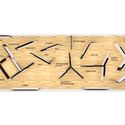
Around 14.5 meters in width and 12.7 meters in height, the mural takes the 798 Art Zone as the representative to depict the status of today’s city in the context of information overload. The drawing is a narrative map: most architectural renderings in the panorama are based on actual prototypes at 798. The assemblages are shattered, fragmented and free-floating. Enormous power comes from the inherent vitality and energy of the city. Its shell is cracked and broken to reveal the exciting maze of life inside. 798 is an imaginary representation of the real world, a reconstruction of countless fragments of physical space and time, that constantly collide, align and rearrange.
https://www.archdaily.com/885157/798-panoramic-mural-by-drawing-architecture-studio罗靖琳 - Jinglin Luo
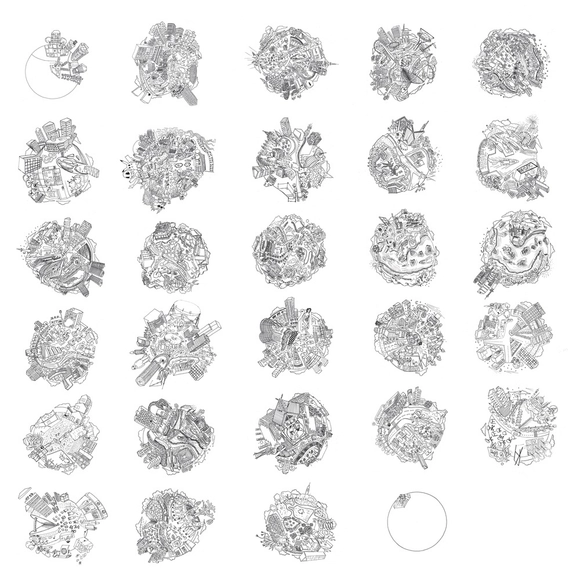
1st prize - The One Day Unit / Charles Weinberg and Shai Ben Ami (Click Image for Full Size). Image Courtesy of Arkitektskolan Aarhus
The Aarhus School of Architecture has revealed the winners of their drawing competition, Drawing of the Year 2017, which asked architecture students around the globe to submit their best digital, hand-drawn or hybrid drawings under the theme of “Everyday Utopia.”
More than 230 submissions were evaluated by an esteemed jury of architects, which consisted of Moon Hoon, founder of Moon Hoon Architects; Trine Berthold, associate partner at schmidt hammer lassen; and Torben Nielsen, professor at Aarhus School of Architecture.
The jury was impressed by the “overwhelming burst of creativity and clever concepts demonstrated in the drawings,” calling out the high level of craft and experimental approaches to drawing.
The idea for the vessel came from feeling that we shouldn’t just make a sculpture or a monument – it felt to us that rather than building a sculpture, it would be great if something was creating more public space.
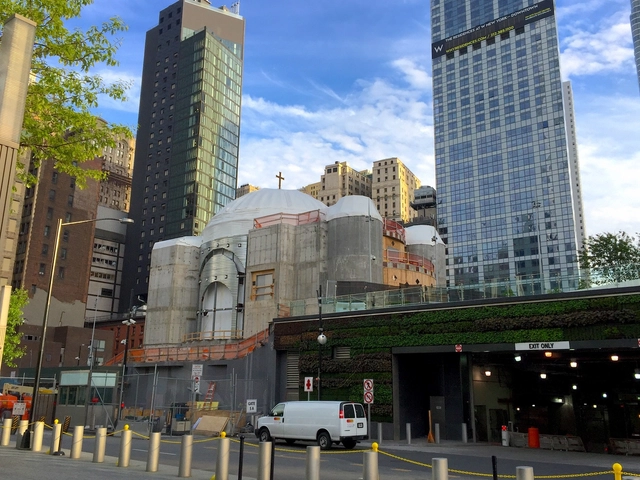
Construction on the Santiago Calatrava-designed St. Nicholas National Shrine at the World Trade Center has halted, after the church failed to make a series of payments over a several month period to contractor Skanska.
As revealed by the Pappas Post, last week the construction company distributed a letter to its subcontractors informing them that the building contract had been terminated after The Greek Orthodox Archdiocese of America defaulted on making payment. In the letter, Skanska directed subcontractors to stop all work and to remove all tools and materials from the site, or risk not being able to recover them.
“The reason that highly designed contemporary architecture almost exclusively manifests in iconic structures is that it’s the only way that investing in design and aesthetic quality can turn a profit.” This is the central assertion of “The Politics of Architecture Are Not a Matter of Taste,” published in Common Edge a couple of weeks ago (and republished as “Hate Contemporary Architecture? Blame Economics, Not Architects” on ArchDaily). Marianela D’Aprile’s impassioned essay takes issue with a Current Affairs piece from October, “Why You Hate Contemporary Architecture,” in which the authors, staff writers Brianna Rennix and Nathan J. Robinson, hate on the current state of the design industry.
Both articles confuse me. “Good buildings recede seamlessly into their surroundings,” Rennix and Robinson claim, but the buildings they praise—figural structures such as London’s St. Paul’s Cathedral and the Moorish palace of The Alhambra—stand out prominently. D’Aprile criticizes the authors’ imprecise use of terminology, but, as the opening passage above shows, her own language can be vague, relying on words such as iconic, ubiquitous shorthand among architects. (If it’s intended to convey “distinctive,” the irony is that most buildings described with that term have a similar sculptural character, so in our mind’s eye they all sort of blend together—the opposite of distinction.) She defines architecture as “buildings that have been designed for construction in the physical world.” Aren’t all buildings constructed “in the physical world”? And are all unrealized designs necessarily relegated to something other than architecture?
Sometimes all your project needs is that little push or three. Travelling on public transport with a model you have spent hours painstakingly fussing over is one of the more stressful situations for an architecture student, especially when you must present it to your tutor. The violence that occurs on a busy bus inevitably predicts the end of your creation, your only hope left is to photoshop what remains.
However, the tutor’s response can be somewhat unpredictable (much like the demise of your model) and you can find yourself in a rare situation where they actually like it. Who knows what is going through their heads, but at the end of the day, they are the ones marking it so I wouldn’t argue.
The Leewardists have perfectly illustrated in their comic the pain that consumes us as we watch our most pride possession deteriorate in front of our eyes.
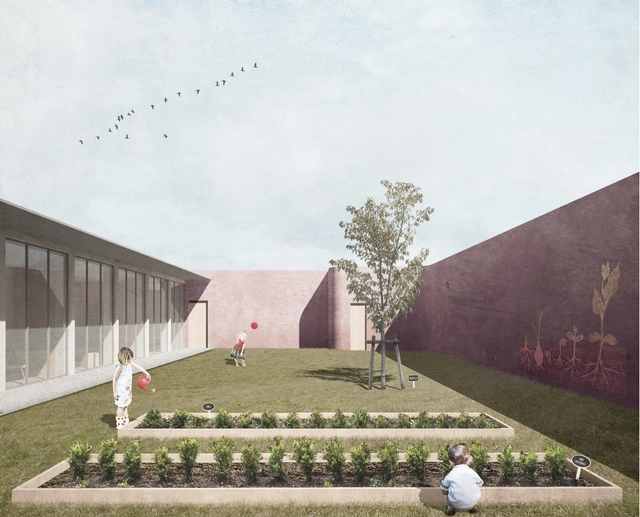
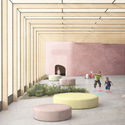
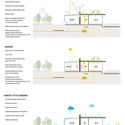
Winning the Italian Ministry of Education's design competition: Scuole Innovative, AS.IN.O is a proposal for a kindergarten and botanical gardens inspired by local materiality and historic context. The team from aut- -aut in Italy, comprised of Gabriele Capobianco, Edoardo Capuzzo Dolcetta, Jonathan Lazar and Damiano Ranaldi, based the layout of the scheme on the typical double courtyard house typology of the Campidano Meridionale area.
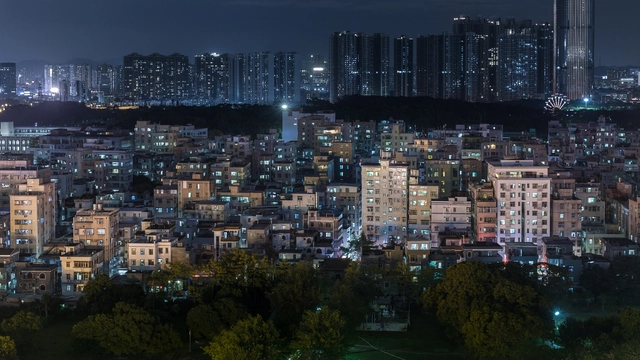
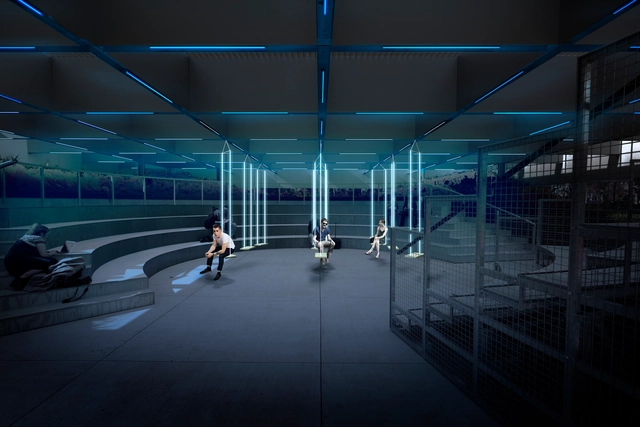
Text from the organizers Bi-City Biennale of Urbanism\Architecture (UABB). The Bi-City Biennale of Urbanism\Architecture (UABB), the only exhibition in the world to explore issues of urbanization and architectural development, will be opening for its 7th edition on December 15th, 2017. UABB will be held at Nantou Old Town in Nanshan district, an urban village that was once the administrative center of the Bao'An County. Hou Hanru, Liu Xiaodu, and Meng Yan (in alphabetic order) make up the curatorial team, all known for notable accomplishments in their respective fields. UABB is thrilled to host more than 200 award-winning exhibitors from 25 countries to share their perspectives on diversity and urban villages at this year’s biennale.
“The opening was an opening with many formal obligations and many excellencies, and that was exciting,” said Koolhaas about the pavilions opening events. “But frankly more exciting was this morning, when the thing performed really wonderfully spontaneously in terms of raising a lot of issues and having from the very first second a really animated discussion about a whole range of issues. And that’s exactly we intended it go.”
Located in the largest remaining park in Beijing’s central business district, MAD Architects’ Chaoyang Park Plaza opened earlier this to year to much deserved fanfare. With a striking black glass form inspired by traditional Chinese ink landscape paintings, the complex is an immediate standout within its context.
In this photo series, Laurian Ghinitiou captures the series of buildings, drawing attention to their relationships to those surroundings. From the bustling streetscape, to the local residents fishing in the nearby pond, to KPF’s fast-rising CITIC Tower in the distance (soon to become Beijing’s tallest tower), Ghinitiou’s photographs are a reminder that all architecture is a product of the people and buildings around it – even the most dramatic of forms.











Nick__Ulivieri__Photography.jpg?1513267321 "150 North Riverside / Goettsch Partners. Image © Nick Ulivieri Photography")
Hufton_Crow_025.jpg?1513272972 "Raffles City Hangzhou; Hangzhou, China / UN Studio. Image © Hufton+Crow")








.jpg?1513011647&format=webp&width=640&height=580)
.jpg?1513011655 "Chaoyang Park Plaza / MAD Architects. Image © Laurian Ghinitoiu")
.jpg?1513011986 "Chaoyang Park Plaza / MAD Architects. Image © Laurian Ghinitoiu")
.jpg?1513011966 "Chaoyang Park Plaza / MAD Architects. Image © Laurian Ghinitoiu")
.jpg?1513011916 "Chaoyang Park Plaza / MAD Architects. Image © Laurian Ghinitoiu")
.jpg?1513011647)