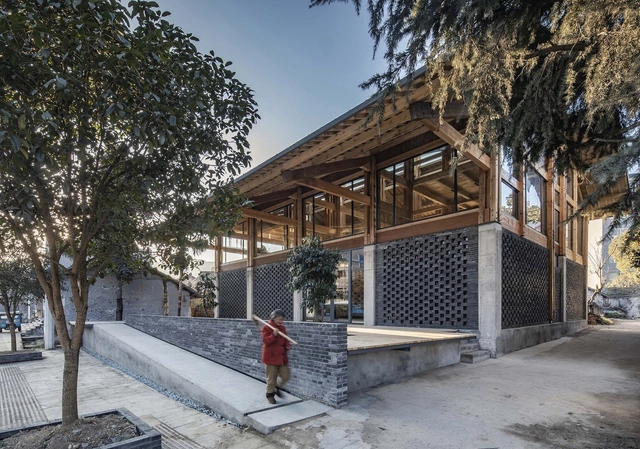
The American architect, designer, and futurist Buckminster Fuller once defined the Dymaxion principle as “constructing ever more with ever less weight, time, and ergs per each given level of functional performance.”


The American architect, designer, and futurist Buckminster Fuller once defined the Dymaxion principle as “constructing ever more with ever less weight, time, and ergs per each given level of functional performance.”
This article was originally published on Common Edge.
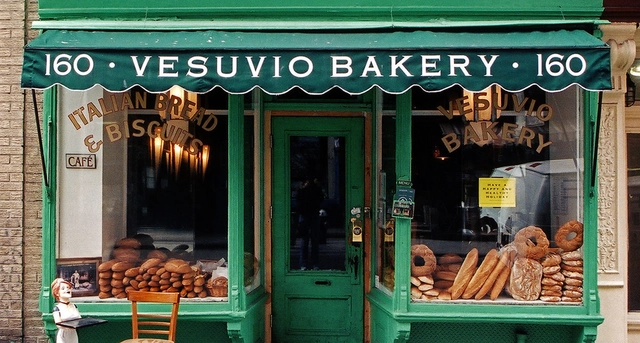
Few businesses in the United States are regarded with more fondness than mom-and-pop retailers. There’s an “all’s right with the world” quality about owner-run shops that meet a neighborhood’s everyday needs and, through repeated face-to-face exchanges, help people feel they’re members of a mutually supportive community. And yet for a long time, mom-and-pop stores have been under stress. In the half-century after 1950, cars shifted much of United States’s retailing to unwalkable roadside strips and winnowed the ranks of neighborhood-scale mom-and-pops. In the past two decades, the burgeoning of the internet has intensified the pressure on brick-and-mortar retail, a situation worsened by the pandemic.

Perhaps no modern character from TV or film is more enthralled with architects than George Costanza from Seinfeld. And, let’s be honest here, how many architects chose the profession in order to say those words, “I am an Architect?” Well, what if George was an architect? What kind of architect would he be? In this episode, Stewart breaks down scenes from Seinfeld in order to piece together the kind of architect he really wants to be. Using seven exhibits and a lawyerly argument, he builds his case around this most pressing 'what if' scenario. Exhibits range from George’s overt references, like his claim to have designed the addition to the Guggenheim, to a more psychological assessment of his proclivities for cozy, velvet-lined spaces and concluding with his fascination for pretending in the first place.
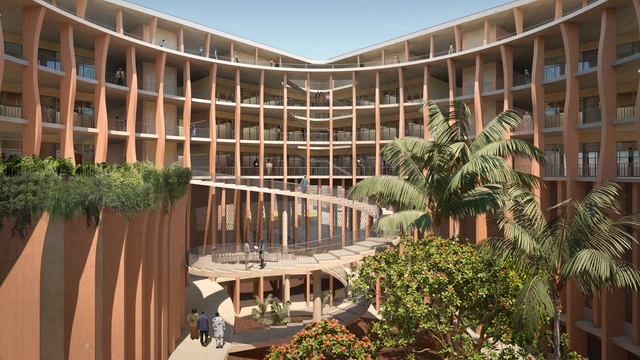
Founder of the Berlin-based firm Kéré Architecture, Francis Kéré, has won the 2021 Thomas Jefferson Foundation Medal in Architecture. Presented by the University of Virginia and the Thomas Jefferson Foundation at Monticello, the award is one of four honors recognizing achievements in architecture, citizen leaderships, global innovation, and law. The Thomas Jefferson Foundation Medals recognize the exemplary contributions of recipients to the endeavors in which Jefferson excelled and held in high regard.
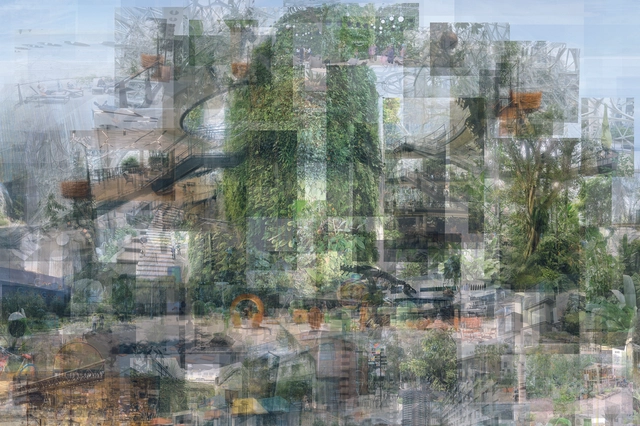
For the 17th international architecture exhibition – la biennale di Venezia 2021, Austria is creating a platform of debate around how we envision the architecture of the future. In fact, the Austrian contribution, entitled “Platform Austria”, curated by Peter Mörtenböck and Helge Mooshammer, seeks to articulate the profound changes established by the development of digital platforms in our built environment.
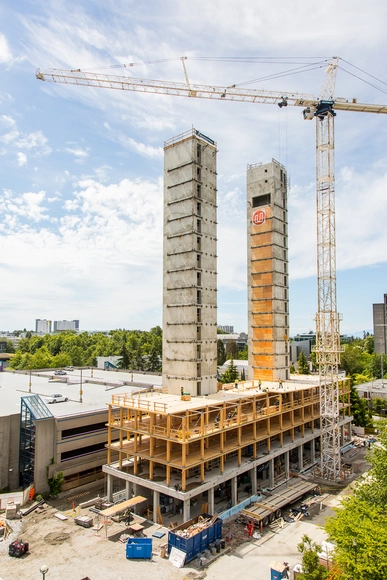
Le Corbusier's fascination with the automobile is evident in the architect's various photographic records of him posing proudly next to a car in front of his architectural work. According to the Franco-Swiss architect, in addition to enabling more efficient and economical construction, the industrialization of architecture could form the basis of improved aesthetic results in the same way the modern car chassis supports the creative and modern design of the automobile body. Yet, while vehicles have experienced impressive changes since the 1930s, it can be said that architecture has been slower to adopt the advances of other industries.
But that has been changing little by little. Driven by concerns around sustainability, the use of non-renewable fossil resources, and efficiency, coupled with accelerating demand to build new buildings and more accessible infrastructure, the construction industry has been incorporating numerous new technologies, including those adopted from other industries. In addition, renewable materials such as wood have been identified as an ideal construction material—especially when incorporating innovative mass timber products such as CLT and glulam, design methods and processes like BIM and DfMA, tools for visualization such as VDC, and tools for manufacturing such as CNC. We know, these are a lot of acronyms, but we will try to clarify them throughout this article.
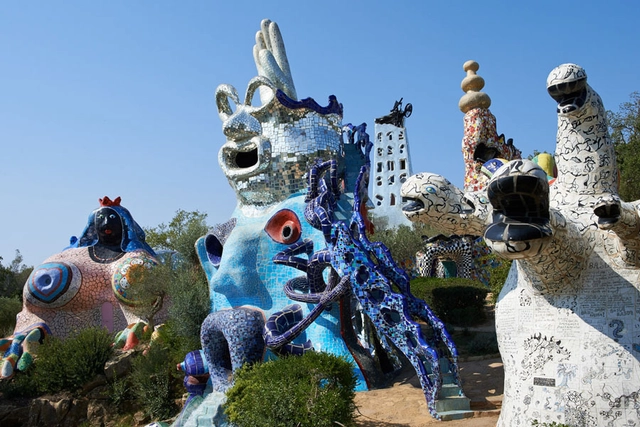
Tarot is often described as a mirror of the soul. Much like the spaces we inhabit, we can look at the symbols housed within the 72-card deck and see reflections of ourselves and our belief systems. The object and practice itself contain many architectural associations: It’s not uncommon for words like “structures,” “foundations,” and “home” to come up in a tarot reading. Traditional cards depict towers, castles, and churches. Sometimes the cards are described as keys, sometimes as gateways.

.jpg?1617225052&format=webp&width=640&height=580)
During this month we will discuss from a critical perspective the meaning of rendering for architecture. What are the models and what are the limits of rendering in the design process of a building?. And from this perspective ask ourselves what is a rendering? It is just an image to win competitions and prospects clients. Or is it an effective tool for the construction process?
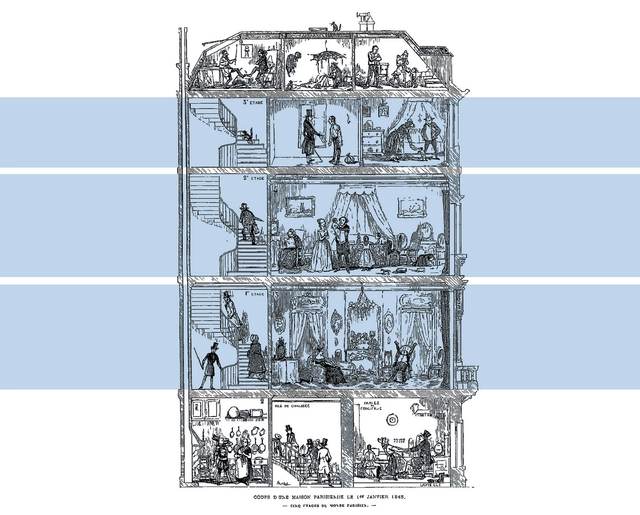
The introduction of new techniques and materials, along with innovations in indoor plumbing systems, resulting from the industrial revolution, paved the way for vertical living. Investigating specifically a period of time where a flux of population was driven to cities, and social class divisions were being questioned, this article looks back at the evolution of the house plan in Europe between 1760 and 1939.
Tackling the transformation of the housing unit during the industrial revolution all the way to the interwar period, this feature highlights four prominent examples that rethought traditional layouts and responded to the challenges of their time. Still influential today, the mentioned models, restored for use, happen to be part of the 21st-century urban fabric. Located in London, Paris, Amsterdam, and Moscow, the plans showcase the ever-changing interior wellbeing standards, directly linked to a broader metamorphosis, equalizing and providing for growing urban populations. Discover the evolution of living units from the Back to Back Houses to the Garden Cities of England; the Haussmannien Block, a Vertical Living for a Modern Bourgeoisie; the Extension of Amsterdam, from Alcove Housing to Social Housing Blocks; and the Transition Type House in Russia.

The Estonian Centre for Architecture is presenting the exhibition “Square! Positively shrinking” curated by Jiří Tintěra, Garri Raagmaa, Kalle Vellevoog, Martin Pedanik, and Paulina Pähn, in the Pavilion of Estonia at the 17th International Architecture Exhibition of La Biennale di Venezia. Hosted in the Arsenale complex, the project will “explore the role of high-quality urban space in enhancing the future development of small towns that are in jeopardy of depopulation, […] sparking a debate on the lesser-known facet of urbanization”.
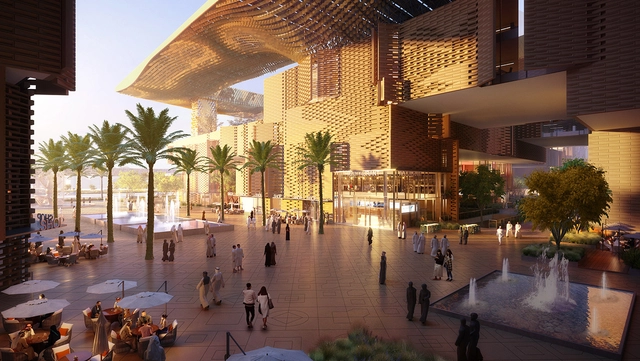
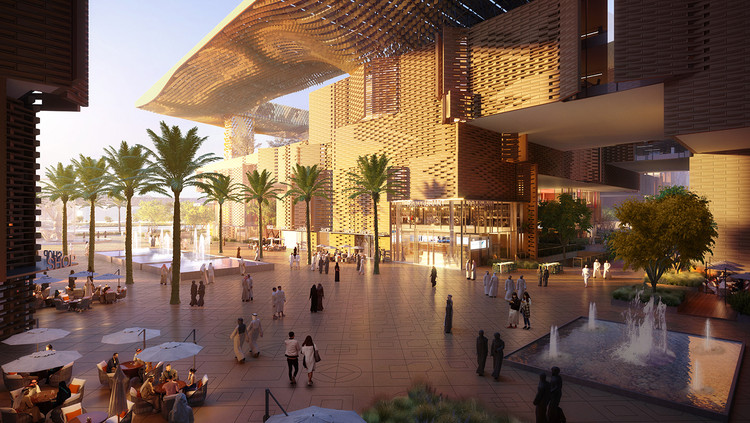
Architecture and design practice Brooks + Scarpa have designed a new complex for the Ministry of Environment Water and Agriculture (MEWA) in Riyadh, Saudi Arabia. The 1.2 million square foot complex includes seven buildings and a solar system that will generate 75% of the entire energy use of the complex of buildings. The team designed the project as a "tapestry of spaces and landscapes" offering connections through shaded outdoor rooms.
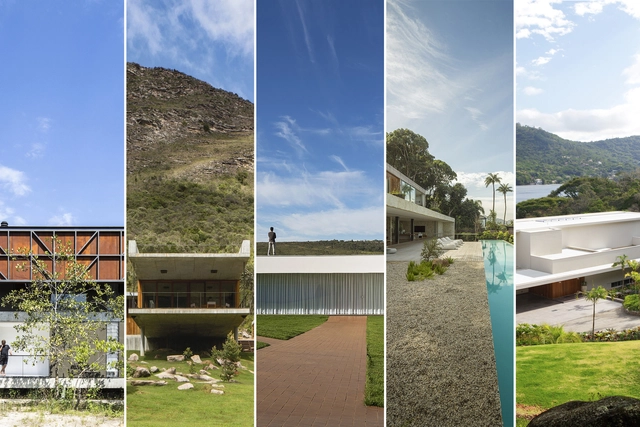
Italian architect Vittorio Gregotti, author of The Territory of Architecture (1966), believed that architecture had its origin when mankind placed the first stone on the ground. Recognizing a place is the first step towards an architectural project, whether intentionally or not. Understanding the project's location and its context is the basis for many design choices and is, therefore, a key aspect in the field of architecture.
.jpg?1617024156&format=webp&width=640&height=580)
More than a year into this worldwide experiment of working from home, we have not yet landed on the perfect formula for the workforce being once again in the workspace. Furthermore, not only has the Working From Home (WFH) situation lasted longer than anticipated, it has embedded itself into the way we will work forevermore. As vaccines are rolled out, leaders of all types of organizations must now seriously consider how to handle the return of their employees to the physical office space.
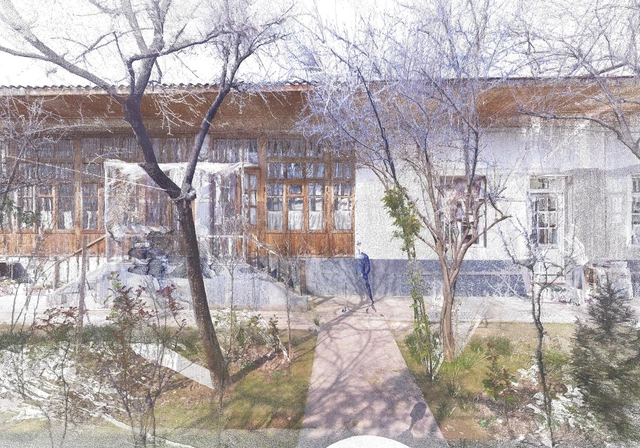
“Mahalla: Urban Rural Living” is the first participation of the Republic of Uzbekistan at the 17th International Architecture Exhibition – La Biennale di Venezia. Open to the public from May 22 to November 21, 2021, at Quarta Tesa, Arsenale, the exhibition is curated by Emanuel Christ and Christoph Gantenbein, professors of architecture and design at ETH Zurich, and founding partners of Christ & Gantenbein.
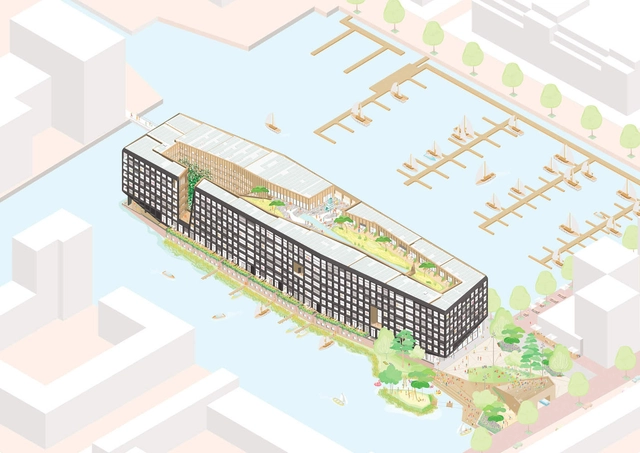
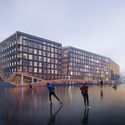
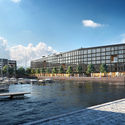
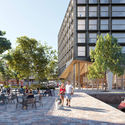
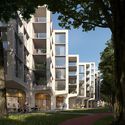
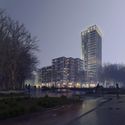
Landscape and architecture studios Felixx and Orange Architects have designed a new housing development in the heart of IJburg, Amsterdam. Rising atop an artificial island, the project is organized around the surrounding marina to provide family housing. The new residential building will include commercial and social programming, as well as new areas for the public realm.
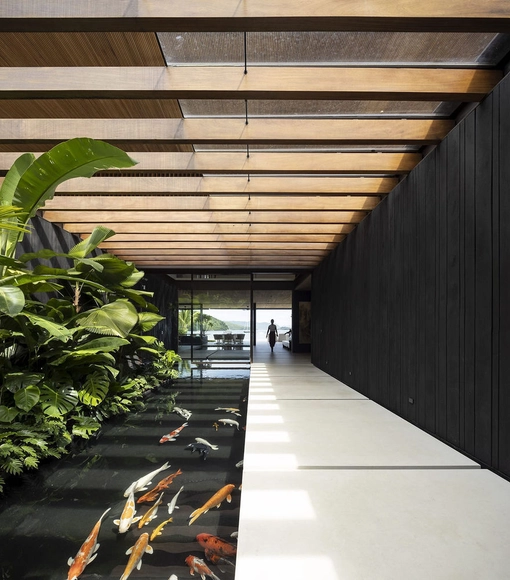
Solar radiation is one of the most important criteria in architectural projects, as it impacts several decisions ranging from the orientation of the building on the site to the choice of windows and doors. Therefore, to ensure the quality of lighting and visual comfort in building interiors, it is crucial to study the sun path and the quantity of sunlight in each given space.
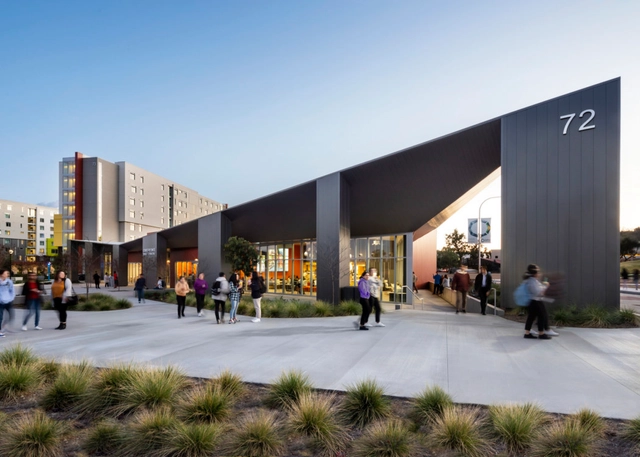
Beautiful design is grounded in functional, accessible and healthy environments. For designers Mariné Maroukian, Kristina Singiser, and Adeleh Nejati at HMC Architects, equity and wellness go hand-in-hand. Each of these three women are leaders in their community and in practice, championing new ways to address local needs and create positive impact.
.jpg?1553197408)
Between 1945 and 1966, the Case Study Houses program, following the Weißenhof-siedlung exposition, commissioned a study of economic, easy-to-build houses. The study included the creation of 36 prototypes that were to be built leading up to post-war residential development. The initiative by John Entenza, editor of Arts & Architecture magazine, brought a team to Los Angeles that featured some of the biggest names in architecture at the time, including Richard Neutra, Charles & Ray Eames, Pierre Koenig, and Eero Saarinen, among others.
The program's experiment not only defined the modern home and set it apart from its predecessors, but it also pioneered new construction materials and methods in residential development that continue to influence international architecture to this day. Take a detailed look at some of the program's most emblematic work together with recommendations for facing contemporary challenges.
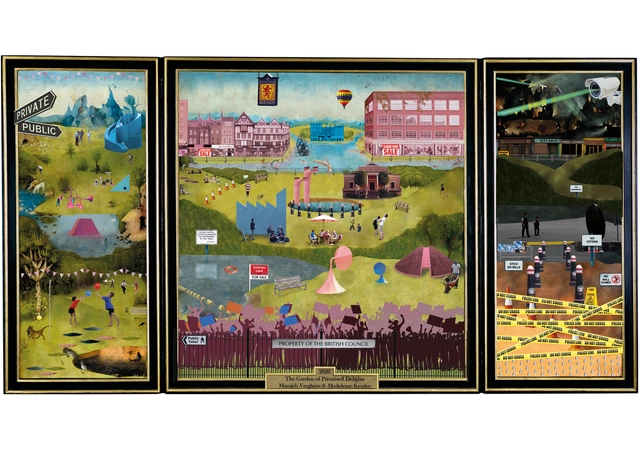
Curated by Manijeh Verghese and Madeleine Kessler, co-founders of multi-scalar design practice Unscene Architecture, the British Pavilion exhibition entitled The Garden of Privatised Delights, at the 17th International Architecture Exhibition – La Biennale di Venezia, will be open to the public from the 22nd of May until the 21st of November 2021. Commissioned by the British Council, the exhibition “reimagines how to make public space more inclusive, countering the rapid rise of privately-owned public space with an inspiring, alternative vision that urges both sectors to work together to create better-designed spaces for all”.
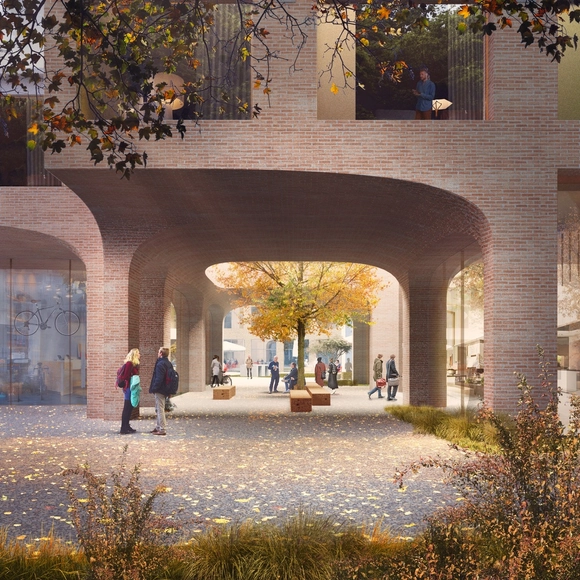
Powerhouse Company has won the competition to transform the Alo-location and neighborhood in Groningen, a city in the Netherlands. They teamed up with Houben/Van Mierlo, Vector-i and landscape architect DELVA to create the proposal. Dubbed HOLT, the project was developed with MWPO, Nijestee and Nijhuis Bouw. The plan for a new green and healthy neighborhood looks to the future of healthy living in the city.
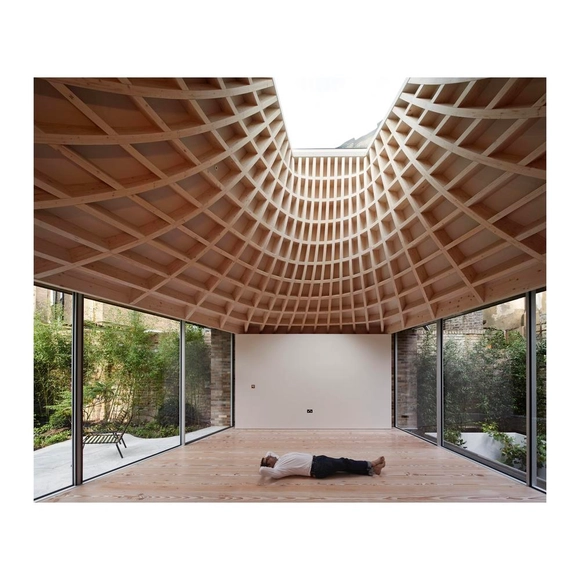
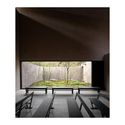
At ArchDaily, we always aspire to provide our community with all the tools and knowledge to help imagine, design, and build better cities. In order to bring inspiration and present more about what goes on beyond a complete project, we are launching a new series titled “Behind the Scenes”, where we showcase the work of visionary photographers, artists, and curators, and ask some questions that allow them to share more of what they do with the world. In every episode, we will be sharing with you the answers, along with images and videos of their work.
Kicking off the series is London-based architectural photographer Edmund Sumner.
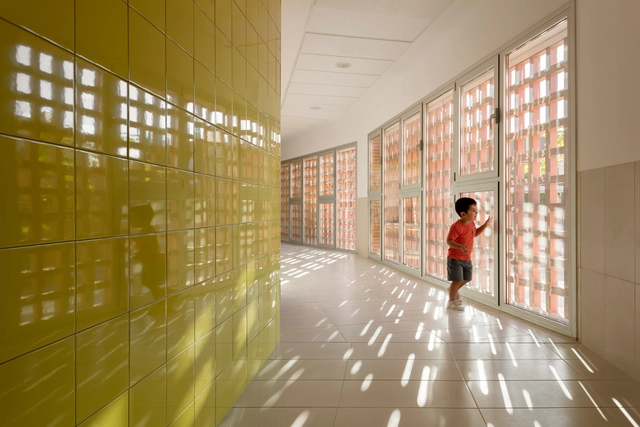
The ongoing pandemic has been a disruption to the everyday routines of billions around the world, as due to being confined to their households, the separation between work and rest has become extremely blurry, with people forced to rethink and reconfigure the layout of their personal spaces. Conversations have abounded on how to create flexible working spaces in a home environment, and if offices themselves are an outdated model that we should leave behind. A missing part of that conversation, however, is the impact that the pandemic has had on children, specifically primary-school level children, on their education - as inequalities are emphasized, some children learning with slow internet connection speeds, or struggling to have the space required to adequately complete educational activities.
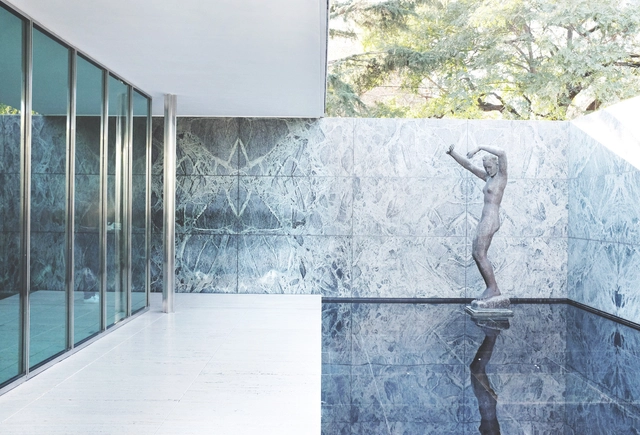
Ludwig Mies van der Rohe (27 March 1886 – 17 August 1969) is one of the most influential architects of the 20th century, known for his role in the development of the most enduring architectural style of the era: modernism. Born in Aachen, Germany, Mies' career began in the influential studio of Peter Behrens, where Mies worked alongside two other titans of modernism, Walter Gropius and Le Corbusier. For almost a century, Mies' minimalist style has proved very popular; his famous aphorism "less is more" is still widely used, even by those who are unaware of its origins.








.jpg "Residential houses \"Eigen Haard\", Spaarndammerplantsoen, Amsterdam, Original state, 1915. Image Courtesy of Wikimedia")



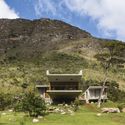

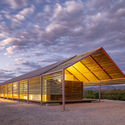
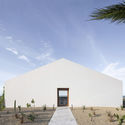




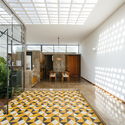

.jpg?1615834807 "Atlântica House / AR Arquitetos. Image: © Federico Cairoli")







0090BB.jpg?1616694288 "Naila House. Photo: © Edmund Sumner© Edmund Sumner")
0019_BB.jpg?1616694314 "Naila House. © Edmund Sumner")


