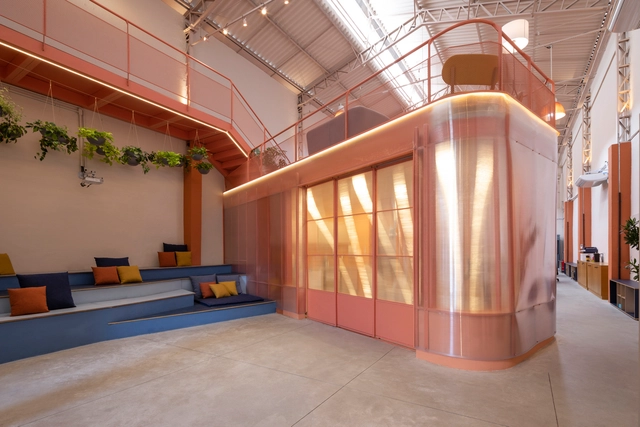
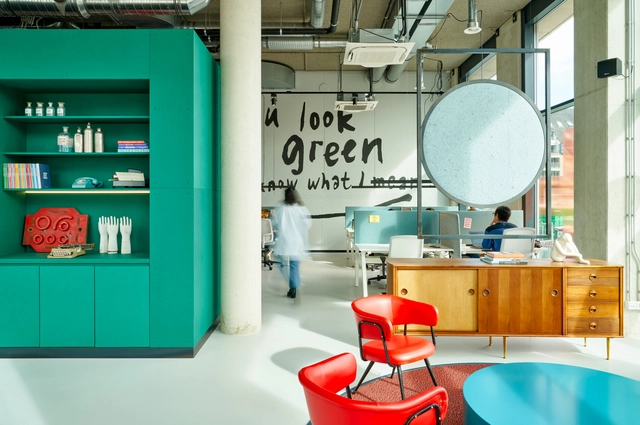
Delft Hotel Interiors. Image via Frame Magazine used under terms of "fair use"
In recent years, there’s been a significant amount of clamor around the habits and impacts of the millennial generation. Headlines often read “Millennials Responsible for the Decline of Cereal”, “Millenials Are Why We No Longer Use Napkins”, and “Are Millennials Killing the Housing Market?” After being burdened with the blame of the death of almost anything, the millennial workforce has now moved away from the spotlight to make room for the next generation, “Gen Z”, which many believe are going to make significant societal disruptions- especially in the architectural and design workforce.
Videos
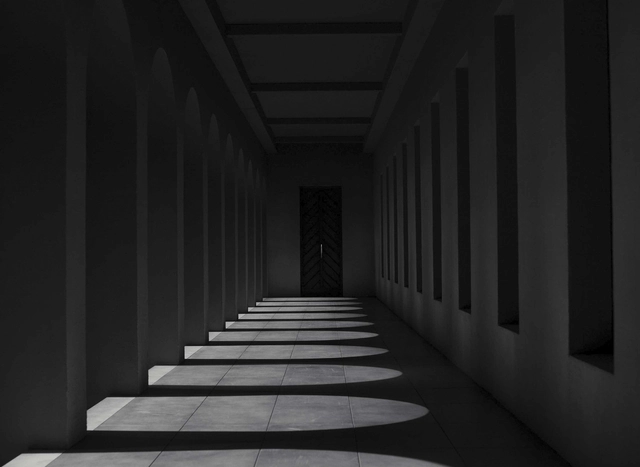
Set Stills. The Tragedy of Macbeth. Image via Stefan Dechant
Stefan Dechant is a production designer with over 25 years of experience in the industry working alongside reputable filmmakers like James Cameron (Avatar), Tim Burton (Alice in Wonderland), and Sam Mendes (Jarhead). Recently, Stefan served as the production designer for the upcoming Apple TV+ film 'The Tragedy of Macbeth' directed by Joel Coen. Why did this interest us immediately? Because he had the task of creating 35 Black & White, Abstract Sets.
In the following interview with Stefan, he tells us all about the inspiration behind the aesthetic, his working process between sketches and digital, and finally the stage of building all of this. Read more below.
The European Commission and the Mies van der Rohe Foundation have announced the 40 shortlisted works that will compete for the 2022 European Union Prize for Contemporary Architecture – Mies van der Rohe Award. The shortlist featured projects built across 18 different European countries, with Spain, Austria, and France topping the list with 5 entries each. The winners will be announced in April 2022 and the Award ceremony will take place in May 2022.
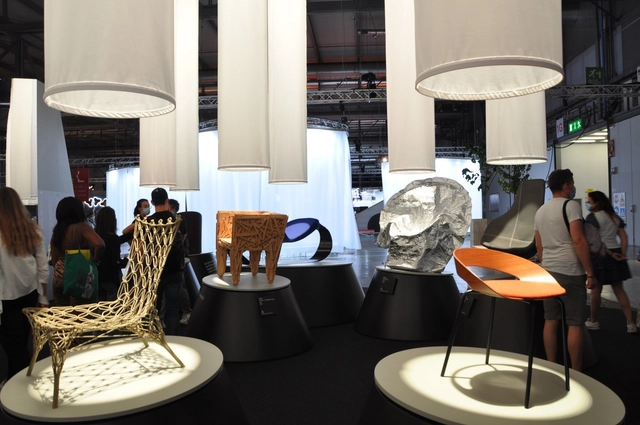
The 60th edition of Salone del Mobile.Milano has been postponed and will now take place from the 7th till the 12th of June 2022. The decision was taken by the Board of Federlegno Arredo Eventi, in agreement with Fiera Milano, who voted to postpone the event from April 2022 to June 2022.
As the new year kicks off, we're taking a look ahead to the projects we're most looking forward to in 2022. With a mix of cultural and commercial programs, the designs are located across five continents, with many under construction for multiple years. Designed across a wide range of scales, they represent a mix of interconnected landscapes, museums, and new skyscrapers.
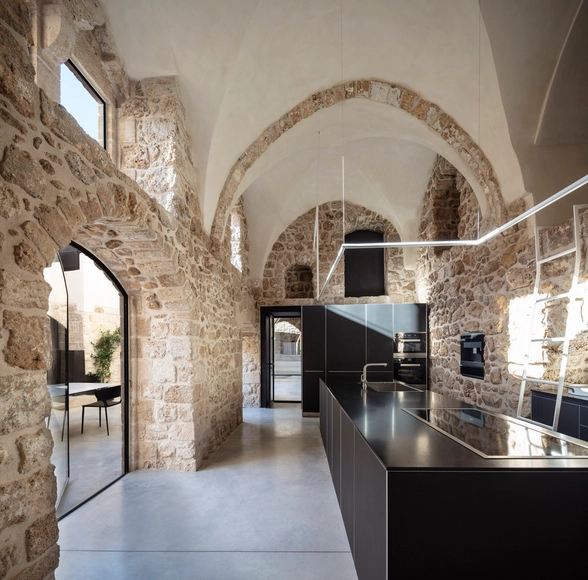
Old Jaffa House 4 by Pitsou Kedem Architects. Image Courtesy of German Design Awards 2022
The German Design Awards have been presented by the German Design Council for the tenth time. The internationally renowned prizes are awarded to companies whose pioneering products and projects stand out in the categories of “Excellent Product Design”, “Excellent Communications Design” and “Excellent Architecture”. In addition to the “Winner” and “Special Mention” awards, the jury gave out a total of 81 “Gold” awards – the highest distinction of the German Design Awards.
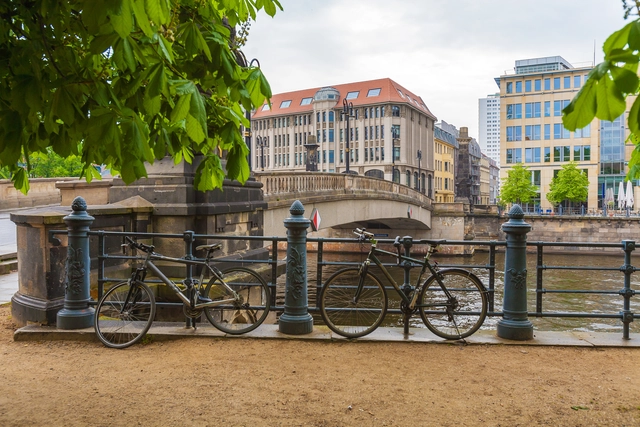
Volksentscheid Berlin Autofrei (People’s Decision for Auto-Free Berlin), has proposed a plan to limit cars within Berlin's Ringbahn, a long circle route around the inner city, making it the world's largest car-free area once approved. The citizen-initiative is aimed mostly at banning the use of private cars in central Berlin, with the exception of emergency vehicles, garbage trucks, taxis, delivery vehicles, and residents with limited mobility, who would all be given special access permits.
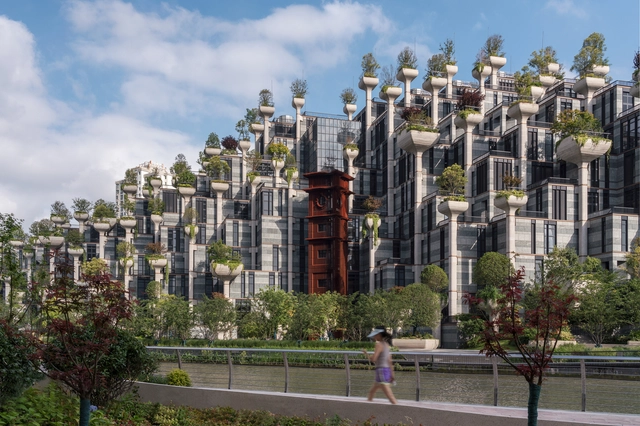
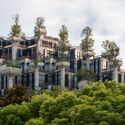
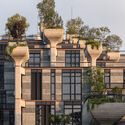
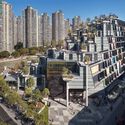
The first phase in the development of Heatherick Studio's 1,000 Trees project in Shanghai was recently inaugurated, showcasing the finished mountain-like structure. The design gives prominence to the structural columns, each topped by a large planter featuring a tree, which becomes the project's main feature. Balancing the requirements for a dense development with the search for a human scale, Heatherick Studio chose to approach the project as "a visual extension" of the neighbouring park, proposing a new topography defined by its integrated greenery.
We are starting to say goodbye to the year and after a review of all the contents developed, we find ourselves with a wide range of architectural advice that involves both interior and exterior spaces. Addressing issues from the domestic sphere to more technical and decisive questions, these are intended to serve as a guide and/or suggestions, rescuing those necessary considerations to take into account when planning our spaces, regardless of the use or the future they contemplate.
Across the globe, museums function as cultural landmarks – spaces of significance that quite often become defining symbols of a city’s architectural landscape. Historical examples such as the Museum de Fundatie in the Netherlands and The Louvre Museum in France continue to attract millions of visitors, with contemporary architectural interventions to them redefining their spatial contribution to their local context.
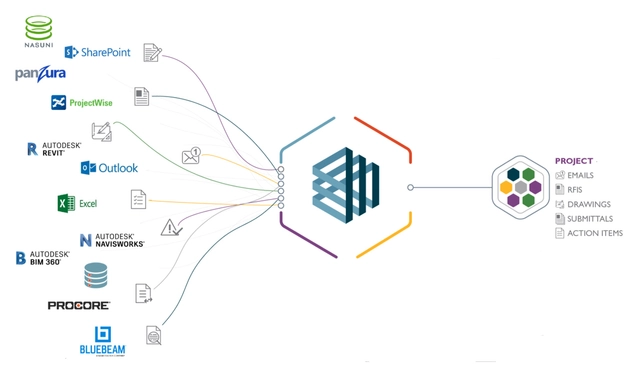
From planning to construction, architecture is more than designing buildings. With many multidisciplinary actors involved and the continuous flow of images, plans, and files, any project is also about managing large amounts of information. Because architects usually have tight deadlines – having to complete a certain number of buildings in a specific time frame – data must be managed productively and efficiently. However, as construction projects and delivery methods continue to increase in complexity, managing information has become more difficult than ever. And with the COVID-19 pandemic added to the mix, architecture firms now have a remote workforce which impacts how and where employees access information. Therefore, in order to ensure effective project delivery, the challenge lies in successfully managing project information.
The dawn of the Anthropocene has thrown the idea of adaptive reuse into the limelight: effectively the pinnacle of urban regeneration and revitalization. It utilizes the presence of existing buildings with historic and cultural value and re-purposes them to be functional. Essentially a form of architectural salvage; a sustainable and viable means of rebuilding.
Recent events such as the pandemic has highlighted inequalities in our cityscape, the inadequate segments in a state of disuse and disrepair. Adaptive reuse can replenish these areas and create new cultural hotspots, encouraging activity and creating vibrant and healthy mixed-use environments.
Below is a diverse selection of cultural hotspots using Adaptive Reuse
Video games and virtual worlds are jam-packed with imaginative environments to explore, time periods to peruse, and invented architectural styles to thumb through within every reality we choose to engross ourselves into. With recent advancements in technology, greater than ever are we witnessing the latest PC and console generations harboring the ability to produce life-like settings for players to roam around, get lost, and explore all the nuances the seemingly authentic reality holds.
Videos
Catie Newell by Alibi Studio. Image Courtesy of Stewart Hicks
Buildings are like bodies with organs. When this is the case, with a little extra effort, buildings can be dismantled instead of demolishing them. Dismantling involves carefully removing salvageable components, storing them, and finding them new homes. While this solution is not always possible, it can be part of a sustainable effort that — in addition to keeping material out of landfills — preserves the history and memory embedded within unique materials and fragments. It also honors the human labor invested in our environment. This video explores the reuse of building materials and what it means to be surrounded by fragments with history. It also profiles institutions dedicated to the dismantling and dissemination of building materials, as well as artistic practices that reconfigure our existing built environment including Noah Purifoy and Catie Newell of Alibi Studio.
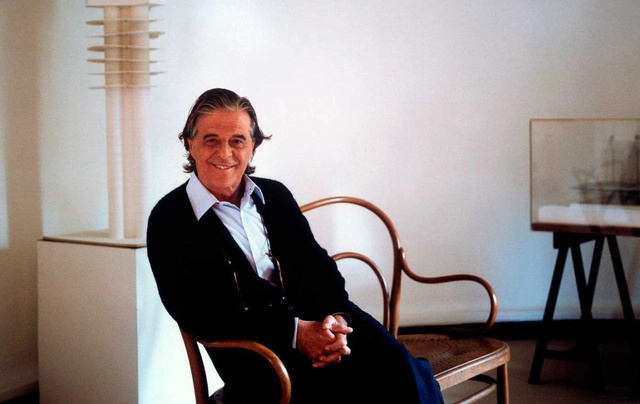
Ricardo Bofill, the Spanish architect founder of Taller de Arquitectura (RBTA), designer of the iconic Walden 7 and more than 1,000 projects in forty countries, has passed away at 82 in Barcelona on Friday, January 14, as officially announced by his own firm through a statement.
With its quantifiable objectives and measurable performance, sustainability often passes as a technological challenge. Its primary language is that of data, equipment, and engineered systems, most often translated into a hyper-technologized layer hidden within a design upholding pre-existing aesthetic norms. As architecture is the image of society at one moment in time, how does the focus on sustainability translate into architectural language, further legitimatizing the efforts to establish an equitable relationship with the environment? Architecture serves as an expression of attitudes, and since sustainability has become a fundamental value, it is worth looking at whether or not it has produced an aesthetic transformation.
Technology manufacturer 2N is diversifying its range of products by offering A&E, BIM technology, and other strategies for architects and designers.
2N is a Prague-based company engaged in the development and manufacturing of products in the field of IP intercoms and access control systems. According to an IHS report in 2016, 2N is the largest global manufacturer of IP intercoms, and a major innovator in the field of IP access systems, IP audio, and IP lift communicators. The company was established in 1991 in the Czech Republic, where its headquarters remain to this day.
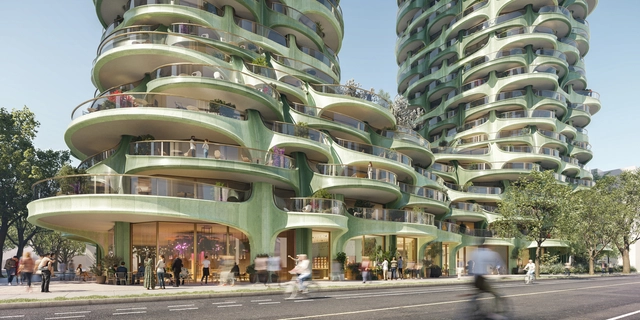
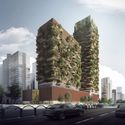
Heatherwick Studio has unveiled an entirely new update for its 1700 Alberni Towers residential project in Vancouver, British Columbia. The new design features extended outdoor living areas with soaring views of the surrounding built environment and landscape, inspired by the province's strong connection with the wilderness, as well as the use of long-lasting, local materials.
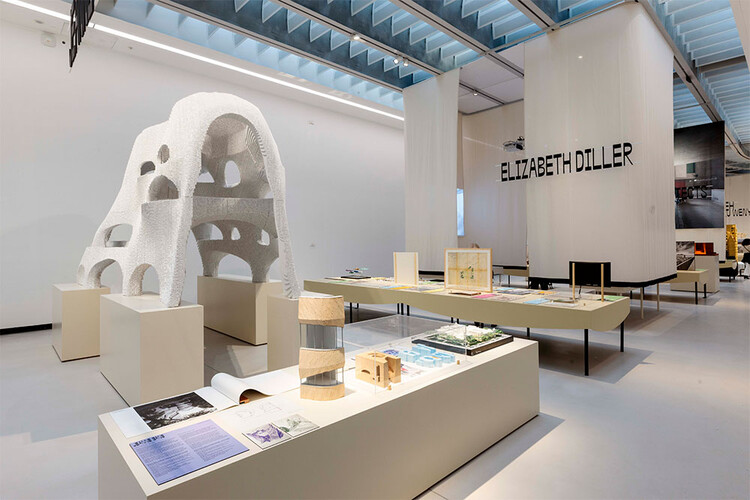
MAXXI Museum celebrates women in architecture in a new exhibition that documents the transformative role of female architects in the profession's evolution over the last century. Curated by Pippo Ciorra, Elena Motisi, Elena Tinacci, and with exhibition design by Matilde Cassani, Good News. Women in Architecture weaves together in four thematic sections the history of women in architecture, with the work of contemporary practitioners and the voices of young collectives, telling the stories of over eighty female architects.
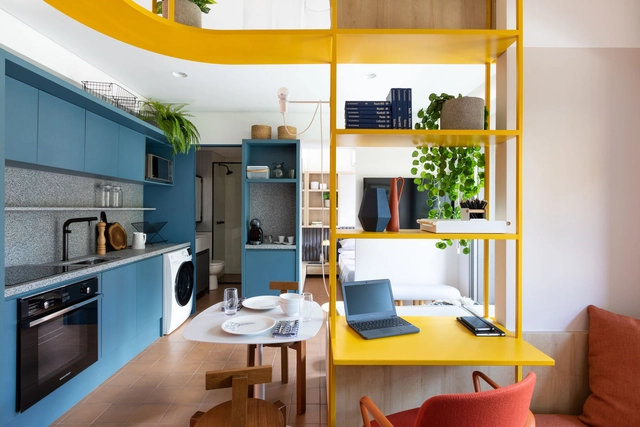
Unusual materials, vibrant colors and daring compositions are some adjectives that can be applied when talking about Superlimão's work. It all started in 2002 when Antonio Carlos Figueira de Mello, Lula Gouveia, Thiago Rodrigues and former partner Sergio Cabral founded the firm, naming it in honor of the Super Lemon candy – “sour at the beginning and sweet at the end”. Since then, this hint of humor - present even in the name itself - permeates all of the team's creations, hinting at new experiences and arousing curiosity as well as the taste of the candy.
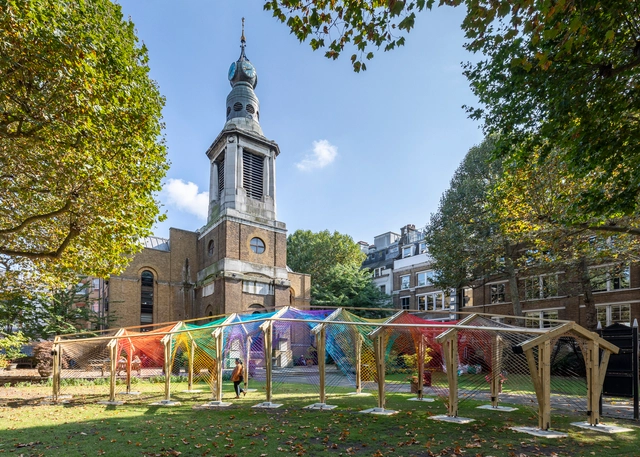
The London Festival of Architecture (LFA), the world’s largest annual architecture festival is returning for its 13th edition this summer, transforming the city's neighborhoods into a public display of installations, exhibitions, talks, and special events. Following two years of digitalized editions, this year's LFA falls under the theme of ‘act’, and will see a return of physical events alongside digital realms across the capital.
When we started ArchDaily 14 years ago, we wanted to represent it through the archetypal image of a building, in an isometric view, blue color. After a quick sketch, we had the first version of our logo, which iterated throughout the years, adapted to diverse applications from wooden trophies to stickers, becoming a staple brand among architects.
As we continue into a new era, that started in 2020 together with Architonic and that continues today with the announcement of our new group DAAily Platforms, we thought it was time for an upgrade and we started to explore what we want to represent as a symbol, connected with our mission and views about architecture.
New Orleans was designed by its early settlers in 1721 as a Cartesian grid. You know it as the famous French Quarter or Vieux Carré. Such grids are named for the Cartesian coordinate system we learned to use in algebra or geometry class, perpendicular X and Y axes, used to measure units of distance on a plane. The invention of René Descartes (1596–1650), these grids reflect his rationalism, the view that reason, not embodied or empirical experience, is the only source and certain test of knowledge. William Penn used a similar grid in 1682 in selling Philadelphia as an urban paradise where industry would thrive in the newly settled wilderness. And just as the massive buildings of Italian Rationalist (i.e., Fascist) architecture express authoritarian control, so, too, Cartesian grids implicitly say: Someone is in charge here. We’ve got this. Trust us.
When we decided to join Architonic, we saw a big opportunity to combine our expertise on curating projects and products, enriching the quality of the content we deliver to millions of professionals and enthusiasts around the world, with one vision: to help everybody who is part of architecture to do a better job, having a positive impact in our environment.
As complementary platforms we look at this big challenge from each one's lenses: project inspiration, materials knowledge, product research and specification.























.jpg?1642168917 "La Muralla Roja / Ricardo Bofill. Image Courtesy of Ricardo Bofill")
.jpg?1642169030 "The Factory . Image Courtesy of Ricardo Bofill")