Produce personalized presentation boards that distill complex concepts into simple visual representations with a few helpful tools and effects.

Produce personalized presentation boards that distill complex concepts into simple visual representations with a few helpful tools and effects.

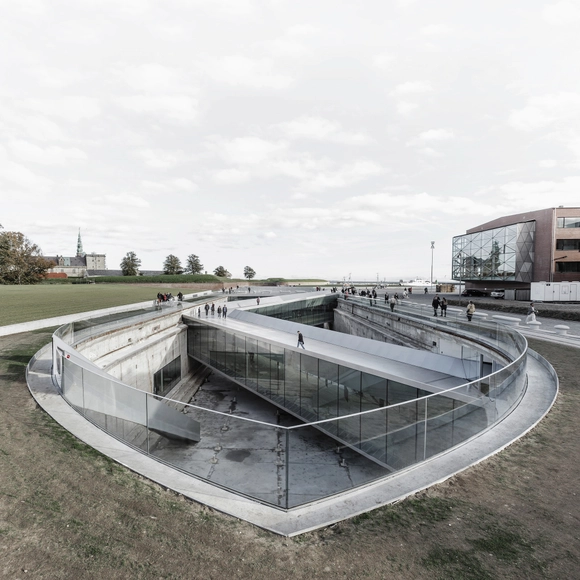
With a voluminous portfolio and a bold, light-hearted persona, Bjarke Ingels is among the most respected young architects of the era. Now, as he enters his forties, this article from Icon looks at one of his longest-running projects: The Danish National Maritime Museum. Exploring the development of this project from competition winning proposal in 2006 to completion last year, it discusses some of BIG’s more daring decisions for the museum’s design, as well as Ingels’ development as an architect on the international stage.

The potential solution to smog and pollution may be hovering right over our heads, now that Students at the University of California - Riverside have designed a pollution reducing rooftop tile. According to their calculations, cladding one million rooftops with the tiles could remove 21 tons of nitrogen oxides -- daily. Currently the Los Angeles area spits out 500 tons of nitrogen oxides a day, so the tiles are just one piece of the puzzle in reducing pollution - however the students are imagining their nitrogen-oxide-eating Titanium Dioxide compound in exterior paints, concrete and more. To see all the possibilities, read the full article here.

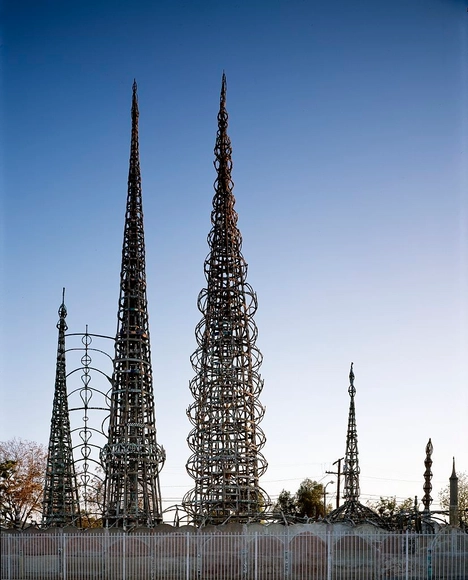
Frank Gehry, renowned for his often enormous public works projects, is turning his attention to something on a smaller scale: a campus for the non-profit organization CII (Children’s Institute Inc.) in the Los Angeles neighborhood of Watts. Perhaps best known for Watts tower, the architecture of Watts is shaped by limited income and the need to deter vandalism. according to the LA Times Gehry’s intervention will hopefully be a tipping point for a neighborhood desperate to change not just its aesthetic but its future. Read the full article about the project here.

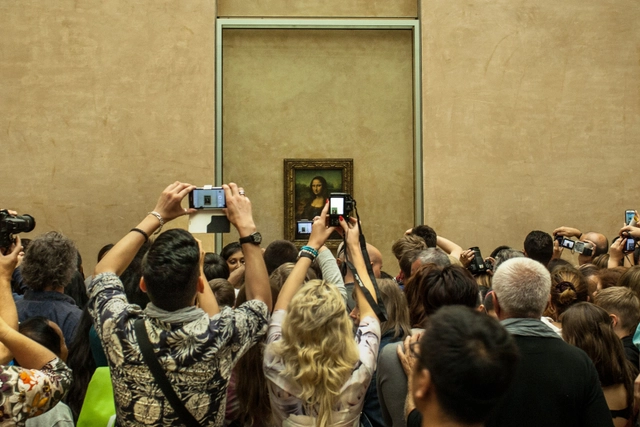
In an article for the New York Times Rachel Donadio examines Masterworks vs. the Masses. From the Louvre in Paris to London's British Museum, Florence's Uffizi to the Vatican Museums, the increasing surge of visitors to these international cultural nodes "has turned many museums into crowded, sauna-like spaces." Balancing everyone's right to be "nourished" by cultural experiences with protecting and preserving the works of art in question is a very real problem. According to Donadio, "even when the art is secure, the experience can become irksome." With some museums seeing annual visitors of up to 6.7 million visitors (British Museum), addressing the issues faced by institutions that are a victim of their own success is becoming more and more pressing. Read the article in full here.

The House of Lords has announced that the proposal to appoint a 'Chief Architect' in the UK, one of the major recommendations of this year's report by Terry Farrell, will be discussed by the UK's minister for architecture Ed Vaizey and Housing and Planning minister Brandon Lewis. The proposal was among 60 recommendations made by the Farrell Review at the end of March. Other proposals due to be discussed by ministers are a the idea of establishing a Place Leadership Council and design review panels for infrastructure projects. More after the break...

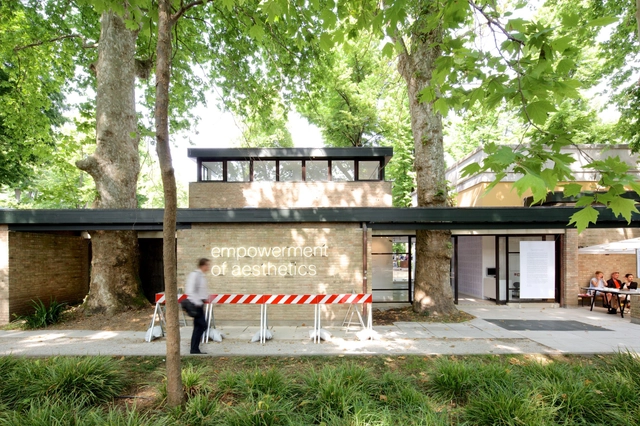
Denmark's exhibition for the 2014 Venice Biennale focuses on the country's history as a pioneer in the development of a welfare state, and the role that architecture, in connection with art, literature and science had in creating an aesthetic manifestation of this 'better life for all'. By exploring the output of a range of fields in connection to a wider social movement, Empowerment of Aesthetics comes to a fuller understanding of how modernity affected architecture in Denmark.

In 2008, a group of students from SCI-Arc put out a proposal for a series of mixed income city housing projects for Dubai. In their design, wealthy residents would live in apartments on the building’s perimeter, with natural daylight and views of the city, while low-income housing tenants would live in the core of the building, isolated from “the upper class.” The proposal was a parody aimed at the classist design of residential development in Dubai, but what unsettled the SCI-Arc students was that their proposal generated almost no controversy. Inspired by the recent approval of a similar 'poor door' in a project in New York, this article from the LA Times covers that parody, and shows that both at home and abroad, residential design is slipping towards socio-economic segregation.

As the Syrian civil war continues to rage, more and more Syrian citizens are emigrating across the border to refugee camps in Jordan. While these camps were intended to be temporary, the sheer number of people they support and the uncertainty of when the Syrian crisis will end has leant them a sense of permanence. This article from the New York Times takes a look at how Syrian refugees are prompting urban development and what this means for the future of refugee camp design.

The World Architecture Festival (WAF) has announced the shortlist for its first Wood Excellence award, which will honor a project where wood is an integral part of the design. Out of over 40 projects considered, WAF has selected eight for the shortlist, including a21studio’s “The Tent” and “Salvaged Ring,” as well as DSDHA’s “Alex Monroe Studio” and the University of Hong Kong’s “The Pinch.”

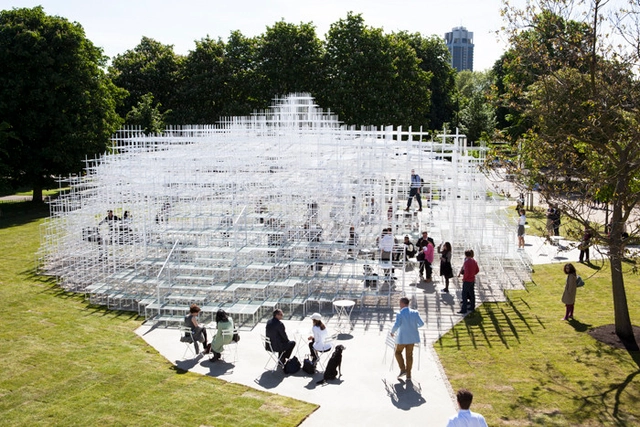
Mirroring the Serpentine Galleries of London, the Naomi Milgrom Foundation has announced its own yearly pavilion commission for the city of Melbourne. Sited in the Queen Victoria Memorial Gardens, the premier "MPavilion" will be designed by Sean Godsell, opening October 6th of this year. The pavilion will host a variety of community events, including art installations and performances, over a four month period. It remains to be seen whether the MPavilion will have a lasting impact on the architectural culture of the city, as some critics have pointed out. To learn more about this now annual commission, visit this article from infolink.

The results of the Royal Institute of British Architects (RIBA) Future Trends Survey for June show that the Workload Index among UK practices increased slightly to +34 (from +33 in May) with confidence levels amongst RIBA practices about the level of future workloads remaining "very strong and widespread across the whole of the UK". Whereas last month’s survey showed Wales and the West with the brightest outlook, this month's survey saw Scotland top the index with a balance figure of +50, the East Midlands and East Anglia tailing closely behind with a figure of +48. Workload forecasts from practices of all sizes are optimistically reporting positive balance figures.

What are the challenges in Africa's current rapid socio-economic development that architects have the capacity to address? Can foreign architects play any role on the African continent today and during the coming decades? If so, how?

The Academy of Neuroscience for Architecture (ANFA) will have their 2nd international conference between September 18 and September 20 in La Jolla, California.

Jane Duncan, an Architect based in the English county of Buckinghamshire, has been elected as the 76th President of the Royal Institute of British Architects (RIBA). Taking over the reigns from current President Stephen Hodder in September 2015, Duncan will become only the third female President after beating fellow candidate Oliver Richards (by a majority of 52% of the vote) to the institute's highest position. According to the Architects' Journal, only 16.7% of RIBA members voted in the election.

eVolo Magazine is pleased to invite architects, students, engineers, designers, and artists from around the globe to take part in the eVolo 2015 Skyscraper Competition. Established in 2006, the annual Skyscraper Competition is one of the world’s most prestigious awards for high-rise architecture. It recognizes outstanding ideas that redefine skyscraper design through the implementation of novel technologies, materials, programs, aesthetics, and spatial organizations along with studies on globalization, flexibility, adaptability, and the digital revolution. It is a forum that examines the relationship between the skyscraper and the natural world, the skyscraper and the community, and the skyscraper and the city.

Mayor de Blasio has declared a “total reset” for public housing in New York. At the same time, the decline of affordable housing options has become New Yorkers' greatest concern.

"For the most part, the way urbanists view black neighborhoods (and other low-income neighborhoods and communities of color) are as problems that need to be fixed. At the heart of what I want to say is what can we as urbanists learn from these neighborhoods?" So asks Sara Zewde, a landscape architecture student at Harvard's Graduate School of Design and this year's Landscape Architecture Foundation’s Olmsted Scholar, in a fascinating profile on Metropolis Magazine. Read more about Zewde and her work here.

Starting September 19th, the ten winners of WorldWide Storefront (WWSf) - an initiative by Storefront for Art and Architecture to create alternative spaces for the expression/exchange of art/architecture - will open across the globe for the next two months. While one winning proposal invites artists to travel the world on commercial freight ships, another will host exhibits and events out of a traveling semi-truck in the United States. For the full list of winners and more information, click here.