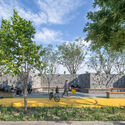
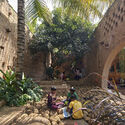
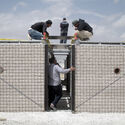
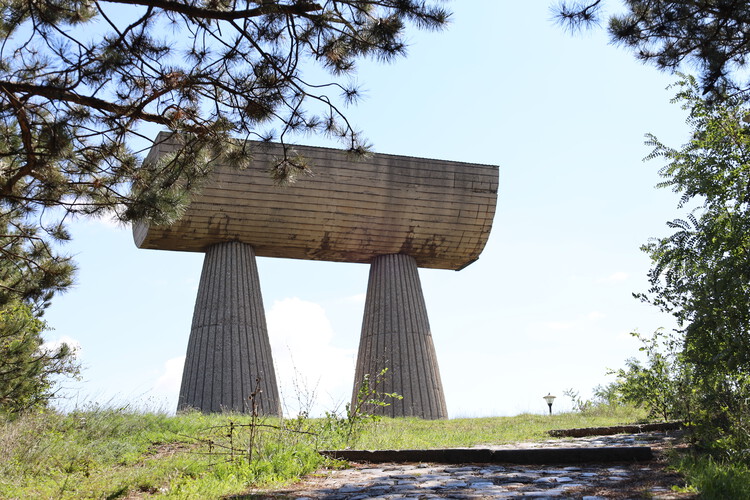
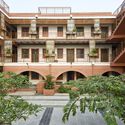
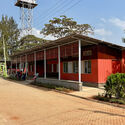
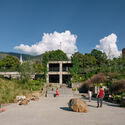
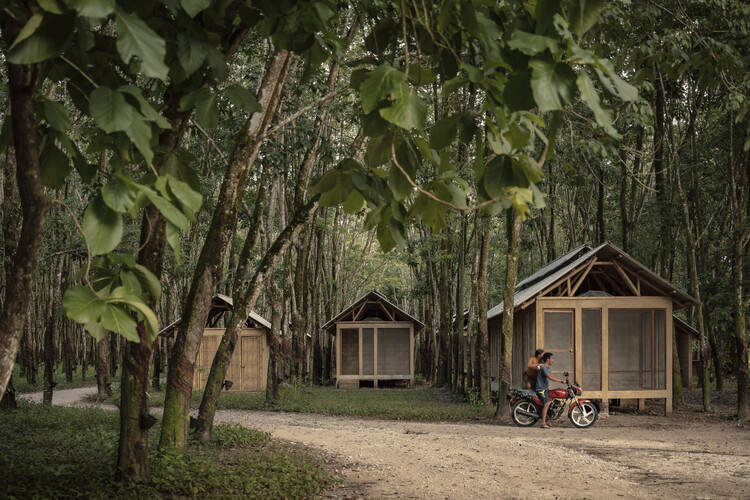
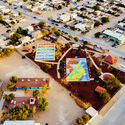
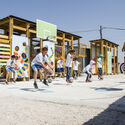
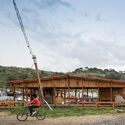
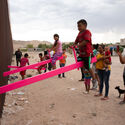
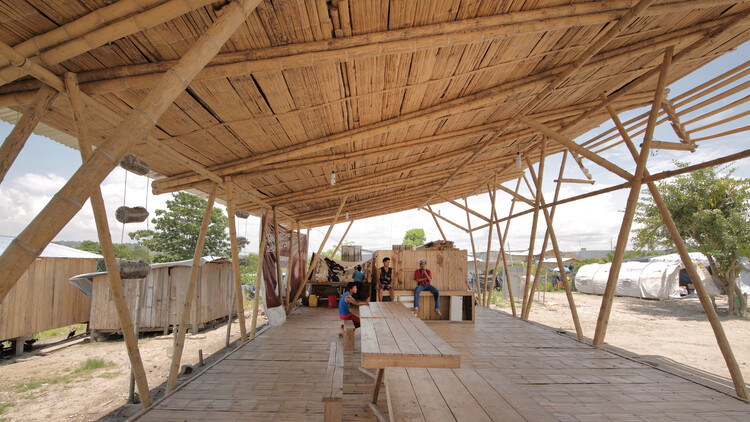
Every year on September 21, the United Nations marks the International Day of Peace, an observance that invites global reflection on the conditions necessary to cultivate non-violence, social stability, and human dignity. Under the 2026 theme, "Invest in Peace – For Everyone, Everywhere, Every Day," the international body emphasizes that peace is neither static nor self-sustaining. Rather than an abstract condition defined solely by diplomatic agreements, peace operates as an ongoing social process, shaped by economic equity, institutional integrity, and the quality of civic life across communities.
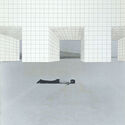
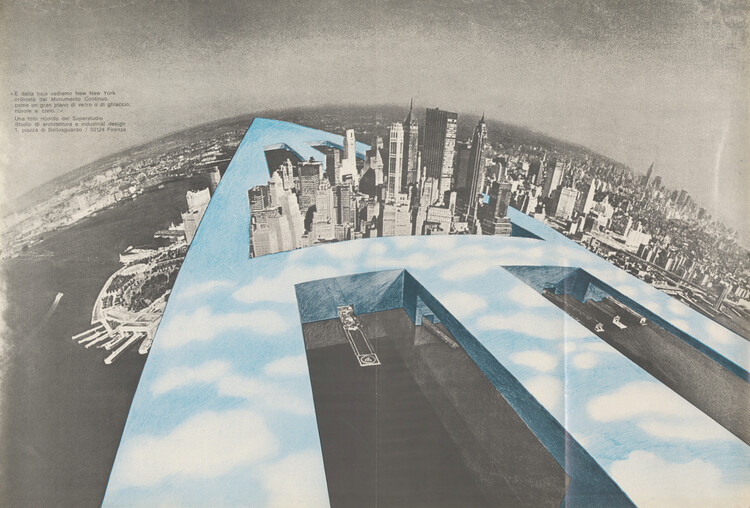
The Continuous Monument- 1969. Image Courtesy of Superstudio
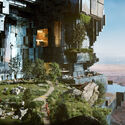
Ask an architect what the hardest problem in the discipline is right now. The block of unmaintained postwar housing two streets from their office rarely comes up. What comes to their mind is the pressure differentials on Mars, or the tensile loads on a floating platform; because unclaimed ground has no one to negotiate with, no history to answer to, no tenant to remember the last renovation, which makes it considerably easier to design for.
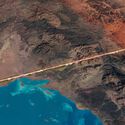
Architects think of themselves as solving a harder problem than the one next door. A project, like The Line, a 170-kilometer city meant to house nine million residents, with a site with no prior claimant, is not architecturally harder than a site with a hundred years of tenancy, contested ownership, and a planning department that remembers the last three developers who used the word "community" and meant something else. It is, considerably, easier. No one to persuade, no history to answer to, no argument to lose. Which raises the question of whether the harder problem is sitting two streets from the office, unsolved, and the easier one is the one getting the renderings and the funding rounds; then 'ambition' is the wrong word for what is happening. Something is being avoided, and we need to start thinking about what.
On the International Day of Democracy, this year the United Nations revisits a traditional idea within the concept: broad citizen participation in government decision-making. On this occasion, the international body invites reflection on how participation and the inclusion of diverse voices in government decision-making can help build a more equitable society. From a spatial perspective, reflection on democracy can move beyond this vertical framing and instead understand it through encounter. What does it mean for a space to be democratic? How can architecture contribute to achieving the principles historically associated with democracy? In the current context of crisis in political organization systems worldwide, this day serves as a platform to question individualization and authoritarianism through the socio-spatial tools available to us.
This article is part of our new Opinion section, a format for argument-driven essays on critical questions shaping our field.
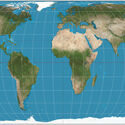
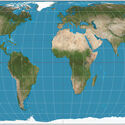
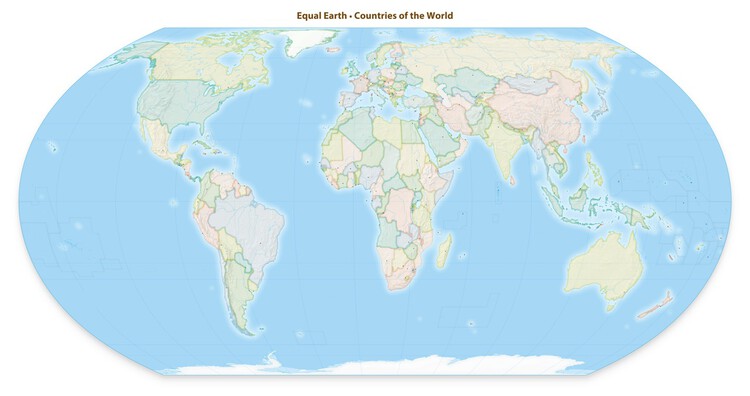
For centuries, most of the world has looked at itself through a 16th-century instrument of spatial representation. On September 4, the United Nations General Assembly voted to change that, adopting a resolution that asks governments, schools, media organizations, and technology companies to retire the Mercator projection wherever the relative size of countries actually matters, in favor of equal-area alternatives like the 2018 Equal Earth projection. The vote passed 164 to 1. The United States was the sole vote against.
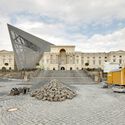
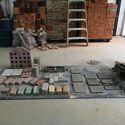
This week's stories share a common thread: the value of looking beyond established frameworks. Two French-Moroccan architects reflected on what architecture can learn from Moroccan culture and local knowledge, while the United Nations General Assembly voted to promote world map projections that more accurately represent the relative size of continents- a symbolic shift that challenges centuries of Eurocentric geographical representation, with direct implications for how we understand Africa and the Global South. A similar spirit of questioning convention runs through this week's featured projects, from city governments repurposing abandoned buildings for circular construction to the German Pavilion for the upcoming Venice Architecture Biennale addressing social isolation and democratic coexistence. On the Radar this week, we cover three recently announced projects: a new multifunctional sports complex in Hilversum that brings together sport, education, and community life around a continuous interior circuit; a low-density residential district in Yerevan where landscape restoration preceded construction; and a landscaped public plaza commissioned by the Las Vegas Raiders to replace underutilized parking lots adjacent to Allegiant Stadium.
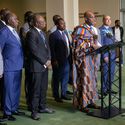
The United Nations General Assembly has voted to promote the use of worldmap projections that more accurately represent the relative size of continents. The resolution was presented during a session at the UN headquarters in New York on September 4 and received 164 votes in favor, with one country voting against and six abstaining. Sponsored by Togo, the resolution encourages governments, educational institutions, international organizations, and technology companies to use equal-area projections when geographic scale is relevant. The resolution does not formally replace or prohibit the use of the Mercator projection, which has been widely used since the 16th century. Instead, it calls for greater use of projections that preserve the relative area of landmasses and encourages education about the limitations of representing the Earth's curved surface on a two-dimensional map. The 2018 Equal Earth projection is identified as one example of a map that more accurately represents continental scale.
sauerbruch hutton and Studio Gang have been selected to renovate the German House in New York following an international competition organized by the Federal Republic of Germany. Located on United Nations Plaza in Manhattan, the building houses the Consulate General of Germany, the Permanent Mission of Germany to the United Nations, and several affiliated cultural institutions. The project marks the first collaboration between the two practices. Berlin-based sauerbruch hutton will serve as Lead Designer, while Studio Gang will act as General Planner and Architect of Record, overseeing project delivery and implementation. The proposal focuses on adapting the existing building, with the stated goal of extending its lifespan while improving its operational and environmental performance.
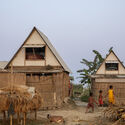
Every year on August 9, and since 1994, UNESCO has commemorated the International Day of the World's Indigenous Peoples. The United Nations has not yet adopted an official definition for the term 'Indigenous peoples,' but considers, for social recognition, self-identified non-dominant groups of society, with distinct language, culture, and beliefs, organized in separate social, economic, and political systems. From a territorial perspective, the UN understands the term through historical continuity with pre-colonial or pre-settler societies, and the group's strong links to territories and surrounding natural resources. The persistence in maintaining and reproducing ancestral environments and systems is also recognized as an element of identity, encompassing other designations such as first peoples/nations, aboriginals, or ethnic groups. Following the occasion's aim to raise awareness, in this article we present contemporary reflections, regional cases, and interviews about ancestral constructive knowledge and how it can build the future.
There is a standard way of telling the history of architecture and food. It begins with the human decision to cultivate, to store, to distribute, to consume, and ends with the building that decision produced. In this version of events, food is the occasion and architecture is the response.
But what if the story runs differently? What if the tomato built Almería? What if the cod redesigned the North Atlantic? What if the soybean is, at this moment, constructing a port in Santos and demolishing a forest in the Cerrado simultaneously, and the architect has simply not been told? These are descriptions of processes already complete, or well underway, that have produced some of the most spatially consequential contemporary landscapes. Much of the built environment is shaped by the pressures, metabolisms, and territorial ambitions of what we eat. Architecture, in this, is often less a project than a consequence, and the discipline has been telling its own story from the wrong end.
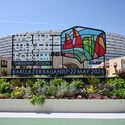
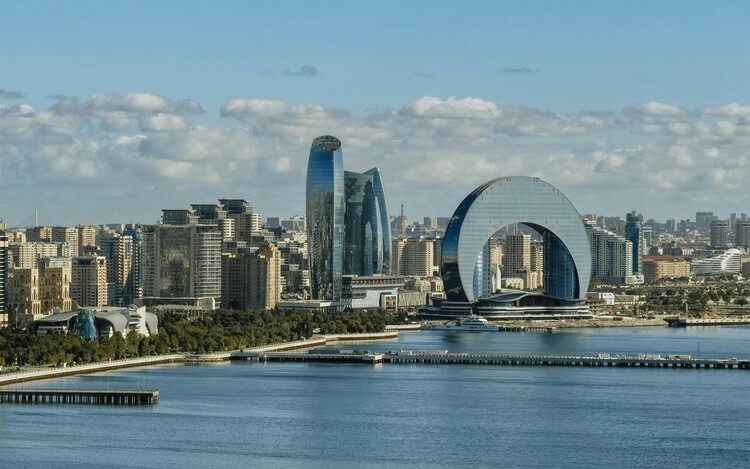
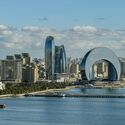
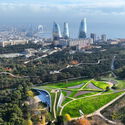
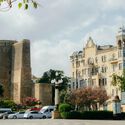
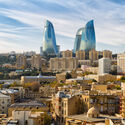
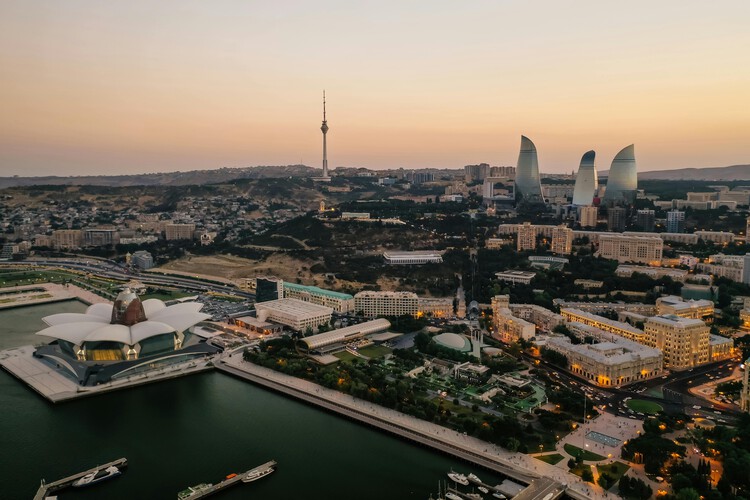
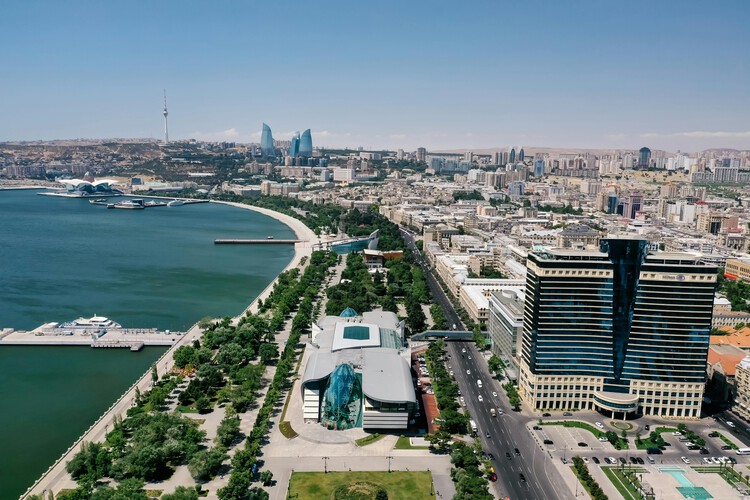
Co-organized by UN-Habitat and the Government of Azerbaijan, the thirteenth session of the World Urban Forum 13 will take place in Baku from May 17 to 22, 2026, under the theme "Housing the World: Safe and Resilient Cities and Communities." Convened every two years by UN-Habitat, the World Urban Forum is considered one of the leading international conferences dedicated to urbanization and the future of cities. Bringing together architects, planners, policymakers, researchers, local governments, and civil society organizations, the forum serves as a platform for discussing the challenges shaping contemporary urban environments and the strategies needed to address them.
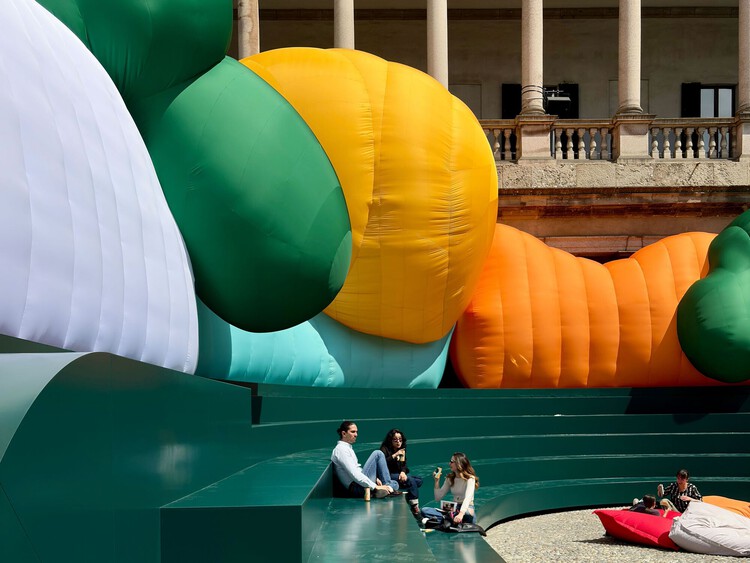
Ooooh, that's EpiQ! By Ricardo Orts Ulises. Image Courtesy of ArchDaily's editors on-site in Milano
Observed annually on April 22, International Mother Earth Day frames this week's architectural discourse through an urgent call to rethink the relationship between the built environment and natural systems, foregrounding themes such as urban rewilding, the restoration of aquatic ecosystems, and the integration of ancestral knowledge into contemporary design practices. On another note, the opening of Salone del Mobile.Milano 2026 and Milan Design Week 2026 seek to reinforce the global relevance of design as a platform for exchange and experimentation, activating the city of Milan through a network of exhibitions and installations that engage both industry and public audiences. Among the announcements of award-winning architectural projects this week, the United Nations' House of No Waste (HØW) Competition highlights emerging architectural responses to climate and resource challenges. The awarded projects demonstrate scalable strategies for reducing material waste and embodied carbon while promoting adaptable, socially responsive, and resource-conscious public infrastructure.
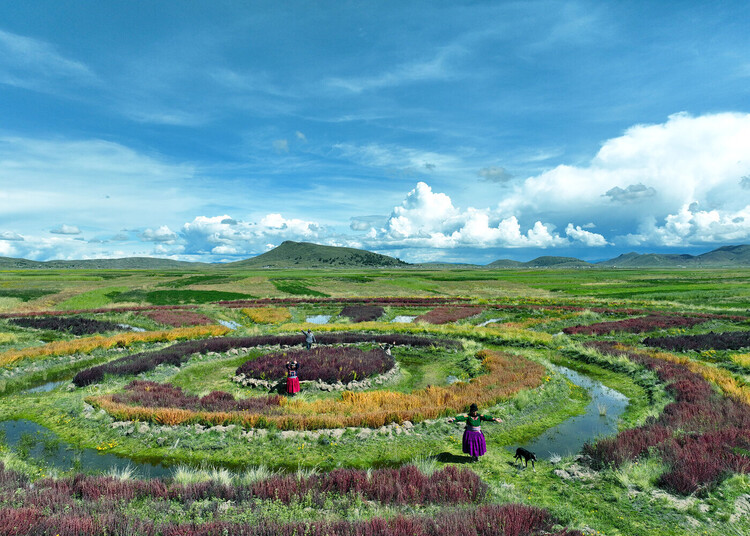
Waru Waru agricultural field. Image via World Monuments Fund
The United Nations' International Mother Earth Day, observed annually on April 22, aims to "promote harmony with nature and the Earth." In light of the urgency posed by climate change, it seeks to raise awareness of the challenges of preserving all forms of life supported by the planet. It is a call to the global community to safeguard biodiversity while striving to balance economic, social, and ecological systems. Crimes against biodiversity include large-scale practices such as deforestation, land-use change, intensified agriculture, livestock production, and illegal wildlife trade, all considered by the UN to be accelerating factors in the destruction of the planet.
World Monuments Fund (WMF) is an independent organization dedicated to safeguarding significant places that enrich people's lives and foster mutual understanding across cultures and communities. Since 2008, the World Monuments Fund/Knoll Modernism Prize has been a biennial award recognizing outstanding achievements in the conservation of buildings emblematic of the modernist architectural movement. The prize honors individuals and organizations that revitalize modern built heritage through innovative and sensitive architectural interventions.
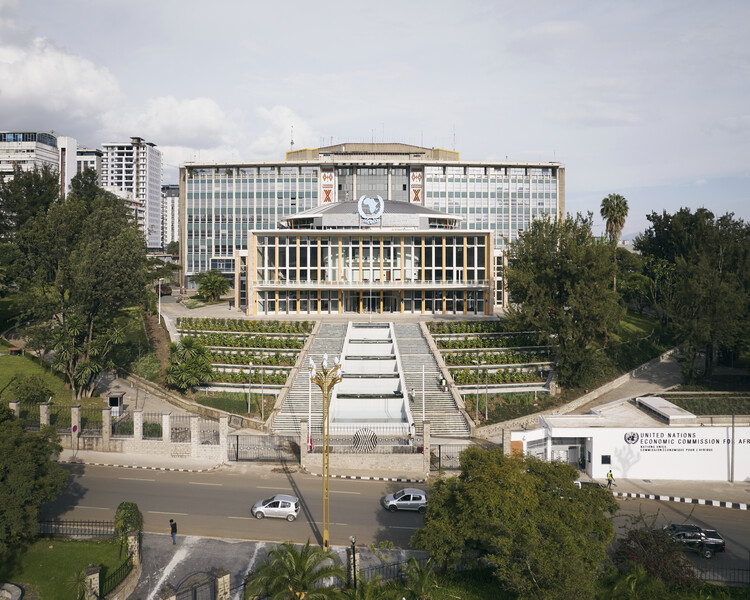
On January 22, 2026, WMF and Knoll announced the Australia-based architecture firm Architectus as the recipient of the 2026 World Monuments Fund/Knoll Modernism Prize for its conservation of the United Nations' Historic Africa Hall in Addis Ababa, Ethiopia. The jury recognized the project for reestablishing a significant work of African modernism as an active venue for diplomacy and cultural exchange. In addition to the main prize, the jury also awarded Paul Rudolph's Umbrella House in Sarasota, Florida, United States, with the Stewardship Award for Modernist Homes.
President Ilham Aliyev has signed an order declaring 2026 the "Year of Urban Planning and Architecture" in the Republic of Azerbaijan. The decision establishes a national framework focused on urban planningpolicy, architectural culture, and sustainable development, aligning with Azerbaijan's preparations to host the 13th World Urban Forum (WUF13) in Baku in May 2026. According to the order, the designation aims to preserve Azerbaijan's centuries-old traditions while integrating contemporary approaches that respond to current social, environmental, and spatial challenges. The President's Administration will now prepare and submit a comprehensive action plan for the year within one month.
December 18 marks the United Nations' International Migrants Day, which aims to highlight the need for safer, fairer, and more inclusive migration systems. Proclaimed on December 4, 2000, the day seeks to recognize the multiple dimensions of migration beyond its economic and humanitarian aspects. According to the UN, mounting evidence indicates that international migration is beneficial for both countries of origin and destination. In this sense, International Migrants Day offers an opportunity to spotlight the value of the possibility to migrate and the contributions of millions of migrants worldwide to the cities and cultures in which they are integrated.
Aligned with this perspective, the UN's 2025 theme, "My Great Story: Cultures and Development," emphasizes how human mobility drives growth, enriches societies, and helps communities connect, adapt, and support one another. At the same time, International Migrants Day also acknowledges the increasingly complex environment in which migration occurs. Conflicts, climate-related disasters, and economic pressures continue to force millions of people from their homes in search of safety or opportunity. From both perspectives, it is essential to recognize the role of architecture in building integrated, multicultural communities and in responding to the conditions that lead people to migrate from their territories in the first place.
Human Rights Day is observed annually on 10 December worldwide. It commemorates the anniversary of the Universal Declaration of Human Rights in 1948. Drafted by representatives with diverse legal and cultural backgrounds from all regions, the Declaration was proclaimed as a common standard of achievement for all peoples and all nations. For the first time, the document set out fundamental human rights to be universally protected and inalienable, entitling every human being to them regardless of race, colour, religion, sex, language, political or other opinion, national or social origin, property, birth, or any other status. Today, the Declaration serves as a global blueprint for international, national, and local laws and policies. Available in 577 languages, it is the most translated document in the world. The United Nations has set the theme for this year's observance as "Human Rights, Our Everyday Essentials," aiming to "reaffirm the values of human rights and show that they remain a winning proposition for humanity."