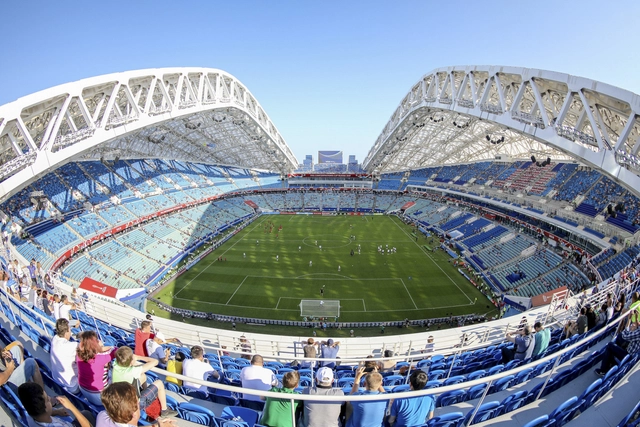
When the Greeks carved stone steps into the side of a hill, they were aiming to create a seated area for people to rest and from which to have an excellent view of the stage at the amphitheater's center. over two millennia later, these objectives are still key to stadium design principles, however, with an ever-increasing global reach and the need for multiple functions, the goal posts for what makes a successful arena are always being moved. As you prepare to watch the 2018 World Cup hosted in Russia, take a look at this list of notable stadium designs in World Cup history which have influenced the evolution of stadium design.
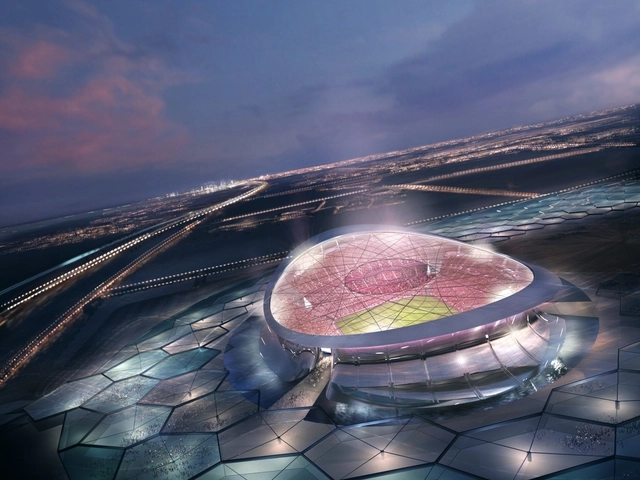
As the 2018 World Cup approaches, we architects can already look ahead to the next tournament. The 2022 FIFA World Cup in Qatar offers the most exciting opportunity in stadium design for decades, with the competition relying on an almost entirely new footballing infrastructure. Several world-renowned designers have submitted proposals, and the following set of newly released time-lapse videos show the progression of each stadium, as we approach four years to the competition’s start. Emphasising the structural shells, the videos highlight a sometimes overlooked facet of stadium design. To materialize the effortless magic of the initial renders - like those produced by Foster + Partners and Zaha Hadid Architects - phenomenal levels of engineering and problem solving are required, and in the early stages of construction, this becomes the visual focal point. Read on to see the beauty of these structural marvels, but be warned - you may develop World Cup fever.
Every four years, millions of soccer fans tune in to watch the best national teams battle it out at the World Cup—all for a chance to call themselves the best soccer team in the world. The FIFA World Cup, much like the Olympic games, encourages a great deal of development in the host country, with the addition of stadiums, infrastructure, and other programs needed to support the mass of fans who will head to cheer on their country. This year, Russia will be hosting the event and will be spending an estimated 10 billion dollars in both building new arenas, and refurbishing their existing facilities. The 2018 tournament will host 65 matches across 11 cities in 12 of the most modern stadiums in the world. We've compiled a list that show these impressive stadiums and arenas, and offer a glimpse as to how they will be used long after the winner of the 2018 World Cup is crowned.
Check out the twelve stadiums that will host matches in the 2018 World Cup below.
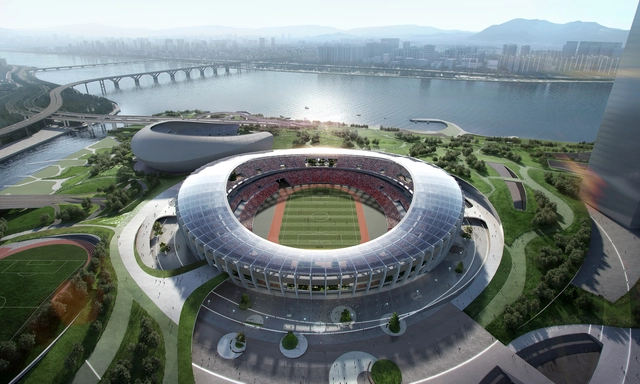
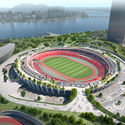
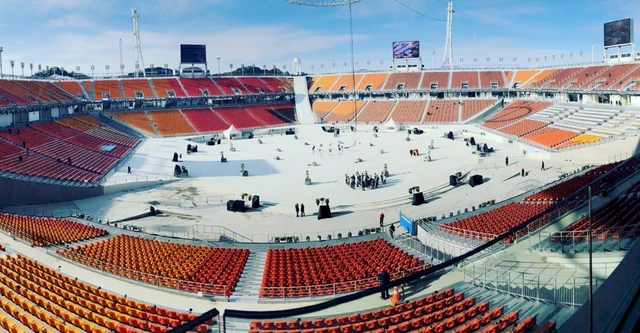
Built before the 1988 Summer Olympics, the Seoul Olympic Stadium in the Korean capital city’s Songpa District remains an active and treasured institution. Designed by Kim Swoo-geun, the stadium represents a significant moment in Korea’s modern history and remains a venue for large concerts and the home of Seoul E-Land FC.
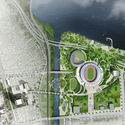
While the Olympic Stadium itself will stand visibly intact in its original form, this spring the Korea National Urban Planning Association staged a competition for a new design of the Jamsil Sports Complex, which includes several sporting venues and buildings adjacent to the stadium, as well as almost 160,000 square meters of total area. Following the deadline earlier this month, the jury has announced NOW Architects in collaboration with NBBJ and SAMOO, as the winners of the competition.
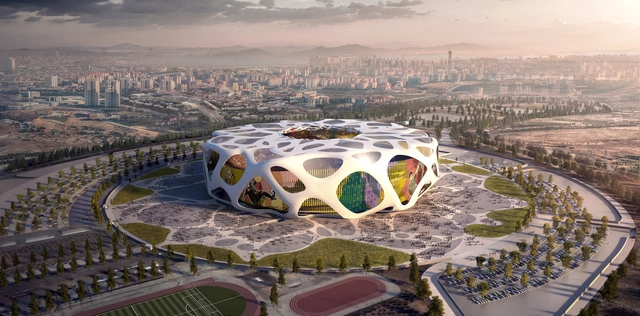
AFL Architects have released details of their proposed stadium design for Turkey’s bid to host the UEFAEuro 2024 soccer tournament. The Ataturk Stadium seeks to become the new home of Turkish football, featuring a closer relationship between spectators and the game, enhanced acoustics, and world-class hospitality.
The scheme involves extensive renovation and adaption of the existing Olympic stadium structure and forms a crucial part of Turkey’s bid for the Euro 2024 tournament, which was submitted in April 2018. In collaboration with the Turkish Football Federation (TFF), AFL has examined the readiness of seven stadia, and the major upgrade and design of three stadia.
https://www.archdaily.com/893637/afl-architects-reveal-images-of-turkeys-soccer-stadium-for-uefa-euro-2024-bidNiall Patrick Walsh
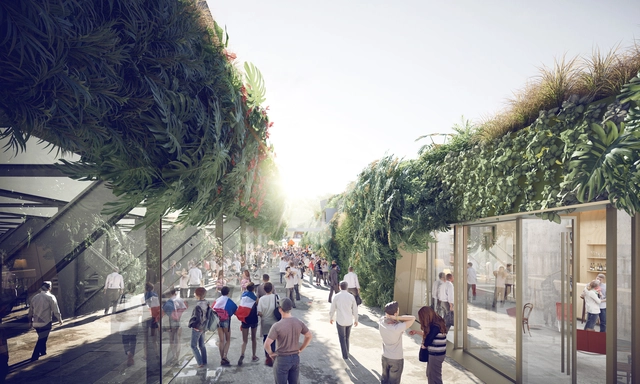
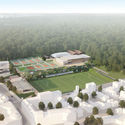
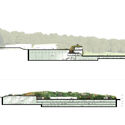
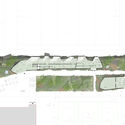
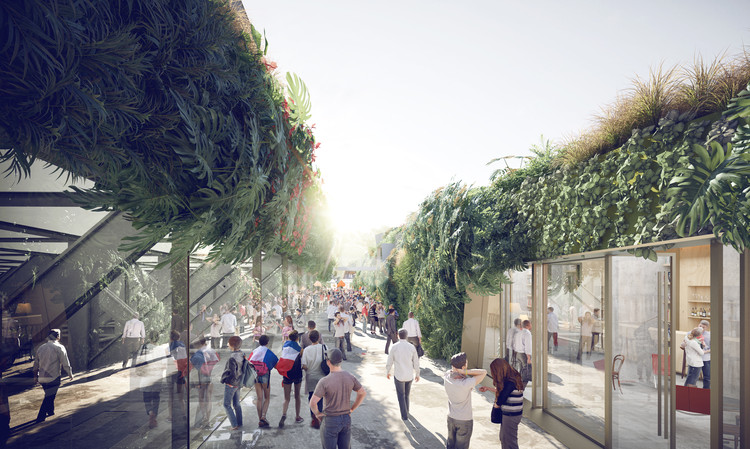
France-based SCAU Architectes has proposed their design for a new stadium project to be built on the outskirts of Paris. The site, which is located at the edge of a forest in Clamart, France, inspired the team to create a design that extends the forest by covering the stadium in a green mass of vegetation.
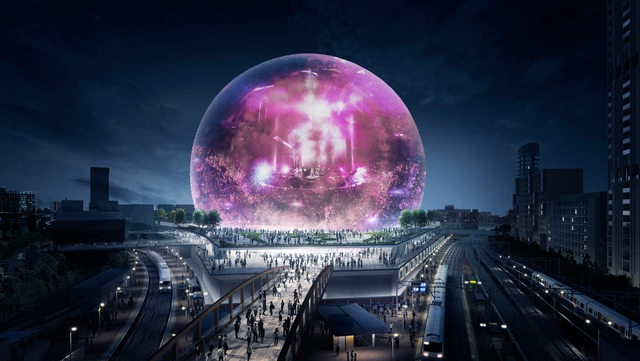
The Madison Square Garden Company has unveiled images of its proposed MSG Sphere in London, a next-generation venue seeking to “redefine live entertainment” through an array of technology geared towards transformative, immersive connections between artists and audiences.
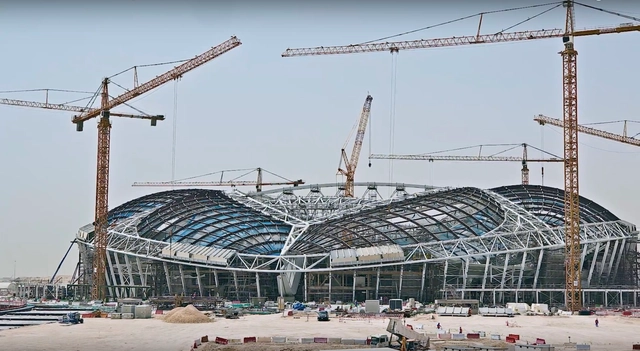
Construction of Zaha Hadid Architects’ Al Wakrah Stadium for the 2022 World Cup in Qatar is marching forward, with an opening date anticipated by the end of 2018. As shown in a video released by the Supreme Committee for Legacy & Delivery, the stadium’s concrete lower bowl has been poured and its massive roof pillars have been successfully installed.
Traditionally, Winter Olympics stadiums have stuck to a design that obscures the sky and protects against the elements in order to keep the guests warm. This year, the Pyeongchang 2018 Winter Olympics organizing team wanted to try something different. Guests will watch the three-hour opening ceremony at the PyeongChang Olympic Main Stadium – and it will be roofless.
Pyeongchang, located not too far from the border of North Korea, is notorious for one of the worst winters in the country. Temperatures in PyeongChang are forecast to reach minus 14 deg C (about 7 deg F), partly due to the powerful, biting winds that barrel down from Siberia and the Manchurian plain. This may be the coldest Olympics since the 1994 Olympics in Lillehammer, Norway. And because of the curious roofless architecture, the roughly 35,000 spectators will be completely exposed.
Videos
Courtesy of The Supreme Committee for Delivery & Legacy
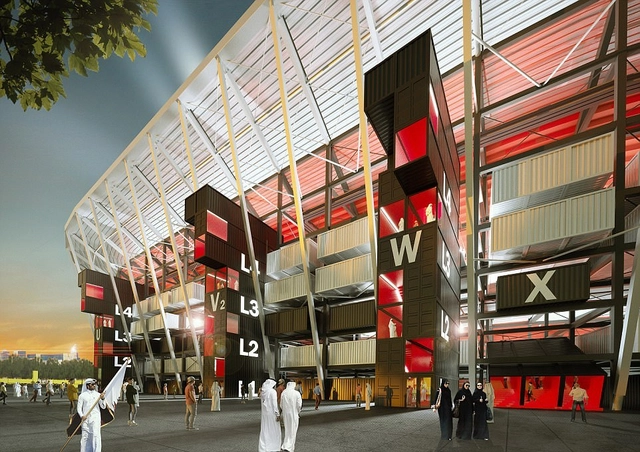
The design of the seventh stadium being constructed for the 2022 FIFA World Cup in Qatar has been revealed. Designed by Fenwick Iribarren Architects, the Ras Abu Aboud Stadium will be constructed from a series of modified shipping containers sitting within a steel framework, allowing it to be quickly assembled, disassembled and then reassembled in a new location following the conclusion of the event.
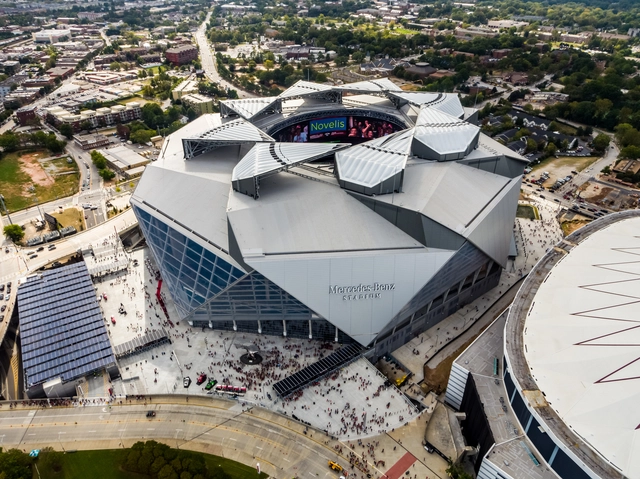
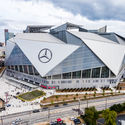
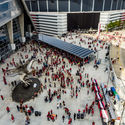
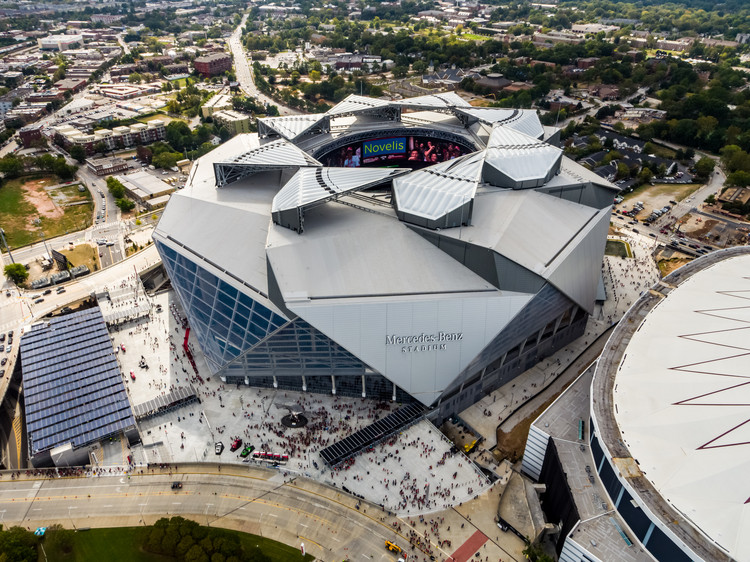
HOK's Mercedes-Benz Stadium is officially the first LEED Platinum certified professional sports stadium in the United States. The new home to the NFL’s Atlanta Falcons boasts the highest sports venue LEED score at 88 total points.
There is much more to learn from this stadium than just its unique retractable roof system. The two-million-square-foot venue is an unprecedented model for sustainability and performance innovation. Its notable design solutions conserve water, lighting, and energy.
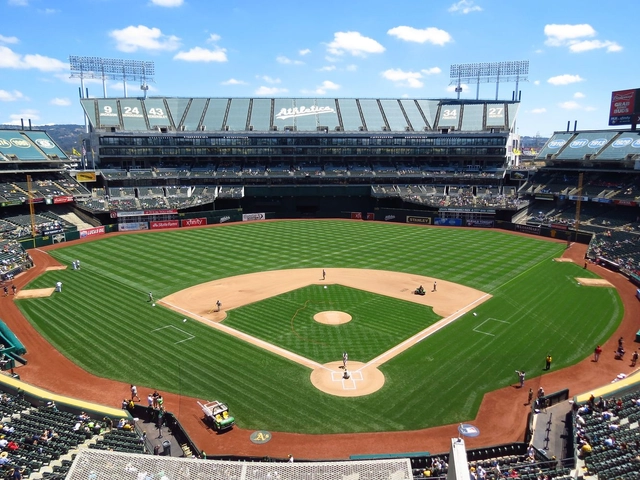
(c) Flickr user Redlegsfan21 licensed under CC BY-SA 2.0
The Oakland Athletic's have hired four firms to lead the design and urban planning for their new ballpark on the Peralta site, near the heart of Oakland. HOK will be collaborating with Snohetta on the design of the ballpark. Snohetta will also be working on the masterplan along with Sasaki and Oakland-based Studio T-Square.
On Thursday, July 29th, the Estadio Wanda Metropolitano's roof was officially completed. This new stadium, a renovation of the old Peineta athletics stadium, is the new home ground of Spanish football club Atlético Madrid.
In this video, FCC Construcción captures the intense work on the roof which was designed and constructed by engineers Schlaich Bergermann Partner. The milestone marks four months of intense work since the installation of the first of the 96 PTFE radial panels at the north end of the stadium.
Videos
Courtesy of Supreme Committee for Delivery & Legacy
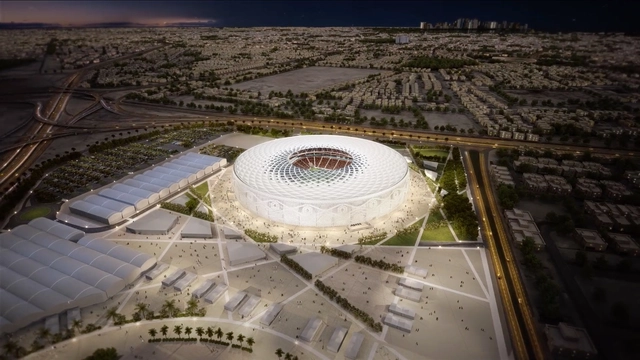
Designs have been revealed of the latest, and most central soccer stadium being constructed for the 2022 World Cup tournament in Qatar. Designed by Qatari architect Ibrahim M Jaidah and design consultant Heerim, the Al Thumama Stadium will feature a woven-pattern exterior skin inspired by the traditional ‘gahfiya’ cap worn by Arab men.
Atlanta’s Mercedes Benz Stadium has released a new video showing the structure’s unique aperture-style retractable roof closing for the very first time. Designed by 360 Architecture (now a part of HOK), the eight ETFE-clad roof “petals” slide along tracks on the stadium roof to come together at a central point, much like how a camera operates. When fully operational, the roof will be able to open and close in less than eight minutes.
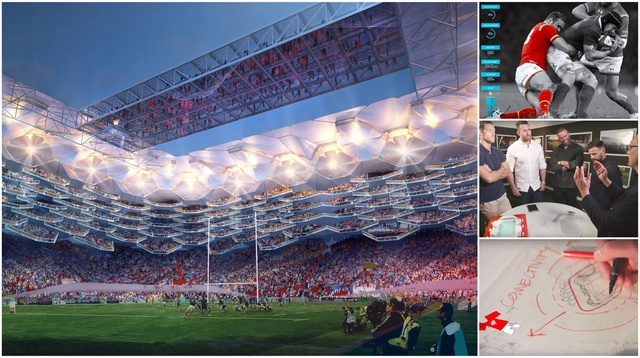
John Rhodes, a director of HOK’s Sports + Recreation + Entertainment practice, met with legendary rugby players Jamie Roberts (Wales), Tim Visser (Scotland), James Horwill (Australia) and Danny Care (England) to capture their ideas, both as players and fans. The findings were collated into a video by HOK, which you can watch below.