

-
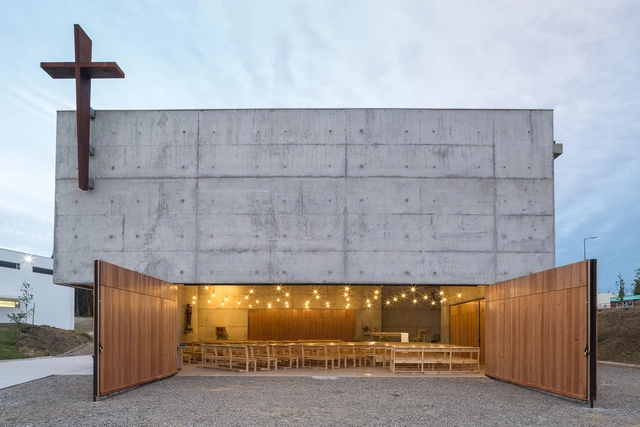
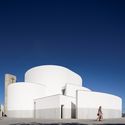
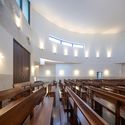
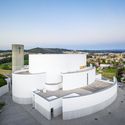
Architects: José Requesens Aldea, Juan Pavez Aguilar
- Year: 2014
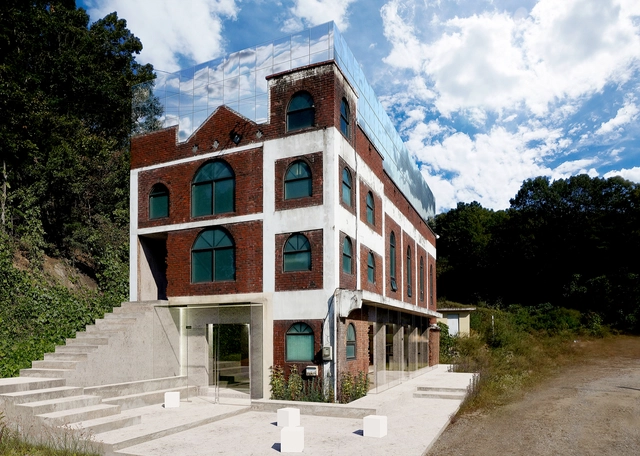
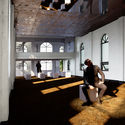
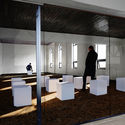
Changtteul Church, is an old place of worship in Gyeonggi-do, South Korea, that gets its name from the term "changtteul", meaning "a frame containing a window", in Korean. As its name suggests, the building's character lies in its series of windows, giving the visitors both outside and inside a unique experience of light and scenery.
Designers Hanyoung Jang and Hanjin Jang of studio minorormajor utilized the windows of Changtteul as a metaphorical motif for their design concept: the first being the 'window between man and God', and the second being ‘the window between man and nature’, immersing the abandoned religious facility with dramatic experiences.
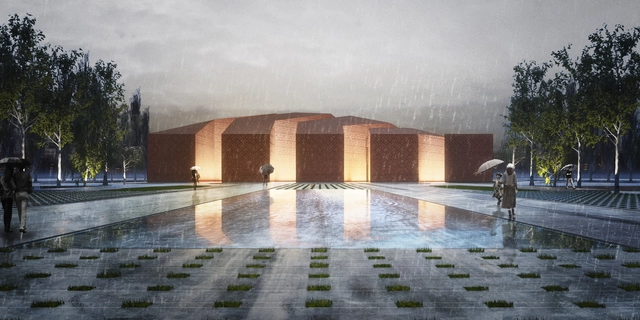
Persian architecture studio Fundamental Approach Architects have won first prize in the Golshahr Mosque and Plaza National Design Competition in Iran, proposing an atypical mosque design for the city of Karaj.
The winning proposal bypasses traditional mosque designs, blurring the lines between the contemporary structure, the city, and the surrounding landscape.
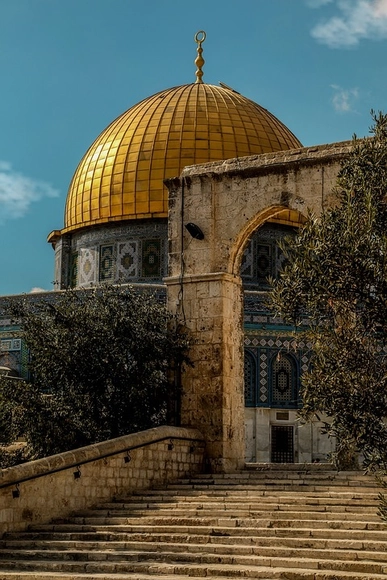
While French firefighters were putting out the destructive blaze at the Notre Dame Cathedral, another holistic site was also up in flames. Jerusalem's Al-Aqsa Mosque, which is among the holiest sites in Islam and was built almost 1,300 years ago, was struck by blaze while the monumental Catholic Church was also devastated with fire.
The fire is said to have started in the Al-Marwani Prayer Hall - also known as Solomon's Stables - part of the same compound as Al-Aqsa mosque and the Dome of the Rock. Fortunately, firemen of the Islamic Waqf department of the city were able to control the fire before any harm was done to the individuals or the other prayer halls. While the cause remains unknown, sources claim that the fire could have been ignited accidentally by children who were near the prayer hall at the time.
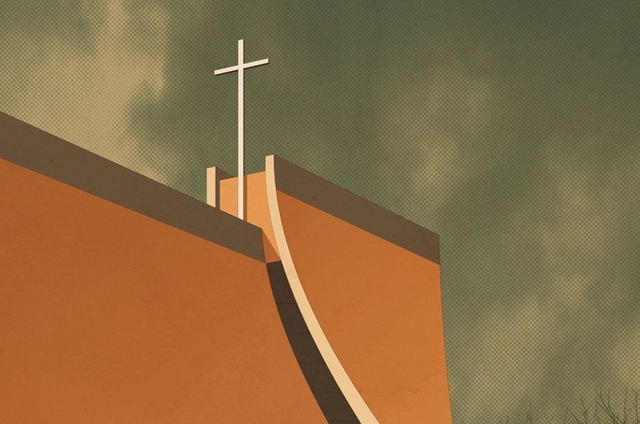
Architecture can be understood through many prisms but is often seen solely as the response to material demands - housing, leisure, commerce, etc. But perhaps no space is more emotionally and symbolically loaded than that of sacred spaces. Designing spaces for worship (religious or otherwise) can be one of the most creative and liberating tasks of this profession. These spaces transcend the terrestrial plane of mere material to become part of a universe of subjectivity and faith.
We present below a series of illustrations of such spaces by André Chiote, featuring famed architectural works by designers such as Gottfried Bohm, Oscar Niemeyer, and Peter Zumthor.
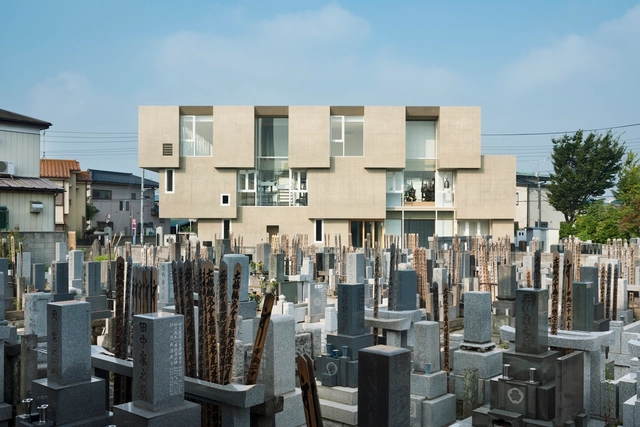
Religious architecture has long been one of the most exciting typologies, one has long paved the way for various design and structural innovations. Faith & Form magazine and Interfaith Forum on Religion, Art and Architecture (IFRAA) annually recognize the continued creativity defining the field.
This year's winners include 35 projects that span a variety of religious denominations, sizes, and location. Additionally, the award has recognized two trends defining contemporary religious architecture: "the preference for natural materials in worship environments, and inventive design solutions to address tight budgets."
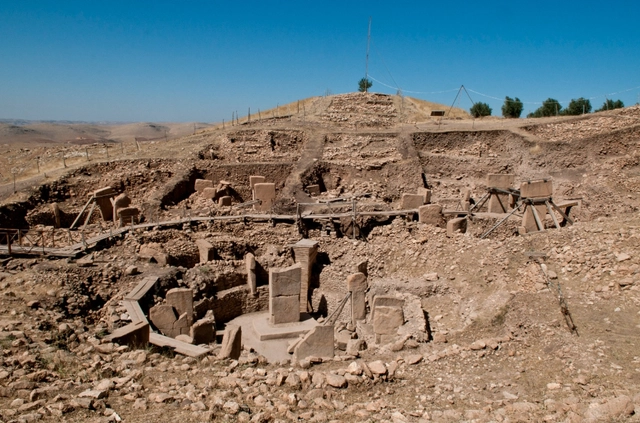
Located in south-east Turkey, the 11,000-year-old Göbekli Tepe is considered to be the world’s oldest temple, greatly surpassing England’s Stonehenge, and the Egyptian pyramids. The ancient site, awarded Unesco World Heritage status in July 2018, predates pottery, writing, and the wheel, leading archaeologists such as its discoverer Klaus Schmidt to ask if Göbekli Tepe may, in fact, be not only the world’s first piece of architecture but a crucial catalyst for the onset of settled societies.
Spread across eight hectares near the city of Sanliurfa, the Göbekli Tepe is an artificial mound hosting a series of sunken circular structures adorned with limestone carvings, believed to have been occupied for thousands of years before their abandonment.
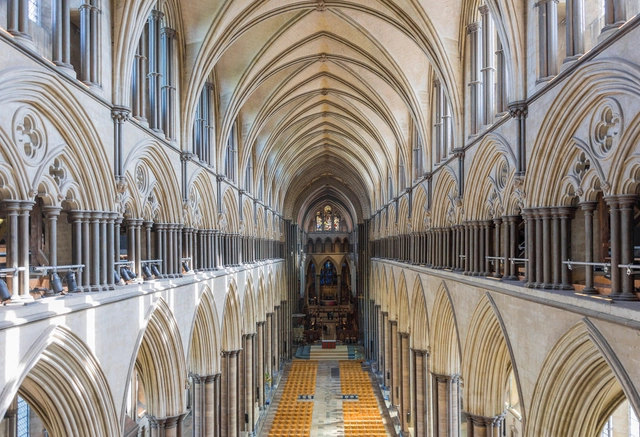
Some of the greatest architectural works throughout history have been the result of religion, driven by the need to construct spaces where humanity could be one step closer to a higher power. With more people choosing a secular lifestyle than ever before, are the effects that these buildings convey—timelessness, awe, silence and devotion, what Louis Kahn called the “immeasurable” and Le Corbusier called the “ineffable”—no longer relevant?
With the Vatican’s proposal for the 2018 Venice Biennale, described as “a sort of pilgrimage that is not only religious but also secular,” it is clear that the role of "religious" spaces is changing from the iconography of organized religion to ambiguous spaces that reflect the idea of "spirituality" as a whole.
So what does this mean? Is there still a key role for spirituality in architecture? Is it possible to create spaces for those of different faiths and those without faith at all? And what makes a space "spiritual" in the first place?
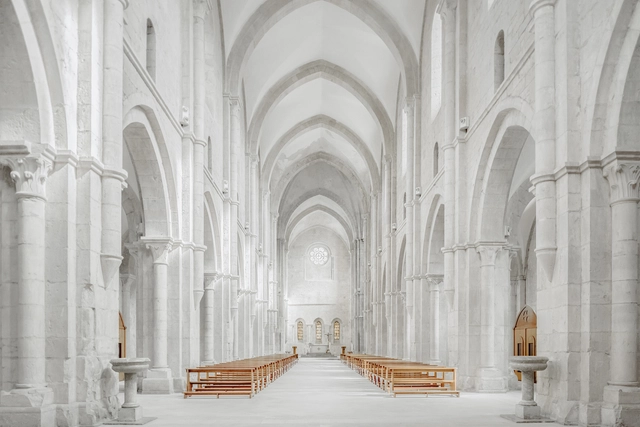
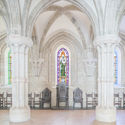
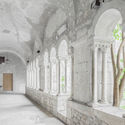
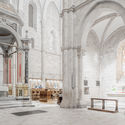
In his latest photographic collection, Federico Scarchilli captures Cistercian order in the form of Abbazia di Fossanova, Casamari, and Valvisciolo. Simple and utilitarian, Cistercian architecture reflects the transition between the Romanesque and Gothic periods. During this time, many religious authorities felt excessive ornamentation was a distraction to spiritual studies.

OMA New York has released initial details of its design for the Audrey Irmas Pavilion, a new addition to the Wilshire Boulevard Temple in Los Angeles, California. The OMA scheme, currently seeking planning approval, seeks to “forge new connections within the existing campus and create a new urban presence to engage Los Angeles.”
Having won a competition for the pavilion's design in 2015, the OMA scheme represents the firm’s first commission from a religious institution and their first cultural building in California. Designed in collaboration with Gruen Associates, the Audrey Irmas Pavilion will form the newest addition to the Wilshire Boulevard Temple, the oldest Jewish congregation in Los Angeles. The scheme will serve as a multi-purpose gathering space in what Rabbi Steve Leder regards as “the city’s most diverse neighborhood.”
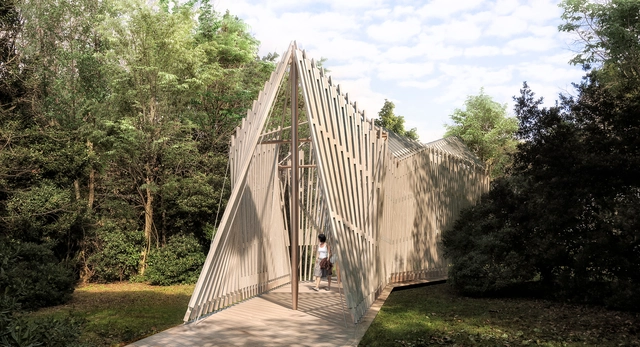
Foster + Partners has released details of their proposed chapel to form part of the Vatican’s inaugural entry to the Venice Biennale. The Holy See Pavilion will comprise ten chapels designed by ten architects, to be situated on the Venetian Island of San Giorgio Maggiore. Among the architects contributing to the circuit of chapels are Foster + Partners, Eduardo Souto de Mourao, and Francesco Cellini.
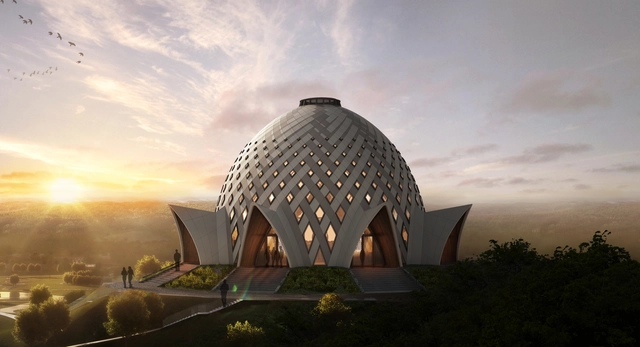
The Bahá'í International Community has unveiled a proposal for the national Bahá'í House of Worship of Papua New Guinea. In the capital city of Port Moresby, a celebration was held at the temple’s future site to showcase the scheme, coinciding with the Bahá'í New Year. Inspired by the art of weaving, the architects’ vision was for a temple where the people of Papa New Guinea could unite to worship and find inspiration.
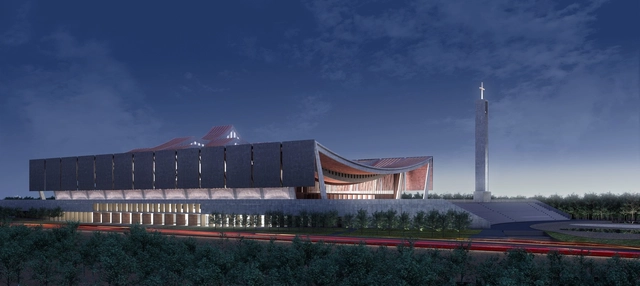
On the 61st anniversary of Ghana’s independence, President Nana Addo Dankwa Akufo-Addo has unveiled plans for a New National Cathedral of Ghana to be built in the capital city of Accra. Led by British-Ghanaian architect David Adjaye of Adjaye Associates, the design is envisioned as a “physical embodiment of unity, harmony and spirituality” where people of all faiths will be welcome to gather and practice their faith.
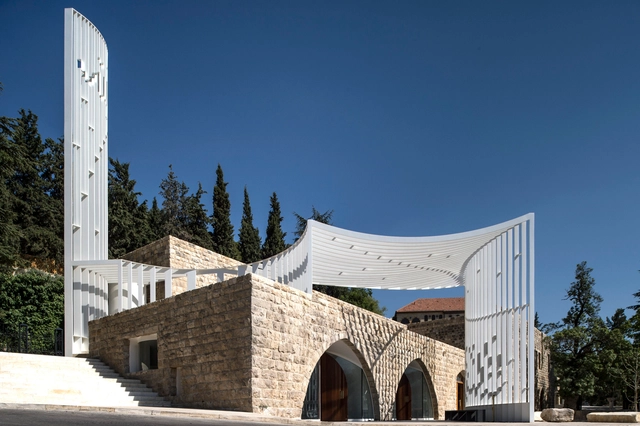
How does contemporary religious architecture adapt to the needs of the modern world? Each year, Faith & Form magazine and the Interfaith Forum on Religion, Art and Architecture (IFRAA) award acknowledges the best in religious art and architecture. This year’s winners included 27 projects spanning in religious denomination, size, and location. Beyonds this, the award recognizes three common trends present in religious architecture today: re-adaptation of existing facilities, community-based sacred spaces, and simplicity in design. Read on to see all 27 winners.
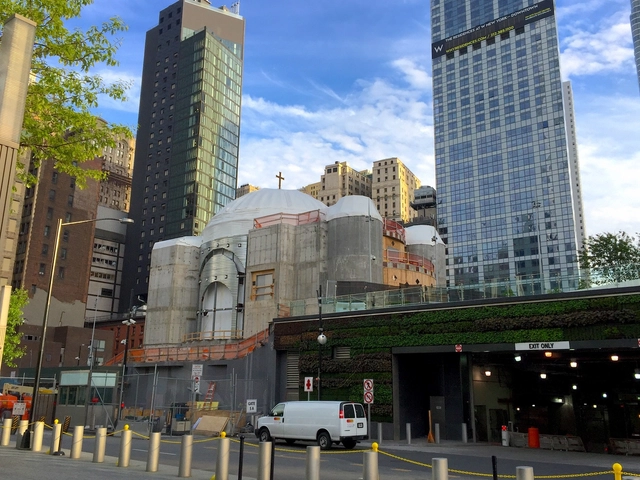
Construction on the Santiago Calatrava-designed St. Nicholas National Shrine at the World Trade Center has halted, after the church failed to make a series of payments over a several month period to contractor Skanska.
As revealed by the Pappas Post, last week the construction company distributed a letter to its subcontractors informing them that the building contract had been terminated after The Greek Orthodox Archdiocese of America defaulted on making payment. In the letter, Skanska directed subcontractors to stop all work and to remove all tools and materials from the site, or risk not being able to recover them.















.jpg?1521650494 "Courtesy of Bahá'í International Community")