1. ArchDaily
  2. Daniel Libeskind

Daniel Libeskind: The Latest Architecture and News

Daniel Libeskind on Immigration, New York City, and 'the State of the World'

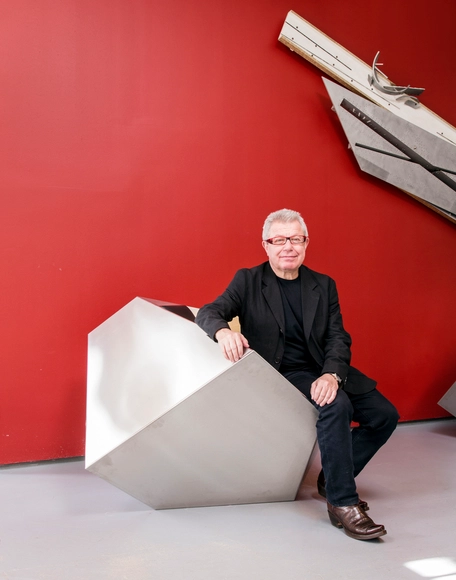
In an exclusive interview with Daniel Libeskind, who is based in New York City ("a microcosm of the world") and describes himself as having been "an immigrant several times," discusses his origins, his family, his early influences and the 'state of the world', touching upon a great theme in his built works: that of memorialising and remembrance in the built environment. Having grown up under "terrible oppression" in post-war Poland and moved between countries eighteen times, he describes himself as a citizen of the world with a great deal of retrospective advice for prospective architects.

Daniel Libeskind Discusses "Building Memory"

In this edition of Section D, Monocle 24's weekly review of design, architecture and craft, David Plaisant speaks to Daniel Libeskind about the art and architecture of memory, with particular focus on his designs for his Ground Zero Masterplan and memorial in New York City. The show also discusses plans to transform John F. Kennedy airport's iconic TWA Terminal, and head to Singapore to meet the team at Ministry of Design.

Daniel Libeskind Discusses "Building Memory" - Image 1 of 4

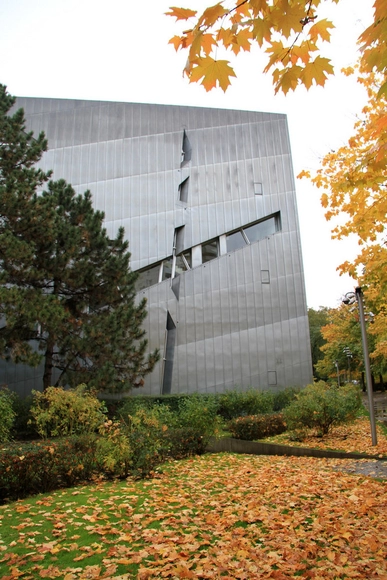
Daniel Libeskind's Jewish Museum Berlin Photographed by Laurian Ghinitoiu

The Jewish Museum in Berlin opened its doors 14 years ago today. Inspired by a lecture given by Daniel Libeskind, Berlin-based photographer Laurian Ghinitoiu captured the building and its dramatic plays of light and texture in a series of 20 photographs.

Exhibition: Childhood ReCollections

Zaha Hadid, Kengo Kuma, Daniel Libeskind, Nieto Sobejano, Denise Scott Brown and Philip Treacy reveal the childhood recollections that have shaped their outstanding visions and work.

25 Architects You Should Know

As an unavoidable art form, “architecture is one of humanity’s most visible and long-lasting forms of expression,” writes Complex Media. Within the past 150 years—the period of modern architecture—a distinct form of artistry has developed, significantly changing the way we look at the urban environments around us. To highlight some of the key figures in architecture over the past 150 years, Complex Media has created a list of “25 Architects You Should Know,” covering a range of icons including Zaha Hadid, Ieoh Ming Pei, Philip Johnson, Oscar Neimeyer, SOM, Daniel Libeskind, and more. Read the full list to learn more about each iconic architect, here.

Daniel Libeskind to be CNN Style's First Guest Editor

Daniel Libeskind will be joining CNN for a month-long editorship that will explore the "interplay between architecture and emotion." As CNN reports, CNN Style is a "new international destination for cosmopolitan, global audiences" that will kickstart with Libeskind's architecture series this July.

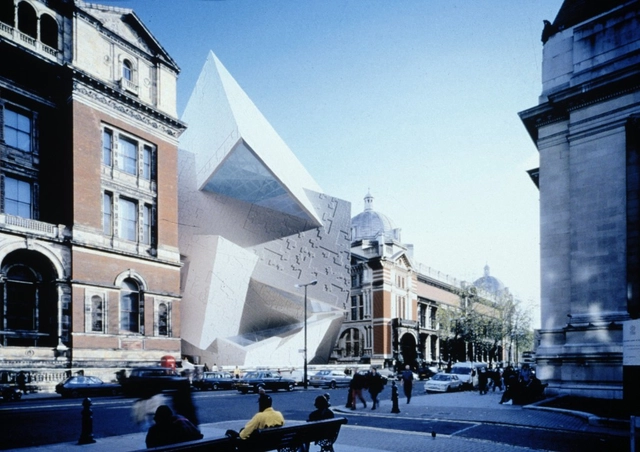
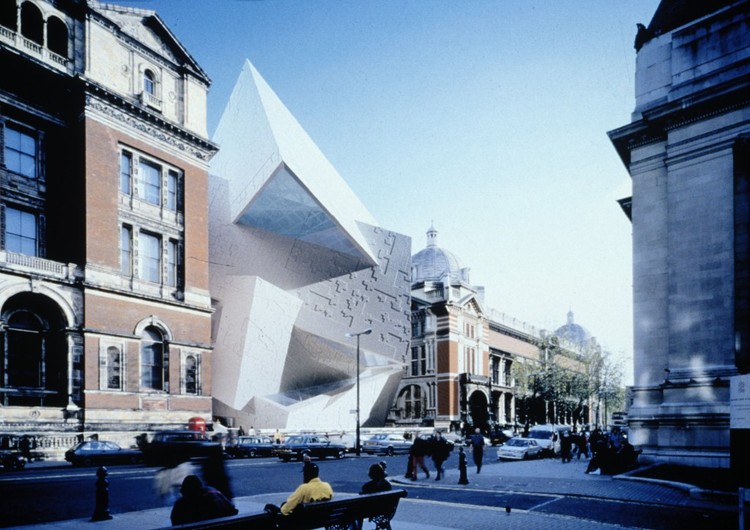
AD Classics: V&A Spiral / Daniel Libeskind + Cecil Balmond

The violent insertion of Daniel Libeskind’s Spiral into the Victorian neighborhood of South Kensington renders a cataclysmic disruption into a landscape of order and propriety. It envisions a rupture in the fabric of space and time, aggressively anachronistic from the building it adjoins, unapologetically appealing not to cultured humanism but to the mathematical logic of complexity and chaos. What is now textbook "Libeskind" was in 1996 a shocking non-starter for the London establishment, an unacceptable risk for a city perpetually torn between its agitated cosmopolitan energies and its quintessential impulse toward nostalgia and restraint. Nearly twenty years after the Spiral was selected as the winner of a distinguished international competition, this controversial extension proposal for the Victoria and Albert Museum remains unbuilt.

AD Classics: V&A Spiral / Daniel Libeskind + Cecil Balmond - Museum, FacadeAD Classics: V&A Spiral / Daniel Libeskind + Cecil Balmond - Museum, FacadeAD Classics: V&A Spiral / Daniel Libeskind + Cecil Balmond - Museum, Facade, BeamAD Classics: V&A Spiral / Daniel Libeskind + Cecil Balmond - MuseumAD Classics: V&A Spiral / Daniel Libeskind + Cecil Balmond - More Images+ 13

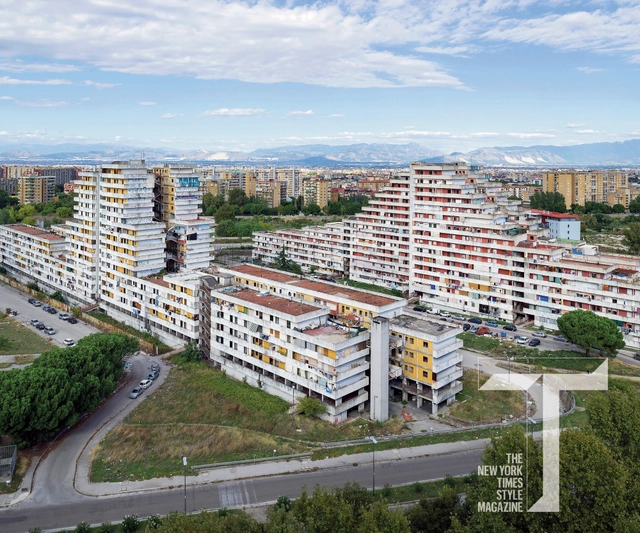
7 Leading Architects Defend the World's Most Hated Buildings

From Paris' most abhorred tower to New York's controversial government center, seven renowned architects have stepped up in defense of the world's most hated buildings in a newly published article on T Magazine. As told to Alexandra Lange, the article presents direct quotes from Zaha Hadid, Daniel Libeskind, Norman Foster and four others regarding controversial architecture whose importance goes beyond aesthetics.

See what hated building Norman Foster believes to be a "heroic" structure, after the break.

A Guided Tour Of The 2015 Milan Expo

Subscriber Access | 
A Guided Tour Of The 2015 Milan Expo - Featured Image
© Hufton+Crow

With 145 countries participating in the 2015 Expo, alongside input from international organizations, corporate partners and an extensive program organized by the Expo itself, there's a lot going on in Milan right now. So much so, in fact, that it can be a little overwhelming to get a handle on all the sights that are worth your attention.

To help you out, we've put together a guided tour of the key pavilions that are turning heads, including the defining vistas of the expo grounds, the displays that are worth your time and the oddities that might entertain. From the Expo's defining icon, the 30-meter-tall Tree of Life, to the exhibition on architecture's favorite consumable (that's coffee), and all the national pavilions in between, the things you need to see are here. Whether you're planning to visit the Expo and want a quick and dirty way to ensure you've covered the highlights, or whether you're simply hoping to live vicariously through the internet, this tour is for you.

A Guided Tour Of The 2015 Milan Expo - Image 1 of 4A Guided Tour Of The 2015 Milan Expo - Image 2 of 4A Guided Tour Of The 2015 Milan Expo - Image 3 of 4A Guided Tour Of The 2015 Milan Expo - Image 4 of 4A Guided Tour Of The 2015 Milan Expo - More Images+ 33

Daniel Libeskind's "Future Flowers" Represent Oikos at Milan Design Week

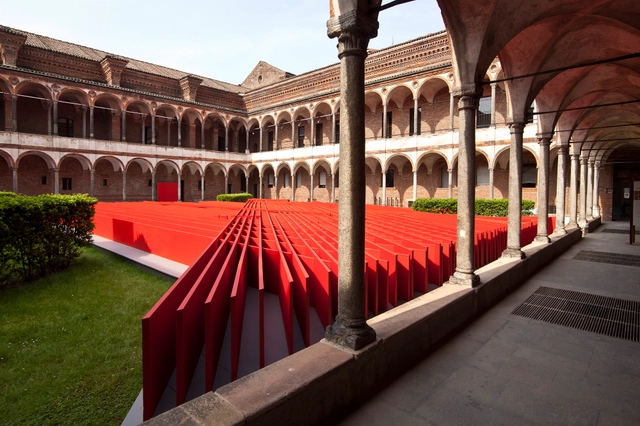
Daniel Libeskind, together with Italian paint company Oikos, has transformed the Università Statale’s Pharmacy Courtyard into a garden of "Future Flowers" as part of the 2015 Milan Design Week. On view through May 24, the installation was inspired by one of Libeskind’s "Chamberwork" drawings. It features a series of intersecting red metal "blades" that represent a collection of Oikos paints developed by Libeskind.

The Life Of Dalibor Vesely: Teacher, Philosopher, Acclaimed Academic

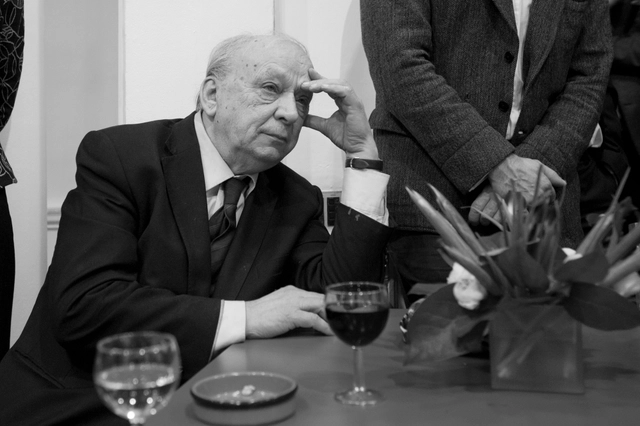
Dalibor Vesely, a celebrated architectural historian, philosopher and teacher, died this week in London aged 79. Over the course of his teaching career, which spanned five decades, he tutored a number of the world’s leading architects and thinkers from Daniel Libeskind, Alberto Pérez-Gómez and Robin Evans, to Mohsen Mostafavi and David Leatherbarrow.

Vesely was born in Prague in 1934, five years before the Nazi occupation of Czechoslovakia. Following World War II, he studied engineering, architecture, art history and philosophy in Prague, Munich, Paris and Heidelberg. He was awarded his doctorate from Charles University (Prague) having been taught and supervised by Josef Havlicek, Karel Honzik, and Jaroslav Fragner. Although later he would be tutored by James Stirling, it was the philosopher of phenomenology Jan Patočka who, in his own words, “contributed more than anyone else to [his] overall intellectual orientation and to the articulation of some of the critical topics” explored in his seminal book, Architecture in the Age of Divided Representation, published in 2004.

LOBBY #2: Projecting Forward, Looking Back

From Vitruvius to Le Corbusier, words and writing have always played an essential role in architectural discourse. One could argue that crafting words is akin to orchestrating space: indeed, history’s most notable architects and designers are often remembered for their written philosophies as much as they are for their built works.

With the exception of a few of architecture’s biggest names, the majority of practicing architects no longer exploit the inherent value writing offers as a means for spatial and theoretical communication. This trend is exacerbated by the fact that many architectural schools place little emphasis on the once-primary subjects of history and literature, resulting in a generation of architects who struggle to articulate their ideas in words, resulting in an ever-growing proliferation of ill-defined “archispeak.”

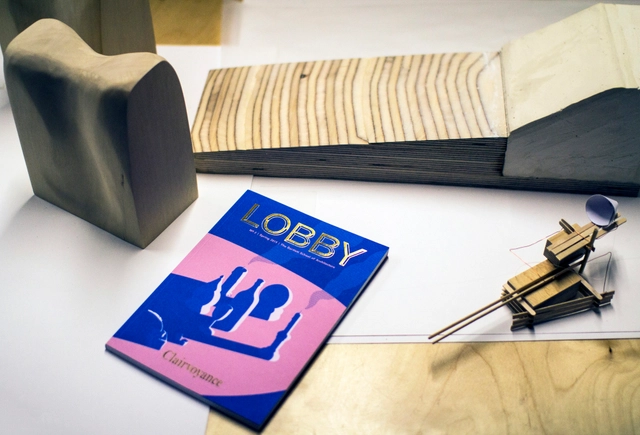
LOBBY is an attempt from students of London’s Bartlett School of Architecture to reclaim the potency of the written word, presenting in their second issue an ambitious array of in-house research and external contributions. The theme is Clairvoyance, and the journal seeks to investigate the ways in which architects are forced to constantly grapple with the possibilities and uncertainties of designing spaces that exist in the intangible realm of the world-to-be.

LOBBY #2: Projecting Forward, Looking Back - Image 1 of 4LOBBY #2: Projecting Forward, Looking Back - Image 2 of 4LOBBY #2: Projecting Forward, Looking Back - Image 3 of 4LOBBY #2: Projecting Forward, Looking Back - Image 4 of 4LOBBY #2: Projecting Forward, Looking Back - More Images+ 6

In Residence: Daniel Libeskind

Subscriber Access | 

The latest installation of the In Residence series, Polish-born architect Daniel Libeskind welcomes NOWNESS into his Manhattan apartment, just five blocks north of Ground Zero.

Video: Tour Through Mons International Congress Xperience with Daniel Libeskind

Subscriber Access | 

In light of the recent opening of Mons International Congress Xperience (MICX), Daniel Libeskind hosted a private tour through the conference center, explaining his thinking behind the building’s expressive form. The experience was captured on this short film by Spirit of Space with the intention to open the discussion up to a larger audience.

The building, an important new landmark in the Belgium city of Mons, is described by Libeskind as “an expression of contrasting geometric forms.” Aside form providing function and “lively” spaces for auditoria and conference use, the building aims to be “a hinge between the old city and the new.”

Mons International Congress Xperience (MICX) / Studio Libeskind + H2a Architecte & Associés

Mons International Congress Xperience (MICX) / Studio Libeskind + H2a Architecte & Associés - Municipal BuildingMons International Congress Xperience (MICX) / Studio Libeskind + H2a Architecte & Associés - Municipal BuildingMons International Congress Xperience (MICX) / Studio Libeskind + H2a Architecte & Associés - Municipal BuildingMons International Congress Xperience (MICX) / Studio Libeskind + H2a Architecte & Associés - Municipal BuildingMons International Congress Xperience (MICX) / Studio Libeskind + H2a Architecte & Associés - More Images+ 12

Video: Daniel Libeskind on Masterplanning Ground Zero

Subscriber Access | 

"Its an adventure, because it's a highly political, highly emotional, highly complicated process, to get something built on the site which is about memory," explains Daniel Libeskind. "It's a day that changed the world… and architecture responds in constructing something that has sense for people, that has spirit."

Daniel Libeskind Reflects On Designing Buildings With 'Emotional Weight'

In an interview with Shaunacy Ferro for FastCo Design, Daniel Libeskind looks back over his built works and discusses the significant 'emotional weight' imbued in many of his projects, from the Jewish Museum in Berlin to his masterplan for Ground Zero in New York City. When asked why he continually returns to projects such as Holocaust memorials - with the Canadian National Holocaust Memorial currently underway in Ottawa - Libeskind stated: "It’s not something that I choose very lightly, because it’s very difficult, but I believe that it’s very important." For him, creating these monuments is part of the act of doing "something that moves us beyond just the darkness and gives us something positive. [...] Even when it comes to the memory, you can’t just dwell on the irreversibility of the tragedy. You have to have something hopeful."

Drawings from Famous Architects' Formative Stages to be Exhibited in St. Louis

Drawings from Famous Architects' Formative Stages to be Exhibited in St. Louis  - Featured Image
Zaha Hadid, The World (89 Degrees), 1984. Image Courtesy of Kemper Art Museum

As a student of architecture, the formative years of study are a period of wild experimentation, bizarre use of materials, and most importantly, a time to make mistakes. Work from this period in the life of an architect rarely floats to the surface - unless you're Zaha Hadid or Frank Gehry, that is. A treasure trove of early architectural drawings from the world's leading architects has recently been unearthed from the private collection of former Architectural Association Chairman Alvin Boyarsky. The collection is slated to be shown at the Kemper Art Museum, Washington University, St. Louis, as a part of the exhibition Drawing Ambience: Alvin Boyarsky and the Architectural Association from September 12th to January 4th, 2015.

Take a look at the complete set of architects and drawings for the exhibition after the break.

Drawings from Famous Architects' Formative Stages to be Exhibited in St. Louis  - Image 1 of 4Drawings from Famous Architects' Formative Stages to be Exhibited in St. Louis  - Image 2 of 4Drawings from Famous Architects' Formative Stages to be Exhibited in St. Louis  - Image 3 of 4Drawings from Famous Architects' Formative Stages to be Exhibited in St. Louis  - Image 4 of 4Drawings from Famous Architects' Formative Stages to be Exhibited in St. Louis  - More Images+ 5