1. ArchDaily
  2. Climate Change

Climate Change: The Latest Architecture and News

What Makes a City Resilient?

This article was originally published on Common Edge.

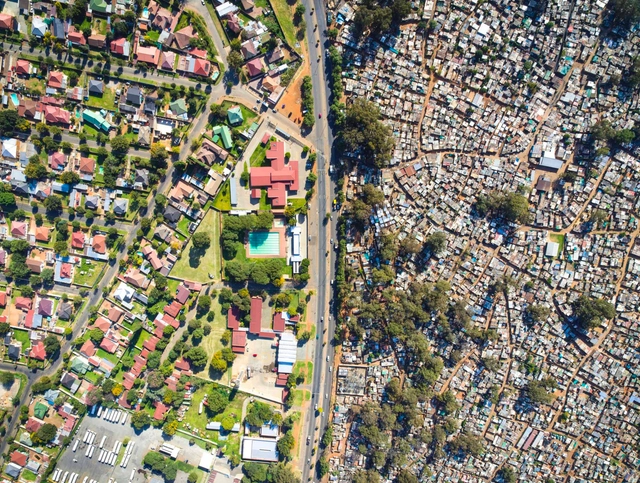
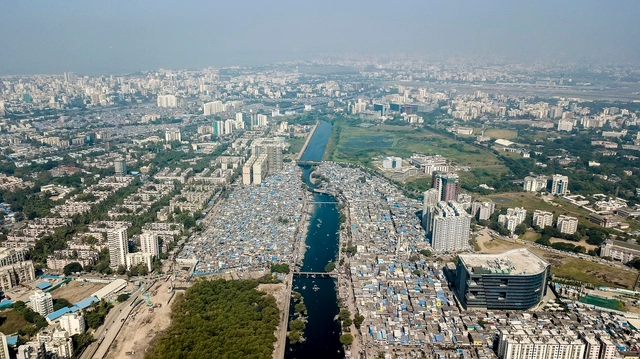
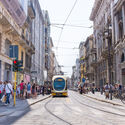
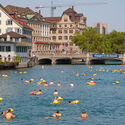
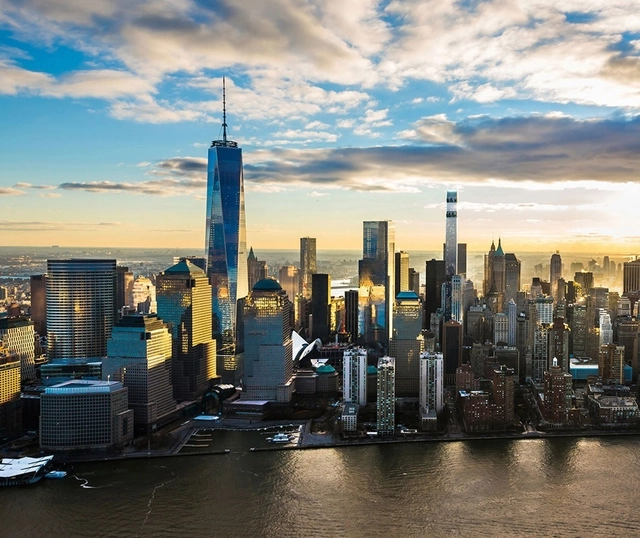
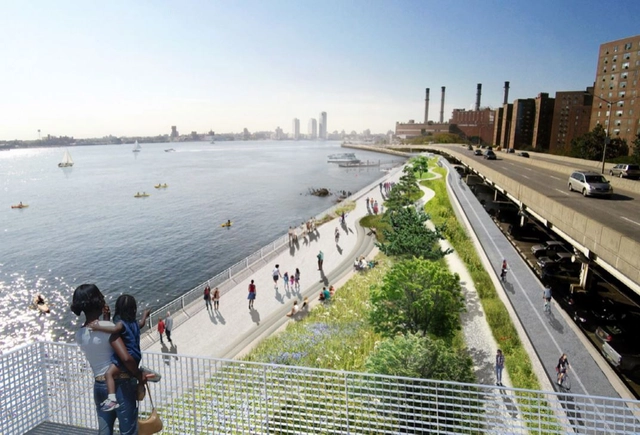
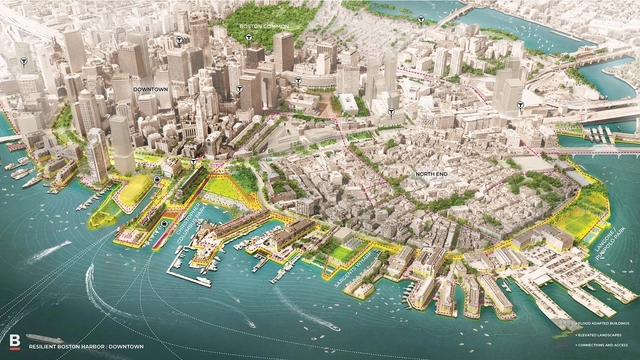
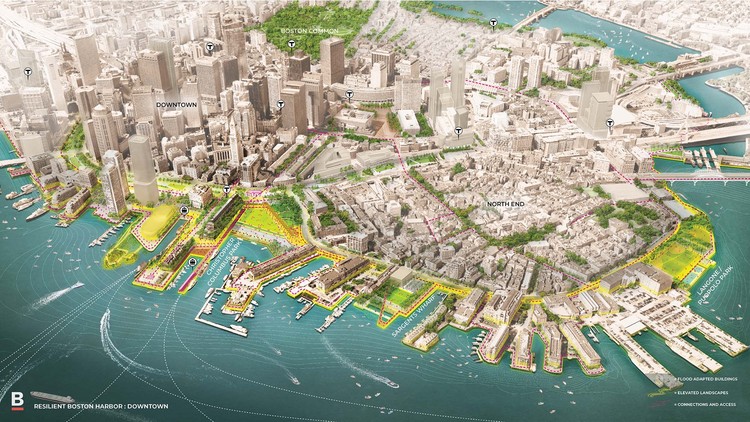
About a decade ago, the term "resilience planning" became ubiquitous in climate circles. That shift, in the wake of increasingly unpredictable events, was shaped in part by the Rockefeller Foundation's 100 Resilient Cities program, a six-year, $160 million effort to establish chief resilience officers in cities all over the world. Out of that program, which ended in 2019, emerged its successor, Resilient Cities Catalyst (RCC), a New York–based nonprofit engaged in what it calls "capacity building" projects. For Climate Week, I talked to Sam Carter, one of RCC's founding principals, about his definition of resilience, the organization's planning and philanthropic method, and the challenge of scaling up climate efforts.

What Makes a City Resilient? - Imagen 1 de 4What Makes a City Resilient? - Imagen 2 de 4What Makes a City Resilient? - Imagen 3 de 4What Makes a City Resilient? - Imagen 4 de 4What Makes a City Resilient? - More Images+ 1

Exploring the Legacy of Modernism in Landscape Architecture

Modernist landscape architecture marked a radical shift from traditional garden designs, emphasizing simplicity, functionality, and a stronger connection between people and their environments. From the 1930s through the 1960s, this movement saw the emergence of visionary landscape architects who integrated form and function in ways that redefined outdoor spaces. Their designs responded to the rapidly evolving urban landscapes of the time, prioritizing usability and creating environments that could accommodate modern life. The enduring influence of these principles continues to shape contemporary practices, while also presenting unique challenges in preservation as these landscapes age.

Exploring the Legacy of Modernism in Landscape Architecture - Imagen 1 de 4Exploring the Legacy of Modernism in Landscape Architecture - Imagen 2 de 4Exploring the Legacy of Modernism in Landscape Architecture - Imagen 3 de 4Exploring the Legacy of Modernism in Landscape Architecture - Imagen 4 de 4Exploring the Legacy of Modernism in Landscape Architecture - More Images+ 18

How Roofscapes' Paris Pilot Project is Pioneering Climate-Resilient Architecture in Europe

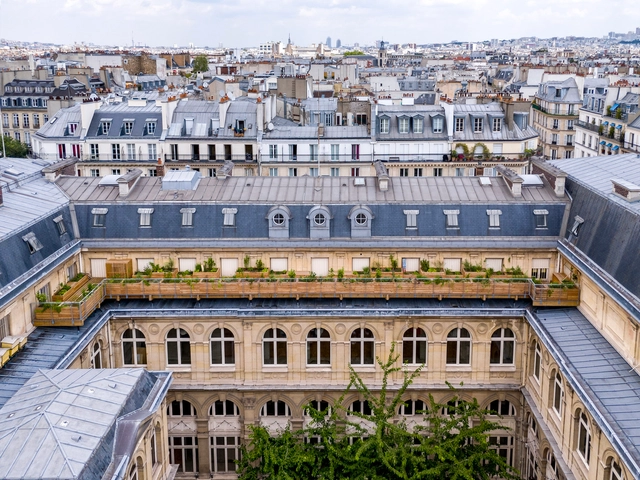
As record-breaking temperatures sweep across European cities, practitioners have recognized that existing infrastructure is poorly equipped to address the impacts of climate change. In response to this concern Roofscapes, a startup emerging from the MIT School of Architecture and Planning, has developed innovative solutions to amplify urban climate resilience. Their approach focuses on the strategic adaptation of underutilized spaces such as rooftops. By tackling the immediate challenges posed by extreme heat, the startup's work epitomizes how architectural innovation can directly contribute to addressing climate adaptation needs in cities. The company was recognized as one of ArchDaily's 2024 Best New Practices for their innovative approach to tackling urban issues such as affordability, lack of biodiversity, rising urban temperatures and repurposing.

How Roofscapes' Paris Pilot Project is Pioneering Climate-Resilient Architecture in Europe - Image 1 of 4How Roofscapes' Paris Pilot Project is Pioneering Climate-Resilient Architecture in Europe - Image 2 of 4How Roofscapes' Paris Pilot Project is Pioneering Climate-Resilient Architecture in Europe - Image 3 of 4How Roofscapes' Paris Pilot Project is Pioneering Climate-Resilient Architecture in Europe - Image 4 of 4How Roofscapes' Paris Pilot Project is Pioneering Climate-Resilient Architecture in Europe - More Images+ 6

"Embodied Carbon Declared" Platform Exposes CO2 Emissions in Sweden's Construction Industry

ACAN Sweden, in collaboration with Differ Agency, has launched "Embodied Carbon Declared," an online platform that actively reveals CO2 emissions data from new construction projects across Sweden. The platform categorizes and presents emissions data in four key areas: Projects, Municipalities, Developers, and Building Types. It provides detailed measurements both in total and per square meter, offering an advanced level of transparency in the construction industry.

"Embodied Carbon Declared" Platform Exposes CO2 Emissions in Sweden's Construction Industry - Imagen 1 de 4"Embodied Carbon Declared" Platform Exposes CO2 Emissions in Sweden's Construction Industry - Imagen 2 de 4"Embodied Carbon Declared" Platform Exposes CO2 Emissions in Sweden's Construction Industry - Imagen 3 de 4"Embodied Carbon Declared" Platform Exposes CO2 Emissions in Sweden's Construction Industry - Imagen 4 de 4Embodied Carbon Declared Platform Exposes CO2 Emissions in Sweden's Construction Industry - More Images

Simple Design Strategies for Extreme Heat

Anyone who walks during the summer in a city like Boston knows that a significant amount of time is spent charting routes with shade. But I can’t use that as my only excuse for being off-task. Honestly, I’m distracted. The swirling headlines of the U.S. presidential election, an unprecedented UN climate conference looming, and the phrase “decade of decisive action” weighs heavy on my shoulders. While it’s easy to get caught up in current events, those of us with solutions must stay focused.

A perhaps helpful Japanese phrase to call upon is “kotsu kotsu,” essentially meaning to slow down and focus on the task at hand, and do it well. Temperatures are soaring, people are suffering. As a recent UN COP letter stated, “time lost is lives, livelihoods, and the planet lost.” Cooling our cities and communities is more important than ever.

Simple Design Strategies for Extreme Heat - Image 1 of 4Simple Design Strategies for Extreme Heat - Image 2 of 4Simple Design Strategies for Extreme Heat - Image 3 of 4Simple Design Strategies for Extreme Heat - Image 4 of 4Simple Design Strategies for Extreme Heat - More Images+ 4

Progress and Reparations: Unpacking the Loss and Damage Fund from COP27

Subscriber Access | 

In November of 2022, the coastal city of Sharm El Sheikh, Egypt, hosted the 27th convention of the United Nations Conference of the Parties, known as COP27. Since signing the Paris Agreement in 2015, the nearly annual conference has gained momentum as a global leader in sharing knowledge and developing frameworks to mitigate climate change worldwide. While the more recent COP28, held in Dubai in 2023, focused on conversations of energy production, this previous conference focused on urban contexts, as they deal with the urgent need for incorporating loss, damage, and climate reparations into climate action plans. As two years have now passed since COP27, it is important to revisit these discussions and hold governing bodies accountable for the promises made and the benchmarks set for climate change mitigation. One of the most ambitious plans from COP27 highlights an urgent debate in our urban environments: how will we define loss, damage, and climate reparations in the twenty-first century?

Progress and Reparations: Unpacking the Loss and Damage Fund from COP27 - Imagen 3 de 4Progress and Reparations: Unpacking the Loss and Damage Fund from COP27 - Imagen 5 de 4Progress and Reparations: Unpacking the Loss and Damage Fund from COP27 - Imagen 2 de 4Progress and Reparations: Unpacking the Loss and Damage Fund from COP27 - Imagen 4 de 4Progress and Reparations: Unpacking the Loss and Damage Fund from COP27 - More Images+ 7

Blair Kamin on Reframing the Crucial Issue of Design Equity

This article was originally published on Common Edge.

The format for Blair Kamin’ latest book, Who Is the City For? is slightly different from typical compilations. Kamin groups his columns thematically (all 55 appeared in the Chicago Tribune, when he served as architecture critic), and then, more often than not, adds a postscript updating or reframing the story for our fraught new normal. One of the recurring themes, both in the stories and in the postscripts, is the issue of design equity. As income inequality, systemic racism, and climate change became central to the cultural and political debates, equity became the critical lens for much design criticism. In our recent conversation, Kamin advocated for a broader definition of the term.

Coping with Extreme Heat: How Cities are Confronting the Heatwave in Eastern and Southern Europe

Audio available

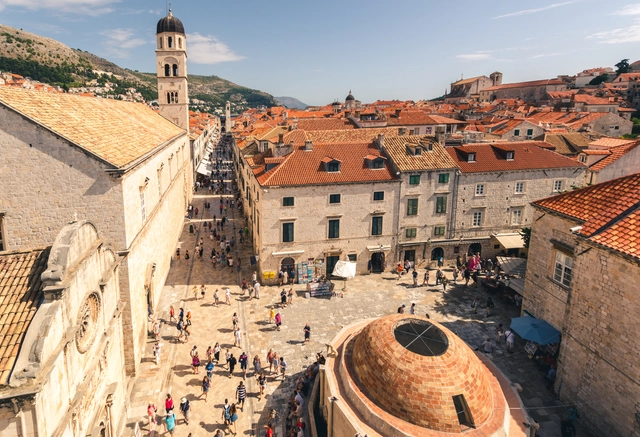
Eastern and Southern Europe is enduring a severe heatwave, with temperatures reaching over 40 degrees Celsius in many countries including Greece, Croatia, Macedonia, and Romania. Driven by hot air from North Africa, this prolonged heatwave has raised significant threats for residents and has strained the cities’ mechanisms for protection and climate mitigation. As the heatwaves expose the vulnerabilities of urban infrastructures, cities across Europe are striving to implement measures to address these challenges.

Coping with Extreme Heat: How Cities are Confronting the Heatwave in Eastern and Southern Europe - Imagem 1 de 4Coping with Extreme Heat: How Cities are Confronting the Heatwave in Eastern and Southern Europe - Imagem 2 de 4Coping with Extreme Heat: How Cities are Confronting the Heatwave in Eastern and Southern Europe - Imagem 3 de 4Coping with Extreme Heat: How Cities are Confronting the Heatwave in Eastern and Southern Europe - Imagem 4 de 4Coping with Extreme Heat: How Cities are Confronting the Heatwave in Eastern and Southern Europe - More Images

Construction Materials that Increase Resilience to Natural Disasters

Eucalyptus forests in Australia are known to burn periodically. It is the trees' way of ensuring propagation, as its fruits – known as gumnuts – have an insulating layer breaks down with the heat of the fire. Once they open, the burnt soil is covered with seeds, initiating a process of forest renewal. Glenn Murcutt, an Australian architect, has created a body of work rooted in the country's landscape. His innovative houses embrace the possibility of frequent fires, including elements that allow for fire control with the least possible loss. In short, the houses are built with very non-flammable materials, always have huge water reservoirs, and a “flood system” that allows the building and its immediate surroundings to be spared in the case of a forest fire.

Kiribati Floating Houses: an Architectural call to face the Climate Change Challenge

 | Sponsored Content

​YAC - Young Architects Competitions and Cantiere delle Marche launch “Kiribati Floating Houses”, a competition of ideas aiming to design floating structures to tackle the challenges of the rise in ocean levels and climate change. A cash prize of € 15,000 will be awarded to winners. In addition, some projects will be selected to be part of an exhibition at Santa Maria della Vita in Bologna and some other projects will be selected to be part of an exhibition about the ocean exploration held by National Geographic at Palazzo Blu in Pisa. selected by a well-renowned jury made of, among the others,​ Kengo Kuma, Moon Hoon, Rocco Yim, Cristiana Favretto (Studiomobile), Simon Frommenwiler (HHF Architects), Fabio Roversi Monaco (Genus Bononiae), Giuseppe Zampieri (David Chipperfield Architects).

Utrecht Creates 300 Bee-Friendly Bus Stops

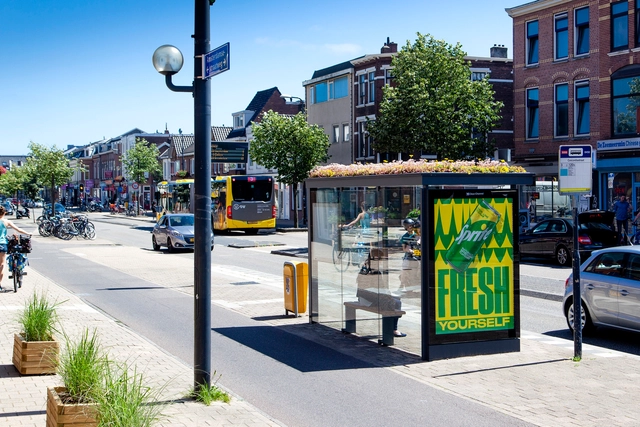
The City of Utrecht Council, in collaboration with advertising agency Clear Channel, has transformed 316 bus stops across the city into “bee stops.” The adaption involved installing green roofs onto the bus stops, creating bee-friendly spaces for the endangered species.

Utrecht Creates 300 Bee-Friendly Bus Stops - Image 1 of 4Utrecht Creates 300 Bee-Friendly Bus Stops - Image 2 of 4Utrecht Creates 300 Bee-Friendly Bus Stops - Image 3 of 4Utrecht Creates 300 Bee-Friendly Bus Stops - Image 4 of 4Utrecht Creates 300 Bee-Friendly Bus Stops - More Images+ 1

The Temperature Rise of 520 Cities by 2050 (is Grim)

The climate in Madrid in 2050 will look more like the climate in Marrakesh, Morocco today. Stockholm will feel more like Budapest, London like Barcelona, Moscow like Sofia, Seattle like San Francisco, and Tokyo like Changsa in China. 

The research "Understanding Climate Change Starting with an Analysis of Similar Cities" published in the scientific magazine PLOS ONE by The Crowther Lab of ETH Zurich, paints a grim picture of the future for the world's urban centers.

GVL Gossamer Merge Resilience and Urbanism in Xi'an, China

GVL Gossamer has released images of their design for a 19 kilometer stretch of waterfront along the Jing River in Xi’an, China. The proposal, a finalist in an international design competition, celebrates the site’s history at the origin of the Silk Road through strategies that tap into ancient and enduring histories of traditional architecture, merchant trade, and agricultural innovation. These enduring histories are woven with contemporary influences such as responses to major climatic and environmental challenges.

GVL Gossamer Merge Resilience and Urbanism in Xi'an, China - Image 1 of 4GVL Gossamer Merge Resilience and Urbanism in Xi'an, China - Image 2 of 4GVL Gossamer Merge Resilience and Urbanism in Xi'an, China - Image 3 of 4GVL Gossamer Merge Resilience and Urbanism in Xi'an, China - Image 4 of 4GVL Gossamer Merge Resilience and Urbanism in Xi'an, China - More Images+ 9

The Age of Travel is Over

Modernism always wanted to have it both ways: on the one hand, modernist architecture was supposed to be, in theory, the same in all places; that's one reason why modernism in architecture was also called the International Style. If all modernist buildings look the same, when you see one you have seen them all: no need for further travel. Yet throughout the 20th century modernist culture and technology enthusiastically endorsed and favored travel. In the 60s we traveled to the Moon, and civil aviation made the world smaller. In modernist culture, travel was good. It made all travelers better, happier humans. It was good to learn foreign languages and to go see distant places. High modernist travel was not only good; it was also cool. The jet setters of the 60s were the coolest citizens of the world. Even later in the 20th century the general expectation was that borderless, seamless travel would keep getting easier and more frequent. Most Europeans of my generation grew up learning two or more foreign languages, and it was not unusual until recently to be born in one country, to study in another, and find one's first job in a third one. That was seen as an opportunity, not as a deprivation.

Bjarke Ingels' TED Talk on Floating Cities and the LEGO House

Subscriber Access | 

BIG founder Bjarke Ingels has delivered a TED Talk focusing on floating cities, the LEGO House, and other architectural forms of the future. Offering a worldwide tour of the firm’s projects, Ingels also elaborates on his waste-to-energy plant doubling as a ski slope, and cutting-edge flood resilience infrastructure for New York City.

World-Leading Architects Call for Action on Climate Change

Some of the world’s leading UK-based architects have joined forces to call for industry-led action on the twin issues of climate change and biodiversity loss. The “Architects Declare” group, which includes firms such as Foster + Partners, David Chipperfield Architects, and Zaha Hadid Architects, has so-far grown to 69 firms, with the original 17 signatories all past winners of the RIBA Stirling Prize.

New York City's Mayor is Planning to Ban New Glass Skyscrapers

New York City Mayor Bill de Blasio has announced plans to introduce a bill banning the construction of glass skyscrapers, forming part of efforts to reduce citywide greenhouse emissions by 30 percent. Unveiling the plans, he described all-glass façade skyscrapers as “incredibly inefficient” because of heat loss, according to NBC New York.

Frank Lloyd Wright Foundation will use Taliesin West to Educate about Living with Nature

The Frank Lloyd Wright Foundation has used Earth Day, April 22nd, 2019, to launch a new initiative focused on educating the public about how sustainable practices are used in the conservation of National Historic Landmark sites, including the renowned architect’s Taliesin (Wisconsin) and Taliesin West (Arizona) residences. Taking place throughout the year, the Foundation’s efforts will aim to show how these practices can serve as examples for other facets of society.