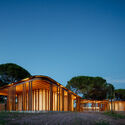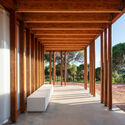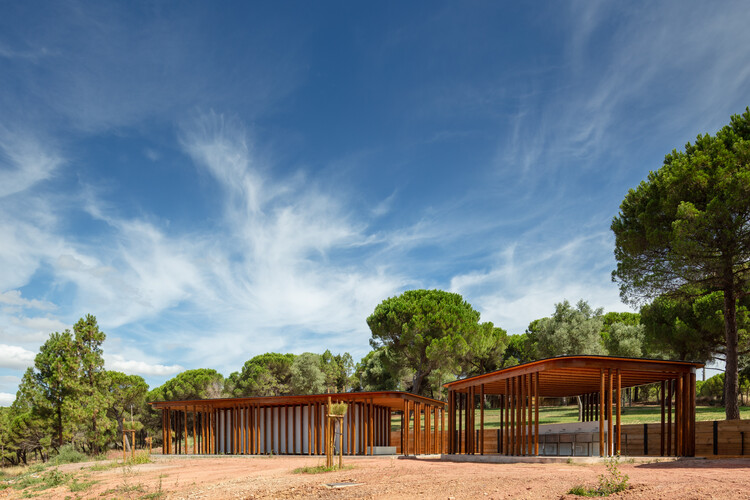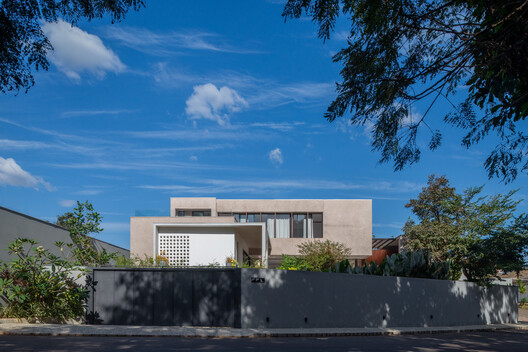

-
Architects: Marcos Lula
- Area: 520 m²
- Year: 2024
-
Manufacturers: Terracor, Illuminato, Tai Azulejos


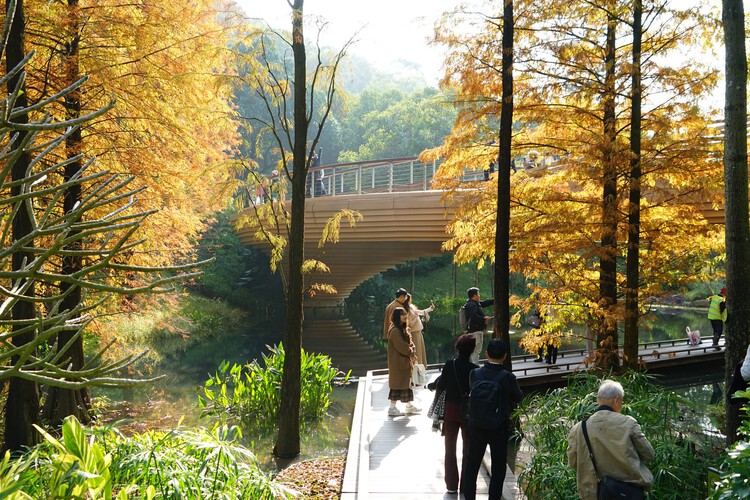
Botanical gardens bring the landscape, design, community, and scientific inquiry into close conversation. Emerging from medicinal gardens and private collections that were dedicated to classifying plants, botanical gardens were developed into institutions where specimens gathered across regions and climates could be cultivated and presented to public audiences. Their evolving position in society produced a distinct architectural repertoire, from greenhouses and conservatories to herbaria and laboratories and, eventually, visitor centers and hospitality spaces. Architecture remains integral to the botanical garden as an instrument of cultivation and a framework for organizing and studying the field of botany.


Buildner is pleased to announce the results of its Architect's Chair Competition Edition 5, the fifth edition of the annual international competition inviting architects and designers worldwide to create a signature chair that reflects their individual design philosophy and vision.
Chair design exemplifies the interdisciplinary nature of architecture, bringing questions of proportion, structure, material, ergonomics, and craftsmanship together at the scale of a single object. This year's submissions explored a broad range of approaches, from highly minimal, structurally efficient solutions to designs rooted in cultural references, material experimentation, and new fabrication methods.

Across Brazil, architecture continues to take shape through different forms of practice, scales, and relationships with place. This month's selection looks at practices working beyond conventional architectural boundaries, collective approaches that reconnect design and construction, and projects that respond to landscape, memory, and community. Alongside recently completed buildings and public spaces, new cultural interventions in São Paulo and Rio de Janeiro further highlight how architecture intersects with art, heritage, and the wider urban environment.
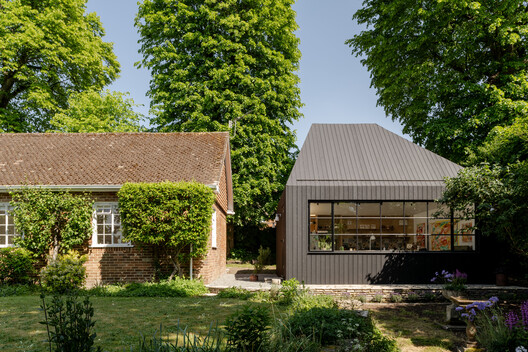

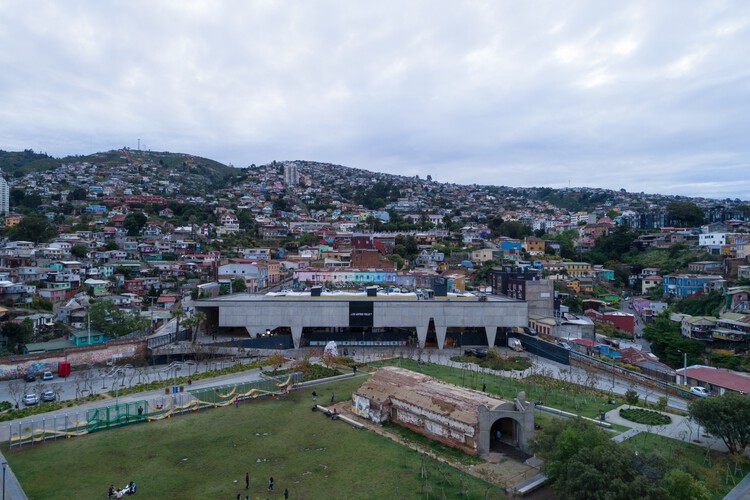
From October 9 to 11, "Oficios en obra" (Trades at Work) will take place at the Parque Cultural de Valparaíso in Chile, a learning and collaboration event centered on the city's traditional construction trades. Organized by the Municipality, the gathering seeks to highlight and preserve work techniques historically tied to the construction of Valparaíso, promoting their recognition and helping ensure their continuity among new generations through activities that are open and free to the public. Once the most important port on the South Pacific, Valparaíso's architecture bears witness to diverse applications of structural timber, rammed earth, and industrial technologies imported during the 19th century. This makes it a subject of study for traditional trades and construction techniques that are being revalued in contemporary contexts of climate and economic crisis, serving as an alternative path forward.
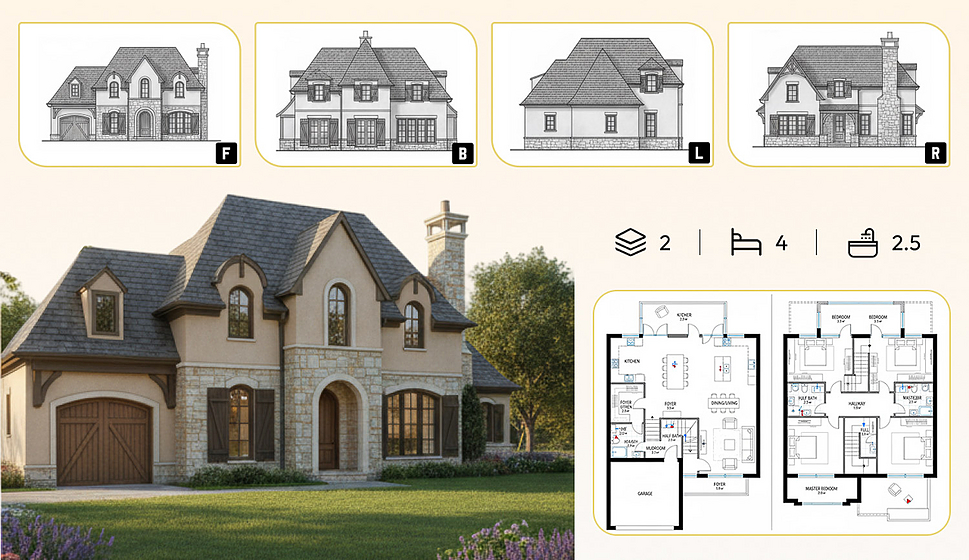
This guide covers a workflow that moves from project parameters to generated floor plans, 3D perspective views, exterior design exploration, and site context visualization, using AI tools in place of preliminary CAD and rendering work.

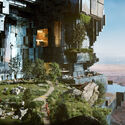
Ask an architect what the hardest problem in the discipline is right now. The block of unmaintained postwar housing two streets from their office rarely comes up. What comes to their mind is the pressure differentials on Mars, or the tensile loads on a floating platform; because unclaimed ground has no one to negotiate with, no history to answer to, no tenant to remember the last renovation, which makes it considerably easier to design for.
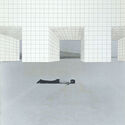
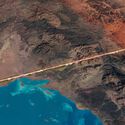
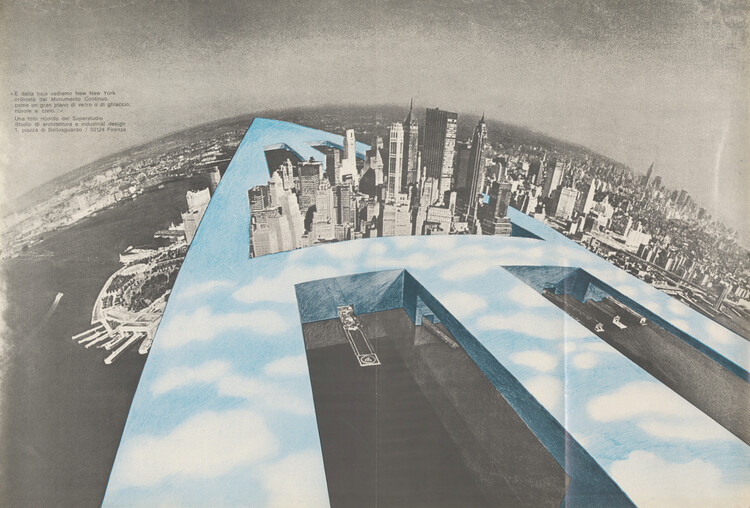
Architects think of themselves as solving a harder problem than the one next door. A project, like The Line, a 170-kilometer city meant to house nine million residents, with a site with no prior claimant, is not architecturally harder than a site with a hundred years of tenancy, contested ownership, and a planning department that remembers the last three developers who used the word "community" and meant something else. It is, considerably, easier. No one to persuade, no history to answer to, no argument to lose. Which raises the question of whether the harder problem is sitting two streets from the office, unsolved, and the easier one is the one getting the renderings and the funding rounds; then 'ambition' is the wrong word for what is happening. Something is being avoided, and we need to start thinking about what.

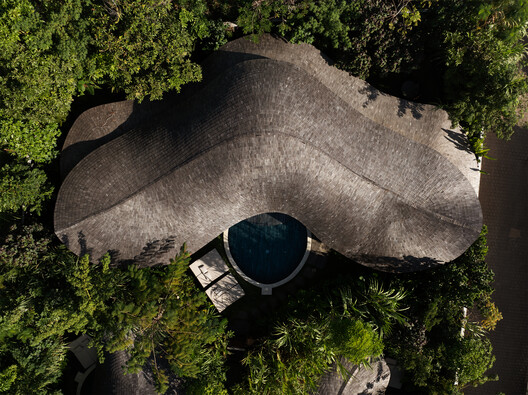

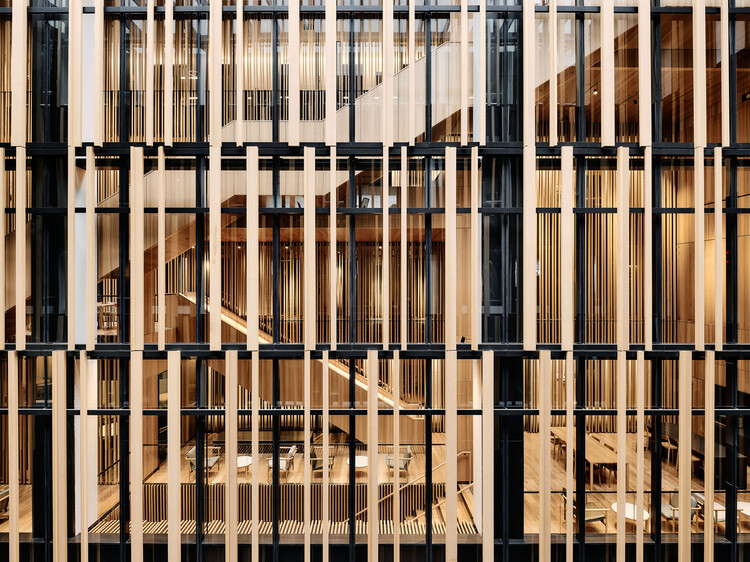
The relationship between humans and wood has endured since the Greco-Roman era, when a variety of techniques were developed to maximize its unique properties and characteristics. Beyond its warmth, texture, and natural appeal, wood has proven its ability to meet a wide range of technical requirements while adapting to diverse environmental and geographic conditions, maintenance demands, and fire-resistance standards. In response to the evolving needs of the built environment, interior and exterior finish materials that replicate the appearance of wood have emerged as viable alternatives. Among them, Wood Finish Aluminum offers a durable, high-performance solution for long-lasting projects, providing a textured wood-look appearance while maintaining minimal environmental impact.